Tichodroma muraria
A high-mountain bird with crimson wings and a wall-climbing lifestyle.

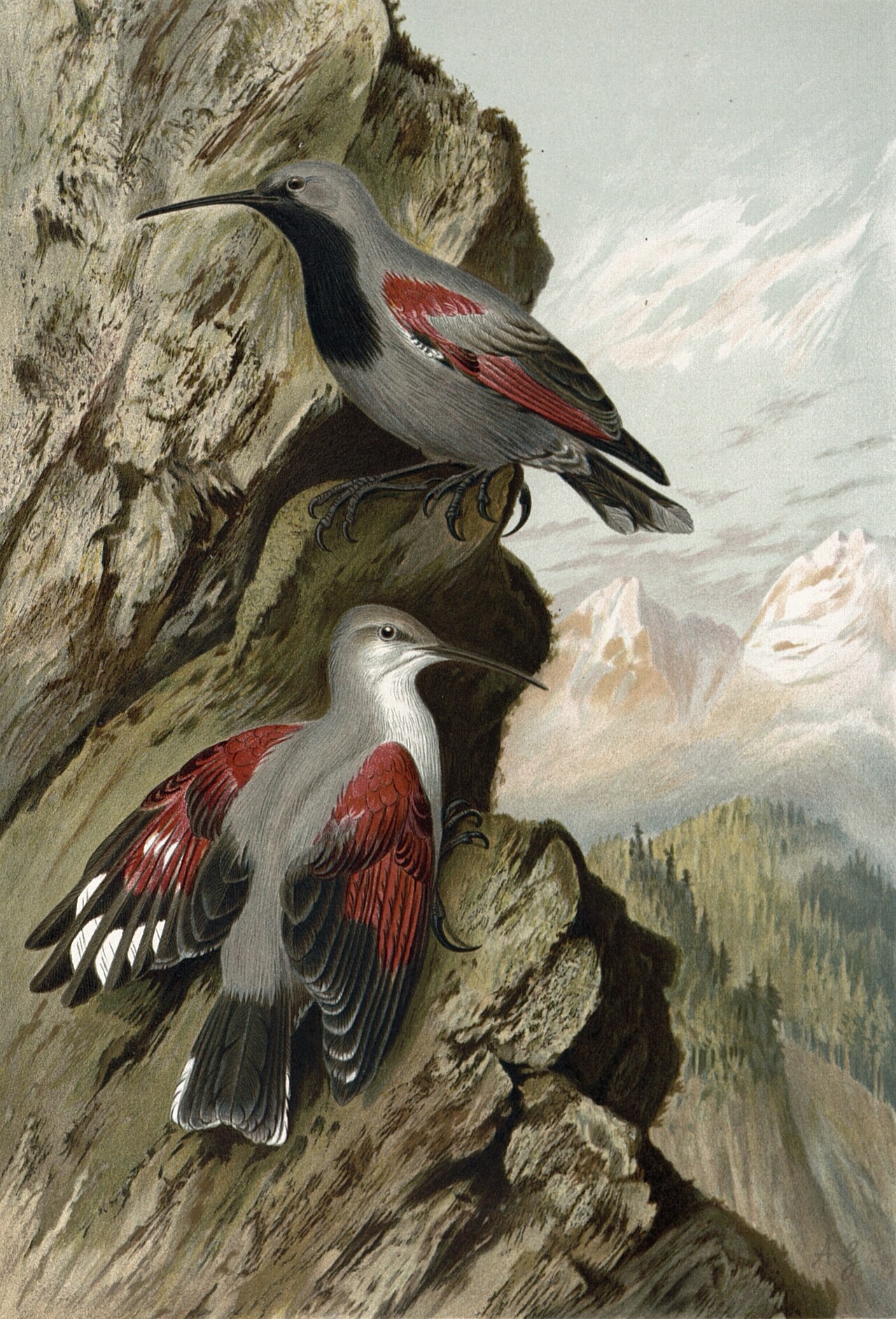
Antón Goering · Public domain
The wallcreeper (Tichodroma muraria) is a small passerine bird that lives in the high mountain ranges of the Palearctic, stretching from southern Europe to central China. It is the only living species in its genus, *Tichodroma*, and its family, Tichodromidae.
Taxonomically, its placement has shifted over time. Linnaeus originally grouped it with treecreepers as *Certhia muraria*. In 1811, Johann Karl Wilhelm Illiger gave it its own genus, *Tichodroma*, but it was long kept in the treecreeper family Certhiidae. Later, Karel Voous placed it in its own monotypic family, Tichodromadidae, while Charles Vaurie considered it a subfamily (Tichodromadinae) within the nuthatch family Sittidae. A 2016 phylogenetic study of the superfamily Certhioidea confirmed it is closely related to treecreepers, as a sister species to Certhiidae. A fossil species, *Tichodroma capeki*, is known from the Late Miocene of Polgardi, Hungary. The genus name combines the Ancient Greek *teikhos* ("wall") and *dromos* ("runner"), and the species name *muraria* is Medieval Latin for "of walls." It is also called the red-winged wall creeper.
Two subspecies are accepted: the European wallcreeper (*T. m. muraria*), found from southern and eastern Europe to the Caucasus and western Iran; and the Asian wallcreeper (*T. m. nepalensis*), originally described as a separate species, ranging from Kazakhstan, Turkmenistan, and eastern Iran to eastern China.
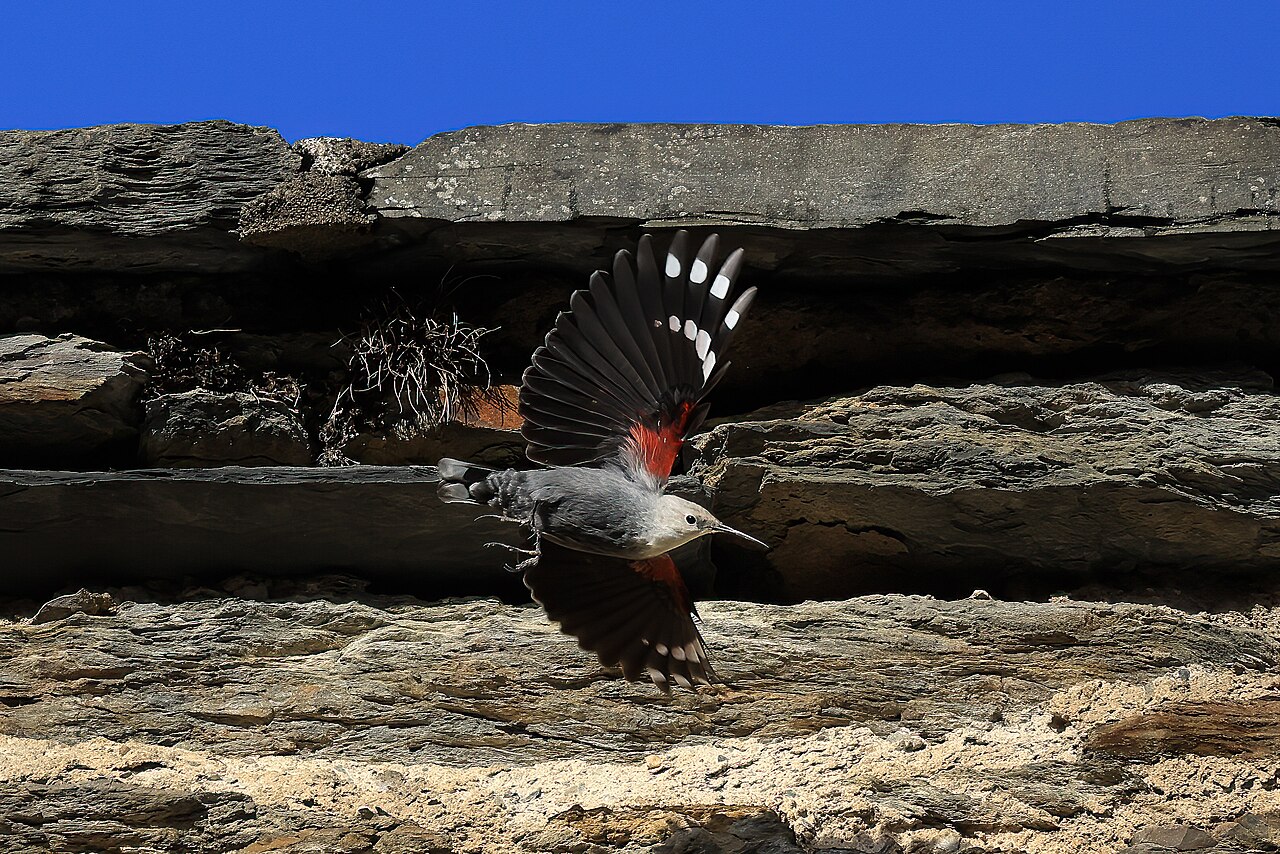
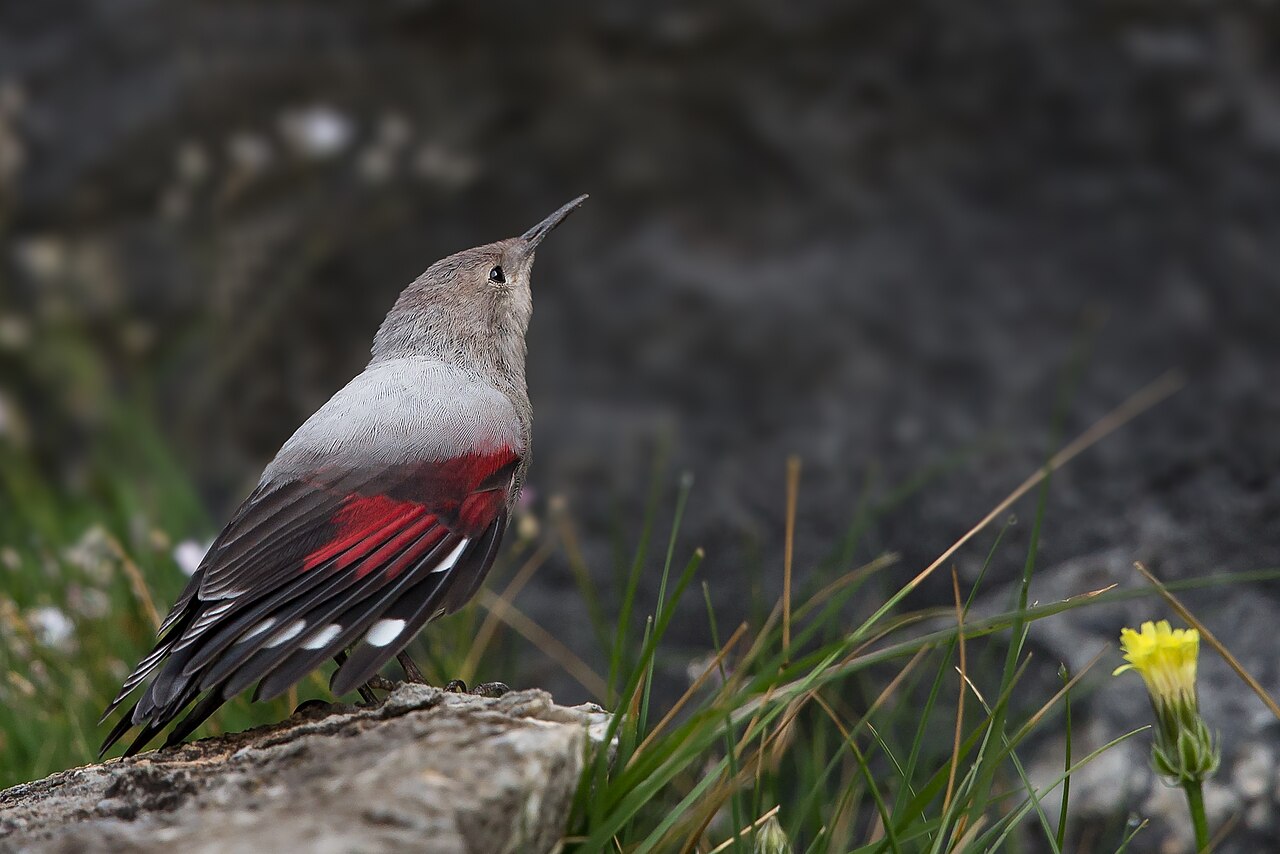
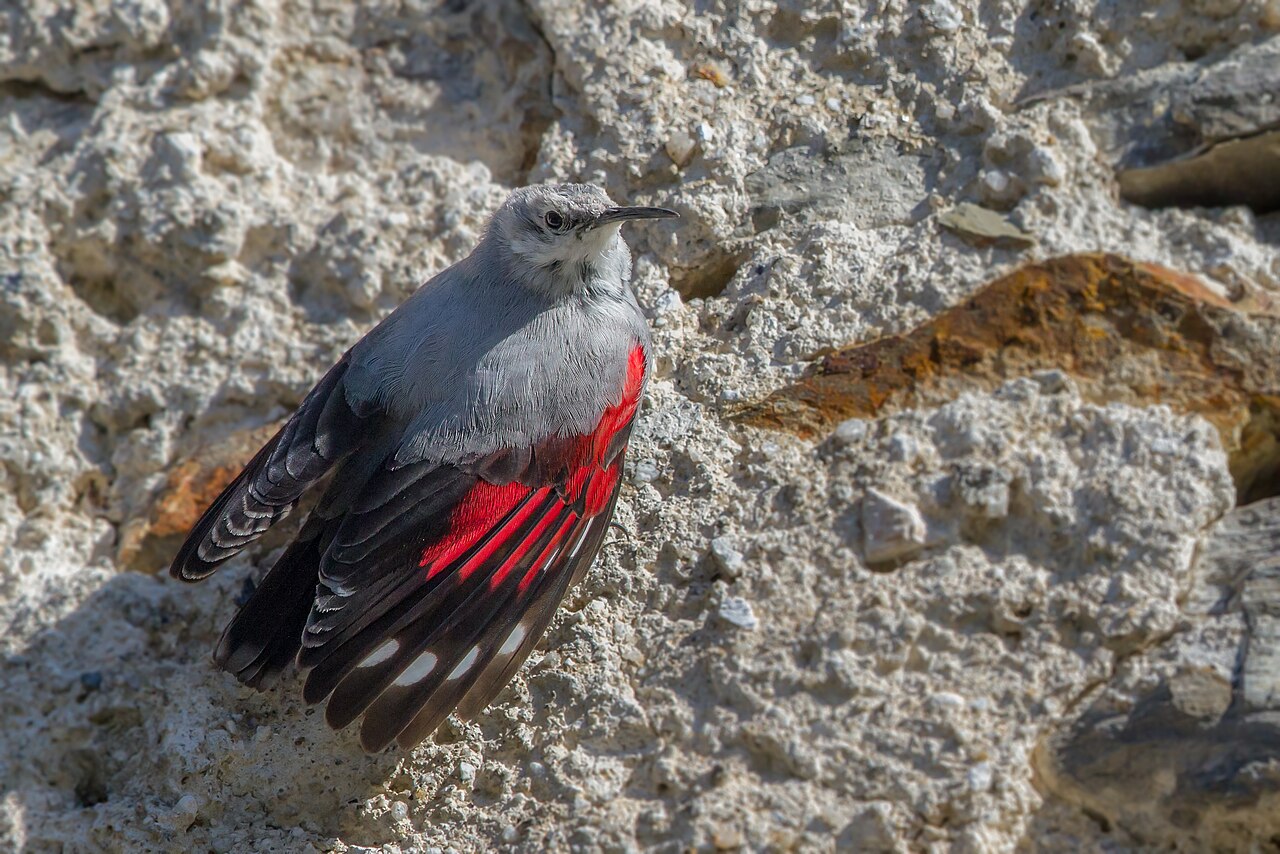
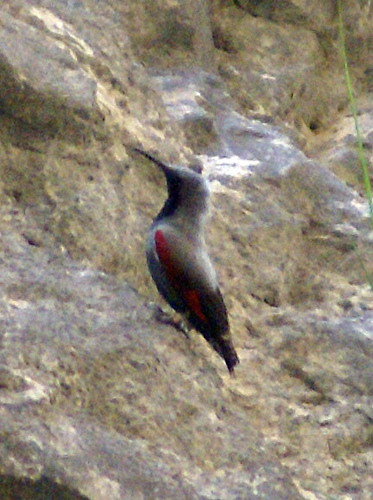
The bird measures 15.5–17 cm long and weighs 17–19 g. Its plumage is mostly blue-grey, with darker flight and tail feathers. In summer, males have a black throat that fades into grey, while females may have a white throat or a small dark patch. In autumn and winter, both sexes have white throats. Its most striking feature is its crimson wings with white spots, largely hidden when folded but covering most of the covert feathers and the basal half of the primaries and secondaries. The tail is short, black with a narrow white fringe. Juveniles resemble winter adults. The Asian subspecies is slightly darker.
Though mostly silent, both sexes sing. Females typically sing only while defending winter feeding territories. The song is a high-pitched, drawn-out whistle with notes that rise and fall. During breeding, males sing while perched or climbing.
Quick Facts
- Genus
- Tichodroma
- Species
- muraria
Facts from the source article.
Lore & Background
The wallcreeper was initially described by Linnaeus as Certhia muraria, placing it among the treecreepers. In 1811, Johann Karl Wilhelm Illiger gave it its own genus, Tichodroma, but it long remained in the treecreeper family Certhiidae. Later, Karel Voous placed it in its own monotypic family, Tichodromadidae, while Charles Vaurie considered it a subfamily of the nuthatch family Sittidae. A 2016 phylogenetic study suggests it is a sister species to the Certhiidae. At least one fossil species, Tichodroma capeki, is known from the Late Miocene of Polgardi, Hungary.
Reader's Guide
The wallcreeper is significant as the sole surviving member of its genus and family, representing a unique evolutionary lineage within the passerines. Its taxonomic history reflects shifting scientific consensus on bird relationships, from treecreepers to nuthatches to its own family. Ecologically, it is a specialist of high mountain cliffs, breeding at elevations up to 5,100 meters in the Himalayas and descending to lower elevations in winter, where it sometimes appears on buildings and cathedrals. Its behavior—including territoriality, site fidelity to winter feeding territories, and the female's sole incubation while fed by the male—offers insights into avian adaptation to harsh environments. The species also appears in cultural contexts, such as being selected as a potential motif for the 2020s redesign of the 5€ banknote by the European Central Bank.
Did You Know?
- The wallcreeper is the only extant member of both the genus Tichodroma and the family Tichodromidae.
- Its genus name Tichodroma comes from Ancient Greek teikhos meaning 'wall' and dromos meaning 'runner'.
- One wallcreeper spent two consecutive winters between 1989 and 1991 at the Vrije Universiteit in Amsterdam.
Taxonomic Singularity and Evolutionary Legacy
The wallcreeper occupies a singular position in the avian tree of life. As the sole surviving representative of both its genus and its family, it stands as a living relic with no close extant relatives. Its taxonomic journey reflects decades of ornithological debate: Linnaeus originally lumped it with treecreepers, Illiger carved out a separate genus in 1811, and it lingered within the treecreeper family for years. Karel Voous eventually elevated it to its own monotypic family in his influential Holarctic list, while Charles Vaurie instead nested it as a subfamily within the nuthatches. A 2016 phylogenetic analysis of the superfamily Certhioidea confirmed its closest kinship to the nuthatch family, positioning it as their sister group. The fossil record adds another chapter: Tichodroma capeki, known from Late Miocene deposits in Polgardi, Hungary, shows the genus once harbored at least one additional species. The very name encodes its identity—Greek teikhos (wall) and dromos (runner), paired with Medieval Latin muraria, meaning "of walls."
Concealed Splendour and Seasonal Plumage
At just 15.5 to 17 centimetres in length and weighing a mere 17 to 19 grams, the wallcreeper is a compact, blue-grey bird whose true drama is concealed beneath its folded wings. When those wings open, a flash of extraordinary crimson reveals itself, covering most of the covert feathers and the basal portions of the primaries and secondaries, punctuated by small white spots. This vivid red-and-white display remains largely invisible during perching, making the bird appear deceptively plain. Seasonal shifts add further nuance: in summer, males sport a black throat that blends into the grey body, while females show either a white throat or a small dark patch. By autumn and winter, both sexes revert to a clean white throat. The tail is short, black, and edged with a narrow white fringe. Two subspecies are recognized—the European T. m. muraria and the slightly darker Asian T. m. nepalensis, the latter originally described as a full species by Bonaparte in 1850. Juveniles mirror the winter plumage, making young birds easy to mistake for adults in colder months.
A Life at Extreme Altitude
The wallcreeper is a creature of vertical extremes, endemic to the high mountains of the Palearctic from southern Europe stretching all the way to central China. Its breeding elevations shift dramatically across the range: between 1,000 and 3,000 metres in European mountains, climbing to 2,800–4,000 metres in the Tien Shan, and reaching a staggering 3,600–5,100 metres in the Himalaya. Across much of its territory the species is largely resident, yet it undertakes seasonal descents to lower ground in winter, where it gravitates toward human structures—buildings, quarries, and even grand cathedrals. In France, wallcreepers regularly winter on the stone facades of Breton and Norman cathedrals and viaducts. Rare vagrants have appeared as far afield as England and the Netherlands; one individual spent two consecutive winters at the Vrije Universiteit in Amsterdam between 1989 and 1991. In South Asia, the bird is a year-round resident across India, Nepal, Bhutan, and parts of Tibet, and appears as a winter visitor in Bangladesh.
Nest Architecture and the Rearing of a Single Brood
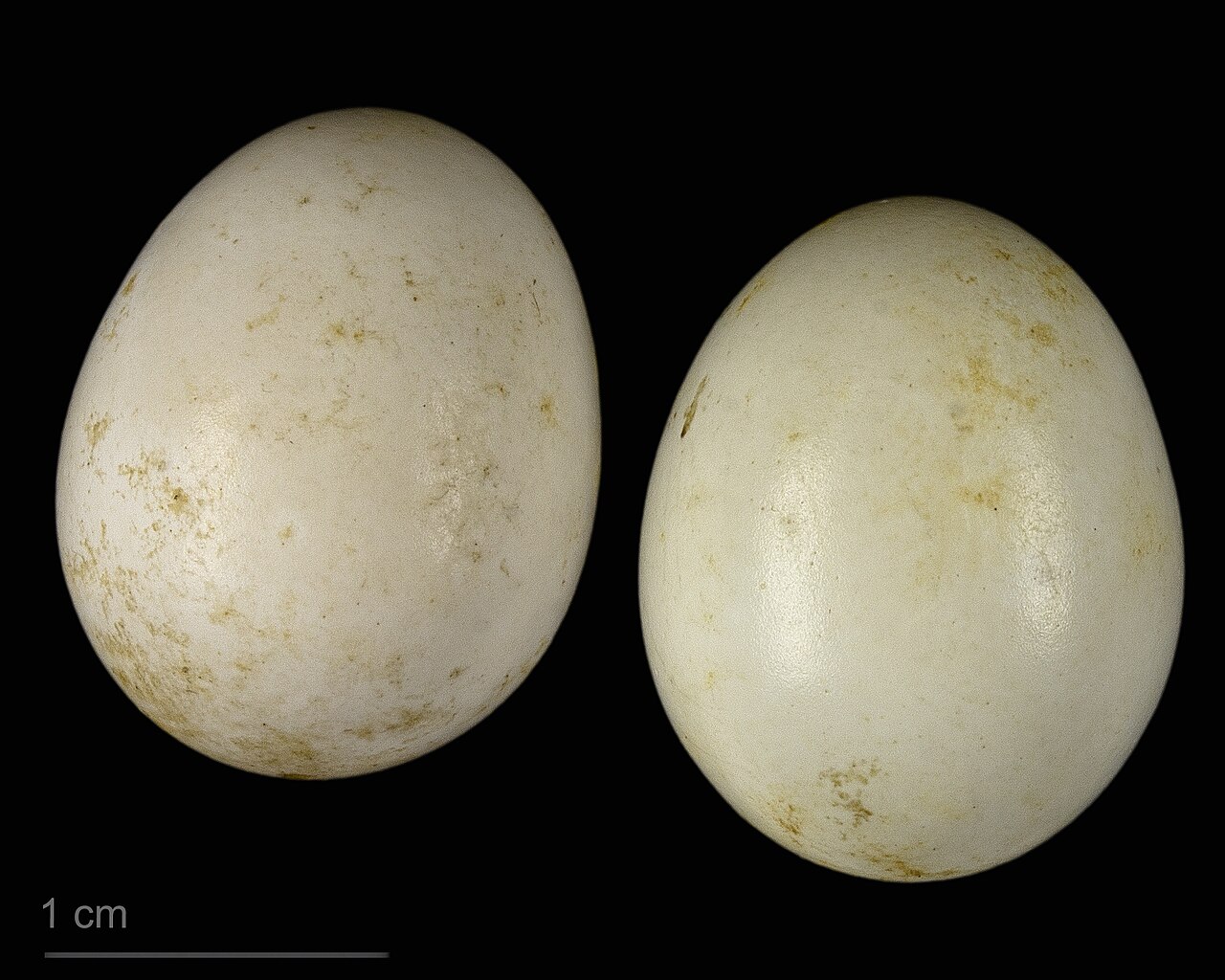
Wallcreeper reproduction is a tightly choreographed, single-brood affair. The female constructs a cup-shaped nest of grass and moss, tucking it deep within a rock crevice, hole, or cave, and lines it with softer materials such as feathers or wool. Notably, the nest typically features two entrances, a design that may aid in predator evasion. She lays a clutch of four to five white eggs, each roughly 21 millimetres long and dotted with sparse black or reddish-brown speckles, though clutches of three have occasionally been recorded. Incubation lasts 19 to 20 days, during which the male regularly feeds his mate. The hatchlings are altricial—blind, featherless, and entirely dependent—and both parents share the burden of provisioning them for 28 to 30 days until fledging. Territory defence is vigorous in summer, with pairs actively guarding their breeding site, while in winter the birds disperse into solitary individuals, each defending its own feeding ground, sometimes a single large quarry or a cluster of smaller rock faces, showing notable site fidelity across consecutive winters.
Gallery
Frequently Asked Questions
Who is Tichodroma muraria?
The Wallcreeper is a tiny high-altitude passerine, measuring just 15.5 to 17 cm and tipping the scales at roughly 17 to 19 grams. It is the sole surviving member of both its genus and its family, Tichodromidae, making it a true one-of-a-kind in the passerine world.
What are Tichodroma muraria's signature traits?
This bird is instantly recognizable for its bold crimson-and-black wing pattern and its habit of clinging to sheer rock faces much like a nuthatch or treecreeper. It forages for insects and spiders directly off cliff surfaces in alpine zones where few other small birds venture.
Where does Tichodroma muraria live?
Its range stretches across the high mountain ranges of the Palearctic, from the Pyrenees and Alps of southern Europe all the way east to the peaks of central China. It essentially lives above the treeline, a niche that suits its wall-climbing lifestyle perfectly.
How many subspecies of Tichodroma muraria are recognized?
Two subspecies are currently acknowledged: the nominate T. m. muraria, found across most of the range, and T. m. nepalensis in the Himalayan region. The differences between them are subtle, mostly in plumage tone and slight size variation.
Why is Tichodroma muraria important to bird taxonomy?
Its classification has bounced around for over two centuries—Linnaeus originally filed it under treecreepers, Illiger carved out its own genus in 1811, and it eventually earned its own monotypic family. That long, unsettled taxonomic journey makes it a favorite case study for anyone tracking how we sort birds.
More in Passeriformes 1-20
Spotted an error? Know more?
Reader corrections go straight into our review queue. Suggest an edit · How this site is sourced