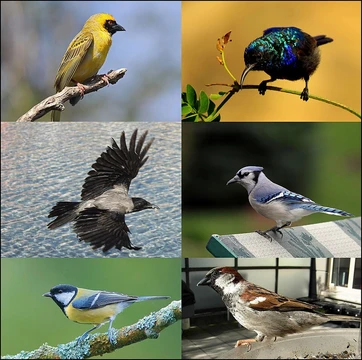
Nicator
African songbirds long debated in taxonomy, now a distinct family.

SpeakingArch · CC BY-SA 4.0
The genus *Nicator* and its sole family, Nicatoridae, consist of three songbird species found only in Africa. For a long time, their evolutionary relationships were unclear. They were first placed with the shrikes, then later linked to bulbuls or bushshrikes. More recent DNA analysis, however, supports treating them as a distinct family containing just this one genus.
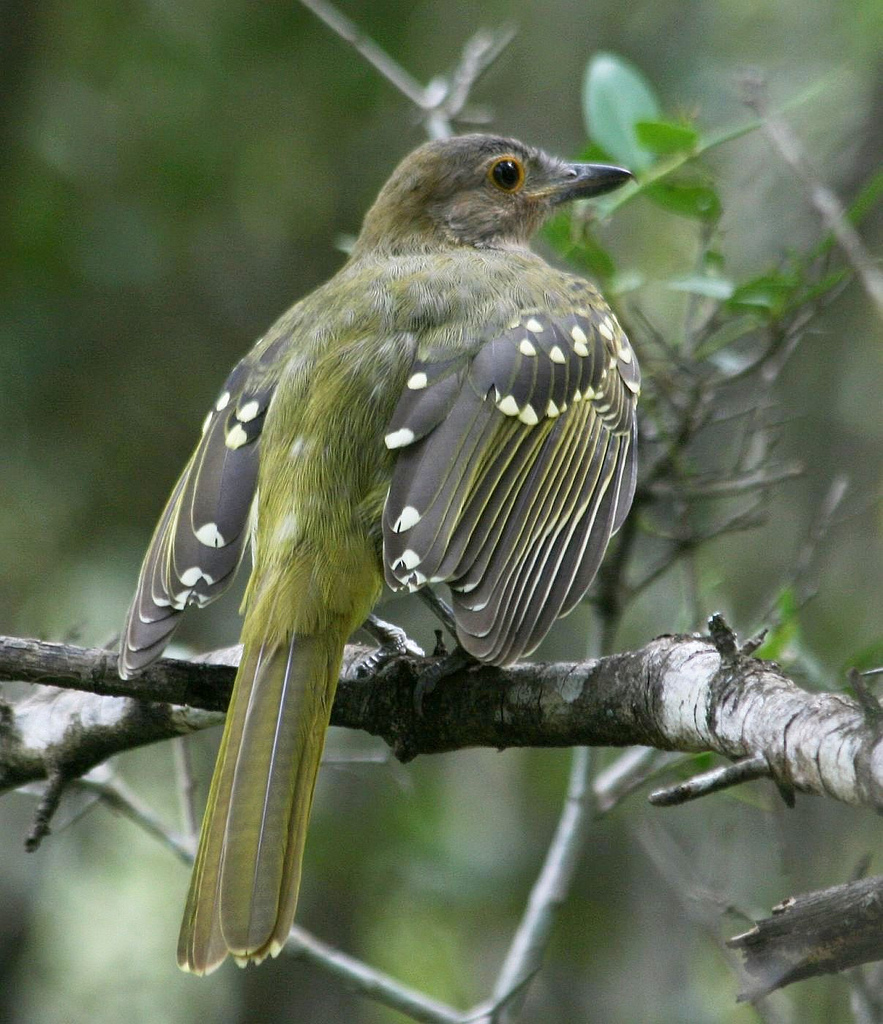
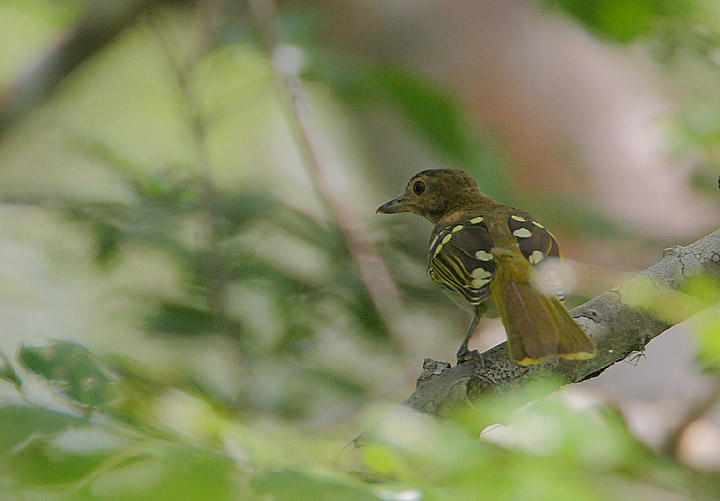
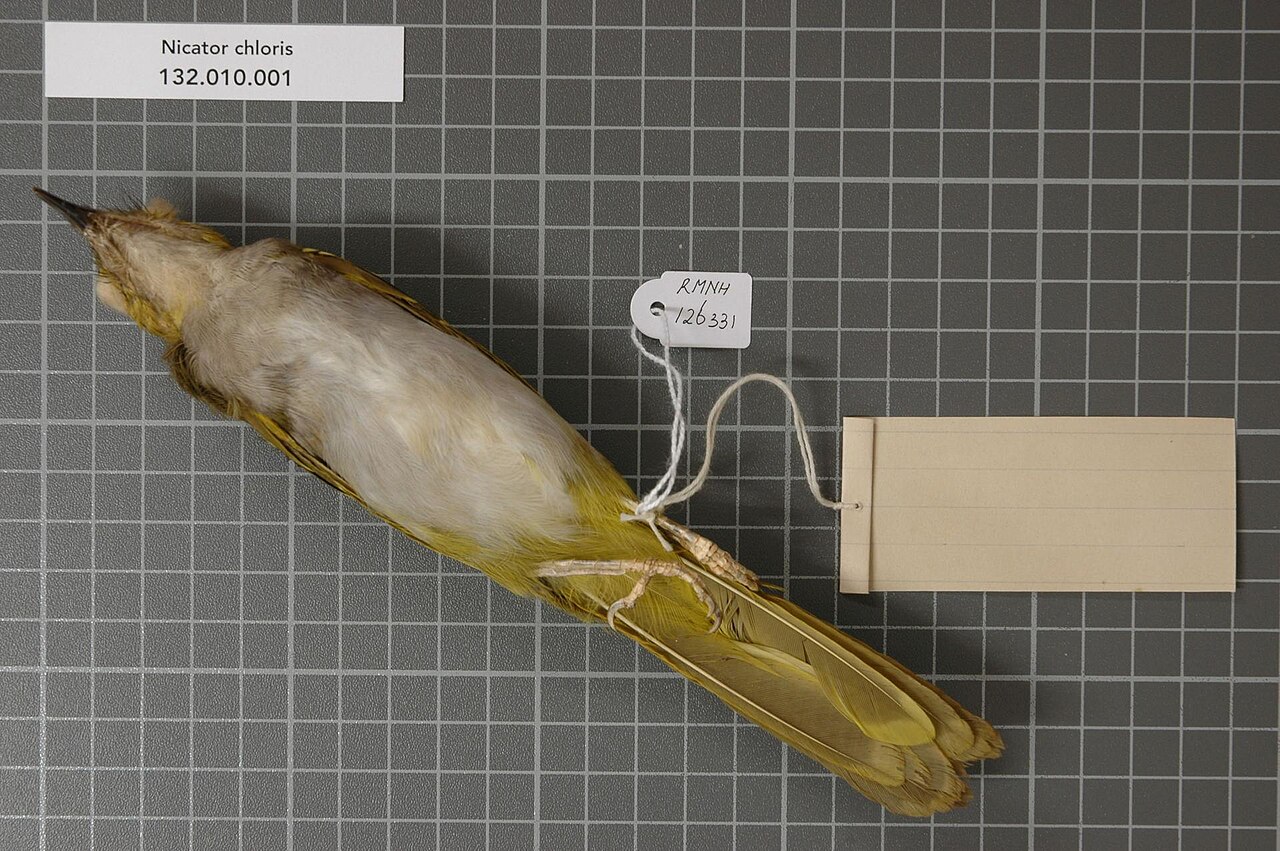
These birds measure 16 to 23 cm in length and resemble shrikes. The eastern and western species are similar in size and larger than the yellow-throated nicator. Males are notably heavier than females; for instance, western nicator males weigh 48 to 67 grams, while females range from 32 to 51 grams. The yellow-throated nicator is much lighter, at 21 to 26 grams. They have heavy, hooked bills. Their plumage is olive on the back, tail, and wings, with yellow wing spots, and lighter gray or whitish undersides.
The nicators live only in sub-Saharan Africa. The western nicator has a mostly continuous range from Senegal to western Uganda and northern Angola. The eastern nicator is found in scattered areas of East Africa, from Somalia south to eastern South Africa. The yellow-throated nicator occurs in central Africa, from Cameroon to Uganda. They inhabit a variety of forests and woodlands.
Quick Facts
- Taxon
- Nicator
- Type Species
- Lanius chloris
- Type Species Authority
- Valenciennes, 1826
Facts from the source article.
Lore & Background
The nicators were originally assigned to the shrikes (Laniidae). In the 1920s James Chapin noted similarities to both bulbuls (Pycnonotidae) and bushshrikes (Malaconotidae). It wasn't until 1943 that Jean Théodore Delacour placed the genus with the bulbuls. Storrs Olson later argued for closer relation to bushshrikes, citing the lack of ossification of the nostril found in all other bulbuls. A number of features—including the position of facial bristles (preorbital rather than rictal), their nests, and calls—make the genus unique. DNA studies have recently suggested the genus is best treated as a monogeneric family, and some authorities, like the Clements Checklist, treat the nicators as the new family Nicatoridae.
Reader's Guide
The nicators represent a taxonomic puzzle that illustrates how morphological and molecular evidence can converge to redefine avian relationships. For decades, their placement shifted among shrikes, bulbuls, and bushshrikes, reflecting the difficulty of classifying birds with mixed traits. The eventual recognition of Nicatoridae as a monogeneric family underscores the value of integrating multiple lines of evidence—anatomy, behavior, and genetics. The three species (western, eastern, and yellow-throated nicators) are endemic to Sub-Saharan Africa, occupying forest and woodland habitats. Their shrike-like appearance, heavy hooked bills, and olive plumage with yellow wing spots distinguish them. The western and eastern nicators form a superspecies and are sometimes considered conspecific. The genus name derives from Greek 'conqueror'. Their conservation status is not addressed in the source, but their restricted ranges and habitat dependence make them of interest to ornithologists studying African avifauna. The family's recent acceptance highlights how ongoing research can resolve long-standing taxonomic uncertainties.
Did You Know?
- The genus name Nicator is derived from Greek Nikátōr, meaning 'conqueror'.
- The nicators have preorbital facial bristles rather than rictal bristles, a unique feature among related groups.
- The western and eastern nicators are considered a superspecies and are sometimes treated as the same species.
- The yellow-throated nicator is much lighter (21–26 g) than the other two species.
The Taxonomic Puzzle
The systematic placement of Nicator has long been one of ornithology's most persistent riddles. For a considerable period, the genus was simply filed under the shrikes (Laniidae), a classification that subsequent evidence has thoroughly dismantled. In the 1920s, James Chapin first drew attention to structural and behavioral resemblances between nicators and both the bulbuls (Pycnonotidae) and the bushshrikes (Malaconotidae), cracking open what had been a closed question. Jean Théodore Delacour followed in 1943 by formally aligning the genus with the bulbuls, yet Storrs Olson later challenged that placement, noting that nicators conspicuously lack the ossification of the nostril found in every other bulbul. A suite of additional features—the preorbital rather than rictal position of facial bristles, the architecture of their nests, and the character of their calls—further isolate the group from either candidate family. Modern DNA studies have ultimately resolved much of the uncertainty, recommending that Nicator be elevated to a monogeneric family of its own. The Clements Checklist and other authorities now recognize Nicatoridae as a distinct family.
Form, Plumage, and Sexual Dimorphism
Nicators are compact, shrike-like songbirds measuring between 16 and 23 centimeters in total length. Their most immediately striking structural feature is a heavy, hooked bill that distinguishes them from many other small African passerines. Plumage across the genus follows a broadly consistent pattern: olive tones dominate the back, tail, and wings, punctuated by yellow spotting on the wing surfaces, while the underparts shift to pale grey or whitish tones. Sexual dimorphism is pronounced in body mass—western nicator males weigh between 48 and 67 grams, while females range from just 32 to 51 grams, a gap of nearly 20 grams. The yellow-throated nicator is markedly smaller and lighter overall, tipping the scales at only 21 to 26 grams. The eastern and western nicators are comparable in size and both exceed the yellow-throated form. This combination of a robust hooked bill, spotted olive upperparts, and significant male-female weight disparity gives the genus a distinctive and immediately recognizable silhouette in the African forest understory.
Range and Habitat Across Sub-Saharan Africa
All three nicator species are strictly endemic to Sub-Saharan Africa, with no populations found anywhere outside the continent. The western nicator enjoys a largely continuous range stretching from Senegal in the far west through to eastern Uganda and northern Angola in the east. The eastern nicator, by contrast, occupies a patchy, discontinuous distribution across East Africa, running from Somalia in the north down to eastern South Africa. The yellow-throated nicator is confined to a more restricted central African band, spanning from Cameroon to Uganda. Despite their different geographic footprints, all three species share a broad ecological tolerance, occupying a wide variety of forest and woodland habitats. This flexibility in habitat use—ranging from dense forest to more open woodland—likely contributes to the western nicator's ability to maintain a near-continuous range across multiple countries, while the eastern nicator's fragmented presence suggests more localized habitat preferences or historical range contraction.
Naming, Superspecies, and Family Status
The genus name Nicator derives from the Greek word Nikátōr (Νικάτωρ), meaning 'conqueror'—a fitting epithet for a group that has outlasted every taxonomic reassignment thrown at it over the decades. Within the three-species genus, the western and eastern nicators are regarded as forming a superspecies, and some authorities treat them as a single species rather than two distinct ones. This taxonomic ambiguity reflects the close morphological similarity between the two forms, which are comparable in size and share the same general plumage pattern. The yellow-throated nicator, being notably smaller and lighter, stands apart more clearly from both. The family name Nicatoridae follows the standard ornithological convention of appending the suffix -idae to the genus name. With only three species in total, Nicatoridae remains one of the smallest and most recently recognized avian families, a testament to how long the group's true evolutionary position eluded definitive classification.
Gallery

Frequently Asked Questions
Who is Nicator?
Nicator is a small genus of three songbird species that makes up the entire family Nicatoridae, found exclusively in Sub-Saharan Africa. They are compact birds ranging from 16 to 23 cm in length and 21 to 67 g in weight.
What is Nicator's role in bird taxonomy?
Nicator has long been a taxonomic puzzle, originally grouped with shrikes and later tentatively linked to bulbuls or bushshrikes. Recent DNA evidence now confirms it as a standalone family with no close relatives, making it a unique branch on the passerine tree.
How does Nicator compare in size to its relatives?
The eastern and western nicatops are the larger of the three species, while the yellow-throated nicator is noticeably smaller. Males across all three species are significantly heavier than their female counterparts.
What does Nicator look like?
These birds have a shrike-like silhouette, which is what originally confused early taxonomists into grouping them with that family. Their overall build is compact and songbird-typical, with no single species standing out dramatically in shape from the others.
Why is Nicator important to ornithology?
Nicator serves as a textbook case of how molecular phylogenetics can overturn decades of morphological assumptions. Its reclassification into its own family Nicatoridae illustrates that some lineages are genuinely isolated, with no close kin among other passerines.
More in Passeriformes 1-20
Spotted an error? Know more?
Reader corrections go straight into our review queue. Suggest an edit · How this site is sourced