Melanopareiidae
Family of South American birds with distinctive chest bands.

Cephas · CC BY-SA 4.0
Melanopareiidae is a family of suboscine passerine birds from South America, commonly known as crescentchests. The family was formally erected in 2009, after the genus Melanopareia was removed from the tapaculo family Rhinocryptidae due to taxonomic questions. The crescentchests are noted for their striking plumage, including a distinctive band across the chest that gives them their name.
Quick Facts
- Taxon
- Melanopareia
- Type Species
- Synallaxis maximiliani
- Type Species Authority
- d'Orbigny, 1835
Facts from the source article.
Lore & Background
The genus Melanopareia was introduced in 1853 by German naturalist Ludwig Reichenbach, who listed two species but did not specify a type. In 1855, English zoologist George Gray selected Synallaxis maximiliani (olive-crowned crescentchest) as the type species. The genus name combines Ancient Greek words for 'black' and 'cheek.' The family Melanopareiidae was formally erected in 2009, following a 2007 decision by the South American Classification Committee to place the genus in its own family, a move later accepted by the International Ornithological Congress Bird List and the Clements Checklist.
Reader's Guide
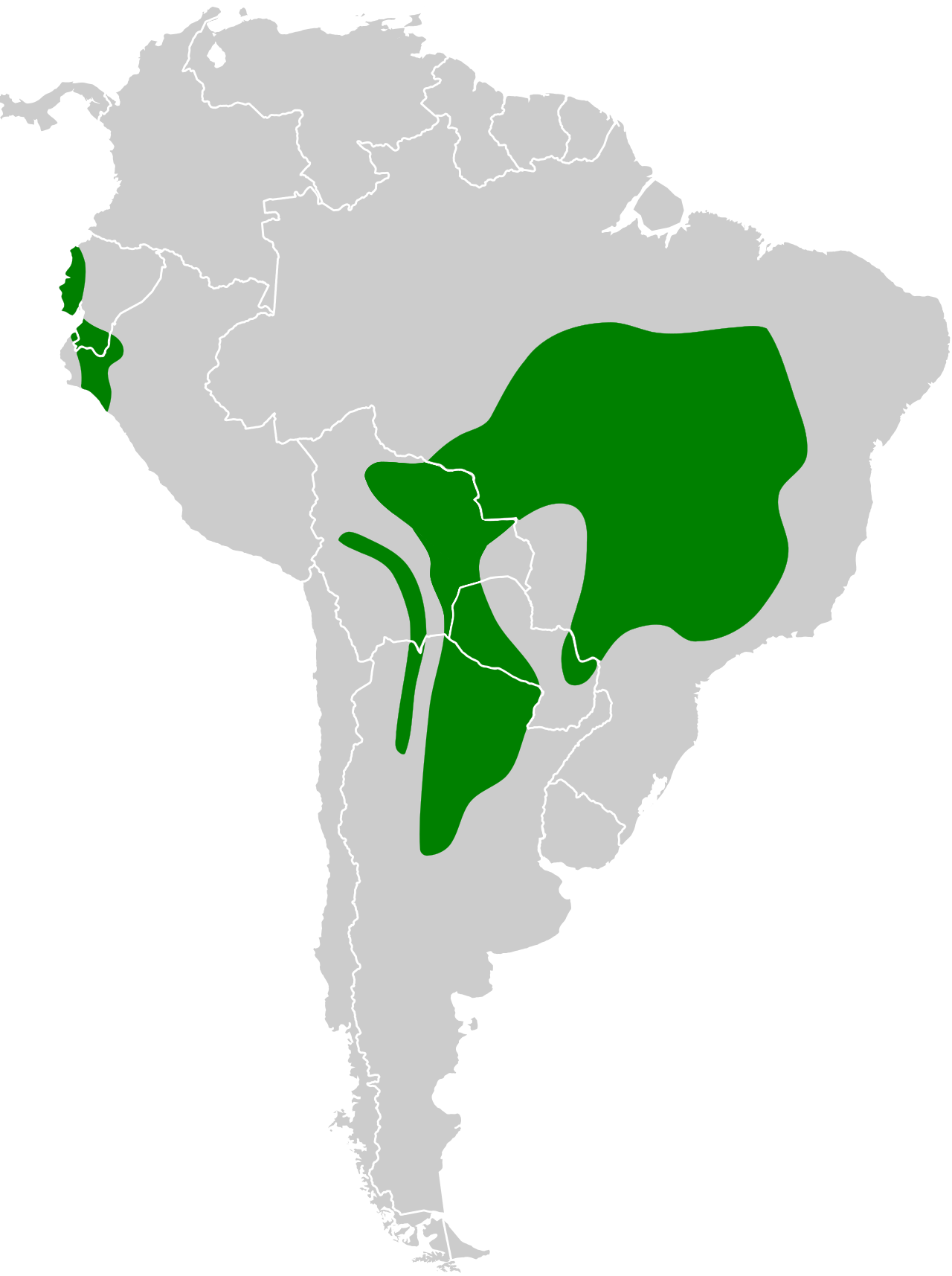
The crescentchests are significant in ornithology as a recently recognized family, Melanopareiidae, which resolved long-standing taxonomic uncertainty about their placement. Previously grouped with tapaculos in Rhinocryptidae, their distinctiveness was confirmed by the South American Classification Committee in 2007, leading to formal family status in 2009. This change reflects ongoing refinement of avian taxonomy based on morphological and genetic evidence. The family comprises four species, ranging in length from 14 to 16 cm and weight from 16 to 23 g, with relatively long tails. They inhabit arid scrub in South America, foraging on the ground, though their diet remains unrecorded. Two species—collared and olive-crowned crescentchests—are widely distributed across central and southern Brazil, Bolivia, Paraguay, and northern Argentina, while the elegant and Marañón crescentchests have restricted ranges in Peru and Ecuador. Little is known about their behavior; only the olive-crowned crescentchest has documented breeding habits, building a cup nest of vegetable fibers and palm fronds hidden in grasses or low shrubs, with a clutch of two to three white eggs blotched with black. No species is considered threatened by the IUCN, but the Marañón crescentchest is listed as near threatened due to its tiny global range and uncommon status.
Did You Know?
- The genus name Melanopareia combines Ancient Greek words for 'black' and 'cheek.'
- Breeding behavior has been documented for several species, including the elegant crescentchest (Melanopareia elegans) and the collared crescentchest (Melanopareia torquata).
Gallery
Frequently Asked Questions
What is Melanopareiidae?
Melanopareiidae is a small family of suboscine passerine birds native to South America, better known to birders by their common name, crescentchests. The family is instantly recognizable by the bold crescent-shaped band that wraps across each member's breast.
When was Melanopareiidae formally recognized as its own family?
The family was erected in 2009 after taxonomists pulled the genus Melanopareia out of the tapaculo family Rhinocryptidae. That reclassification finally gave the crescentchests their own independent family-level status.
How many species belong to Melanopareiidae?
There are exactly four recognized species in the family. Despite the small number, each one carries the signature chest band that unites the group.
What is the type species of Melanopareiidae?
The type species is the Olive-crowned crescentchest, originally described as Synallaxis maximiliani in 1853. It serves as the anchor species to which the family name is formally tied.
Why do fans and ornithologists care about the crescentchests?
Their vivid, patterned plumage makes them stand out among the often drab understory birds of South America. The 2009 split from the tapaculos also highlighted how much taxonomic work still remains in suboscine classification, keeping the group a hot topic in systematics circles.
More in Passeriformes 1-20
Spotted an error? Know more?
Reader corrections go straight into our review queue. Suggest an edit · How this site is sourced