Spotted elachura
A passerine bird that is the only member of its family.

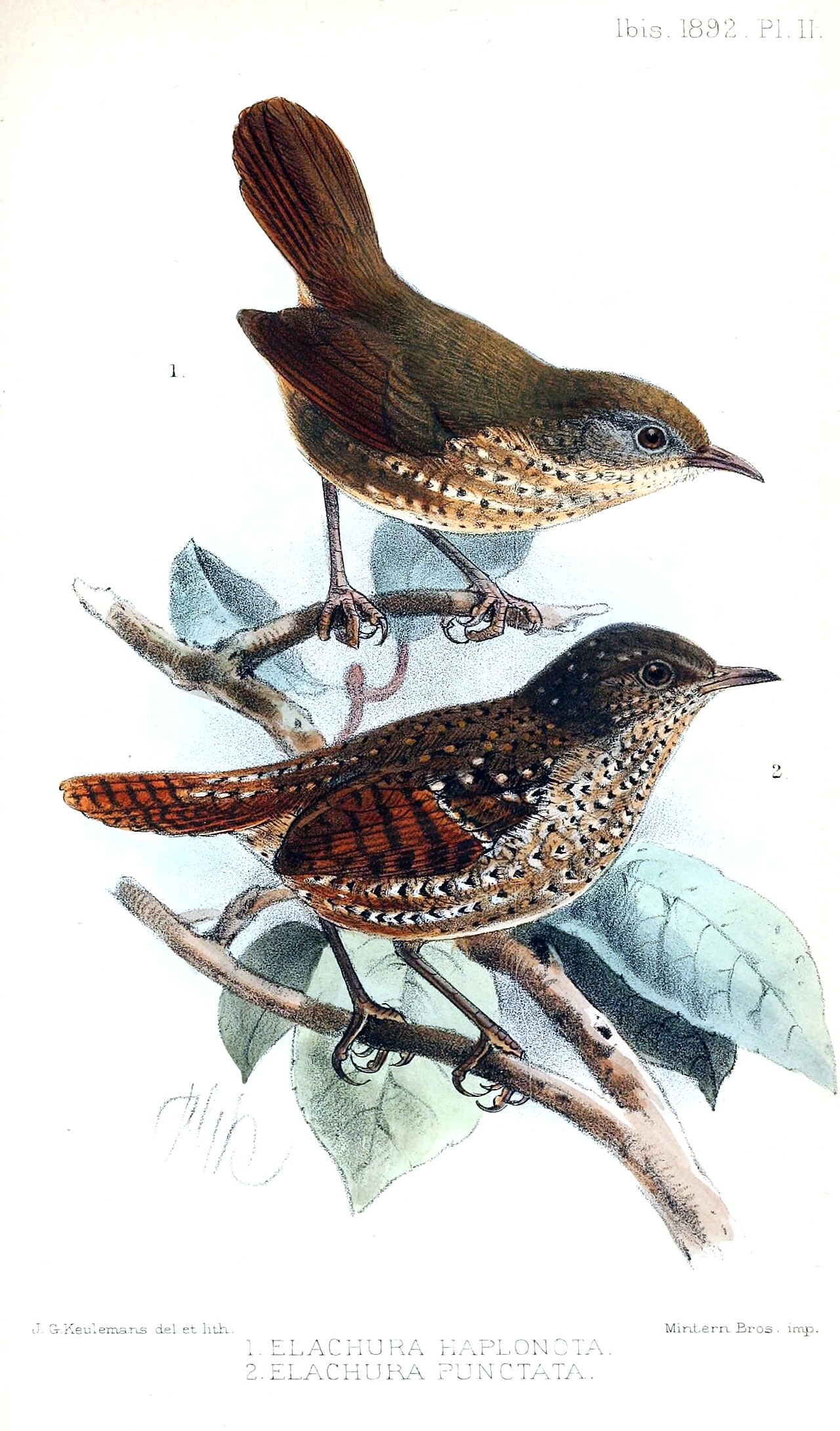
John Gerrard Keulemans · Public domain
The spotted elachura or spotted wren-babbler (Elachura formosa) is a species of passerine bird found in the forests of the eastern Himalayas and Southeast Asia. It was once classified in the babbler genus Spelaeornis, but molecular phylogenetic studies in 2014 revealed it to be distinct from babblers, with no close living relatives within the passerine clade Passerida. This led to the creation of a new monotypic family, Elachuridae, to accommodate this single species.
Quick Facts
- Grandparent Authority
- Alström et al., 2014
- Genus
- Elachura
- Species
- formosa
Facts from the source article.
Lore & Background
The species is found in Bangladesh, Bhutan, China, India, Laos, Myanmar, Nepal, and Vietnam. In the past it was included in the babbler genus Spelaeornis as S. formosus, but molecular phylogenetic studies in 2014 provided evidence that it was distinct from the babblers, having no other close living relatives within the passerine bird clade Passerida. This led to the creation of a new family, Elachuridae, to accommodate just one species (a monotypic taxon).
Reader's Guide
The spotted elachura holds significant evolutionary importance as the sole representative of the family Elachuridae, a lineage that diverged from other passerines long ago. Its reclassification in 2014 based on molecular phylogenetic studies resolved a long-standing taxonomic uncertainty, confirming that it is not a babbler but a distinct branch within the Passerida clade. This discovery underscores the value of genetic analysis in revealing hidden biodiversity and evolutionary relationships. The species' restricted montane forest habitat across the eastern Himalayas and Southeast Asia highlights its ecological specialization, relying on dense undergrowth, mossy rocks, and decaying wood near streams. As a monotypic taxon, it represents a unique evolutionary trajectory, making it a priority for conservation efforts in its range countries. Its small size and cryptic coloration aid in its survival within dense thickets, but habitat loss poses a potential threat. The spotted elachura serves as a reminder that even within well-studied groups like passerine birds, ancient lineages can remain unrecognized until modern techniques uncover their distinctiveness.
Did You Know?
- The spotted elachura is the only species in the family Elachuridae.
- Molecular phylogenetic studies in 2014 showed it has no close living relatives within the passerine clade Passerida.
The Solitary Family: A Taxonomic One-Off
For decades the spotted elachura was tucked away in the babbler genus Spelaeornis under the name S. formosus, assumed to be just another member of that familiar group. Then in 2014, molecular phylogenetic studies upended that assumption entirely. The genetic evidence showed the bird bore no close living relatives anywhere within the passerine clade Passerida, a finding that was almost unprecedented. Rather than force it into an existing family, taxonomists did something rare: they erected an entirely new family, Elachuridae, to house this single species. The result is a monotypic taxon — a family of one. The spotted elachura became, in the words of one popular science outlet, a "true loner," a bird whose evolutionary story stretches back so far that it outlived every other lineage that might once have been its kin. What was once a footnote in a babbler checklist became the sole representative of its own family, a living reminder that the tree of life still holds surprises even in well-studied groups.
A Study in Subtle Markings
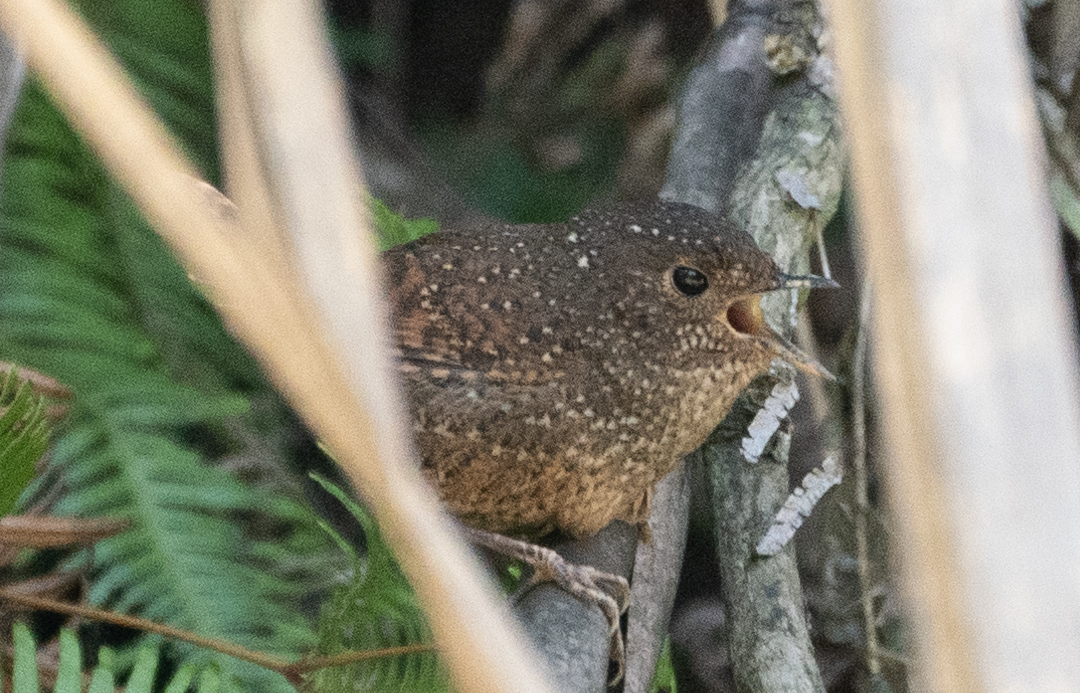
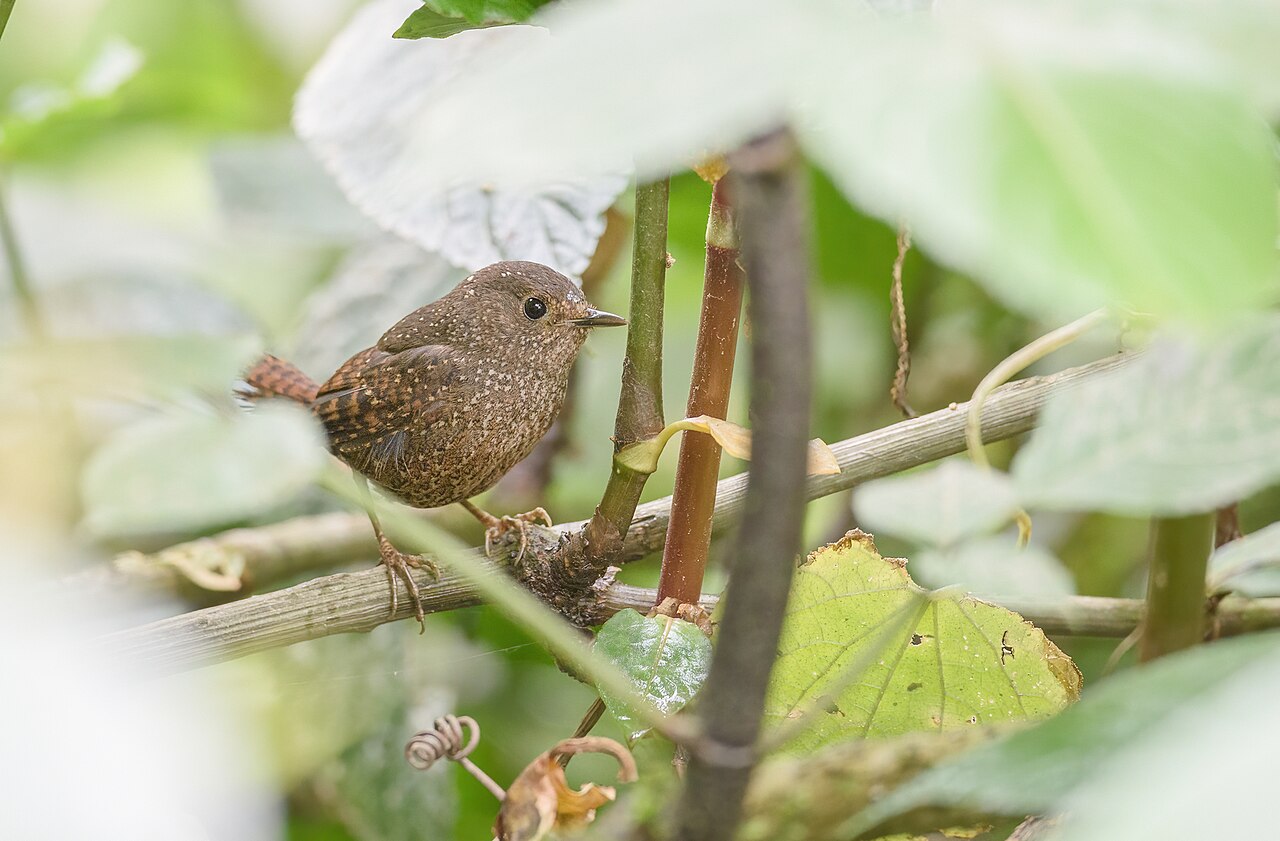
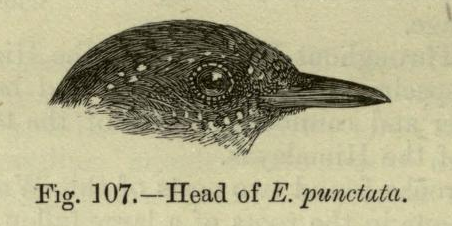
At just ten centimetres from beak to the tip of its notably short tail, the spotted elachura is a compact, unassuming bird. Its overall plumage is a deep, uniform dark brown that covers the head, breast, and back, giving it a shadowy, almost camouflaged appearance against the forest floor. The wings and tail break from that brown base with a warm rufous tone, adding a touch of coppery warmth to an otherwise muted palette. What gives the species its common name, however, is the pattern of fine white speckles scattered across the body. On the wings and tail, those speckles give way to a different pattern altogether: neat black barring that contrasts sharply against the rufous background. The interplay of dark brown, rufous, white dots, and black bars makes for a bird that is simultaneously plain and intricately patterned, perfectly suited to disappearing into the dappled light of its montane forest home.
Life in the Forest Understorey
The spotted elachura is a creature of the forest floor, a bird that lives deep within the undergrowth and dense thickets of subtropical and tropical moist montane forests. It shows a clear preference for the most cluttered, tangled microhabitats: thick carpets of ferns, moss-draped rocks, the decaying trunks of fallen trees, and tangles of brushwood. Streams and creeks seem to be a recurring feature of its preferred territory, suggesting a fondness for the slightly wetter, more humid pockets along watercourses. Long grass and low scrub also feature prominently in the kind of terrain where this bird is most at home. Rather than soaring through the canopy or foraging in open clearings, the elachura navigates the dim, tangled understory where its dark brown plumage and speckled markings blend seamlessly into the leaf litter and shadow. This deep commitment to the forest floor makes it a challenging bird to observe, easily overlooked by all but the most attentive of birdwatchers wading through ferns and mossy boulders.
A Wide but Hidden Range
Despite its status as a taxonomic oddity, the spotted elachura is not confined to a single remote valley. Its range stretches across eight countries, spanning the eastern Himalayas and the forests of Southeast Asia. Records place it in Bangladesh, Bhutan, China, India, Laos, Myanmar, Nepal, and Vietnam — a broad arc of montane forest that links the highlands of the Himalayan foothills to the tropical woodlands of mainland Southeast Asia. Yet "wide" is perhaps misleading. Within each of those countries, the bird is restricted to specific tracts of moist montane forest, and within those forests it retreats into the densest undergrowth. The result is a species that occupies a large geographic footprint on a map but remains vanishingly rare in any given location. A birder travelling from Nepal to Vietnam might cross hundreds of kilometres of suitable habitat and still never glimpse one, simply because the elachura keeps to the thickest ferns and the mossiest rocks, where no casual observer would think to look.
Gallery
Frequently Asked Questions
What is the Spotted elachura?
It is a tiny 10-centimeter passerine bird with a notably short tail, native to the forested regions of the eastern Himalayas and Southeast Asia. It is also widely known under the common name spotted wren-babbler.
Why is the Spotted elachura so unusual among songbirds?
It stands alone as the sole species in the family Elachuridae, making it a one-of-a-kind lineage in the passerine tree. Molecular work published in 2014 confirmed it does not nest neatly with babblers or any other group within the Passerida clade.
Where can you find a Spotted elachura in the wild?
This bird inhabits the humid montane forests of the eastern Himalayan range and parts of Southeast Asia. It favors subtropical to tropical moist woodland where the canopy stays dense and damp.
How did the Spotted elachura end up in its own family?
For years it was lumped inside the babbler genus Spelaeornis, but a 2014 phylogenetic analysis showed it shared no recent common ancestor with any other living passerine in Passerida. Ornithologists therefore erected the new monotypic family Elachuridae to give it a proper taxonomic home.
Why do bird enthusiasts care about the Spotted elachura?
It represents a rare example of a passerine lineage that has no close living relatives, making it a living relic of an otherwise unknown branch of songbird evolution. Its reclassification reshaped how researchers map the deep relationships within Passerida.
More in Passeriformes 1-20
Spotted an error? Know more?
Reader corrections go straight into our review queue. Suggest an edit · How this site is sourced