
Phaenicophilidae
A passerine bird family endemic to the West Indies.

Cephas · CC BY-SA 4.0
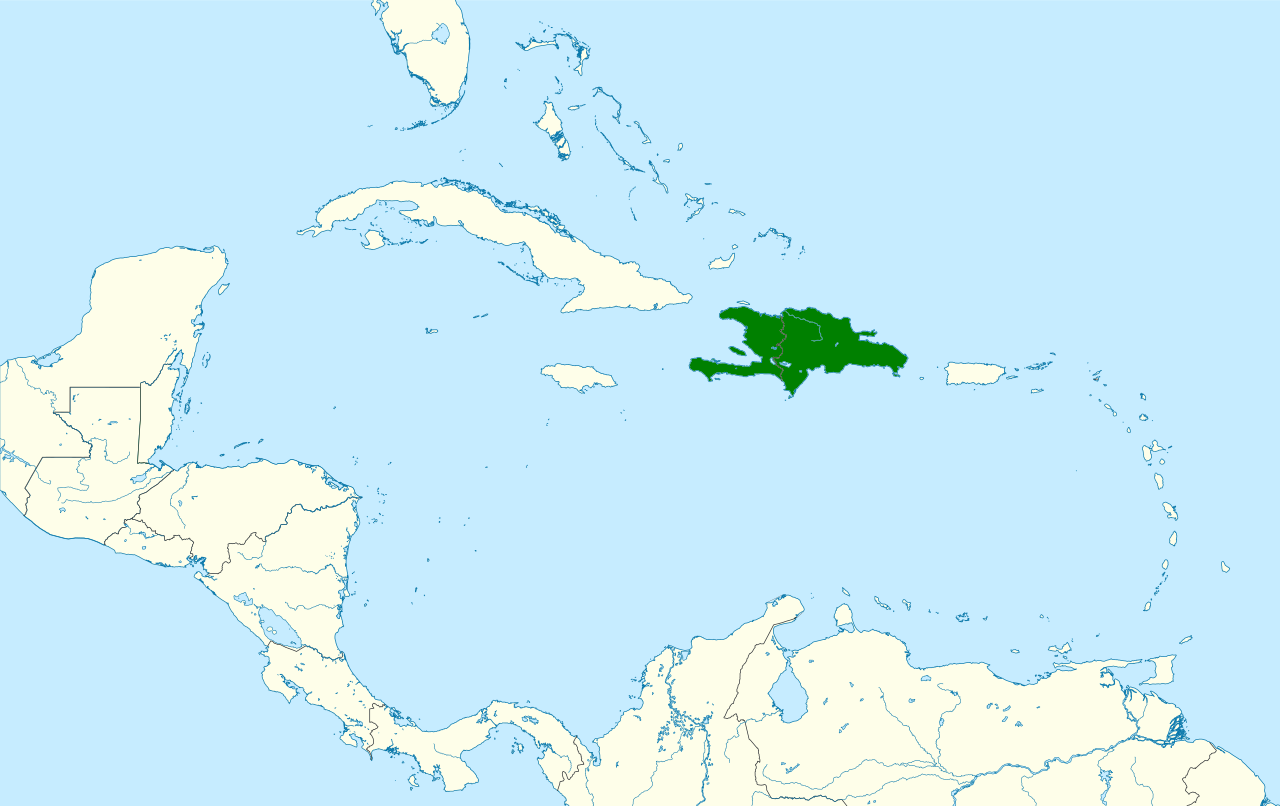
Phaenicophilidae is a family of passerine birds found almost exclusively in the West Indies, often referred to as the Greater Antillean Tanagers or Hispaniolan Tanagers. It includes ten species spread across five genera. These birds were once placed in the tanager family Thraupidae and the New World warbler family Parulidae, but genetic evidence later showed they form a distinct group.
The family was first created for the genus *Phaenicophilus* and was revived after molecular studies indicated that several species traditionally assigned to Thraupidae (including the two *Phaenicophilus* species) and some from Parulidae were more closely related to each other than to the rest of those families. This led to the inclusion of the genera *Microligea* and *Xenoligea*. More recently, the Caribbean tanager genera *Nesospingus* and *Spindalis*—previously considered distinct enough to warrant their own monotypic families, Nesospingidae and Spindalidae, based on analyses by Barker et al. (2013, 2015)—were added to Phaenicophilidae. Those two lineages are likely close relatives but appear to have diverged long ago. The expanded family, incorporating Nesospingidae and Spindalidae, was adopted by the International Ornithological Congress in 2022 and by the Clements Checklist in 2023. The closest relatives of Phaenicophilidae are the Icteridae (New World blackbirds) and Parulidae.
The family comprises five genera and ten species.
Quick Facts
- Taxon
- Phaenicophilidae
- Type Genus
- Phaenicophilus
Facts from the source article.
Lore & Background
The family Phaenicophilidae was originally established to classify the genus Phaenicophilus. It was reinstated when molecular genetic studies revealed that various species traditionally classified in Thraupidae (including the two Phaenicophilus species) and some from Parulidae were not as closely related to the members of those families as they were to each other. This led to the inclusion of the genera Microligea and Xenoligea into Phaenicophilidae.
Most recently, several other groups of Caribbean tanagers—specifically the genera Nesospingus and Spindalis—which had been tentatively associated with this group have been added to the family. Analyses by Barker et al. (2013, 2015) had suggested these latter two lineages were sufficiently divergent to warrant their own monotypic families: Nesospingidae and Spindalidae, respectively. These taxa are likely closely related to one another but appear to have diverged in the distant past.
The merging of the members of the Nesospingidae and Spindalidae families into an enlarged Phaenicophilidae family was adopted by the International Ornithological Congress (IOC) in 2022 and by the Clements Checklist in 2023. The closest relatives to this family are the Icteridae (New World blackbirds) and Parulidae (New World warblers).
Reader's Guide
Phaenicophilidae represent a significant reclassification in avian taxonomy, demonstrating how molecular genetics can reshape our understanding of evolutionary relationships. Historically, these birds were scattered across Thraupidae and Parulidae, but genetic studies revealed they form a distinct clade endemic to the West Indies. The family's composition has been debated, with analyses by Barker et al. (2013, 2015) suggesting that Nesospingus and Spindalis were divergent enough to warrant separate families, yet the Clements Checklist and IOC in 2025 merged them into an enlarged Phaenicophilidae. This highlights ongoing uncertainty in taxonomy, where different authorities may adopt different classifications. The family's closest relatives are Icteridae and Parulidae, placing them within the broader radiation of New World passerines. For ornithologists, Phaenicophilidae serve as a case study in how genetic data can resolve long-standing classification puzzles, while also illustrating the provisional nature of taxonomic boundaries. Their restricted distribution to the West Indies underscores the region's importance as a center of avian endemism.
Did You Know?
- Phaenicophilidae are mostly endemic to the West Indies.
- The family contains ten species in five genera.
- The merging of Nesospingidae and Spindalidae into Phaenicophilidae was adopted by the IOC in 2022 and by the Clements Checklist in 2023.
- The closest relatives to this family are Icteridae and Parulidae.
A Family Reborn Through Genetics
The story of Phaenicophilidae is fundamentally one of rediscovery. For generations, ornithologists filed these small Caribbean songbirds under the broad umbrellas of Thraupidae and Parulidae, treating them as tanagers and warblers respectively. Yet the birds told a different story through their DNA. Molecular genetic analyses revealed that species once scattered across those two families shared a more intimate relationship with one another than with their supposed family members. This finding prompted the reinstatement of Phaenicophilidae as a recognized family, originally anchored to the genus Phaenicophilus. As further genetic work unfolded, the genera Microligea and Xenoligea were folded in, followed eventually by Nesospingus and Spindalis. What had been a patchwork of misplaced species across multiple families was reassembled into a single, coherent clade—proof that the Caribbean had been quietly harboring its own distinct lineage of passerines all along.
Nine Species, Five Genera, One Island World
Phaenicophilidae is a compact family: just nine species distributed across five genera, yet their geographic story is striking. These passerine birds are predominantly endemic to the West Indies, meaning they evolved in and are largely confined to the island chains of the Caribbean. Because of this restricted range, the family carries two common names that highlight different facets of its identity. Greater Antillean Tanagers emphasizes the broader Caribbean region and the tanager-like appearance that once led to their misclassification. Hispaniolan Tanagers narrows the focus to the island of Hispaniola, where several of the family's members are found. Despite their small numbers, these birds represent a unique evolutionary experiment—passerines that radiated across a set of islands, developing distinct lineages isolated from mainland relatives. Their passerine status places them among the perching birds, a group that dominates tropical and subtropical ecosystems worldwide, yet here in the West Indies they carved out their own family-level identity.
The Debate Over Nesospingus and Spindalis
Not every taxonomic decision about Phaenicophilidae has been settled without controversy. The genera Nesospingus and Spindalis, both representing Caribbean tanager lineages, were tentatively linked to the core Phaenicophilidae group for some time. However, analyses published by Barker and colleagues in 2013 and again in 2015 raised a significant caveat: these two lineages appeared so genetically divergent from the rest of the family that they might each merit recognition as their own monotypic families, Nesospingidae and Spindalidae. The researchers suggested the two groups were likely close relatives to each other, but their split from the broader tanager assemblage had occurred so far back in evolutionary time that drawing them into a single family felt taxonomically forced. This created a period of uncertainty, with different checklists and authorities handling the grouping differently. The question of whether deep divergence justifies family-level separation or whether shared ancestry is sufficient to keep them together became one of the more nuanced debates in Caribbean ornithology.
2025 and the Enlarged Family
In 2025, a significant taxonomic shift brought the long-running debate to a practical close. Both the Clements Checklist and the International Ornithological Congress adopted the enlarged version of Phaenicophilidae, formally merging the previously separated Nesospingidae and Spindalidae back into the family. This decision effectively endorsed the view that, despite their ancient divergence, all nine species across five genera belong under one family banner. The move also clarified the family's position within the broader passerine tree of life. Genetic evidence places the closest living relatives of Phaenicophilidae in two other families: Icteridae, the New World blackbirds, and Parulidae, the New World warblers. This triad of relationships—blackbirds, warblers, and the Caribbean tanagers—paints a picture of a shared ancestral lineage that split into distinct evolutionary paths, with the Phaenicophilidae line finding its niche in the island ecosystems of the West Indies while its relatives radiated across the Americas.
Gallery
Frequently Asked Questions
What is Phaenicophilidae?
Phaenicophilidae is a family of passerine birds commonly called the Greater Antillean or Hispaniolan Tanagers. It is a small, island-restricted group of ten species spread across five genera.
Where do Phaenicophilidae birds live?
This family is essentially endemic to the West Indies, with its members found on islands in the Greater Antilles region and nowhere else in the wild.
Why were Phaenicophilidae pulled out of the tanager and warbler families?
For years these birds were lumped into Thraupidae or Parulidae, but molecular phylogenetic work showed they form a separate, well-supported clade. That genetic evidence prompted taxonomists to recognize them as their own family.
How many species and genera make up the family?
Phaenicophilidae contains ten species distributed among five genera, making it a relatively compact passerine family.
How did the family name Phaenicophilidae come about?
The name was coined to honor the genus Phaenicophilus, for which the family was originally erected. It was later revived once molecular studies confirmed that the two Phaenicophilus species and their relatives warranted a distinct family-level rank.
More in Passeriformes 1-20
Spotted an error? Know more?
Reader corrections go straight into our review queue. Suggest an edit · How this site is sourced