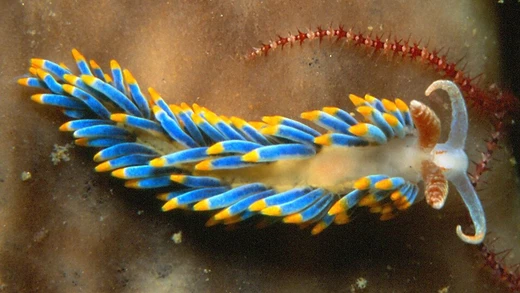
Janolus
A genus of nudibranchs named after the two-headed god Janus.

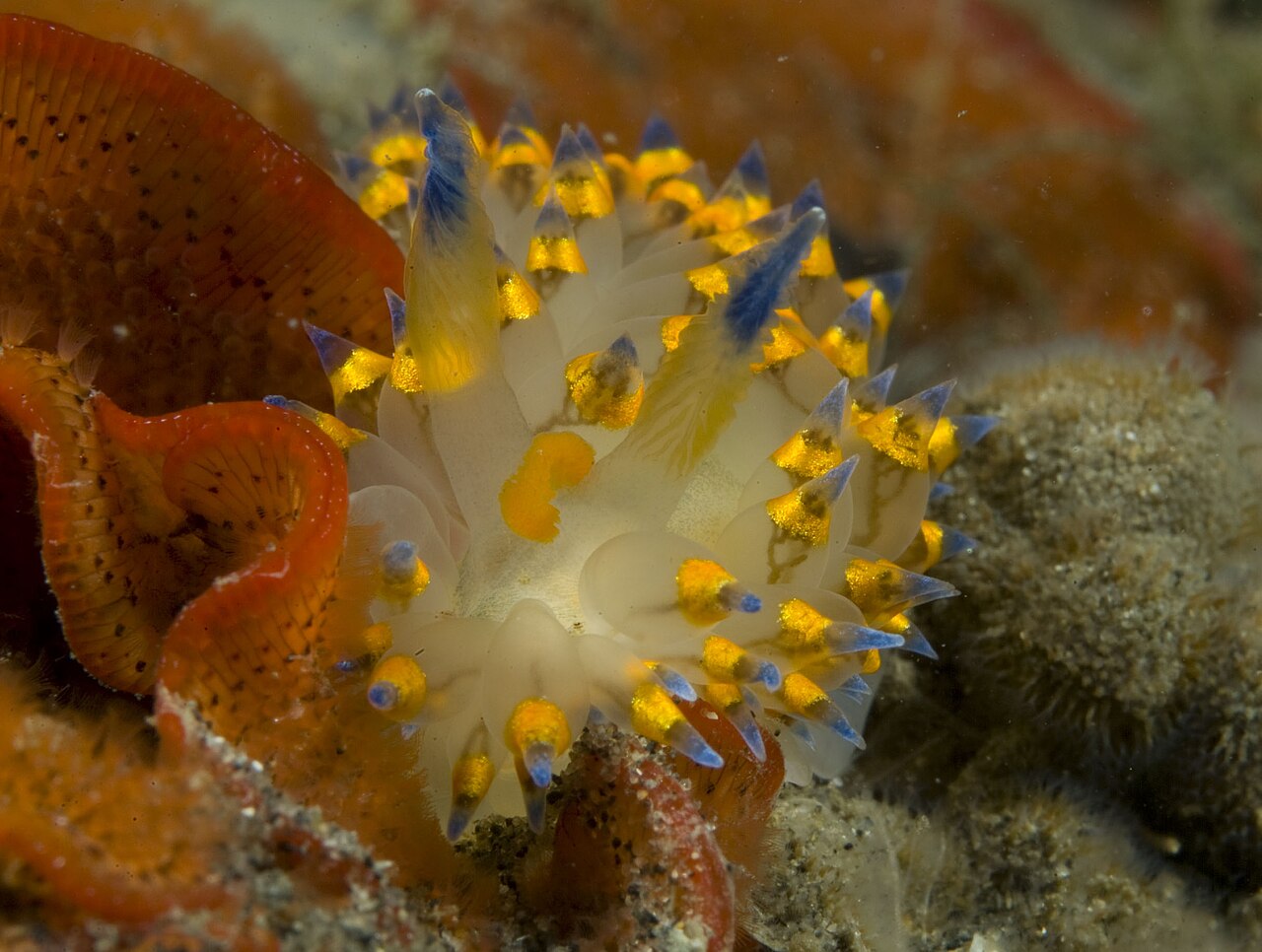
Wilhelm · CC BY-SA 2.0
Janolus is a genus of marine gastropod mollusks, specifically nudibranchs, that range from small to large in size. They belong to the family Janolidae. Their name comes from Janus, the two-headed god of ancient Roman mythology.
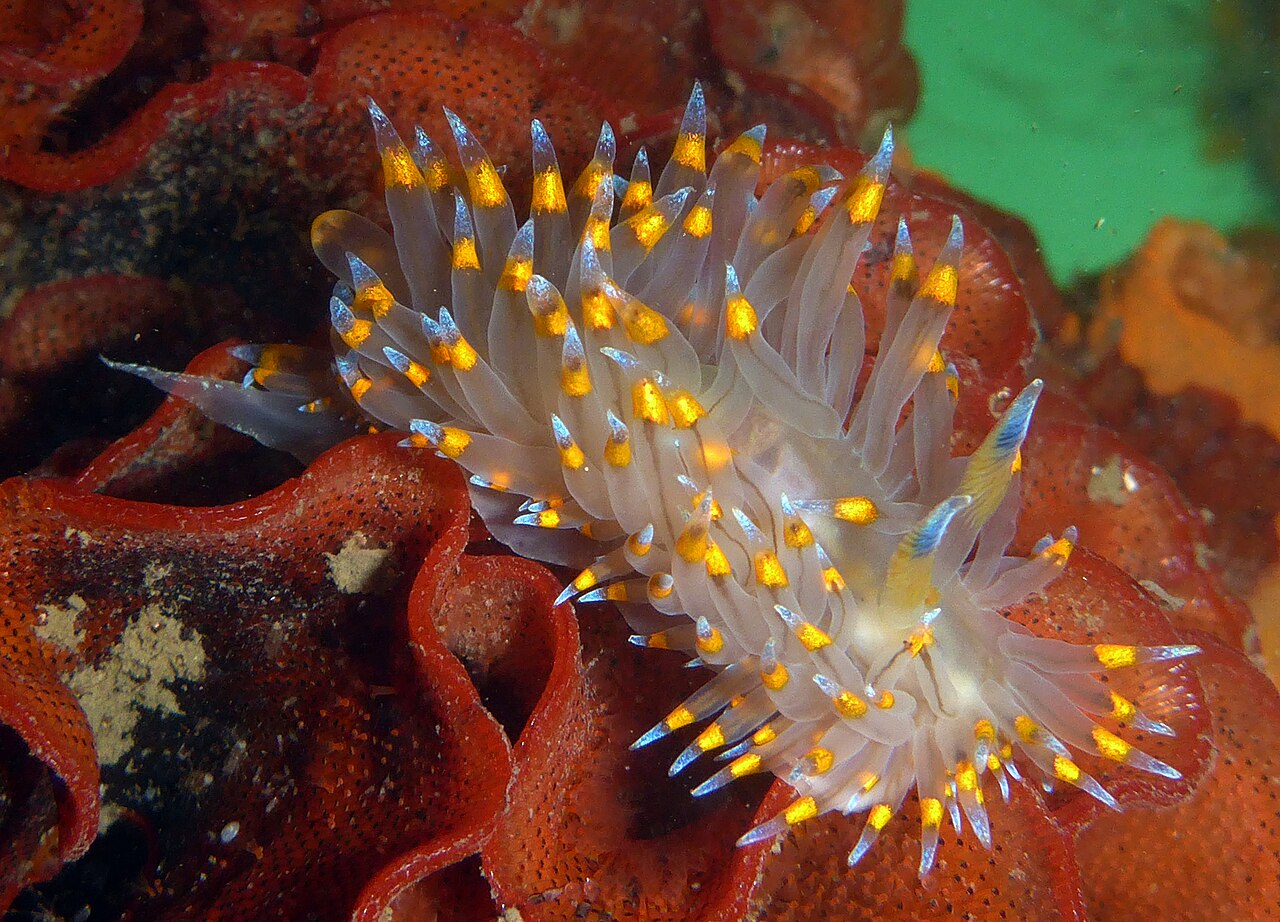
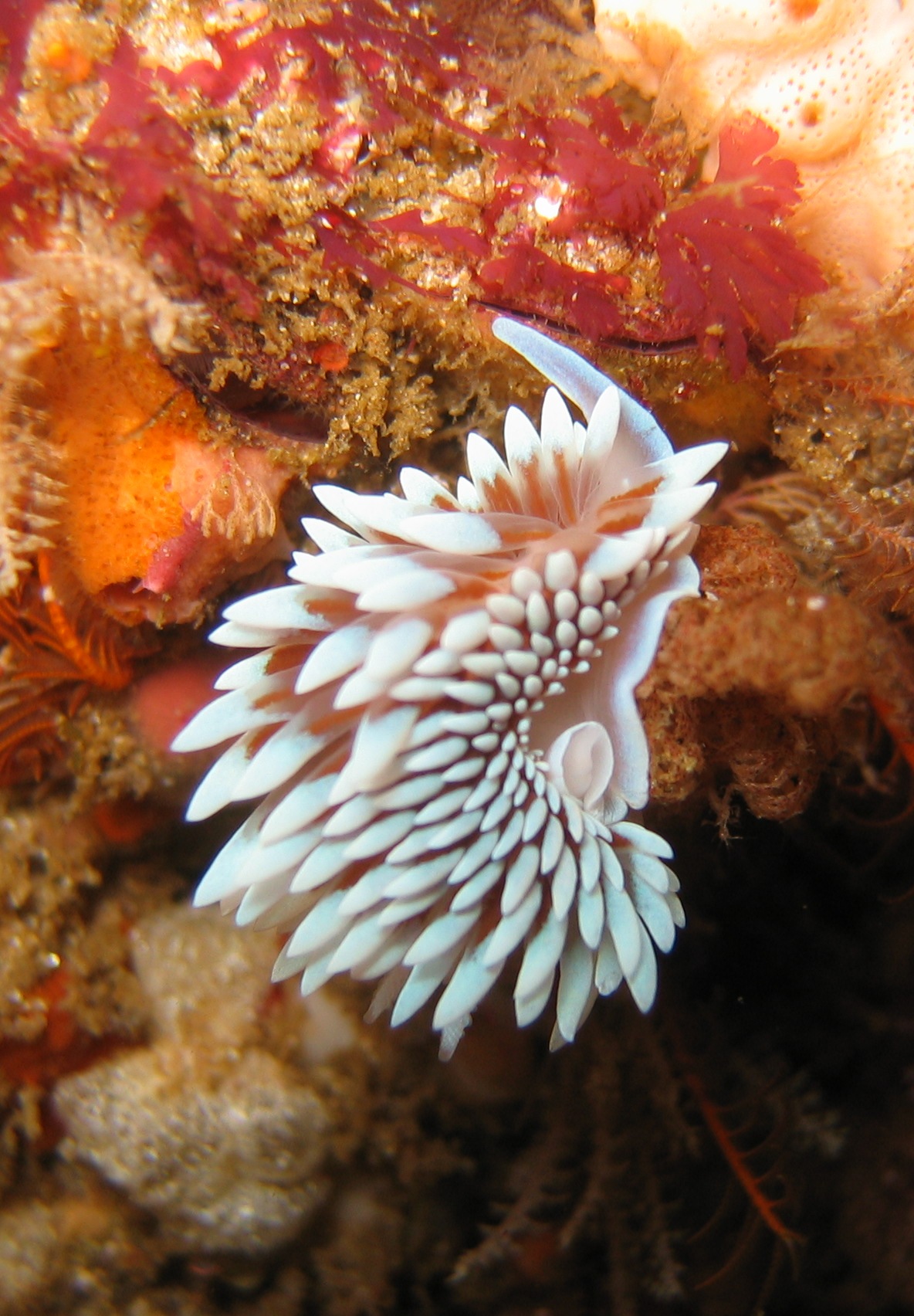
Depending on the species, adult Janolus can measure anywhere from 2.5 cm to 8 cm in length. Their bodies are semi-translucent and covered with short cerata.
These sea slugs are found worldwide, including in waters off Europe, Australia, Japan, and Africa. They live in shallow and subtidal zones. Their diet consists of Bryozoa, also known as moss animals.
In California, Janolus is preyed upon by the sea slug Navanax. Navanax uses chemoreceptors to track the slime trail left by Janolus. When Janolus senses it is about to be caught, it rolls into a ball, leaving its cerata exposed.
Species in the genus include Janolus anulatus, Janolus australis, Janolus chilensis, Janolus comis, Janolus eximius, Janolus faustoi, Janolus flavoanulatus, Janolus hyalinus, Janolus ignis, Janolus incrustans, Janolus kinoi, Janolus mirabilis, Janolus mokohinau, Janolus mucloc, Janolus rebeccae, Janolus savinkini, Janolus toyamensis, and Janolus tricellariodes.
Several former species are now considered synonyms. These include Janolus barbarensis (now Antiopella barbarensis), Janolus capensis (now Antiopella capensis), Janolus costacubensis (now Janolus comis), Janolus cristatus (now Antiopella cristata), Janolus flagellatus (now Janolus hyalinus), Janolus fuscus (now Antiopella fusca), Janolus longidentatus (now Antiopella longidentata), Janolus nakaza (now Bonisa nakaza), Janolus novozealandicus (now Antiopella novozealandica), and Janolus praeclarus (now Antiopella praeclara).
- Size range
- 2.5 cm to 8 cm
- Body characteristics
- semi-translucent, covered in short cerata
- Habitat
- shallow and subtidal waters
- Distribution
- Europe, Australia, Japan, Africa
- Feeding
- Bryozoa (moss animals)
- Known predator
- Navanax (in California)
Lore & Background
Adult individuals of Janolus species can be between 2.5 cm to 8 cm long, depending on the species. They are semi-translucent and the body is covered in short cerata. Janolus species are found in many areas world-wide, including Europe, Australia, Japan and Africa. This genus of nudibranch is found in shallow and subtidal waters. Janolus species feed on Bryozoa, moss animals. In California, Navanax is a known predator of Janolus. Navanax tracks the slime of Janolus by using chemoreceptors. When Janolus is about to be caught, it rolls into a ball, leaving its cerata exposed.
Reader's Guide
The genus Janolus comprises small to large sea slugs in the family Janolidae, notable for their semi-translucent bodies covered in short cerata. Their name references the two-headed Roman god Janus, reflecting perhaps their dual or varied appearance. Species range from 2.5 cm to 8 cm in length and inhabit shallow and subtidal waters across Europe, Australia, Japan, and Africa. They feed exclusively on Bryozoa, or moss animals. A specific predator, Navanax, is documented in California, which tracks Janolus by chemoreception of its slime; when threatened, Janolus rolls into a ball, exposing its cerata. The genus includes numerous species such as Janolus anulatus, Janolus australis, and Janolus hyalinus, among others. Several former Janolus species have been moved to other genera, including Antiopella and Bonisa, reflecting taxonomic revisions. The genus is significant for its defensive behavior and ecological role as a bryozoan predator.
Did You Know?
- The name Janolus comes from the two-headed Roman god Janus.
- They feed on Bryozoa, also known as moss animals.
- When threatened by the predator Navanax, Janolus rolls into a ball, leaving its cerata exposed.
Taxonomy & the Mythological Name
Janolus belongs to the family Janolidae within the broader group of nudibranchs, those soft-bodied marine gastropod mollusks popularly known as sea slugs. The genus name carries a striking mythological echo: it is drawn from Janus, the two-faced deity of ancient Rome who presided over beginnings, transitions, and doorways. This evocative naming choice has endured, and the family Janolidae carries the same root, tying an entire lineage to that image of duality and threshold. Taxonomically, Janolus sits firmly among the opisthobranch mollusks, though modern classification places it specifically in the nudibranch branch. The genus encompasses a range of body sizes from small to large, distinguishing it from some of its close relatives. Its placement in Janolidae reflects shared morphological and ecological traits that set it apart from other nudibranch families, even as it remains part of the vast and diverse world of marine gastropods.
Form & Global Range
Adult Janolus nudibranchs measure anywhere from 2.5 to 8 centimeters in length, with the exact size varying across the many species that make up the genus. Their bodies are notably semi-translucent, giving them a glassy, almost ethereal appearance against the reef or rocky substrate they inhabit. The entire dorsal surface is studded with short cerata, the finger-like projections characteristic of nudibranchs that serve in respiration and defense. Despite their delicate look, Janolus species have established a remarkably broad geographic footprint. They have been recorded in European coastal waters, along the shores of Australia, in the seas around Japan, and off the coasts of Africa. Their preferred habitat spans both shallow intertidal zones and the slightly deeper subtidal environment, suggesting a tolerance for a range of light, temperature, and wave-exposure conditions. This wide distribution across multiple continents underscores the genus's ecological versatility.
Feeding, Predation & Defense
In the food web, Janolus occupies a specific niche as a specialist grazer on Bryozoa, the colonial invertebrates often called moss animals. These tiny, encrusting organisms form the primary dietary staple for members of the genus. On the other side of the ecological ledger, Janolus faces predation pressure from other marine invertebrates. In California waters, the sea slug Navanax has been documented as a known predator of Janolus. Navanax locates its prey by following the trail of slime left behind by Janolus, relying on sensitive chemoreceptors to detect and track that chemical signature. When the threat becomes imminent and Janolus is on the verge of being captured, it employs a distinctive defensive response: it curls its body into a tight ball. In this coiled posture, the short cerata that normally line its back become prominently exposed, presenting a spiky, unappetizing silhouette to the approaching predator. This behavioral adaptation, combined with the chemical defenses likely housed within those cerata, offers Janolus a meaningful survival advantage in the face of a persistent hunter.
Species Diversity & Taxonomic Revisions
The genus Janolus is home to a rich assemblage of species, with valid names spanning descriptions from 1854 all the way to 2019. Early entries include Janolus hyalinus, described by Alder and Hancock in the mid-nineteenth century, while more recent additions such as Janolus flavoanulatus, Janolus incrustans, and Janolus tricellariodes were all formally named by Pola and Gosliner in 2019. Other notable species carry names that reflect their discoverers or type localities, such as Janolus mokohinau and Janolus toyamensis. Beyond the currently recognized species, the taxonomic history of Janolus is marked by significant revisions. Several names once placed in this genus have since been reclassified as synonyms of other genera, most frequently Antiopella; species like Janolus barbarensis, Janolus capensis, Janolus cristatus, and Janolus fuscus now belong to that group. Others, such as Janolus nakaza, were transferred to Bonisa. These ongoing synonymy decisions illustrate how the boundaries of Janolus have been refined over more than a century of malacological research.
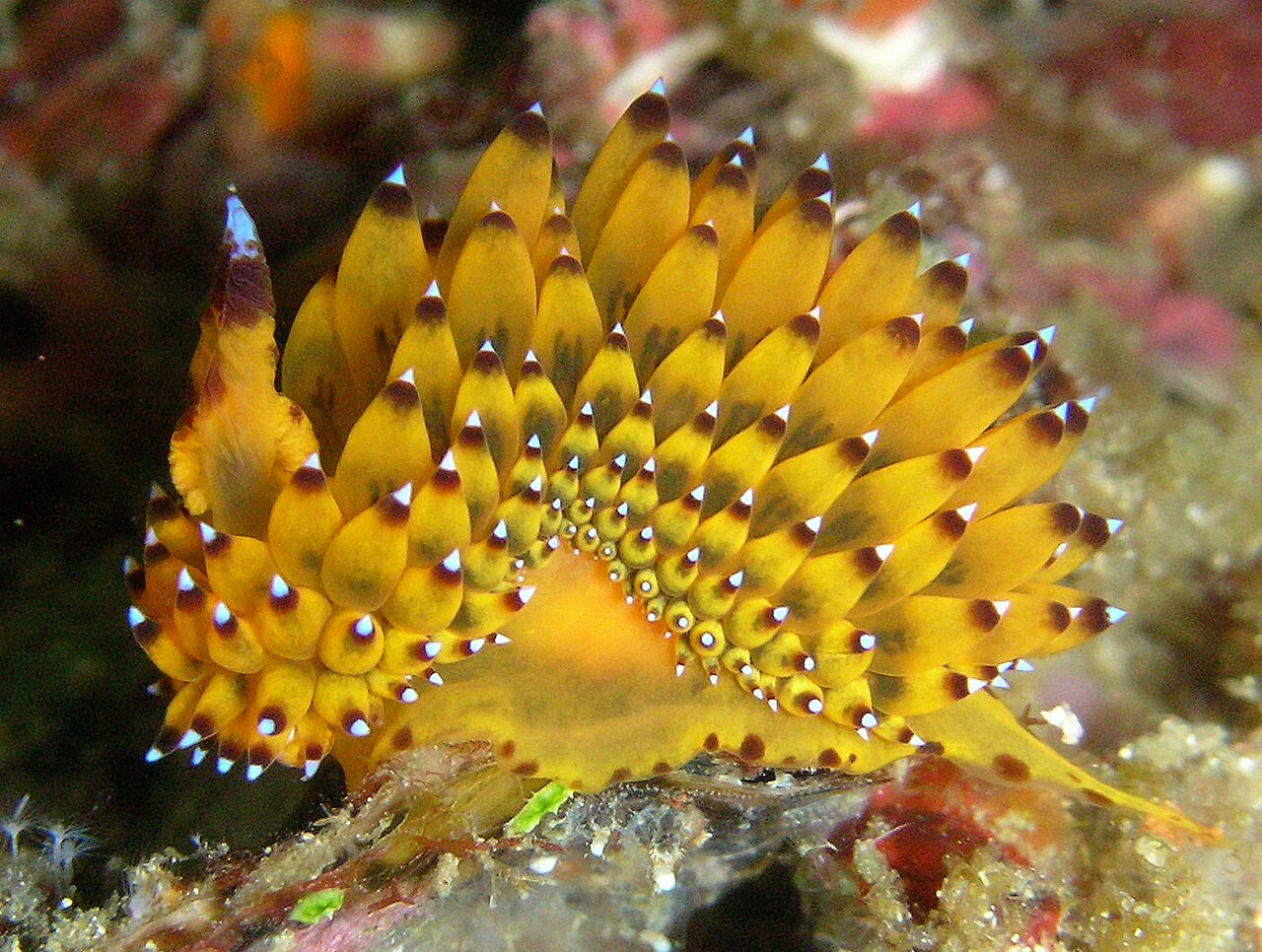
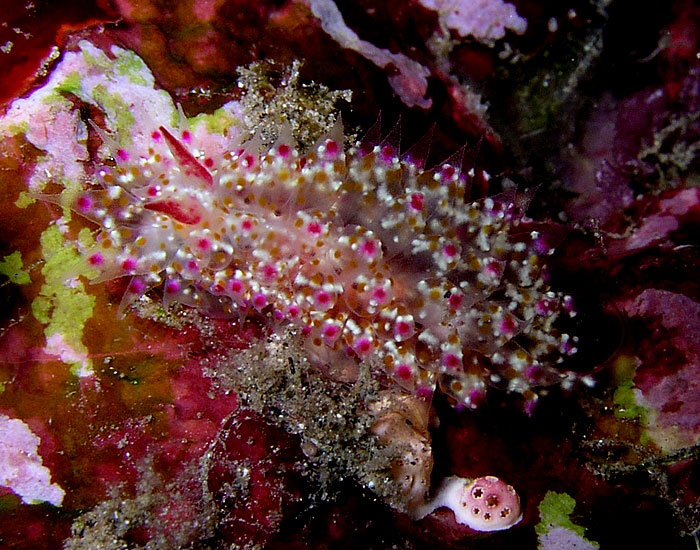
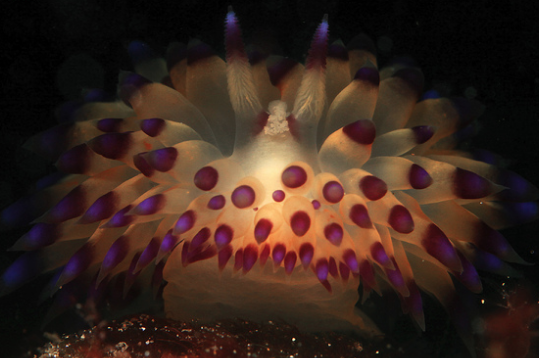
Gallery
Frequently Asked Questions
What exactly is Janolus?
Janolus is a genus of nudibranchs in the family Janolidae, easily recognized by their semi-translucent bodies and the short cerata that cover them. They span a notable size range within the nudibranch world, from quite small to fairly large adults.
How big do Janolus nudibranchs get?
Depending on the species, adults measure anywhere from about 2.5 cm up to 8 cm in length. That nearly threefold spread makes size one of the more variable traits you'll see across the genus.
What do Janolus eat in the wild?
Their menu is essentially limited to Bryozoa, the colonial invertebrates often nicknamed moss animals. They graze on these organisms while foraging in shallow and subtidal habitats.
Where can I spot a Janolus?
They have a broadly global range, with confirmed populations in waters around Europe, Australia, Japan, and Africa. You'll typically find them in shallow reef or rocky-substrate areas as well as in subtidal zones just below the low-tide line.
Why is the genus named Janolus?
The name is a direct reference to Janus, the two-headed Roman god associated with doorways and transitions. It's a fun mythological nod that nudibranch fans love to point out when identifying these particular sea slugs.
More in Nudibranchs and Sea Slugs 1-24
Spotted an error? Know more?
Reader corrections go straight into our review queue. Suggest an edit · How this site is sourced