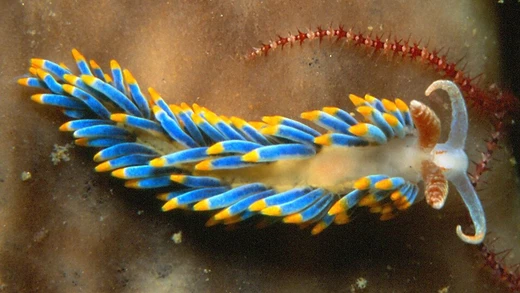
Janolus flavoanulatus
A sea slug with yellow-ringed cerata, described from the Philippines.

Pauline Walsh Jacobson · CC BY 4.0
Janolus flavoanulatus is a species of sea slug, a soft-bodied mollusk known for its extraordinary colors and prominent forms. The specific name is derived from Latin words flavus (“yellow”) and anulatus (“ringed”), referring to the yellow ring around its cerata. The first description of this species was reported by researcher Terry Gosliner, a leading researcher in the evolutionary history of nudibranchs, based on his research in the Philippines.
Quick Facts
- Taxon
- Janolus flavoanulatus
Facts from the source article.
Lore & Background
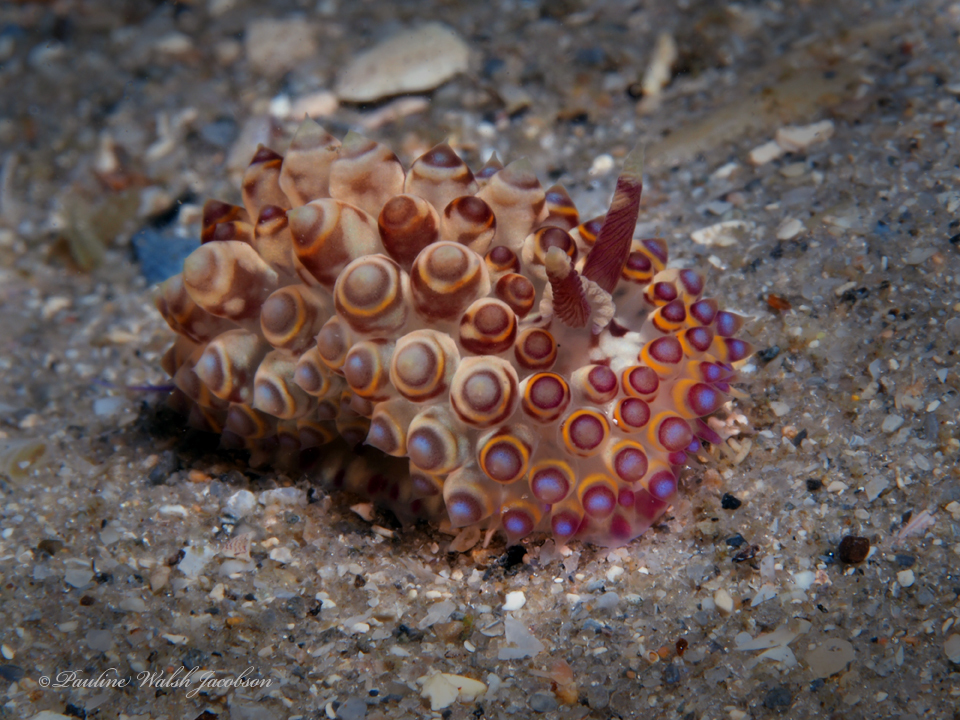
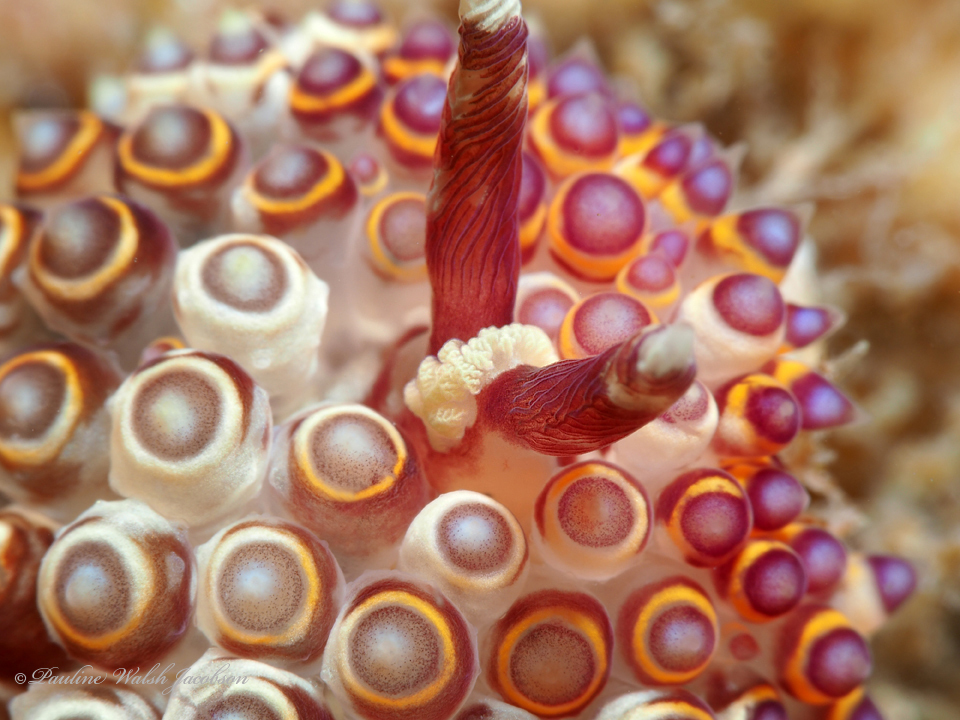
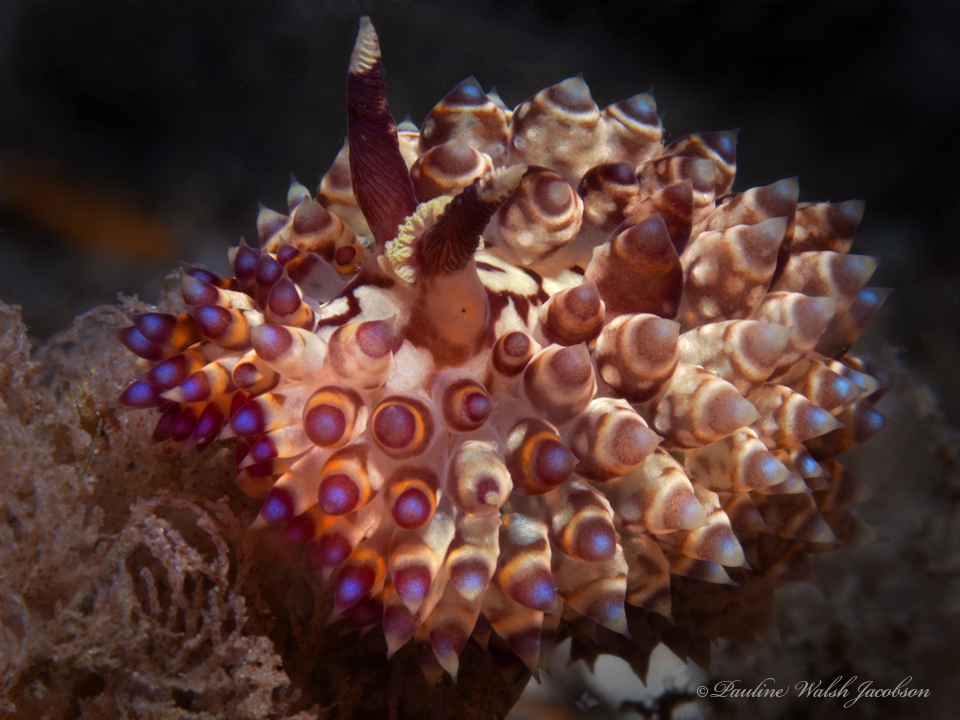
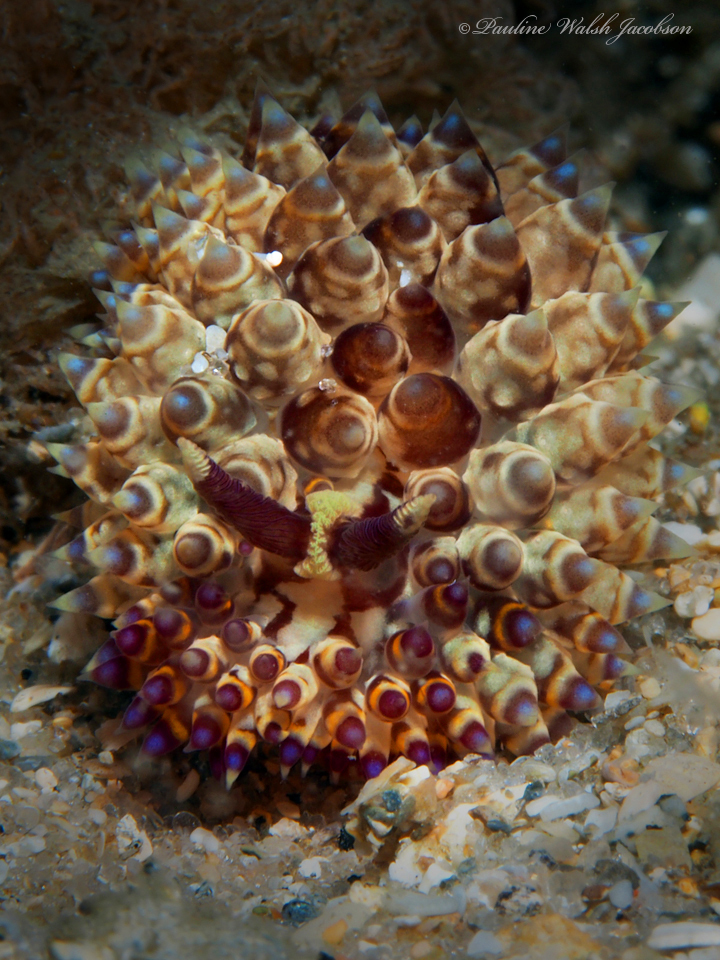
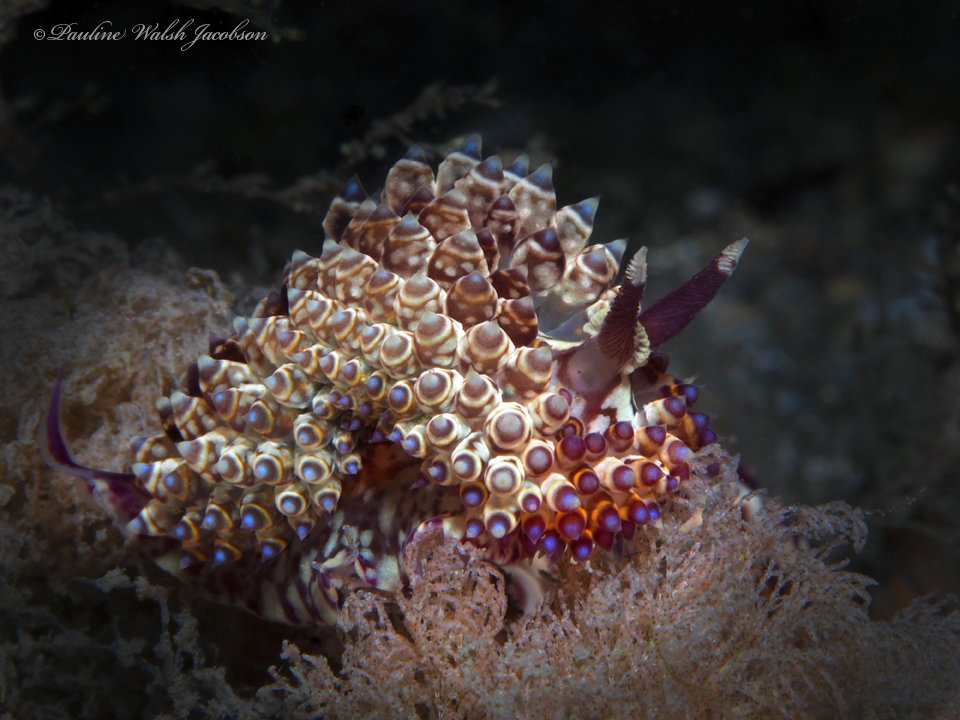
Janolus flavoanulatus are shell-less, elongated mollusks reaching about 50 mm in length, displaying numerous round pointed papillae with striking forms and colors. They are bilaterally symmetric externally, with female and male openings on the side of their bodies, and lack a mantle cavity. Their anatomy includes a simple gut, radula, two eyes behind the rhinophores, and a pair of finger-like oral tentacles. The species is distinguishable by its translucent white body and cerata; the cerata tips are violet purple with a bright blue apex, below which are yellow and brown rings. The rhinophores are brownish-purple with white tips, the caruncle is pale, and the foot has a slight blue lining. The genus Janolus resides in fluctuating temperatures within shallow, subtidal water levels and can be found far beneath the ocean surface; those closer to the surface inhabit an ideal photic zone. Habitat loss and pollution pose great threats to these marine animals.
Reader's Guide
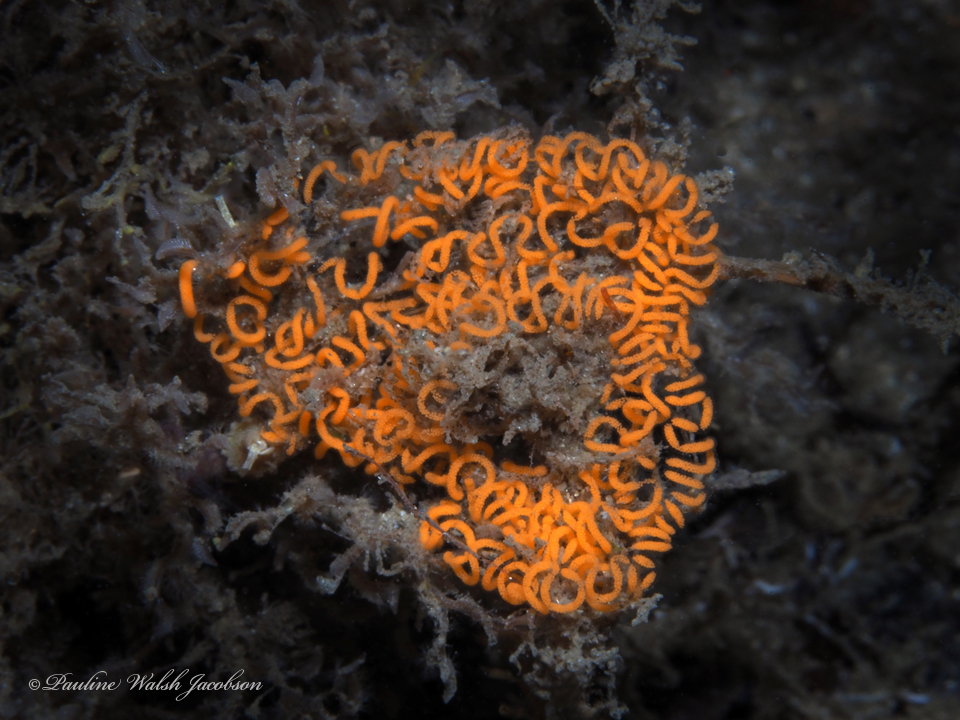
Janolus flavoanulatus is notable for its vivid coloration, which serves as both a distinguishing feature and a defense mechanism. The species exhibits bright colors that are generally associated with toxicity, deterring potential predators. In response to threats, it can roll into a ball exposing its cerata and secrete acids from those cerata as a crucial advantage. Its diet, which includes Bryozoa, algae, and decaying biological matter, influences its bright colors and benefits the marine environment by grazing on coral reefs and consuming organic debris. Predators include Navanax inermis, which uses chemoreceptors to trace the slug's slime, as well as lobsters, fish, and humans. The species is becoming scarce due to decline in biodiversity, though its global population is unassigned. As a hermaphrodite, it can mate with any neighbor, and its eggs hatch into free-swimming larvae that drift with currents, feed on plankton, and eventually metamorphose into adults, leaving behind their shells.
Did You Know?
- The specific name flavoanulatus combines Latin flavus ('yellow') and anulatus ('ringed') for the yellow ring around its cerata.
- Terry Gosliner first described this species from research conducted in the Philippines.
- Janolus flavoanulatus can secrete acids from its cerata as a defense mechanism.
- These sea slugs are hermaphrodites and can mate with any passing neighbor.
Discovery & Nomenclature
Janolus flavoanulatus entered the scientific record through the work of Terry Gosliner, a researcher widely recognized for his contributions to understanding the evolutionary history of nudibranchs. During a research expedition to the Philippines, Gosliner observed this particular sea slug and chose to honor its most visually arresting feature: a distinctive yellow ring encircling its cerata. The species name itself is a direct translation from Latin—flavus meaning 'yellow' and anulatus meaning 'ringed'—making the nomenclature a transparent description of the animal's appearance. This act of naming reflects a broader tradition in marine biology where researchers assign identities rooted in morphology, allowing future scientists to immediately recognize the organism's defining traits. Gosliner's identification of this species added another entry to the growing catalog of nudibranch diversity in the Indo-Pacific region, underscoring the ongoing importance of field research in tropical waters where countless soft-bodied mollusks remain undocumented or poorly understood. The Philippines, as the site of discovery, continues to serve as a critical region for nudibranch taxonomy and ecological study.
Range & Conservation Outlook
Janolus flavoanulatus occupies a remarkably broad swath of the Indian and Western Pacific oceans. Documented sightings span from the Red Sea eastward through Indonesia, the Philippines, Papua New Guinea, the Solomon Islands, Vanuatu, Japan, and as far south as Australian coastal waters. This wide distribution suggests the species can tolerate a range of shallow, subtidal environments where temperatures fluctuate. However, despite this geographic spread, the global population size remains unassigned—researchers have not yet established a definitive census. More concerning, accumulating field observations point toward a gradual scarcity of these sea slugs, a trend researchers link to the broader decline in marine biodiversity. Habitat loss and pollution are identified as primary pressures threatening their survival. The combination of an unknown population baseline and mounting environmental stressors places J. flavoanulatus in a vulnerable position, highlighting the urgent need for sustained monitoring across its range to determine whether populations are stabilizing or continuing their downward trajectory.
Anatomy & Striking Coloration
Janolus flavoanulatus is a shell-less, elongated mollusk reaching roughly fifty millimeters in length, its body covered in numerous round, pointed papillae that give it a textured, sculptural appearance. Externally bilaterally symmetric, it carries both male and female reproductive openings along the side of its soft body. Lacking a mantle cavity, it possesses instead a simple gut and a radula used for feeding. Just behind the rhinophores sit two eyes, flanked by a pair of finger-like oral tentacles extending from either side of the head—structures that serve as its primary sensory organs. The coloration is what truly sets this species apart: a translucent white body and cerata form the base, while the cerata tips display a violet-purple hue capped by a brilliant blue apex. Beneath that purple subapical ring, additional yellow and brown bands are visible. The rhinophores themselves are brownish-purple with white tips, the caruncle appears pale, and the foot carries a faint blue lining. Together these features create a visually complex and unmistakable profile.
Predation & Defensive Strategies
Because of their relatively stationary lifestyle and exposed soft bodies, Janolus flavoanulatus are frequent targets for a variety of marine predators. The nudibranch Navanax inermis is a notable hunter; although it lacks visual recognition, it relies on chemoreceptors to detect and trace the slime trails left by sea slugs. Lobsters, various fish species, and even human activity pose additional threats. In response to such predation pressure, the genus Janolus has evolved a remarkable defensive repertoire. When threatened, individuals roll themselves into a tight ball, deliberately exposing their cerata. This display is not merely postural—their vivid coloration serves as an aposematic signal, advertising toxicity to would-be attackers. Furthermore, the cerata can secrete acids, providing a chemical deterrent that makes consumption painful or dangerous for predators. The interplay of visual warning and chemical defense represents a sophisticated survival strategy, allowing these otherwise vulnerable, shell-less mollusks to persist in ecosystems teeming with potential threats.
Gallery
Frequently Asked Questions
What is Janolus flavoanulatus?
Janolus flavoanulatus is a soft-bodied sea slug, a type of nudibranch mollusk, that grows to roughly 50 mm in length. It is most easily recognized by the bright yellow rings that encircle each of its cerata, giving it a striking, almost jewel-like appearance.
What does the name 'Janolus flavoanulatus' mean?
The species epithet is built from two Latin words: flavus, meaning yellow, and anulatus, meaning ringed. Together they point directly to the vivid yellow band that wraps around each ceratum on the animal's body.
Where can you find Janolus flavoanulatus in the wild?
Its range stretches across the Indian and Western Pacific Oceans, with documented sightings in the Philippines, Indonesia, Papua New Guinea, Japan, the Solomon Islands, Vanuatu, Australia, and the Red Sea. It is a broadly distributed Indo-Pacific species rather than one tied to a single reef system.
What does Janolus flavoanulatus eat and how does it reproduce?
It forages on moss animals (Bryozoa), algae, and decaying organic matter on the seafloor. Like most nudibranchs, each individual is a simultaneous hermaphrodite, carrying both male and female reproductive structures in a single body.
Who first described Janolus flavoanulatus and where was it found?
The species was formally named by Terry Gosliner, a leading authority on nudibranch evolutionary history, based on material collected in the Philippines. His work there provided the reference specimens used to establish the species in the scientific literature.
More in Nudibranchs and Sea Slugs 1-24
Spotted an error? Know more?
Reader corrections go straight into our review queue. Suggest an edit · How this site is sourced