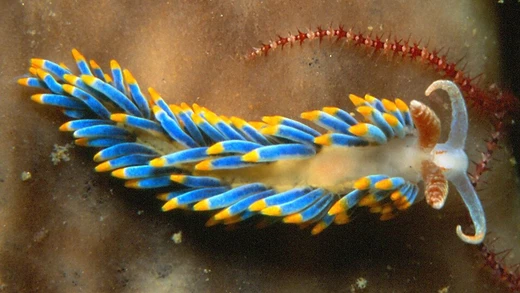
Nudibranch
Soft-bodied marine gastropods known for vivid colours and diverse forms.

Peter Southwood · CC BY-SA 3.0
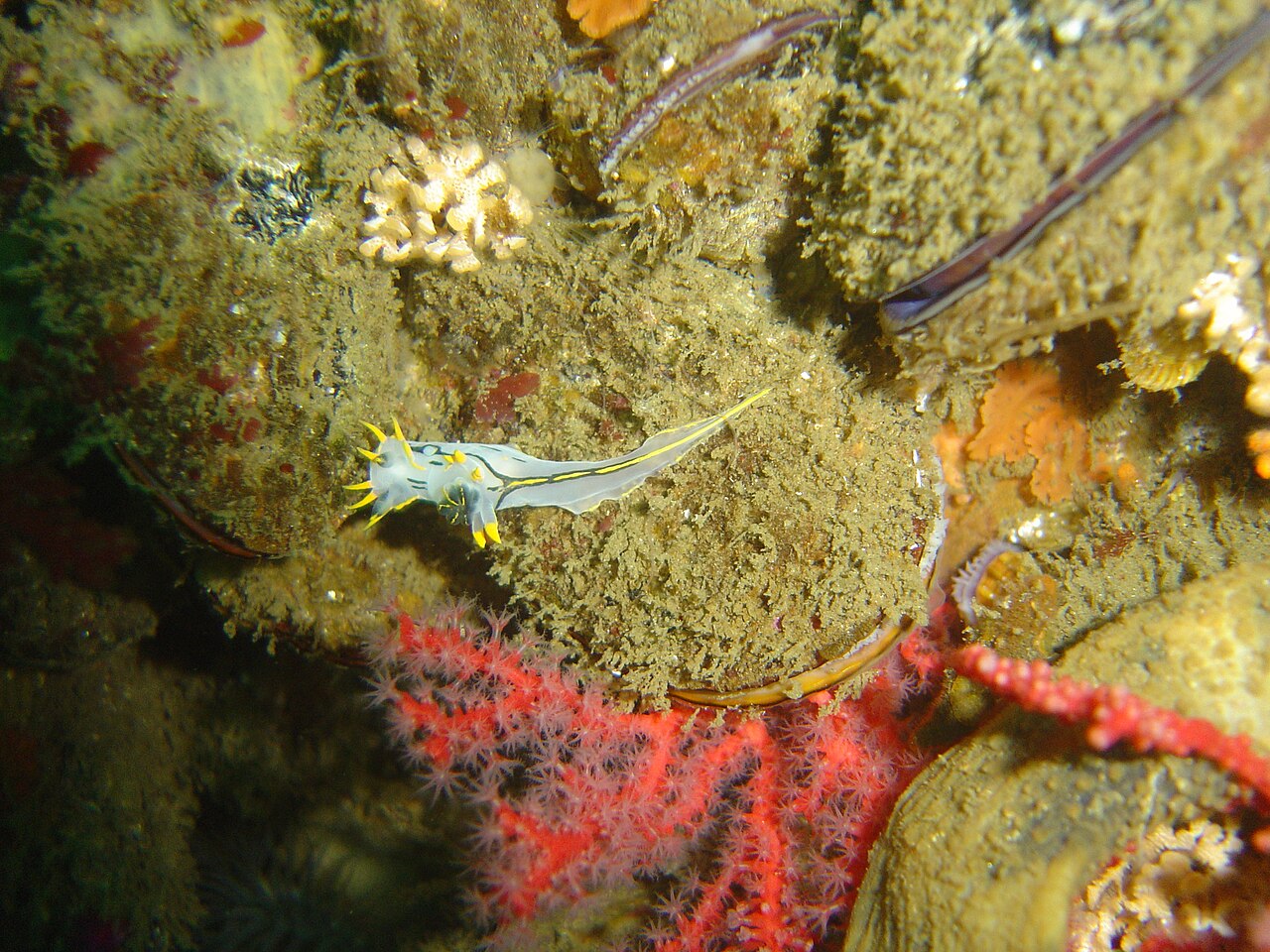
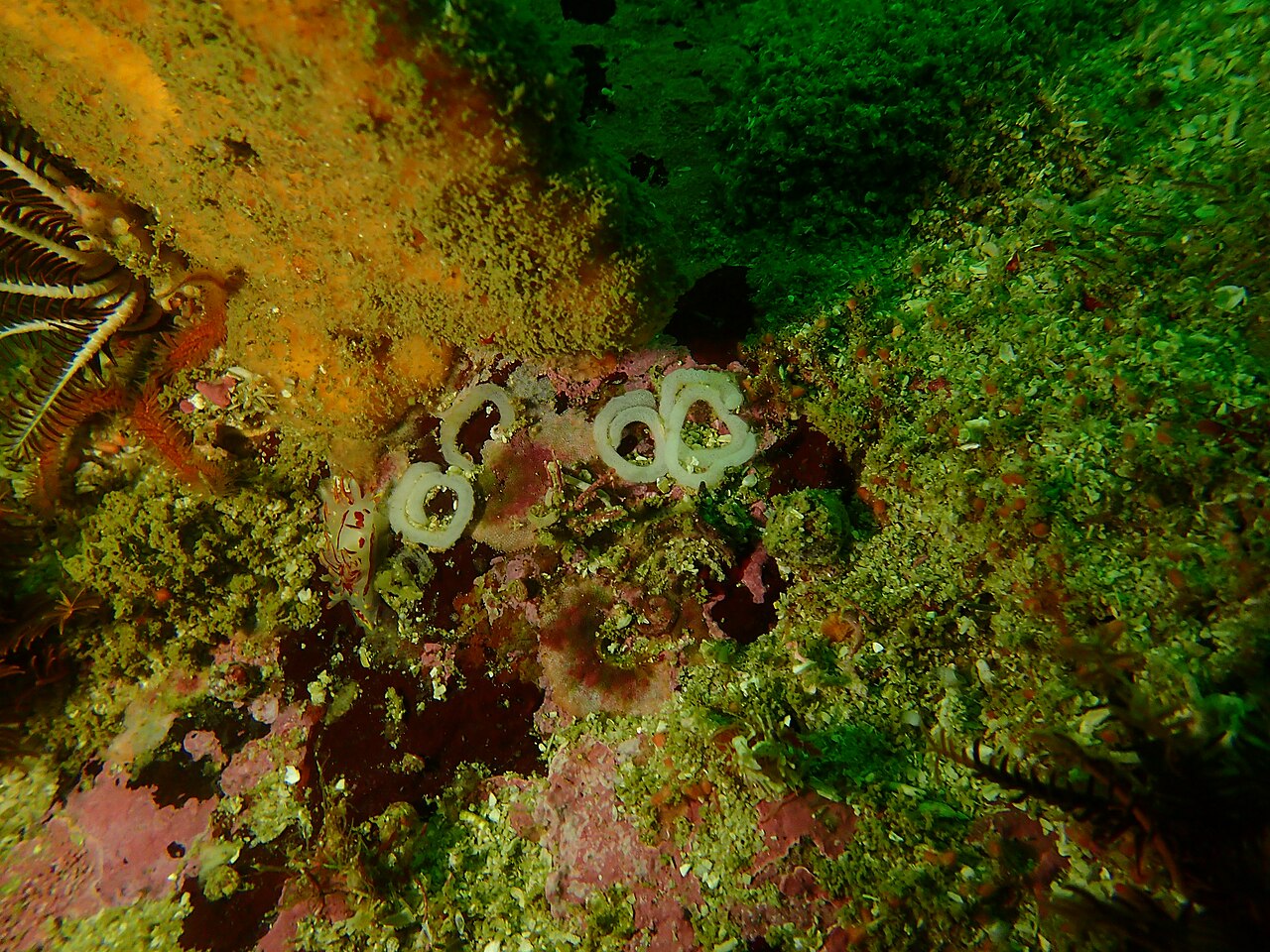
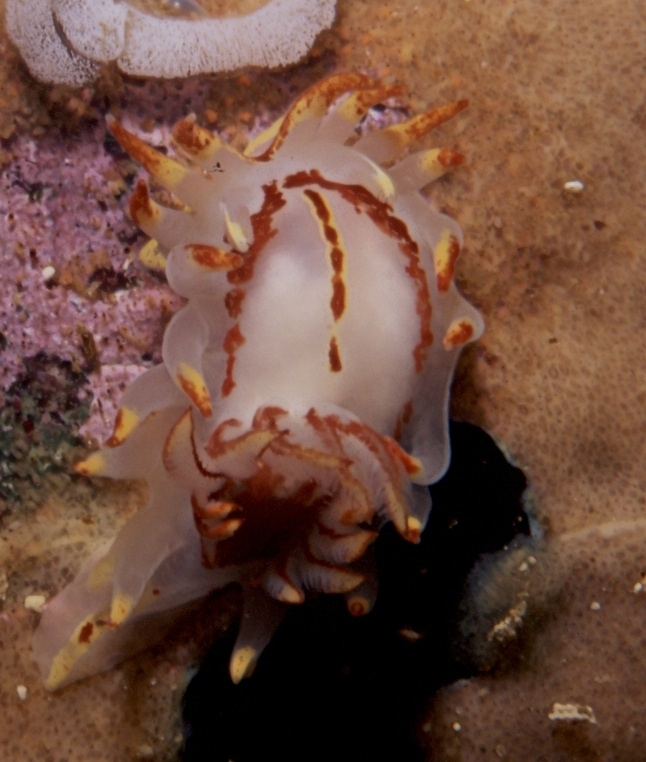
Nudibranchs are a group of soft-bodied marine gastropod molluscs belonging to the order Nudibranchia. They shed their shells after their larval stage and are noted for their often extraordinary colours and striking forms, earning colourful nicknames such as 'clown', 'marigold', 'splendid', 'dancer', 'dragon', and 'sea rabbit'. About 3,000 species are known. The word nudibranch comes from the Latin 'nudus' (naked) and the Ancient Greek 'βράγχια' (gills). They are often casually called sea slugs, though many sea slugs belong to other taxonomic groups not closely related to nudibranchs.
Quick Facts
- Taxon
- Nudibranchia
- Diversity
- About 3000 species
Facts from the source article.
Lore & Background
Nudibranchs occur in seas worldwide, from the Arctic through temperate and tropical regions to the Southern Ocean around Antarctica. They are almost entirely restricted to salt water, though a few species inhabit brackish water. They live at virtually all depths, with greatest diversity seen in warm, shallow reefs. One species, described in 2024 as Bathydevius, is the only known nudibranch with a bathypelagic lifestyle and is one of the very few to be bioluminescent. Most nudibranchs are benthic, crawling over the substrate, with exceptions including the neustonic Glaucus nudibranchs, the pelagic Cephalopyge trematoides, two pelagic species of Phylliroe, and the bathypelagic Bathydevius.
Their body forms vary greatly. They are opisthobranchs and appear bilaterally symmetrical externally but not internally, due to secondary detorsion. Male and female sexual openings are on the right side. They lack a mantle cavity. Some species have venomous appendages (cerata) on their sides. The eyes are simple, able to discern little more than light and dark, set into the body, about a quarter of a millimeter in diameter, consisting of a lens and five photoreceptors. The adult form lacks a shell or operculum. Most species have a swimming veliger larva with a coiled shell that is shed at metamorphosis. Dorids breathe through a 'naked gill' shaped into branchial plumes on their backs; aeolids have brightly coloured cerata. Nudibranchs have cephalic tentacles sensitive to touch, taste, and smell, and club-shaped rhinophores that detect odors.
Reader's Guide
Nudibranchs have lost their shells over evolutionary time and developed alternative defence mechanisms. Some use camouflage, mimicking surrounding sessile invertebrates such as sponges or soft corals. Others, like Chromodoris quadricolor, have bright, contrasting colour patterns that make them conspicuous. Nudibranchs are the most commonly cited examples of aposematism in marine ecosystems, though evidence has been contested due to few examples of mimicry, many nocturnal or cryptic species, and attenuation of red colours with depth. The Spanish dancer nudibranch (genus Hexabranchus) is potently chemically defended, brilliantly red and white, nocturnal, and has no known mimics. Some nudibranchs store nematocysts from hydrozoans in their cerata (kleptocnidae), and some take in symbiotic algae from soft corals. Sacoglossan sea slugs retain chloroplasts for photosynthesis (kleptoplasty). Some species practice autotomy and can regrow their whole body from their head if decapitated.
Chemical defences include concentrating chemical defences from prey sponges, producing secondary metabolites, or producing chemicals de novo. Evidence for dietary origin comes from similarities between prey and nudibranch metabolites; de novo production is indicated by uniform chemical composition across different environments. Another protection method is releasing ugdon acid from the skin when irritated, which eats the animal from the inside out. In 1884, Philip Henry Gosse reported that two species—Eolis punctata and Tritonia arborescens—produce audible sounds, described as resembling the clink of a steel wire, heard when the animals are lively and moving.
Did You Know?
- About 3,000 species of nudibranchs are known.
- The deepest recorded nudibranch, Bathydevius, was discovered at a depth near 2,500 m (8,200 ft) and is the only known bathypelagic nudibranch.
- In 1884, two species of nudibranchs were reported to produce audible sounds resembling the clink of a steel wire.
Taxonomy, Naming & the 'Sea Slug' Confusion
The name nudibranch fuses Latin nudus, meaning 'naked,' with the Greek bránkhia, meaning 'gills,' a pairing that captures the group's most visible trait: respiration through exposed gill structures rather than a protected shell cavity. Taxonomically, they sit within the order Nudibranchia, a subset of opisthobranchs in the phylum Mollusca. In everyday language they are lumped in with 'sea slugs,' but that label is taxonomically loose. Organisms like the photosynthetic Sacoglossa or the vivid Aglajidae are also called sea slugs yet belong to entirely separate lineages with no close kinship to true nudibranchs. Roughly 3,000 species have been described so far. Their extraordinary visual range has inspired playful common names—'clown,' 'marigold,' 'splendid,' 'dancer,' 'dragon,' 'sea rabbit'—each reflecting the almost surreal palette of hues and body shapes that distinguishes one nudibranch species from another.
Global Reach & Vertical Habitat Range
Nudibranchs occupy saltwater seas on every continent, stretching from Arctic waters through temperate and tropical zones down to the Southern Ocean encircling Antarctica. A small number tolerate the lower salinities of brackish environments, but the overwhelming majority are strictly marine. Their vertical range is equally striking: they crawl across substrates from the intertidal zone down past 700 metres, with the richest assemblages of species found on warm, shallow coral reefs. In 2024 a remarkable exception was described—Bathydevius, a nudibranch living near 2,500 metres in the bathypelagic zone, making it the only known species with that lifestyle and one of the very few bioluminescent nudibranchs. Most nudibranchs are benthic, spending their lives crawling over the seafloor. A handful break this pattern: the neustonic genus Glaucus floats upside-down just beneath the surface, Cephalopyge trematoides and two species of Phylliroe swim freely in the water column, and Bathydevius occupies the deep midwater.
Anatomy, Sensory Organs & the Shell Question
Nudibranch body plans are remarkably diverse, yet all share a key anatomical legacy: secondary detorsion. Unlike most gastropods, which retain a twisted internal layout, nudibranchs have straightened out, giving them an apparently bilaterally symmetrical exterior—though internal asymmetry persists, as seen in the placement of both male and female reproductive openings on the right side of the body. They lack a mantle cavity entirely. Adult size spans a wide range, from 4 millimetres to 600 millimetres. The larval veliger stage typically carries a coiled shell, which is shed at metamorphosis; in some species the shell is discarded even before the animal hatches from the egg mass. Sensory anatomy includes cephalic tentacles sensitive to touch, taste, and smell, club-shaped rhinophores for detecting odours, and tiny eyes roughly a quarter millimetre in diameter, each containing a simple lens and five photoreceptors capable of distinguishing light from dark. Dorid nudibranchs breathe through naked gill plumes arranged in a rosette on their backs, while aeolids carry brightly coloured cerata instead.
Defence, Camouflage & Stolen Weapons
Having abandoned the protective shell, nudibranchs evolved a remarkable toolkit of defences. Some blend into their surroundings through camouflage, mimicking the textures and colours of sponges or soft corals. Others, such as Chromodoris quadricolor, adopt intensely bright, high-contrast patterns—a strategy long cited as aposematism, though the evidence is debated since many species are nocturnal, few confirmed mimics exist, and red wavelengths fade quickly with depth. The Spanish dancer, Hexabranchus, illustrates the tension: brilliantly red and white, potently defended, yet nocturnal with no known mimics. A more exotic defence involves kleptocnidae: certain species that feed on hydrozoids harvest the prey's nematocysts and store them in their cerata, deploying stolen stinging cells against predators. Related sacoglossan slugs go further, retaining chloroplasts for photosynthesis in a process called kleptoplasty. Chemical defences are widespread; sponge-eating nudibranchs concentrate their prey's toxins to become distasteful. Some species even practise autotomy, severing body parts to shed parasites and regrowing them.
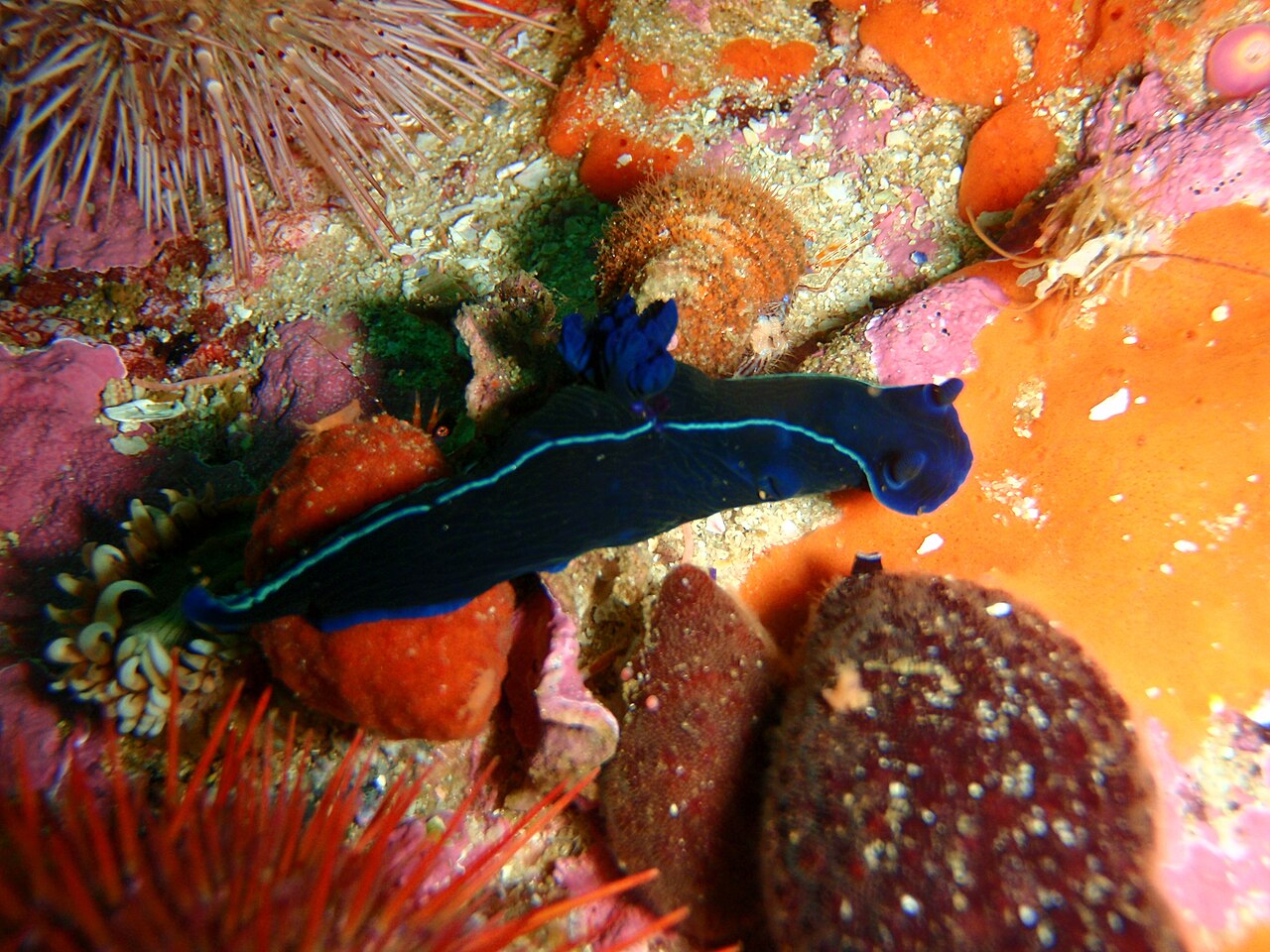
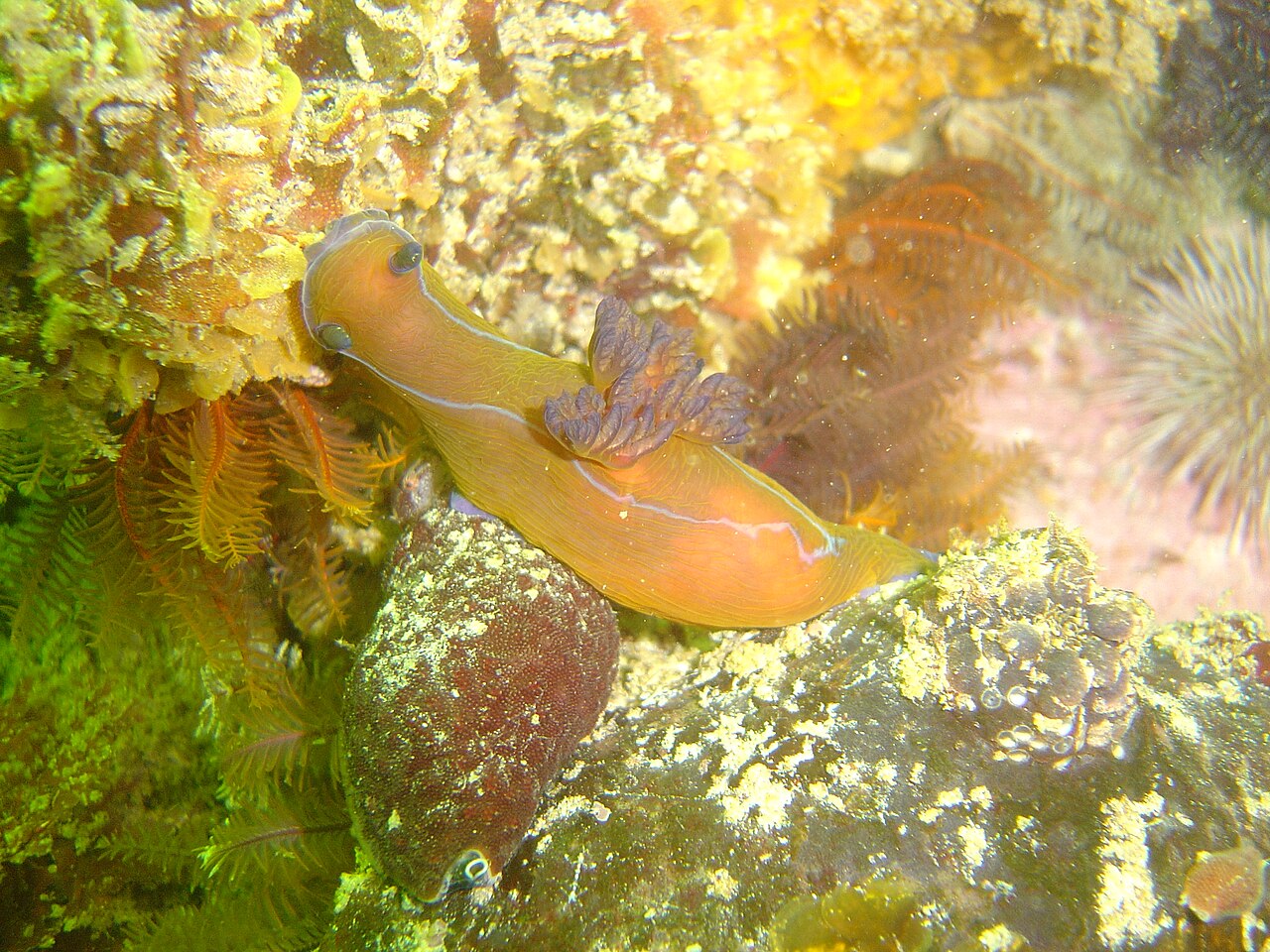
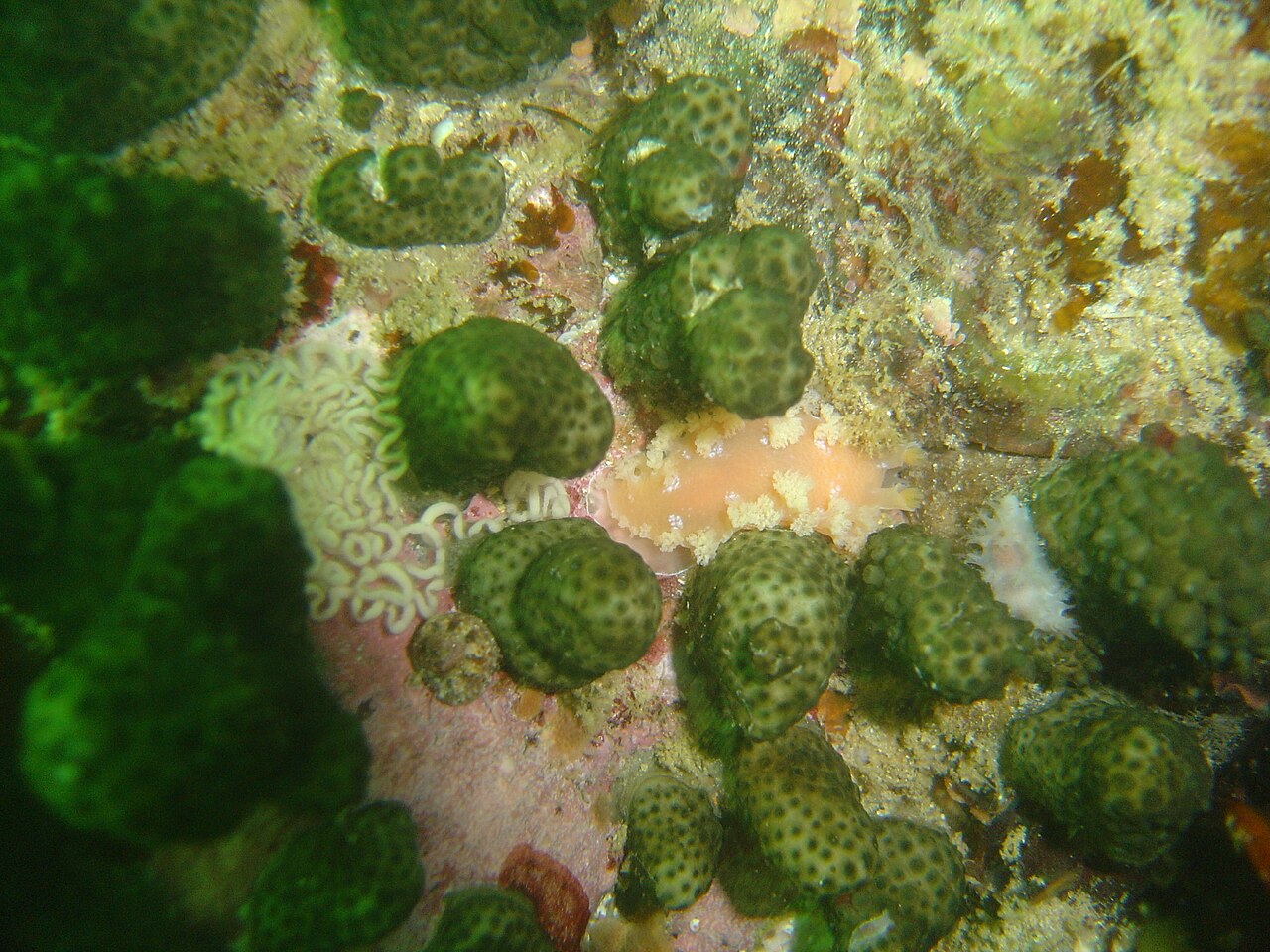
Gallery
Frequently Asked Questions
Who is Nudibranch?
A nudibranch is a soft-bodied marine gastropod mollusc in the order Nudibranchia that loses its shell once it exits the larval stage. Roughly 3,000 species are recognized, and the group is celebrated for its bold coloration and unusual body shapes.
What makes Nudibranch so visually striking?
Members of this group display an extraordinary range of vivid hues and sculptural forms, earning nicknames like 'clown,' 'marigold,' 'splendid,' 'dancer,' 'dragon,' and 'sea rabbit.' Because adults are shell-less, those colors and shapes are fully exposed with no hard outer covering to hide them.
How big does Nudibranch get?
Adults span a wide range, from about 4 mm up to roughly 600 mm (around 23.6 inches). For scale, their eyes are tiny—only about a quarter of a millimeter in diameter.
Where does Nudibranch live?
They range from the intertidal zone down to depths well past 700 meters, and the deepest recorded sighting was near 2,500 meters (about 8,200 feet). That makes them a surprisingly vertically broad group of ocean dwellers.
Why is it called a Nudibranch?
The name fuses the Latin 'nudus' (naked) with the Ancient Greek 'βράγχια' (gills), pointing to their shell-less adult bodies and exposed gill structures. People often casually call them 'sea slugs,' though many animals people lump under that label actually belong to unrelated taxonomic groups.
More in Nudibranchs and Sea Slugs 1-24
Spotted an error? Know more?
Reader corrections go straight into our review queue. Suggest an edit · How this site is sourced