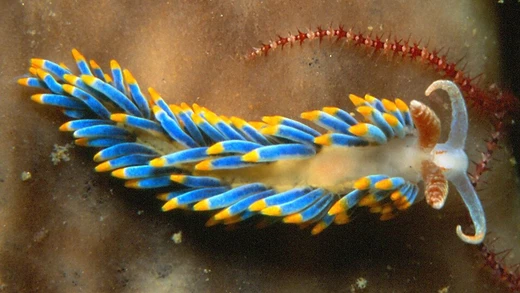
Bathydoridoidea
Monotypic superfamily of deep-sea dorid nudibranchs.

Bathydoridoidea is a superfamily of dorid nudibranchs, which are shell-less marine gastropod mollusks. It is monotypic, containing only the family Bathydorididae, and belongs to the infraorder Bathydoridoidei.
The family Bathydorididae includes two genera. The type genus is *Bathydoris*, established by Bergh in 1884. Members of this genus inhabit deep water, below 1,500 meters. The type species is *Bathydoris abyssorum*, also described by Bergh in 1884. Other species in the genus include *Bathydoris aioca*, *Bathydoris antoni*, *Bathydoris hodgsoni*, *Bathydoris ingolfiana*, *Bathydoris japonensis*, and *Bathydoris spiralis*. The second genus is *Prodoris*, named by Baranetz in 1997, which contains the single species *Prodoris clavigera*.
Quick Facts
- Grandparent Authority
- Minichev & Starobogatov, 1979
- Taxon
- Bathydorididae
- Type Genus
- Bathydoris
- Type Genus Authority
- Bergh, 1884
Facts from the source article.
Lore & Background
The superfamily Bathydoridoidea was established to accommodate the family Bathydorididae, which is its sole member. The family includes two genera: Bathydoris, described by Bergh in 1884, and Prodoris, described by Baranetz in 1997. Bathydoris is the type genus, with Bathydoris abyssorum as the type species. Members of Bathydoris are known to inhabit deep waters, specifically below 1,500 meters. The family contains several species, including Bathydoris aioca, Bathydoris antoni, Bathydoris hodgsoni, Bathydoris ingolfiana, Bathydoris japonensis, and Bathydoris spiralis, as well as Prodoris clavigera.
Reader's Guide
Bathydoridoidea is notable as the only superfamily within the infraorder Bathydoridoidei, highlighting its unique taxonomic position among dorid nudibranchs. The family Bathydorididae, which it contains, is distinguished by its deep-water habitat, with species of the genus Bathydoris living below 1,500 meters. This adaptation to abyssal environments sets it apart from many other nudibranch groups. The genus Prodoris, added later by Baranetz in 1997, expands the family's diversity. The superfamily's significance lies in its representation of a primitive lineage within the nudibranchs, as suggested by studies such as Baranetz's work on the radular and respiratory apparatus variability. The species Bathydoris aioca has been the subject of redescription and range extension studies, indicating ongoing research interest. Overall, Bathydoridoidea serves as a key group for understanding the evolution and ecology of deep-sea nudibranchs.
Did You Know?
- Bathydoridoidea contains only one family: Bathydorididae.
- The type genus Bathydoris was described by Bergh in 1884.
- Bathydoris species live in deep water below 1,500 m.
- The genus Prodoris was added to the family in 1997 by Baranetz.
Frequently Asked Questions
What is Bathydoridoidea?
Bathydoridoidea is a superfamily of dorid nudibranchs—shell-less marine gastropods—that is defined by its exclusively deep-sea lifestyle. It falls under the infraorder Bathydoridoidei and stands out among sea slugs for living far below the photic zone.
How many families and genera make up Bathydoridoidea?
The superfamily is monotypic, containing a single family, Bathydorididae. That family houses just two genera: Bathydoris (the type genus) and Prodoris.
How deep do Bathydoridoidea actually live?
Known members are found in waters below 1,500 meters, placing them in the deep abyssal zone. This makes them among the deepest-dwelling dorid nudibranchs we have catalogued.
Who described the type genus and when?
Bergh established the type genus Bathydoris in 1884 and also described its type species, Bathydoris abyssorum, that same year. The genus has since been expanded with additional species such as B. aioca, B. antoni, B. hodgsoni, and B. ingolfiana.
Why is Bathydoridoidea considered notable among nudibranch fans?
Its strict commitment to abyssal depths sets it apart from most dorid nudibranchs, which typically favor shallower habitats. The group is also unusually compact—just one family and two genera—making it a small but ecologically distinctive lineage in the deep sea.
More in Nudibranchs and Sea Slugs 1-24
Spotted an error? Know more?
Reader corrections go straight into our review queue. Suggest an edit · How this site is sourced