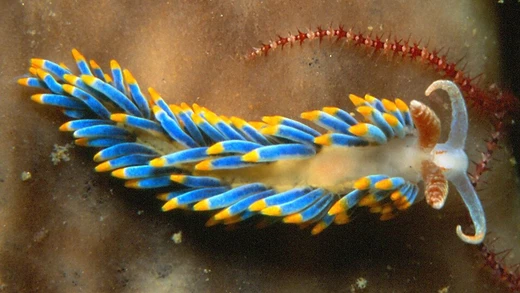
Coryphella
A genus of aeolid nudibranchs in the family Coryphellidae.

Coryphella is a genus of marine gastropod molluscs, specifically aeolid nudibranchs, belonging to the family Coryphellidae. The genus was first described in an 1850 paper, with three original species: *Coryphella landsburgii*, *Coryphella rufobranchialis*, and *Coryphella pellucida*. Rudolph Bergh established the family Coryphellidae in 1889, and it was later reinstated following a 2017 study. Molecular studies indicated that many existing genera were actually synonymous with *Coryphella*, prompting a merger of several genera. However, because these studies did not incorporate morphological analysis, this "lumping" led to a loss of differentiation. A 2025 study, which combined full molecular and morphological analysis, restricted the genus *Coryphella*, reinstated previously synonymized genera, and established two new genera. According to Korshunova et al. (2025), the species currently recognized within *Coryphella* are *Coryphella longicaudata*, *Coryphella pseudoverrucosa*, and *Coryphella verrucosa*. Genus incertae sedis under Coryphella according to Korshunova et al. (2025) include: *Coryphella abei* Baba, 1987, *Coryphella alderi*, *Coryphella pallida*, and *Coryphella subrosacea*. A long list of species has been moved into synonymy, including *Coryphella albomarginata* (now *Coryphellina albomarginata*), *Coryphella alexanderi* (now *Corrupta alexanderi*), *Coryphella amabilis* (now *Microchlamylla amabilis*), and many others.
Quick Facts
- Taxon
- Coryphella
Facts from the source article.
Lore & Background
Coryphella was originally described in an 1850 paper, with three original species: Coryphella landsburgii, Coryphella rufobranchialis, and Coryphella pellucida. The family Coryphellidae was first established in 1889 by Rudolph Bergh, and was re-established in a 2017 study. Molecular studies found that many existing genera were actually synonymous with Coryphella, leading to many genera being merged. However, these studies had failed to take morphological analysis into account, the 'lumping' of several genera under Coryphella leading to loss of differentiation. Thus in a 2025 study, after full molecular and morphological analysis, the genus Coryphella was restricted, previously synonymized genera reinstated, and two new genera established. According to Korshunova et al. (2025), species within the genus Coryphella are Coryphella longicaudata, Coryphella pseudoverrucosa, and Coryphella verrucosa. Genus incertae sedis under Coryphella according to Korshunova et al. (2025) include: Coryphella abei Baba, 1987, Coryphella alderi, Coryphella pallida, and Coryphella subrosacea. Many former Coryphella species have been brought into synonymy with other genera, such as Coryphella albomarginata becoming a synonym of Coryphellina albomarginata, and Coryphella alexanderi becoming a synonym of Corrupta alexanderi.
Reader's Guide
The significance of Coryphella lies in its taxonomic history, which illustrates the challenges of classifying aeolid nudibranchs. Molecular studies initially suggested that many genera were synonymous with Coryphella, leading to a broad 'lumping' of species. However, because these studies did not incorporate morphological analysis, this lumping resulted in a loss of differentiation among distinct lineages. A 2025 study that combined both molecular and morphological data resolved this by restricting the genus Coryphella, reinstating previously synonymized genera, and establishing two new genera. This revision highlights the importance of integrating multiple lines of evidence in taxonomy. The current accepted species within Coryphella, according to Korshunova et al. (2025), are only three: Coryphella longicaudata, Coryphella pseudoverrucosa, and Coryphella verrucosa. The legacy of Coryphella is thus as a case study in the dynamic nature of nudibranch classification, where ongoing research continues to refine our understanding of evolutionary relationships.
Did You Know?
- A 2025 study restricted the genus Coryphella after full molecular and morphological analysis.
- Many former Coryphella species, such as Coryphella albomarginata, are now synonyms of other genera.
More in Nudibranchs and Sea Slugs 1-24
Spotted an error? Know more?
Reader corrections go straight into our review queue. Suggest an edit · How this site is sourced