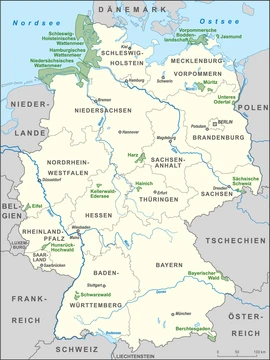
Hamburg Wadden Sea National Park
Smallest German Wadden Sea National Park, protecting a World Heritage intertidal ecosystem.

The smallest of Germany’s three Wadden Sea National Parks, the Hamburg Wadden Sea National Park protects a portion of the single ecological system that runs from Den Helder to Esbjerg. It sits as an exclave of the city-state of Hamburg, roughly 12.5 kilometers off Cuxhaven in the Elbe estuary, within the German Bight of the North Sea. The park encompasses the islands of Neuwerk, Scharhörn, and Nigehörn. In 2011, it became part of the Wadden Sea World Heritage Site, recognized for its undisturbed intertidal ecosystem, its role as a breeding ground for numerous bird species, and its notably high biodiversity.
The area was reclassified as a national park by a Hamburg Parliament ruling on April 9, 1990. An update to the law on April 5, 2001, expanded the park’s boundaries. Covering 13,750 hectares (53.1 square miles) across Zones 1 and 2, the park imposes special protections in Zone 1, restricting mudflat hiking and horse-and-carriage rides to designated routes. Around 2,000 animal species live within the park, with about 250 endemic to the Wadden Sea’s salt marshes. Notable residents include the common seal and the gray seal. The natural sediment flow at the Elbe’s mouth creates a rich food supply for young fish and seabirds, making the park a key resting and molting site for seabirds. Shelducks, for instance, feed on snails that cover the mudflats in the hundreds of thousands. The northwestern shelduck population—roughly 180,000 birds—molts here from July to September, protected across all three national parks in Lower Saxony, Schleswig-Holstein, and Hamburg. About 200,000 eider ducks also molt here, and around 1,000 pairs use the North Sea mudflats as breeding grounds, mostly on the island of Amrum. The Wadden Sea as a whole serves as a stopover for northern breeding birds, which replenish fat reserves needed for successful nesting, hosting an estimated 10 to 12 million waders, geese, ducks, and gulls. The park collaborates closely with the Jordsand Society, particularly on bird conservation.
Since 1992, the national park has also been designated a biosphere reserve, elevating its status under the UNESCO Man and Biosphere Programme. The national park management oversees both the reserve and its national responsibilities.
Quick Facts
- Iucn Category
- II
- Location
- North Sea coast, Hamburg
- Area Ha
- 13750
- Established
- 1990-04-09
Facts from the source article.
Lore & Background
Following a ruling by the Hamburg Parliament on 9 April 1990, the area was reclassified as the Hamburg Wadden Sea National Park. On 5 April 2001, the law was updated and the national park area was expanded. The park is made up mainly of sand and mixed mudflats with shallow creeks, sand bars (Plaaten), and dune islands. Within the park, there are about 2,000 animal species, of which about 250 are endemic to the salt marshes of the Wadden Sea. Of particular note are the common seal and the gray seal. Due to the natural influx of sediment, there is a high concentration of food for young fish and seabirds at the mouth of the Elbe, making the park an important resting and molting area for seabirds.
Reader's Guide
The Hamburg Wadden Sea National Park is significant as the smallest of three German national parks protecting the Wadden Sea, a single ecological entity recognized as a UNESCO World Heritage Site in 2011. Its designation as a biosphere reserve in 1992 under the UNESCO Man and Biosphere programme further underscores its international importance. The park's intact intertidal ecosystem supports about 2,000 animal species, including 250 endemic to the salt marshes, and serves as a critical breeding, resting, and molting area for seabirds such as shelducks and eider ducks. For example, approximately 180,000 shelducks from the north-western population molt here from July to September, and about 200,000 eider ducks also spend their molting season in the Wadden Sea. The park works closely with the Jordsand Society in bird conservation. Its legacy lies in protecting a uniquely biodiverse and dynamic coastal environment that is vital for migratory birds and marine life, while also allowing limited human activities like mudflat hiking and horse-drawn carriage rides on designated routes.
Did You Know?
- The park is an exclave of the city state of Hamburg, located 12.5 km off Cuxhaven.
- About 250 animal species in the park are endemic to the salt marshes of the Wadden Sea.
- Approximately 180,000 shelducks from the north-western population molt in the Wadden Sea from July to September.
Geography & Physical Landscape
The Hamburg Wadden Sea National Park occupies a remarkable position as the smallest of the three German Wadden Sea parks, yet it forms part of one continuous ecological entity stretching from Den Helder all the way to Esbjerg. As an exclave belonging to the city state of Hamburg, it sits roughly 12.5 kilometres offshore from Cuxhaven, nestled within the Elbe estuary where the river meets the North Sea's German Bight. The park encompasses three islands—Neuwerk, Scharhörn, and Nigehörn—and together with its surrounding waters covers a total of 13,750 hectares. The terrain is predominantly composed of sand and mixed mudflats, interspersed with shallow creeks, distinctive sand bars known locally as Plaaten, and low dune islands. This combination of open water, shifting sediment, and vegetated flats creates a landscape that is both dynamic and extraordinarily rich in habitat variety, making it a critical piece of the broader Wadden Sea mosaic.
Biodiversity & Wildlife
Few coastal habitats on Earth rival the Hamburg Wadden Sea National Park in sheer biological density. The park is home to approximately 2,000 animal species, of which around 250 are found exclusively in the salt marshes of the Wadden Sea. Among the most celebrated residents are the common seal and the gray seal, both of which thrive in the sheltered waters around the Elbe mouth. The natural influx of sediment into the estuary creates an exceptionally rich food base for juvenile fish and seabirds, turning the area into a vital resting and molting ground. Shelducks, for instance, feed on the hundreds of thousands of snails that carpet the mudflat surfaces, and roughly 180,000 individuals from the north-western population spend their July-to-September moulting period in these protected waters. Eider ducks add another layer of abundance: about 200,000 moulting eiders pass through, while approximately 1,000 breeding pairs use the North Sea mudflats as nesting grounds, predominantly on the island of Amrum. Across the entire Wadden Sea, an estimated 10 to 12 million waders, geese, ducks, and gulls depend on these intertidal zones each year.
Conservation History & Protection
The path to full protection for this stretch of the Wadden Sea unfolded over more than two decades. On 9 April 1990, a ruling by the Hamburg Parliament formally reclassified the area as the Hamburg Wadden Sea National Park, establishing a dedicated legal framework for its preservation. A decade later, on 5 April 2001, the governing law was revised and the protected area was expanded, reflecting growing recognition of the ecosystem's value. In 1992, the site received an additional layer of international recognition when it was designated a biosphere reserve under UNESCO's Man and the Biosphere programme, placing it under a global conservation umbrella that complements national protections. The crowning moment came in 2011, when the park was incorporated into the transnational Wadden Sea World Heritage Site. UNESCO's inscription specifically highlighted the area's intact intertidal ecosystem, its critical role as a breeding ground for numerous bird species, and its uniquely high biodiversity. Together, these successive designations—national park, biosphere reserve, and World Heritage Site—create a multi-tiered shield that safeguards one of Europe's most ecologically significant coastal landscapes.
Management & Stewardship
The day-to-day governance of the Hamburg Wadden Sea National Park reflects a carefully structured approach to balancing protection with limited public access. The park is divided into two zones: Zone 1, which receives the highest level of special protection, and Zone 2. Within Zone 1, activities such as mudflat hiking and horse-and-carriage rides are restricted to designated routes, ensuring that the most sensitive habitats remain undisturbed. The park's management falls under Hamburg's environmental authority, which is also responsible for the national aspects of the biosphere reserve designation. A key partnership in the park's conservation work is its close collaboration with the Jordsand Society, a dedicated organization whose efforts focus particularly on bird conservation. This cooperative model allows the park to leverage specialized expertise in ornithology and habitat management while maintaining a unified administrative framework. The park's station on the island of Neuwerk serves as a physical hub for visitors and operations, while the broader administrative office is based in Hamburg. Through this combination of strict zoning, international partnerships, and focused species-level stewardship, the park sustains its role as a guardian of the Wadden Sea's irreplaceable biological heritage.
Frequently Asked Questions
What is Hamburg Wadden Sea National Park?
It is the smallest of Germany's three Wadden Sea National Parks, protecting a stretch of intertidal habitat in the Elbe estuary. The park functions as an exclave of the city-state of Hamburg, sitting roughly 12.5 kilometers off Cuxhaven in the North Sea's German Bight.
Which islands make up Hamburg Wadden Sea National Park?
The park encompasses three islands: Neuwerk, Scharhörn, and Nigehörn. Together they cover about 13,750 hectares of protected coastal and marine habitat.
When was Hamburg Wadden Sea National Park established and what designations does it hold?
It was reclassified as a national park on 9 April 1990 and received UNESCO Biosphere Reserve status in 1992. In 2011 it was jointly inscribed as part of the transnational Wadden Sea World Heritage Site.
What notable wildlife can visitors expect to see in Hamburg Wadden Sea National Park?
The park supports populations of common seals, gray seals, shelducks, and eider ducks. It also serves as a breeding ground for numerous bird species within its undisturbed intertidal ecosystem.
How does Hamburg Wadden Sea National Park fit into the larger Wadden Sea system?
It forms the smallest segment of a single continuous ecological system that stretches from Den Helder in the Netherlands all the way to Esbjerg in Denmark. Its 2011 World Heritage inscription recognizes it as an integral piece of that shared transboundary landscape.
More in National parks of Germany 1-19
Spotted an error? Know more?
Reader corrections go straight into our review queue. Suggest an edit · How this site is sourced