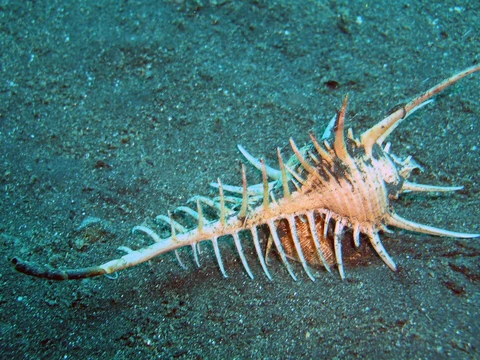
Vitularia
A genus of predatory marine snails in the murex family.

Vitularia is a genus of sea snails, specifically marine gastropod mollusks belonging to the Muricidae family—commonly known as murex snails or rock snails. These snails are found in the Indo-west Pacific and eastern Pacific regions, including waters off Australia (Queensland and Western Australia). The genus includes several species, such as *Vitularia crenifer*, *Vitularia miliaris*, *Vitularia minima*, *Vitularia salebrosa*, *Vitularia sandwicensis*, and *Vitularia triangularis*, along with the fossil species †*Vitularia dominicana* and †*Vitularia linguabovis*. Some names once considered separate species are now recognized as synonyms; for example, *Vitularia asiatica* and *Vitularia tuberculata* are both synonyms of *Vitularia miliaris*, while *Vitularia extensa* is a synonym of *Vitularia salebrosa*. Other synonyms include *Vitularia aspera* (now *Paciocinebrina lurida*), *Vitularia candida* (now *Nucella wahlbergi*), and the fossil †*Vitularia crassicostata* (now †*Lyropurpura crassicostata*), as well as †*Vitularia curtansata* (now †*Urosalpinx curtansata*).
Quick Facts
- Taxon
- Vitularia
- Type Species
- Murex miliaris / Gmelin, 1791
Facts from the source article.
Lore & Background
The genus Vitularia was established within the family Muricidae, a diverse group of carnivorous gastropods. Species within this genus are found in warm marine waters of the Indo-west Pacific and eastern Pacific, including regions off Queensland and Western Australia. The genus includes both extant and fossil species, such as Vitularia crenifer and Vitularia miliaris, the latter of which has been subject to synonymy with Vitularia asiatica and Vitularia tuberculata. Some species originally placed in Vitularia have since been reassigned to other genera, such as Paciocinebrina and Nucella, reflecting taxonomic revisions over time.
Reader's Guide
Vitularia holds significance within the Muricidae as a genus that illustrates the taxonomic complexity and evolutionary history of murex snails. The presence of both living and fossil species, such as Vitularia dominicana and Vitularia linguabovis, provides insight into the temporal and geographic range of the group. The synonymy of several species, including Vitularia asiatica with Vitularia miliaris, highlights ongoing refinement in classification based on morphological and molecular studies. The genus also contributes to understanding the radular evolution in predatory neogastropods, as discussed in developmental perspectives on the family. Its distribution across the Indo-west Pacific and eastern Pacific underscores its ecological role in marine benthic communities. The legacy of Vitularia is tied to its representation of the broader diversity and adaptive radiation within Muricidae, with species like Vitularia salebrosa and Vitularia sandwicensis adding to the known biodiversity of the group. Taxonomic works by authors such as Iredale and Wilson have documented Australian representatives, while phylogenetic frameworks have placed the genus within the muricid tree of life.
Did You Know?
- Vitularia miliaris has synonyms including Vitularia asiatica and Vitularia tuberculata.
- Fossil species Vitularia dominicana and Vitularia linguabovis are known from the genus.
- The genus occurs in the Indo-west Pacific and eastern Pacific, including off Queensland and Western Australia.
- Vitularia salebrosa has a synonym Vitularia extensa.
Frequently Asked Questions
What is Vitularia?
Vitularia is a genus of predatory sea snails classified within the murex family (Muricidae). These marine gastropod mollusks are commonly grouped with rock snails and are recognized as a distinct genus in that family.
Where do Vitularia snails live?
Members of this genus are native to the Indo-west Pacific and eastern Pacific regions. In Australian waters, they can be encountered off the coasts of Queensland and Western Australia.
How many living species are there in Vitularia?
Six extant species are currently recognized: V. crenifer, V. miliaris, V. minima, V. salebrosa, V. sandwicensis, and V. triangularis. Each represents a distinct shell form within the genus.
Are there any fossil Vitularia species?
Yes—two fossil species have been described: †V. dominicana and †V. linguabovis. These represent extinct lineages that once existed alongside the living members of the genus.
How does Vitularia fit into murex snail classification?
Vitularia sits within the Muricidae family, the large group of spiny, predatory sea snails often called murex or rock snails. It is one of many genera that make up this diverse family of marine gastropods.
More in Murex Snails, Part 2 1-24
Spotted an error? Know more?
Reader corrections go straight into our review queue. Suggest an edit · How this site is sourced