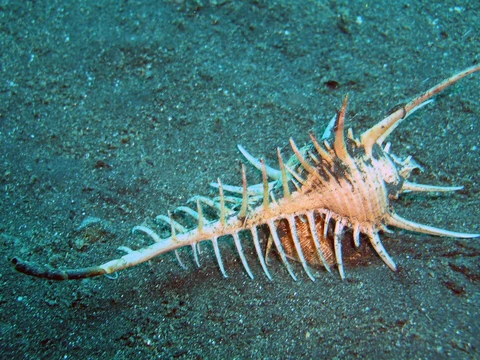
Typhinae
A subfamily of muricid gastropods with 15 recognized genera.

Typhinae is a subfamily within the family Muricidae, comprising a group of marine gastropods. The subfamily is notable for its taxonomic complexity and the diversity of its constituent genera.
Quick Facts
- Taxon
- Typhinae
Facts from the source article.
Lore & Background
The subfamily Typhinae is classified under the family Muricidae. According to the World Register of Marine Species, it contains 15 genera, including Brasityphis, Choreotyphis, Distichotyphis, Haustellotyphis, Hirtotyphis, Laevityphis, Lyrotyphis, Monstrotyphis, Pilsbrytyphis, Rugotyphis, Siphonochelus, Trubatsa, Typhina, Typhinellus, and Typhis. Several synonyms exist, such as Talityphis, Typhisala, and Typhisopsis, all considered junior synonyms of Typhina. The status of the fossil genus Indotyphis is uncertain, being a possible synonym of Laevityphis.
Reader's Guide
The significance of Typhinae lies in its taxonomic structure and the ongoing refinement of its classification. The subfamily's 15 genera, as recognized by the World Register of Marine Species, reflect a broad morphological and evolutionary range within the Muricidae. The presence of multiple synonyms, such as Talityphis, Typhisala, and Typhisopsis, all synonymized under Typhina, indicates historical taxonomic revisions. The uncertain status of Indotyphis as a synonym of Laevityphis further highlights the dynamic nature of typhine systematics. The subfamily's legacy is tied to the work of malacologists like Jousseaume, Cossmann, and Habe, who established many of its genera. The 2021 taxonomic update by Houart, Buge, and Zuccon underscores the continued research interest in Typhinae, particularly in regions like New Caledonia, the South China Sea, and Western Australia. This ongoing study contributes to a deeper understanding of muricid diversity and biogeography.
Did You Know?
- Typhinae is a subfamily in the family Muricidae.
- The subfamily contains 15 genera according to the World Register of Marine Species.
- Talityphis, Typhisala, and Typhisopsis are junior synonyms of Typhina.
- The status of the fossil genus Indotyphis as a synonym of Laevityphis is uncertain.
More in Murex Snails, Part 2 1-24
Spotted an error? Know more?
Reader corrections go straight into our review queue. Suggest an edit · How this site is sourced