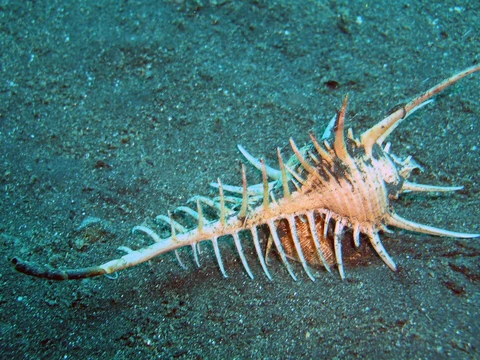
Phyllonotus oculatus
A marine gastropod mollusc in the family Muricidae.

Phyllonotus oculatus, known as the oculate apple murex, is a marine gastropod mollusk belonging to the family Muricidae, which includes murex and rock snails. Its adult shell ranges from 50 mm to 124 mm in size. This species is found in the Gulf of Mexico, the Caribbean Sea, the Lesser Antilles, and the Atlantic Ocean from Florida down to eastern Brazil.
Quick Facts
- Genus
- Phyllonotus
- Species
- oculatus
Facts from the source article.
Lore & Background
Phyllonotus oculatus is a species of sea snail within the family Muricidae, commonly referred to as murex snails or rock snails. Its shell size ranges from 50 mm to 124 mm in adulthood. The species is distributed across the Gulf of Mexico, the Caribbean Sea, the Lesser Antilles, and the Atlantic Ocean from Florida to Eastern Brazil.
Reader's Guide
Phyllonotus oculatus, the oculate apple murex, is a member of the Muricidae family, a group known for their often ornate and spiny shells. Its distribution spans the Gulf of Mexico, the Caribbean Sea, the Lesser Antilles, and the Atlantic from Florida to Eastern Brazil, indicating a broad tropical and subtropical range. The species has been documented in various malacological works, including checklists of Bermuda marine molluscs, Gulf of Mexico biodiversity surveys, and comprehensive studies of fossil and Recent Muricidae. Its shell size, reaching up to 124 mm, places it among the larger murex snails. The species is included in inventories of Muricidae collected during expeditions in the French Antilles, reflecting ongoing taxonomic interest. The oculate apple murex contributes to the understanding of muricid diversity and biogeography in the western Atlantic region.
Did You Know?
- The adult shell size varies between 50 mm and 124 mm.
- It is a species of sea snail in the family Muricidae.
- The common name is the oculate apple murex.
More in Murex Snails, Part 2 1-24
Spotted an error? Know more?
Reader corrections go straight into our review queue. Suggest an edit · How this site is sourced