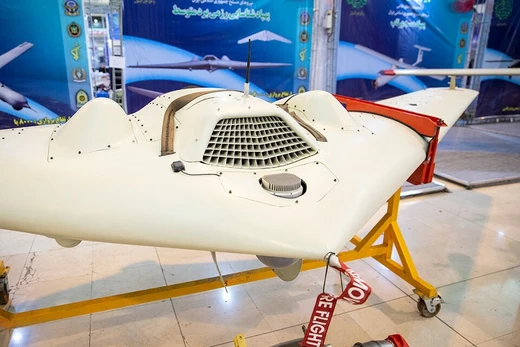
NESCOM Burraq
Pakistan's first indigenous armed drone, used in live combat.

The NESCOM Burraq is an unmanned combat aerial vehicle (UCAV) developed and built jointly by the National Engineering and Scientific Commission (NESCOM) and the Pakistan Air Force (PAF). Its development is believed to have started around 2009, following years of Pakistan’s unsuccessful requests to the United States to acquire the MQ-1 Predator, which the US had been using since 2004 for controversial strikes in Pakistan’s northwest territories. Denied over technology proliferation concerns, Pakistan accelerated the Burraq program in secrecy, fueled by frustration with US refusals and the politicization of those strikes. In 2012, China offered to sell Pakistan armed drones, but doubts about their capabilities led Pakistan to continue its own effort. Early Burraq models were limited to surveillance and intelligence gathering, used by the Pakistani military to track militants, before a combat-capable version was publicly demonstrated in March 2015. The Burraq is thought to draw inspiration from the US MQ-1 Predator, the Chinese CASC Rainbow CH-3 A, and the Italian Selex ES Falco. As Popular Science noted, with the Burraq, Pakistan could conduct drone strikes independently of the United States.
The name “Burraq” comes from interpretations of Surah Al Isra in the Qur’an. In Islamic tradition, Buraq is a heavenly steed that carried Muhammad from Makkah to Al-Aqsa and then to the heavens, and back to Makkah during the Mi’raj (Night Journey), which is the title of that surah.
The first Burraq fleet was inducted into the Pakistan Air Force and army in 2013, alongside the Shahpar UCAV. It carries various imagery and motion sensors and is equipped with a laser-guided air-to-surface missile called “Barq.” The Inter-Services Public Relations (ISPR) described the system as a “force multiplier.” After a successful demonstration of its ability to fire missiles at both stationary and moving targets, Pakistan became the fifth country in the world to successfully develop an unmanned combat aerial vehicle. On 7 September 2015, the Burraq was used for the first time in a live military operation, firing on a terrorist compound in the Shawal Valley in Pakistan’s tribal areas, eliminating three high-profile targets, according to former ISPR Director General Major General Asim Saleem Bajwa.
Quick Facts
- Aircraft Type
- UAV/UAS and UCAV
- National Origin
- Pakistan
- Manufacturer
- NESCOM
- Primary User
- Pakistan Air Force
- More Users
- Pakistan Army
- Construction Date
- 2009-Present
- Introduction
- 2013
- First Flight
- 9 May 2009
Facts from the source article.
Lore & Background
Development of the Burraq is thought to have primarily begun in 2009, with the contract awarded to NESCOM in close coordination with the Pakistan Air Force. The program was driven by growing frustration over the United States' refusal to allow Pakistan to acquire the MQ-1 Predator, amid fear of technology proliferation. In 2012, China offered to help by selling armed drones, but questions were raised about their capabilities. The first few models of the Burraq were only capable of surveillance and intelligence gathering, and some of these early models were used by the Pakistani military to track down militants. The first combat-capable version was publicly demonstrated in March 2015.
The Burraq is thought to be inspired by the US MQ-1 Predator, the Chinese CASC Rainbow CH-3 A, and the Italian Selex ES Falco. Its name comes from interpretations of Surah Al Isra in the Qur'an, referring to Buraq, a heavenly steed that carried Muhammad during the Night Journey. The first fleet of Burraqs was inducted into the Pakistan Air Force and Pakistan Army in 2013, alongside the Shahpar UCAV. The system carries various imagery and motion sensors and is equipped with a laser-guided air-to-surface missile named 'Barq'. The Inter-Services Public Relations (ISPR) described the system as a 'force multiplier'.
Reader's Guide
The Burraq's significance lies in its role as Pakistan's first indigenous armed drone, developed in response to the United States' refusal to transfer MQ-1 Predator technology. The program accelerated in secrecy amid frustration over US drone strikes in Pakistan's north-west territories and the politicization of those strikes. By successfully developing and deploying the Burraq, Pakistan became the fifth country in the world to develop an armed UCAV and the fourth to use one in active combat, after Israel, the US and the UK. Its first live operation on 7 September 2015 targeted a terrorist compound in the Shawal Valley, eliminating three high-profile targets. Before its public unveiling, the Pakistani military reportedly conducted several strikes with the Burraq as part of the Khyber-1 military operations in the Tirah Valley. As Popular Science noted, 'with the Burraq, Pakistan can now do drone strikes on their own, without the United States.' The system represents a shift in Pakistan's military capabilities, allowing it to conduct its own drone operations independently.
Did You Know?
- Pakistan became the fourth country after Israel, the US and the UK to use an armed drone in active combat.
- The Burraq's name comes from the Islamic tradition of Buraq, the heavenly steed that carried Muhammad during the Night Journey.
- The first fleet of Burraqs was inducted in 2013, alongside the Shahpar UCAV.
More in Military Drones of Asia, Europe and the Americas 1-24
Spotted an error? Know more?
Reader corrections go straight into our review queue. Suggest an edit · How this site is sourced