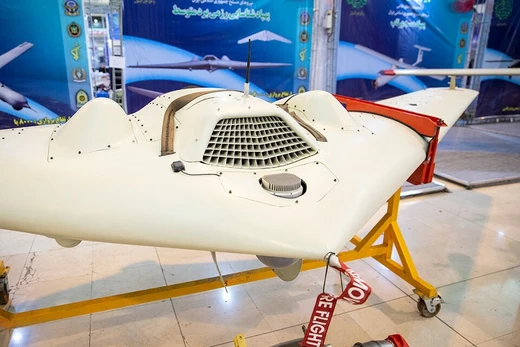
WB Electronics Warmate
Polish loitering munition with swarming and multi-warhead capability.

Krzysztof Popławski · CC BY 4.0
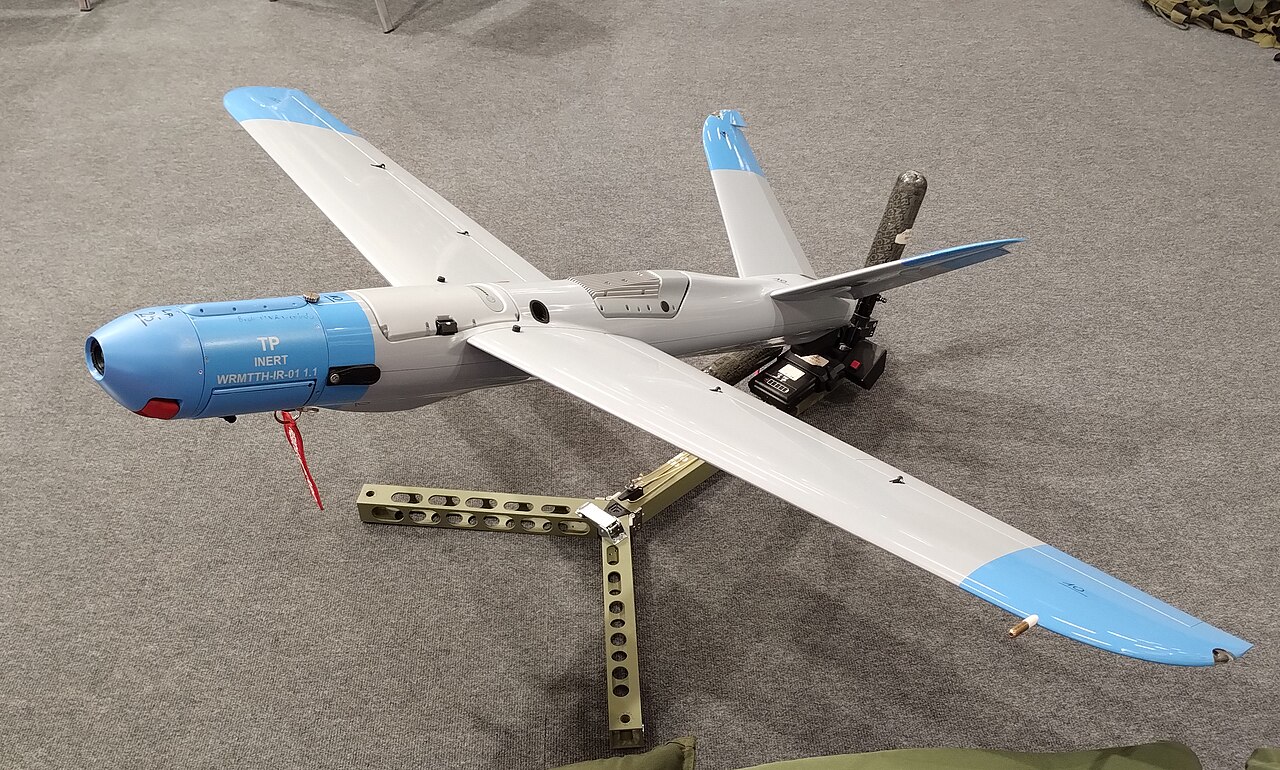
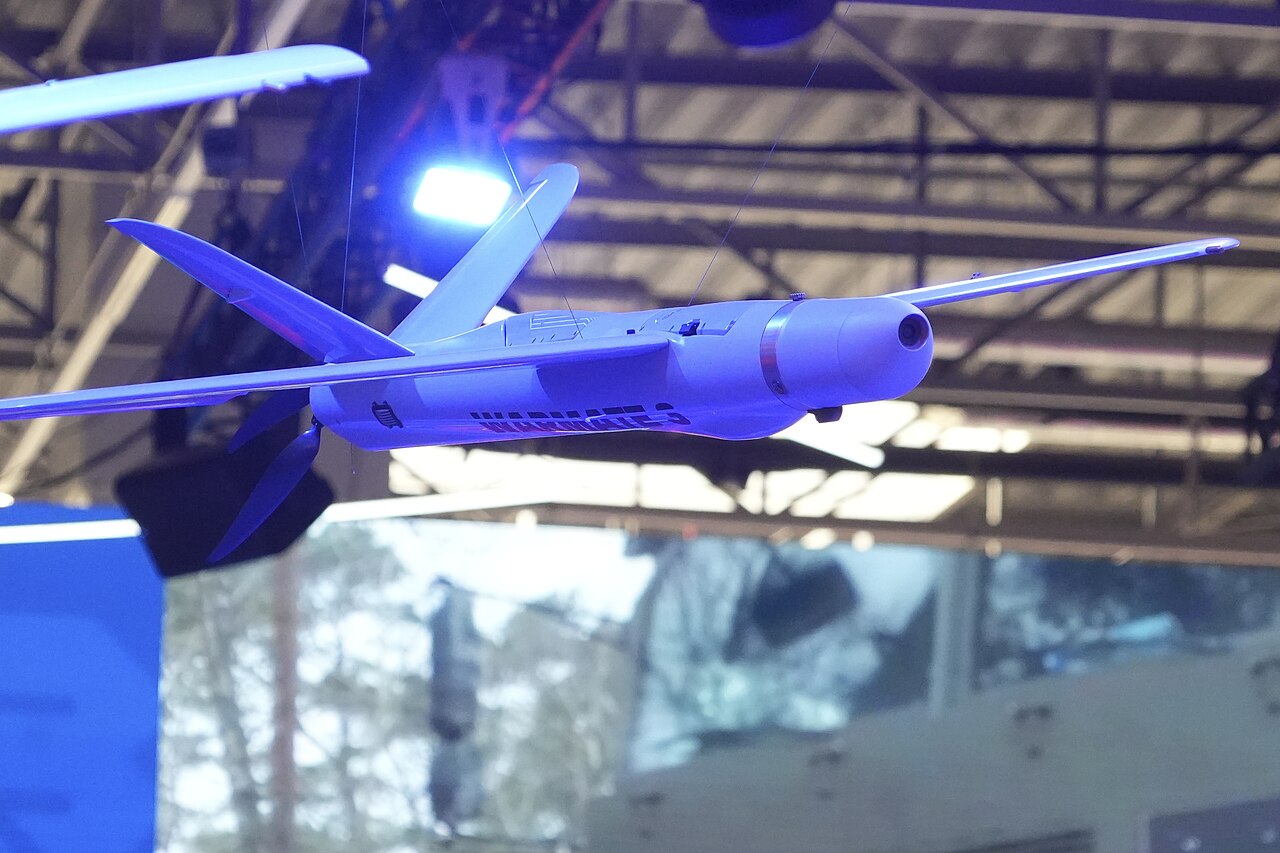
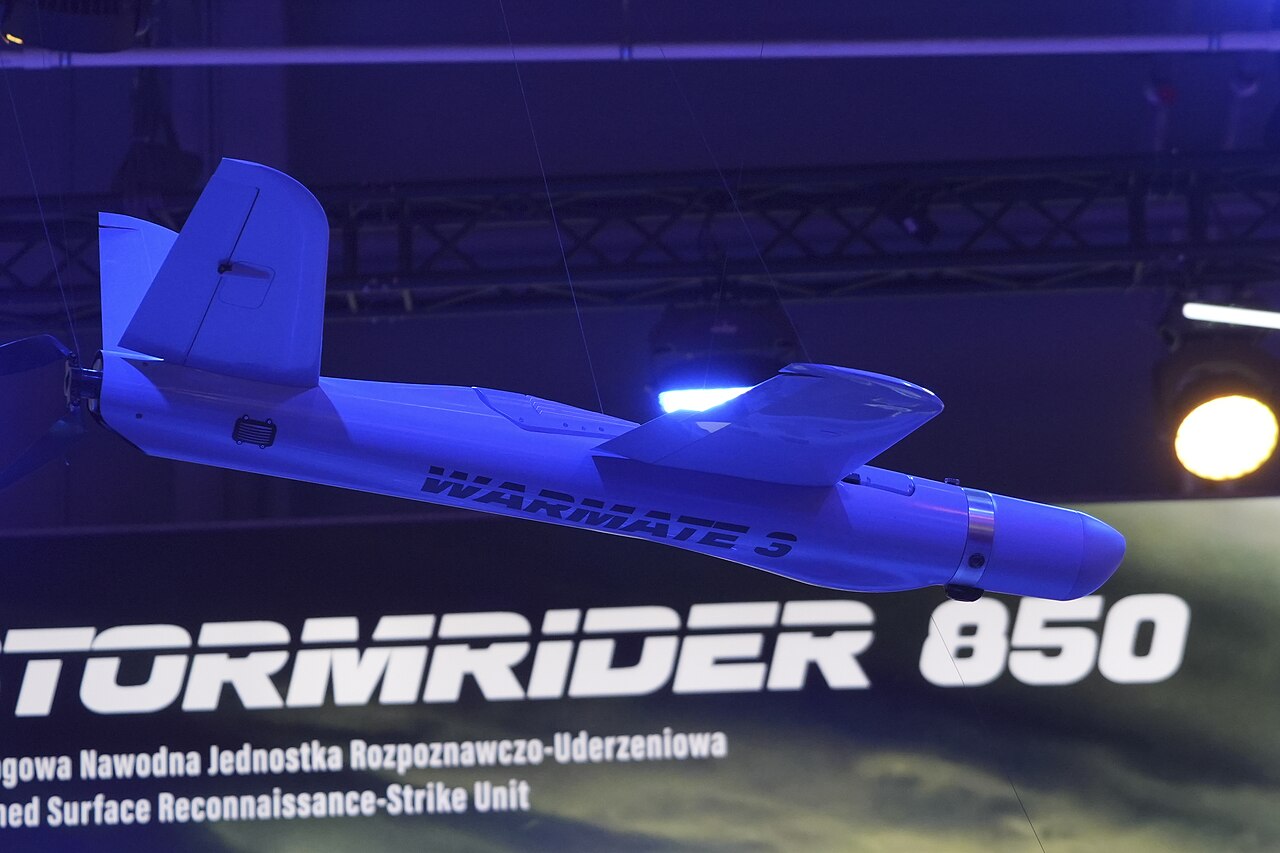
The WB Electronics Warmate is a family of loitering munition drones created by the Polish company WB Group, with initial production beginning in 2016. The design supports multiple warhead options, including fragmentation, HEAT, and thermobaric types, and features swarming capability.
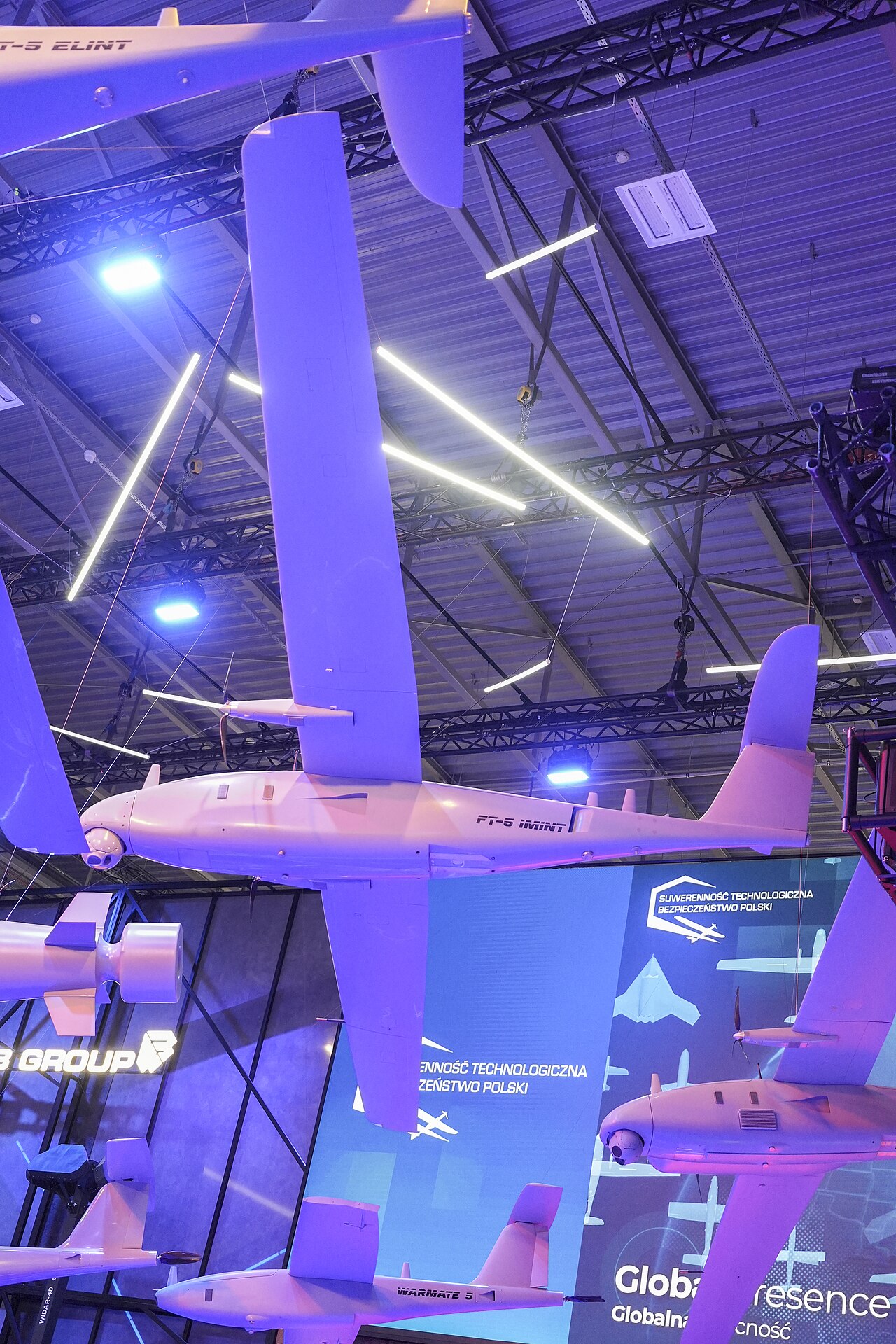
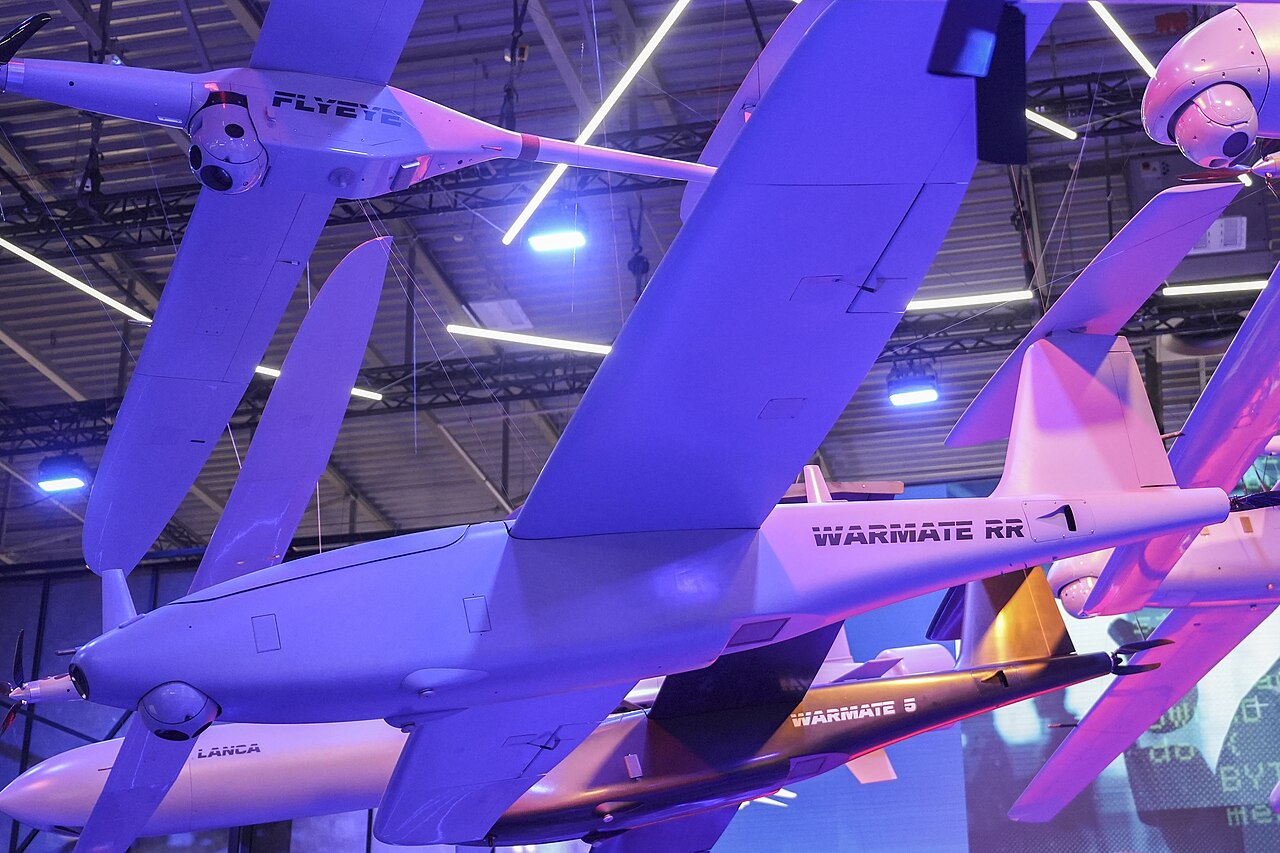
The W2MPIR system, also known as Vampire, is intended to counter enemy anti-access and area denial defenses, offering cost-effective strike and reconnaissance for suppression of enemy air defenses and electronic warfare tasks. It uses a swarm of interoperable WB Electronics UAVs, such as the Warmate 3.0 and Warmate 2 loitering munitions, along with FlyEye and FT-5 Łoś reconnaissance platforms that can identify, locate, and jam electronic sensors and radars.
Variants include the Warmate-R, an intelligence, surveillance, and reconnaissance version sharing the same fuselage and ground equipment. It carries three cameras: an 8mm forward-facing lens, plus 8mm and 12mm optics that can tilt smoothly from 0 degrees downward to 90 degrees to one side. It can be fitted with daylight or thermal cameras with remote pan and tilt, and a laser target designator. A "Target Lock" mode tracks moving targets and provides precise location data.
The Warmate-TL (Tube Launch) variant launches from man-portable or vehicle-mounted tubular launchers and can integrate with ground vehicles, helicopters, or warships.
The 3.0 generation was refined using customer feedback and combat experience. It features a 30 km radio range with control handover support for an 80 km total operational range, 70 minutes of flight endurance, and warheads designed for improved firepower against high-value targets such as personnel, reconnaissance systems, communications, and electronic warfare equipment. It uses a quiet low-RPM engine that can be shut down during engagement to avoid detection, and its propeller blades can fold in the final attack phase. It operates in all weather conditions, has extra control surfaces on the wings for better maneuverability, and integrates with other WB Electronics systems like the FlyEye reconnaissance drone and Topaz battle management system.
The Warmate 2 is a larger, heavier version launched from elastomeric vehicle-mounted launchers.
Quick Facts
- Origin
- Poland
- Is Ranged
- Yes
- Wars
- Russian invasion of Ukraine / 2025 India–Pakistan strikes
- Manufacturer
- WB Electronics
- Production Date
- 2016–current
- Weight
- Empty: 4 kg · MTOW: 5.7 kg (Warmate), 30 kg (Warmate 2)
- Length
- 1.1 m
- Filling
- Warmate: / Training, HE-FRAG with 300g of TNT or HEAT (penetration 200–240mm of RHA) / Warmate 2: / Training, HE-FRAG, thermobaric FAE or HEAT (penetration 400mm of RHA)
- Filling Weight
- Warmate: / 1.4 kg / Warmate 2: / 5 kg
- Engine
- Electric motor
- Vehicle Range
- Warmate: / 30 km / Warmate 2: / 30-240 km
- Ceiling
- 9800 ft AMSL
Facts from the source article.
Lore & Background
The Warmate was developed by WB Group and entered initial production in 2016. It has been operated by several countries, including an unspecified NATO member, the Polish Armed Forces, Polish Special Forces, the Territorial Defence Force, and the Armed Forces of Ukraine. Ukraine received units as part of Poland's military assistance following the 2022 Russian invasion of Ukraine, including through private fundraisers. The Libyan National Army acquired the system, and the United Arab Emirates acquired it in 2020. An unspecified Middle-Eastern operator also uses it. The Warmate notably participated in the 2025 India–Pakistan strikes.
Variants include the Warmate-R, an ISR version with three cameras and a laser target designator; the Warmate-TL, a tube-launched variant for man-portable or vehicle-mounted launchers; and the Warmate 2, a larger version with a 30 kg maximum take-off weight and heavier warheads capable of penetrating 400 mm of RHA. The 3.0 generation features a 30 km radio range with control handover support for an 80 km operational range, 70-minute endurance, a quiet low-RPM engine that can be shut down during engagement, and integration with other WB Electronics systems like the FlyEye drone and Topaz battle management system.
Reader's Guide
The Warmate represents a cost-effective loitering munition system that fills a niche between traditional artillery and guided missiles. Its swarming capability, enabled by the W2MPIR system, allows it to breach enemy anti-access/area denial defenses and perform suppression of enemy air defenses and electronic warfare missions. The system's modular design, with multiple warhead options and variants for reconnaissance and tube launch, makes it adaptable to various operational needs. The Warmate 2 is promoted as a viable alternative to anti-tank guided missiles, offering standoff engagement and simplified target acquisition. Its deployment in Ukraine and participation in the 2025 India–Pakistan strikes demonstrate its relevance in modern conflicts. The system's integration with other WB Electronics platforms and its automatic video tracker for precise targeting even after communication loss highlight its advanced capabilities. The Warmate's quiet engine and ability to fold propeller blades during attack enhance its survivability.
Did You Know?
- The Warmate can be equipped with fragmentation, HEAT, and thermobaric warheads.
- The Warmate 2 has a HEAT warhead capable of penetrating 400 mm of RHA.
- The Warmate 3.0 generation can shut down its engine during engagement to avoid detection.
- Ukraine received Warmate drones as part of Poland's military assistance after the 2022 Russian invasion.
Gallery

Frequently Asked Questions
What is the WB Electronics Warmate?
The Warmate is a Polish loitering munition drone family developed by WB Group, with initial production kicking off in 2016. It is designed as a one-way attack UAV that can hover over a target area before committing to a strike.
What warhead options does the Warmate support?
The platform is built to accept several payload types, including fragmentation, HEAT (anti-armor), and thermobaric warheads. This multi-warhead flexibility lets operators match the warhead to the specific target they are engaging.
What are the Warmate's main flight specifications?
The drone measures roughly 1.1 m in length with a wingspan near 1.6 m and a maximum take-off weight of 5.7 kg. It carries up to 1.4 kg of payload, can reach targets out to 30 km, and stays airborne for about 60 minutes.
How does the Warmate's swarming capability work?
Multiple Warmate airframes can be launched and coordinated as a swarm, allowing them to saturate defenses or strike several targets in a single wave. This interoperability is a core element of the broader W2MPIR (Vampire) system, which uses mixed UAV groups to suppress enemy air defenses and electronic warfare assets at low cost.
Why is the Warmate significant in the current drone landscape?
It gives Poland—and potential export customers—a domestically produced, relatively inexpensive loitering munition that can be fielded in quantity. Its combination of swarming, multiple warhead choices, and compact size makes it a versatile tool for both reconnaissance and strike missions against A2/AD threats.
More in Military Drones of Asia, Europe and the Americas 1-24
Spotted an error? Know more?
Reader corrections go straight into our review queue. Suggest an edit · How this site is sourced