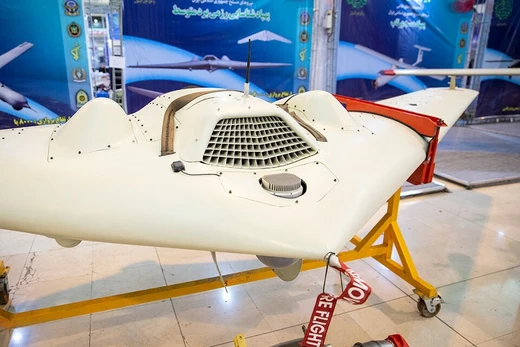
Canadair CL-89
Jointly developed surveillance drone for divisional intelligence gathering.

San Diego Air & Space Museum Archives · Public domain
The Canadair CL-89 was a surveillance drone developed in the 1960s through a partnership between Canada, Britain, and West Germany. It was meant to gather information at the divisional level for NATO forces. A bigger, upgraded version with more carrying capacity, the CL-289, came later.
The project began in June 1963 when Canada and Britain agreed to have Canadair design and test the drone, based on an earlier study for a message-carrying vehicle. West Germany joined later; the United States was invited but declined. The first test flight, in March 1964 at Yuma, Arizona, went poorly. The British insisted the whole system—drone, launcher, recovery gear, and support equipment—be made simple enough for soldiers to operate reliably. They assigned an army officer to Canadair, who helped set up a maintenance advisory group that proved very effective. The CL-89’s development was so difficult it nearly got scrapped.
The first complete system went to West Germany in 1969. During the 1970s, France and Italy also began operating it. NATO called the whole setup AN/USD-501; in British service it was known as Midge (Military Intelligence & Data Gathering Equipment). In the British Royal Artillery, a troop with two launchers, image processing facilities, and repair shops ran the system, staffed by two officers and about 70 soldiers. Tasking came from the divisional artillery intelligence cell, mainly to confirm suspected enemy positions, especially artillery. Midge replaced the Northrop Radioplane SD-1 (called "Observer") and was later replaced by Phoenix. It saw operational use in Kuwait in 1991, particularly effective when paired with artillery raids. In the German Army, a battery in the divisional observation battalion handled it, with six officers and roughly 120 soldiers. Logistics support for all user nations came through NAMSA.
The CL-289 began design in 1974, and a production agreement among Canada, West Germany, and France was signed in November 1987. It was larger than the CL-89, with better range and payload, intended for corps-level intelligence. Though it looked similar, many design changes were made. It entered service in November 1990, designated AN/USD-502. At least nine CL-289s were shot down by the Yugoslav Army during the 1999 NATO bombing of Yugoslavia.
Quick Facts
- Manufacturer
- Canadair
- National Origin
- Canada
- First Flight
- March 1964
Facts from the source article.
Lore & Background
In June 1963, a sponsorship by Canada and Britain agreed to have Canadair design, evaluate and test the CL-89 drone. The concept had been developed at Canadair from the CL-85, a study for the carriage of dispatches. West Germany later joined the group, and although the United States was invited to join, they declined. The first, less than successful flight was made at Yuma, Arizona in March 1964. The British wanted changes in the system to be 'Soldier Proof', sending an army officer to Canadair to set up a maintenance advisory group which had excellent results. The CL-89 had a difficult development and was almost abandoned.
The first complete CL-89 system was supplied to the West Germans in 1969. During the 1970s, both France and Italy joined the British and West Germans in operating the CL-89. NATO gave the entire system the designation AN/USD-501; in UK service it was known as the Midge. In Royal Artillery service, Midge was operated by a troop in a divisional locating battery, with two launchers and facilities for processing imagery and repair. The troop comprised two officers and about 70 soldiers. In German Army service, CL-89 was operated by a battery in the divisional observation battalion with six officers and about 120 soldiers. Logistic support was provided through NAMSA.
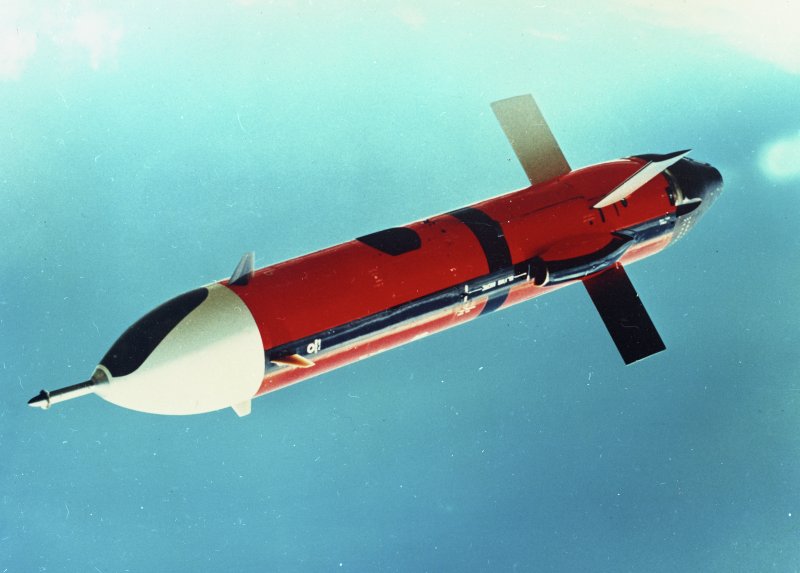
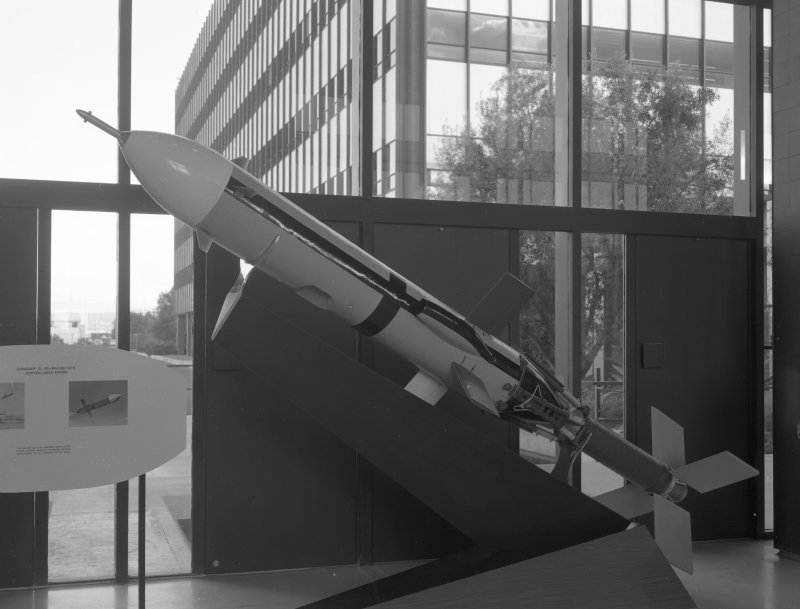
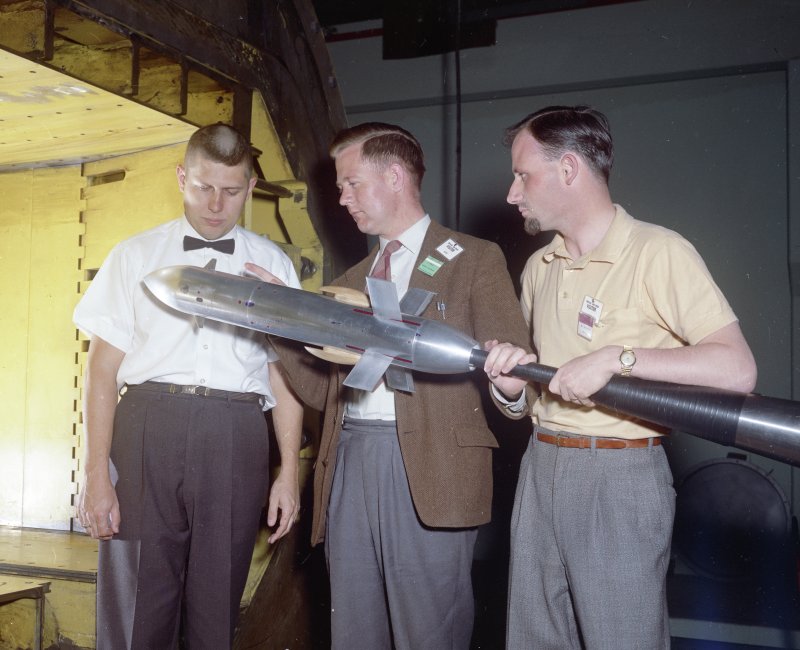
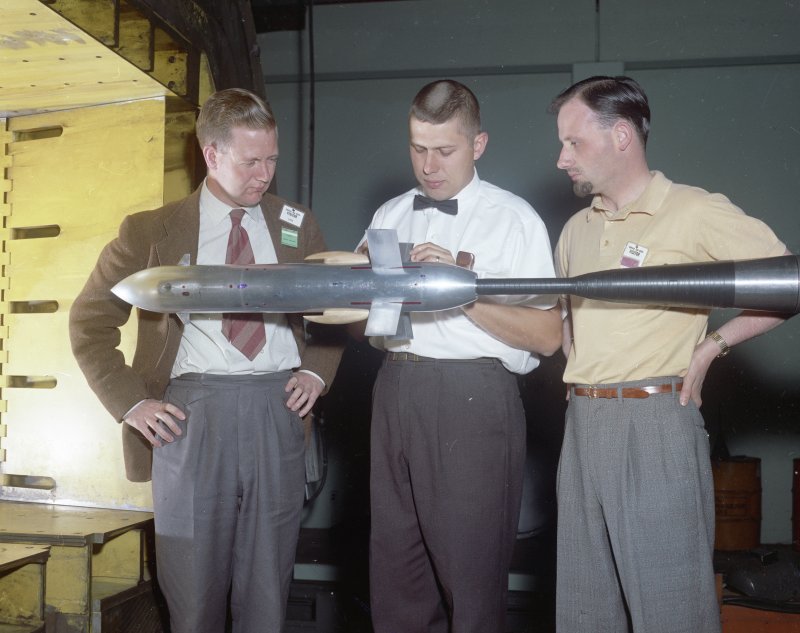
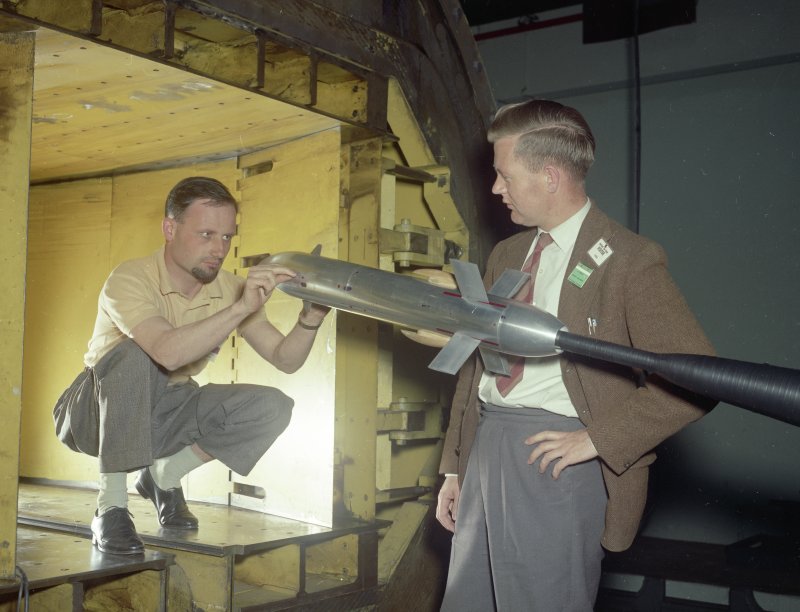
The cylindrical body had four stub-wings at the rear of the fuselage, with aerodynamic trim provided by smaller canard foreplanes. The drone looked and flew like a missile and was launched from truck-mounted rails, cruising under jet power. Takeoff was achieved by a booster rocket, which was jettisoned when flight speed was attained; a small turbojet then took over. The flight pattern was programmed, allowing for flight to target areas, sensor runs, and return to the recovery site. On arrival, the motor cut and a drogue parachute deployed, slowing the drone and causing it to invert. Pneumatic landing bags were released before ground contact. A camera or sensor could be fitted to the CL-89. The programmed flight path was constrained by a very limited number of 'events' that could be programmed, including turns, altitude changes, sensor activations, and landing. The flightpath had to be corrected for meteorological conditions using a standard artillery Target Acquisition meteor message. Two types of sensors were used: standard black and white film (with flares for night use) and infrared linescan. Three types of sensors were used with British Drone Troops: Vinten (day sensor), Zeiss (day and night), and IRLS (day and night).
Reader's Guide
The Canadair CL-89 represented a significant step in NATO's unmanned surveillance capabilities during the Cold War, providing divisional-level intelligence gathering through a joint Canadian, British, and West German development effort. Its difficult development and near-abandonment highlight the technical challenges of early UAV programs, yet the system eventually entered service with multiple nations and saw operational use. In UK service as Midge, it replaced the Northrop Radioplane SD-1 and was itself replaced by Phoenix. The CL-89 was used operationally in Kuwait in 1991, with some effect especially when combined with artillery raids. The system's design, resembling a missile with a programmed flight path and parachute recovery, reflected the era's approach to unmanned reconnaissance. The later CL-289 model, a larger and improved version with greater payload and range, entered service in November 1990 and was used during the NATO bombing of Yugoslavia in 1999, where at least nine were shot down by the Yugoslav Army. The CL-89's legacy includes its role in establishing multinational cooperation in drone development and its influence on subsequent NATO surveillance systems.
Did You Know?
- The CL-89 was almost abandoned during its difficult development.
- In UK service it was known as Midge, which stands for Military Intelligence & Data Gathering Equipment.
- The drone was recovered by inverting itself and deploying pneumatic landing bags.
- At least nine CL-289 drones were shot down during the NATO bombing of Yugoslavia in 1999.
The Canadian License and the Mark 6 Apex
The Canadair Sabre represents one of the most significant licensed-production efforts in postwar aviation history. Under a licensing agreement with North American Aviation, Canadair Ltd. built 1,815 Sabre variants for Canadian and allied air forces. What elevates the Canadian contribution beyond mere quantity is the final variant, the Mark 6, which is generally regarded as possessing the highest capabilities of any Sabre version ever produced. This distinction places a Canadian-built aircraft at the very apex of a design family that spanned multiple nations. The Canadair production line operated within a broader global manufacturing network that also included facilities in the United States, Japan, Italy, and Australia, collectively producing 9,860 units across all variants. The Sabre family thus stands as the most-produced Western jet fighter in history, and the Canadian share represents a substantial and technically advanced portion of that total output.
The Swept-Wing Breakthrough
The F-86 Sabre's defining design feature—the 35-degree swept-back wing—was not an original North American invention but rather the application of aerodynamic research data seized from German engineers at the close of World War II. By 1944, German designers had demonstrated through experimental work dating to 1940 that a thin, swept wing dramatically reduced drag and delayed the compressibility problems that had plagued straight-wing fighters like the P-38 Lightning near the speed of sound. When North American's XP-86 prototype failed to meet the required 600 mph top speed, the company turned to this captured data. Despite resistance from senior staff who had invested heavily in the existing straight-wing design, wind tunnel testing validated the swept-wing concept. The final configuration incorporated modified NACA four-digit airfoils, an automatic slat design derived from the Messerschmitt Me 262, and an electrically adjustable stabilizer. This radical mid-development change transformed a mediocre prototype into a combat-proven fighter.
Records and Pioneering Flights
The Sabre family achieved a remarkable string of aviation firsts and records across multiple decades. On 15 September 1948, Major Richard L. Johnson set the first official world speed record in an F-86A at 671 mph over Muroc Dry Lake. Five years later, on 18 May 1953, Jacqueline Cochran became the first woman to break the sound barrier, piloting a one-off Canadian-built F-86 Sabre Mk 3 alongside Chuck Yeager—a milestone that directly ties the Canadair production line to a landmark moment in aviation history. Col. K. K. Compton won the 1951 Bendix air race in an F-86A averaging 553.76 mph. In 1958, a Pakistan Air Force team called the Falcons, led by Wing Commander Zafar Masud, set a world record by performing a loop in a 16-aircraft diamond formation at PAF Base Masroor. These achievements spanned nationalities and eras, underscoring the Sabre's versatility as both a record-breaker and a precision formation aircraft.
From Prototype to Global Combat Workhorse
The Sabre's journey from a mid-1944 USAAF requirement for a high-altitude day escort fighter to the most-produced Western jet fighter of its era was neither linear nor guaranteed. North American's initial XP-86 design, rolled out in August 1947 and first flown by George Welch in October of that year at Muroc Dry Lake, initially projected a top speed of only 582 mph—barely ahead of the FJ-1 Fury and on par with rival XP-80 and XP-84 programs that were further along in development. The swept-wing modification rescued the program. By the time the F-86 entered USAF service with Strategic Air Command units in 1949, it was already destined for the Korean War, where it became the primary U.S. air combat fighter against the Soviet MiG-15 in some of the earliest jet-to-jet battles. Despite being developed in the late 1940s and considered outdated by the end of the 1950s, the Sabre's adaptability kept it in front-line service across numerous air forces well beyond its original design life.
Gallery
Frequently Asked Questions
What is the Canadair CL-89?
The CL-89 was a surveillance drone jointly developed by Canada, Britain, and West Germany during the 1960s to collect battlefield intelligence at the divisional level for NATO forces. It was designed and built by Canadair under a tripartite agreement that began in June 1963.
What was the CL-89's primary role?
Its job was to fly reconnaissance missions and relay gathered information back to divisional commanders so NATO units could make informed tactical decisions. A larger follow-on model, the CL-289, was later developed to carry an expanded sensor payload.
Which armies operated the CL-89?
The drone entered service with the Canadian, British, German, French, Italian, and Turkish armies. In British Army use it carried the service name 'Midge,' and a single UK troop was staffed by just two officers.
When did the CL-89 first fly and when was it delivered?
The initial test flight took place in March 1964 at Yuma, Arizona, though that first attempt did not go well. The first complete operational system was not fielded until 1969, giving the program roughly five years of further development.
What NATO designation did the CL-89 receive?
Under the NATO standardization system the drone was assigned the code AN/USD-501. The United States was invited to join the tripartite development effort but ultimately declined to participate.
More in Military Drones of Asia, Europe and the Americas 1-24
Spotted an error? Know more?
Reader corrections go straight into our review queue. Suggest an edit · How this site is sourced