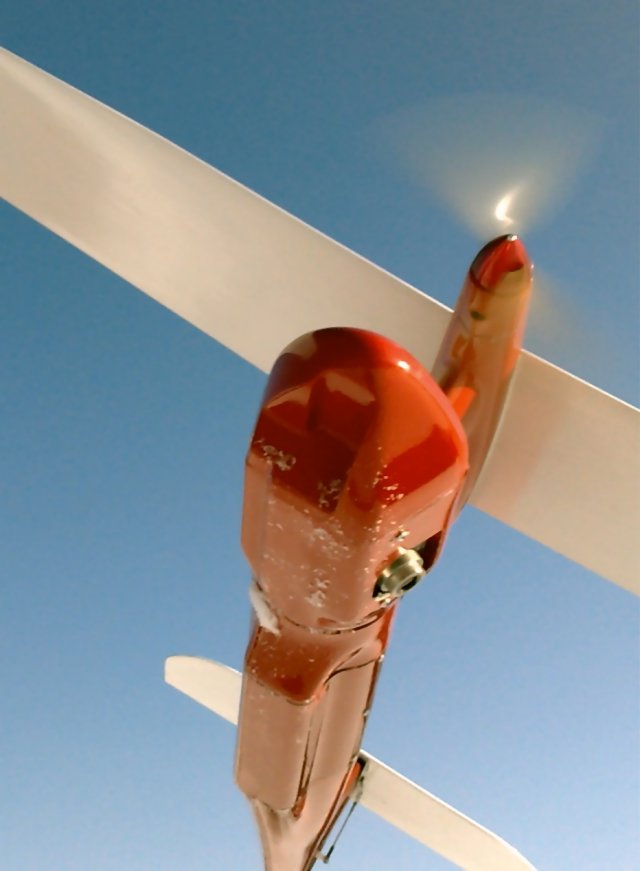
Pteryx UAV
Polish civilian UAV for photomapping with autonomous and RC operation.

Kbosak · CC BY 3.0
The Pteryx UAV is a Polish miniature unmanned aerial vehicle (UAV) designed for civilian use, manufactured and sold by Trigger Composites. It functions both as a flying remote control model and a pre-programmed vehicle, and was awarded the Innowator Podkarpacia medal for innovative design in the micro-enterprises category of the Podkarpacie region in 2010.
Quick Facts
- Aircraft Type
- UAV
- Aircraft Role
- Photography
- National Origin
- Poland
- Manufacturers
- Trigger Composites
Facts from the source article.
Lore & Background
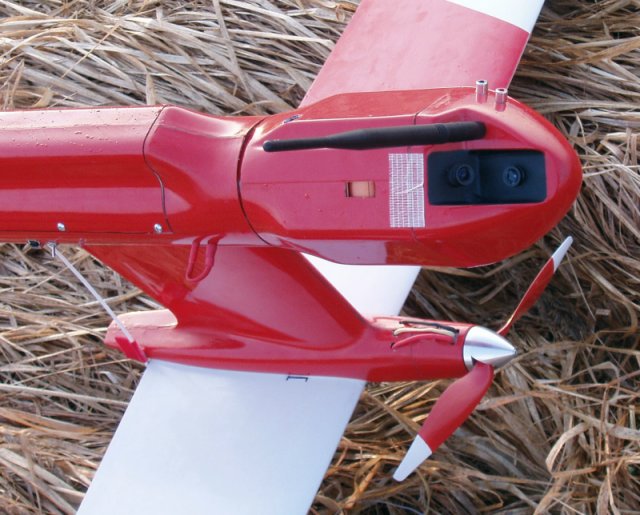
The Pteryx UAV was developed by Trigger Composites and uses a custom derivation of the FLEXIPILOT software designed by the Aerial Robotics engineering group for photomapping and civilian use. Its avionics and flying platform are capable of full operational capability without an active transmitter or ground station. The aircraft is constructed from custom fiberglass composite material covered with durable red gelcoat, with carbon fiber and Kevlar reinforcements, wood, and other plastics; wooden or all-composite wings are offered.
The UAV can be launched by catapult and lands via parachute. It carries a fully enclosed camera head that can be mounted for nadir or oblique photography, and the entire head can be tilted in flight using the RC transmitter. The camera mount accommodates a pre-installed compact digital camera or can be exchanged for other equipment, supporting a payload weight range of 200 g to 1000 g. The aircraft provides positions for photos taken and has storage for 8000 events.
Multiple missions per day can be flown without reprogramming the autopilot, using waypoints. The system features single-button operation and an exchangeable mission package. Assembly time is around five minutes.
Reader's Guide
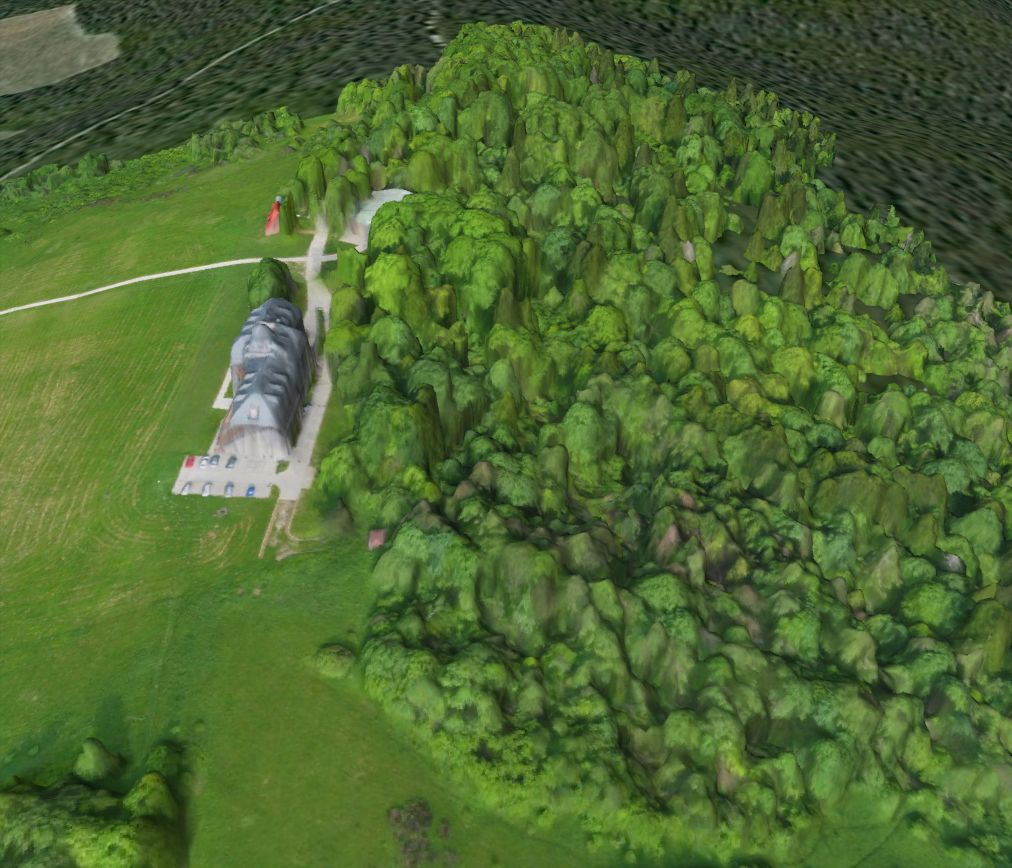
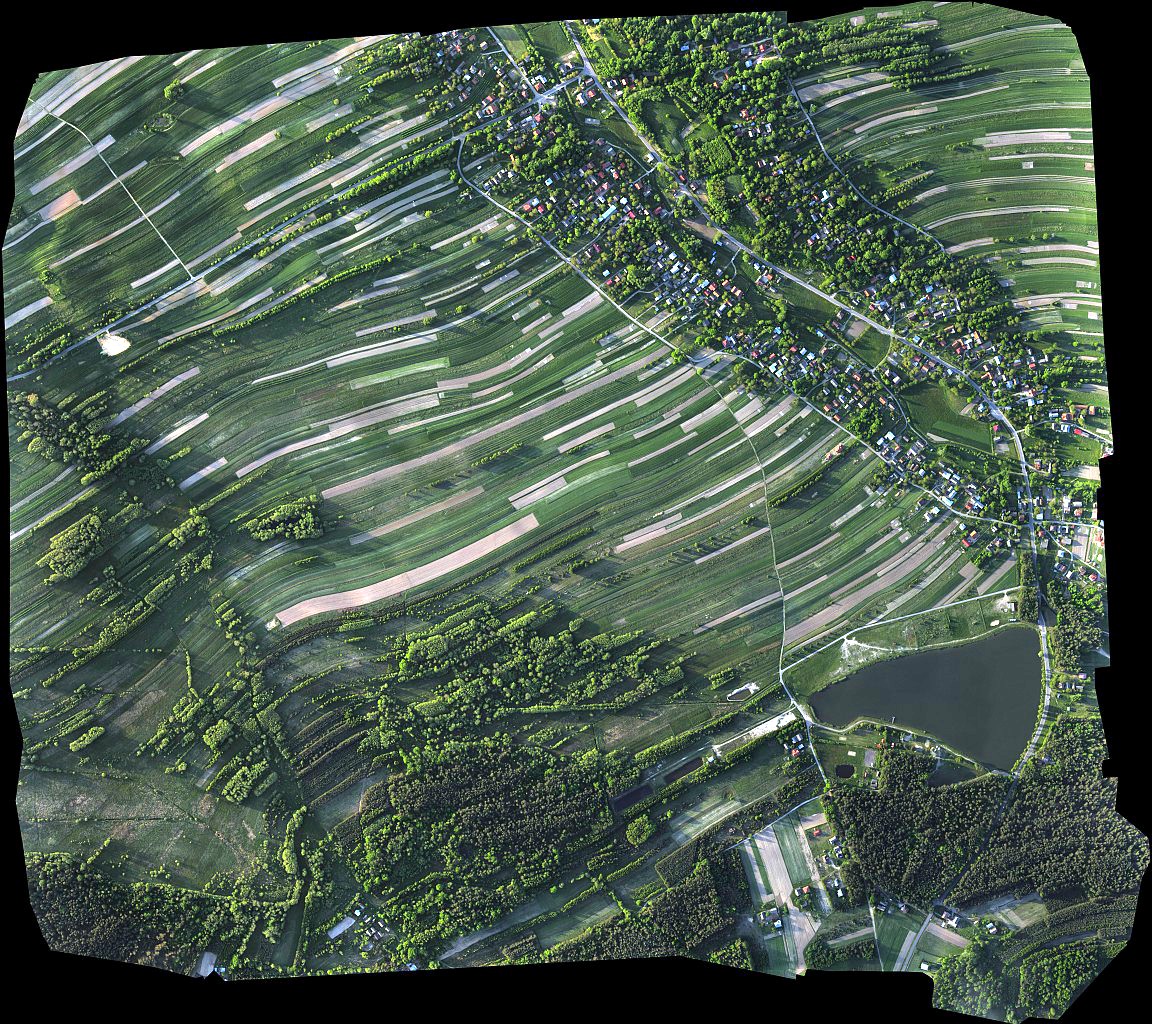
The Pteryx UAV represents a niche in civilian drone development, focusing on photomapping and precision agriculture with a design that emphasizes operational simplicity and autonomy. Its ability to function without an active transmitter or ground station, combined with catapult launch and parachute landing, makes it suitable for remote or infrastructure-poor environments. The aircraft's data processing strategies range from direct photo examination to cloud-based services and specialized GIS software, enabling generation of orthophotomaps and digital surface models. The system's error margins—such as GPS position error up to 5 m and altitude drift up to 5 m per hour—are documented for users to calibrate outputs. The Pteryx UAV's recognition with the Innowator Podkarpacia medal highlights its regional significance in Podkarpacie, though its broader legacy is as a specialized tool for civilian mapping and research, with a design that prioritizes flexibility in payload and mission profiles over military or mass-market applications.
Did You Know?
- It can fly up to 120 minutes with a 450 g payload or 55 minutes with a 1 kg payload.
- Data processing options include using free 3D modelling services or a pre-paid cloud computing service that delivers results in hours.
Gallery
Frequently Asked Questions
Who builds the Pteryx UAV and where does it come from?
The Pteryx UAV is a Polish miniature unmanned aerial vehicle produced by Trigger Composites. It was developed as a civilian platform rather than a military system, targeting the micro-enterprise sector in the Podkarpacie region of southeastern Poland.
What is the Pteryx UAV actually used for?
Its primary mission is civilian photomapping, and it can be flown either as a hand-controlled remote model or in a fully autonomous, pre-programmed flight mode. This dual operation style makes it useful for survey and mapping tasks that don't require real-time pilot input.
What are the Pteryx UAV's key flight specifications?
It has a 2.8 m wingspan, 1.4 m length, and 0.33 m height, with a maximum takeoff weight of 5.0 kg. Endurance reaches roughly 55 minutes carrying a 1 kg payload or up to 120 minutes with a lighter 450 g payload.
How do the Pteryx Lite and Pteryx Pro variants differ?
The two versions are distinguished mainly by their service ceiling: the Pteryx Lite is rated to 3,000 m, while the Pteryx Pro is limited to 1,200 m. Both share the same airframe dimensions and payload endurance figures.
What recognition has the Pteryx UAV earned?
In 2010 it received the Innowator Podkarpacia medal, an award honoring innovative design among micro-enterprises in the Podkarpacie region. The recognition highlighted its compact, dual-mode flight architecture as a notable achievement for a small Polish manufacturer.
More in Military Drones of Asia, Europe and the Americas 1-24
Spotted an error? Know more?
Reader corrections go straight into our review queue. Suggest an edit · How this site is sourced