Boeing MQ-28 Ghost Bat
Stealth loyal wingman drone designed for autonomous and crewed teaming.

HoHo3143 · CC BY-SA 4.0
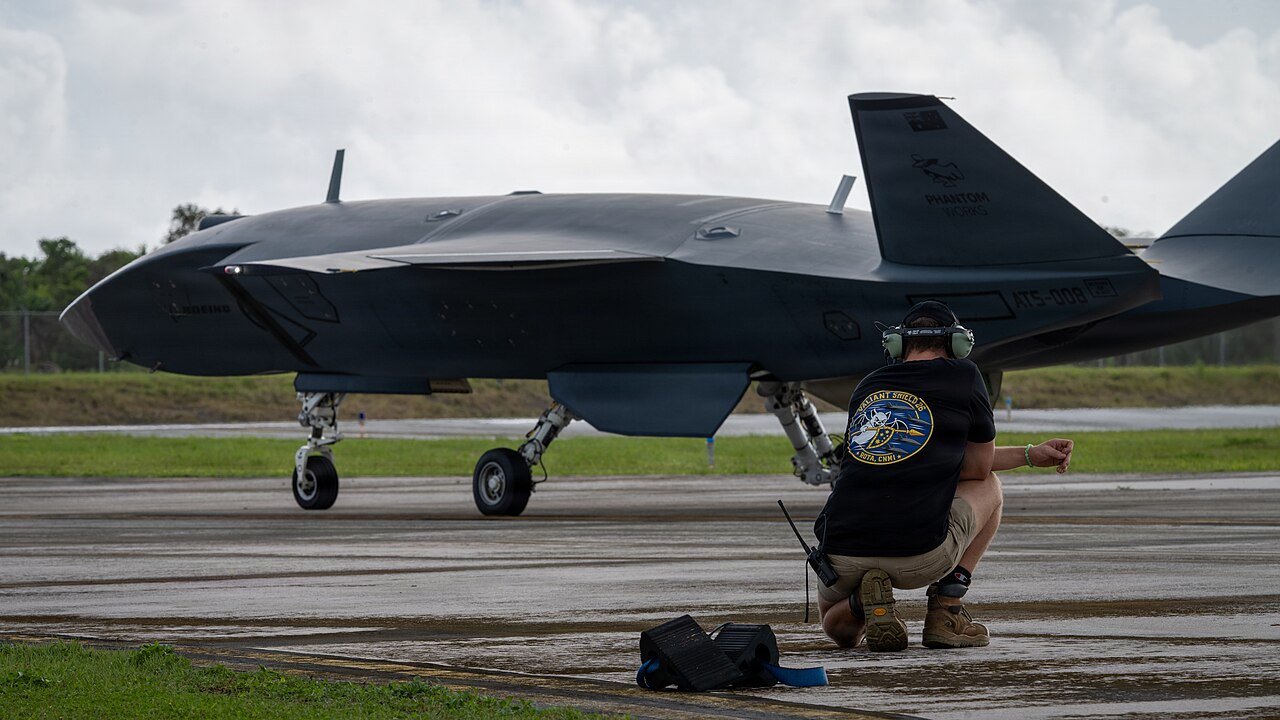
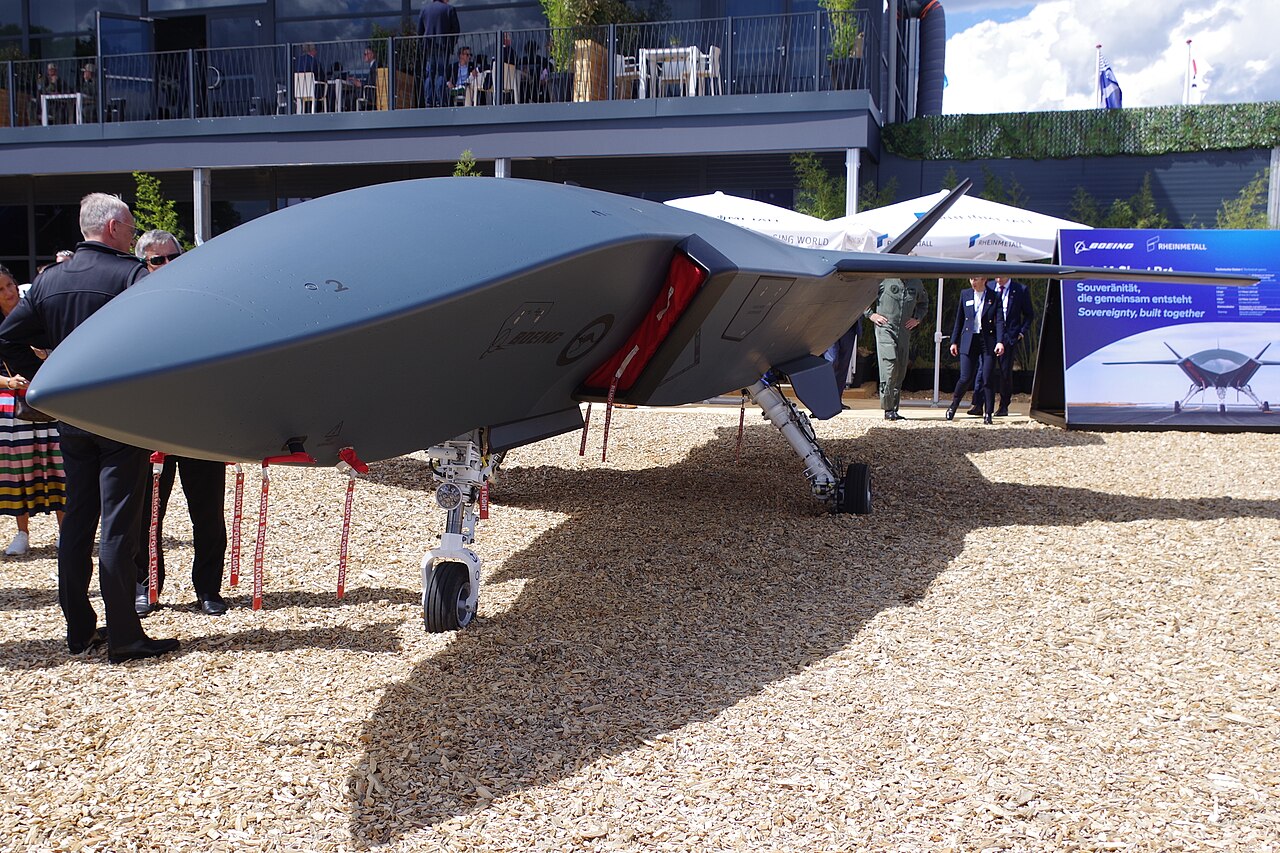
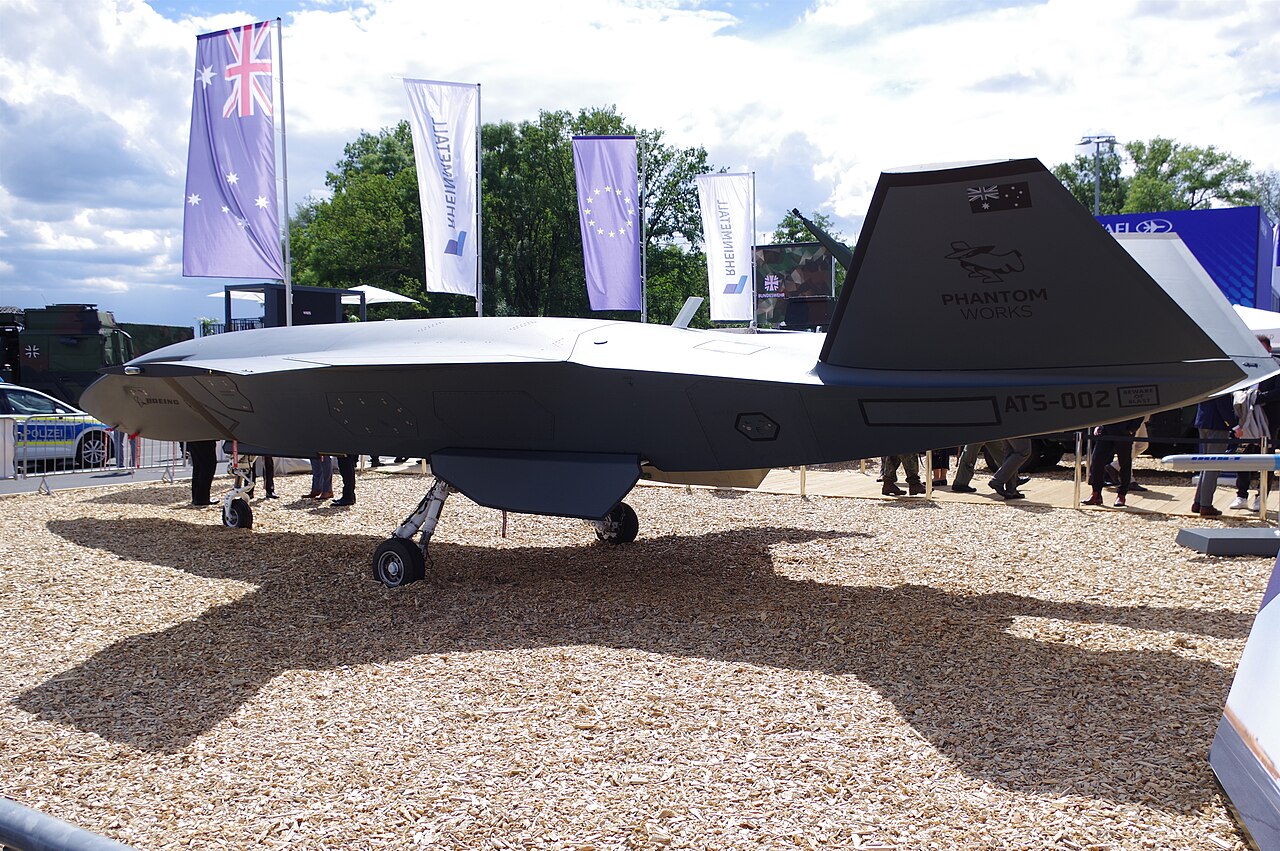
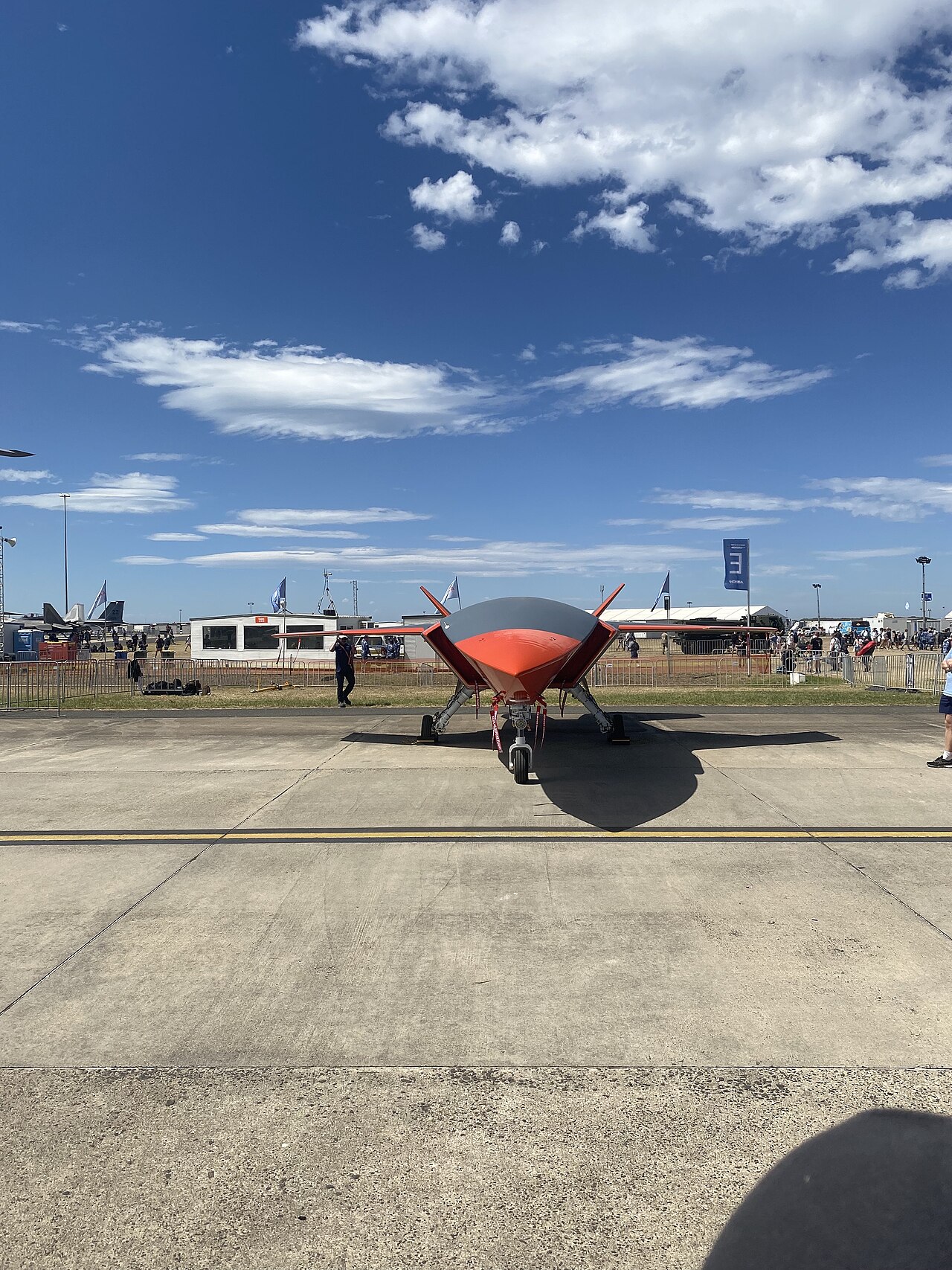
The Boeing MQ-28 Ghost Bat, originally called the Boeing Airpower Teaming System (ATS), is a stealthy, multirole drone being built by Boeing Australia for the Royal Australian Air Force (RAAF). It acts as a force multiplier, able to fly alongside crewed aircraft as a "loyal wingman" within an integrated system that includes space-based assets, or carry out autonomous missions on its own using artificial intelligence. This is the first combat aircraft designed and developed in Australia in more than fifty years.
By October 2024, eight Block 1 aircraft had been built, logging over 100 flight-test hours. Operational tests occur about every three months at the RAAF Woomera Test Range Complex, with one to three sorties per day, including night flights. The drone has also operated from RAAF Base Tindal, demonstrating it can be deployed from a Boeing C-17 Globemaster III and controlled by an airborne Boeing E-7 Wedgetail. Three additional Block 2 airframes, with an improved wing and GPS/INS, are slated for production by 2025. In December 2025, plans were announced for six more Block 2 airframes and development of an enhanced Block 3 prototype.
As of 2025, the aircraft are designed and built in Melbourne at Boeing Australia, with future production planned in Wellcamp, Toowoomba. The wing is Boeing’s largest resin-infused single composite component, using electromechanical actuators and controllers for the primary flight control system. The aircraft features a modular, swappable mission nose package.
In February 2019, Boeing stated that manufacturing location would depend on the market, but the Ghost Bat remains a sovereign Australian program, produced only in Australia with the RAAF as lead partner. On 4 November 2021, Boeing Australia announced construction of its fifth aircraft had begun in Melbourne. On 26 March 2024, it announced the start of earthworks for a 9,000-square-metre factory complex, the Wellcamp Aerospace and Defence Precinct, in partnership with Wagners. This facility was first announced by the Queensland Premier on 21 September 2021.
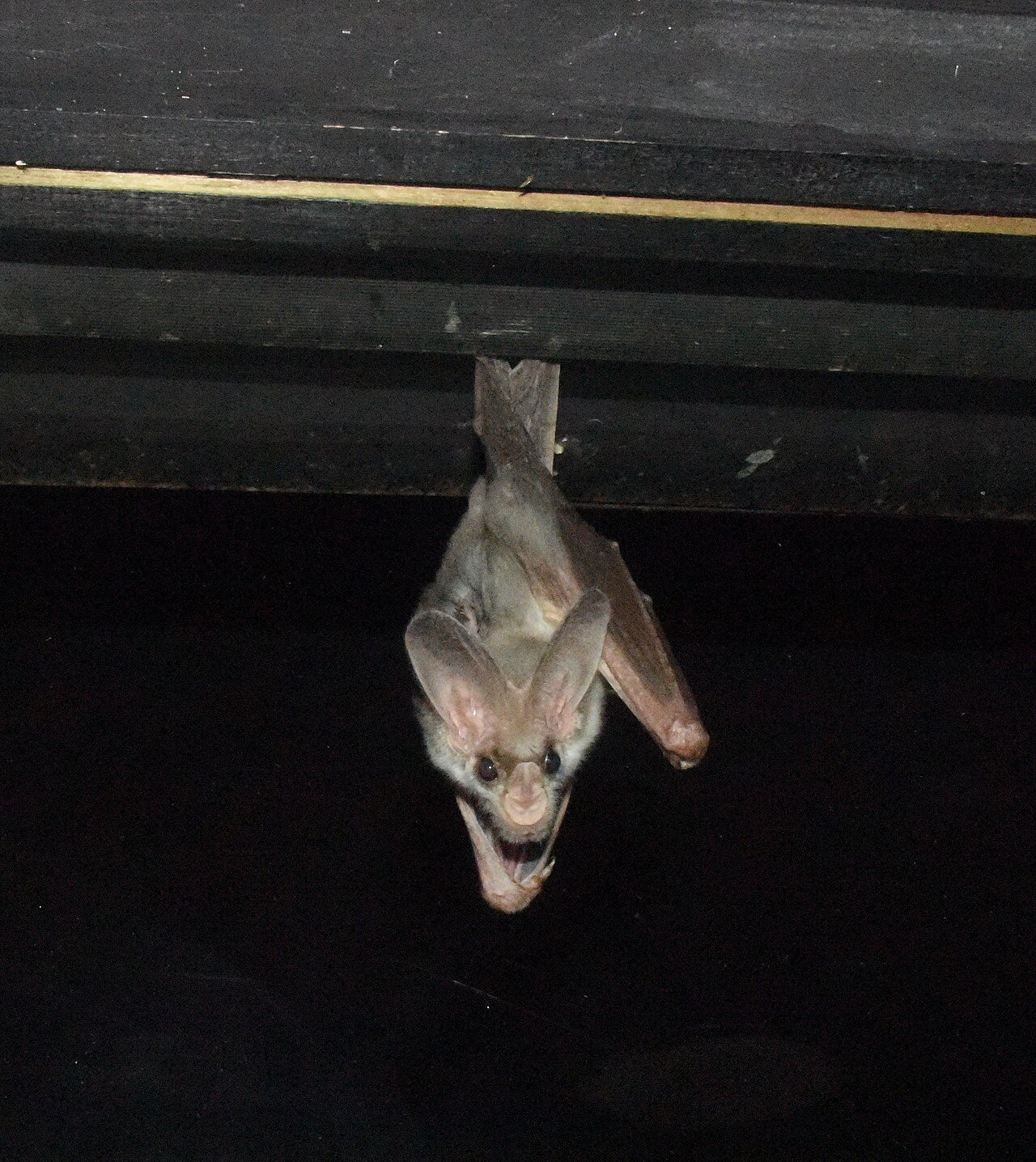
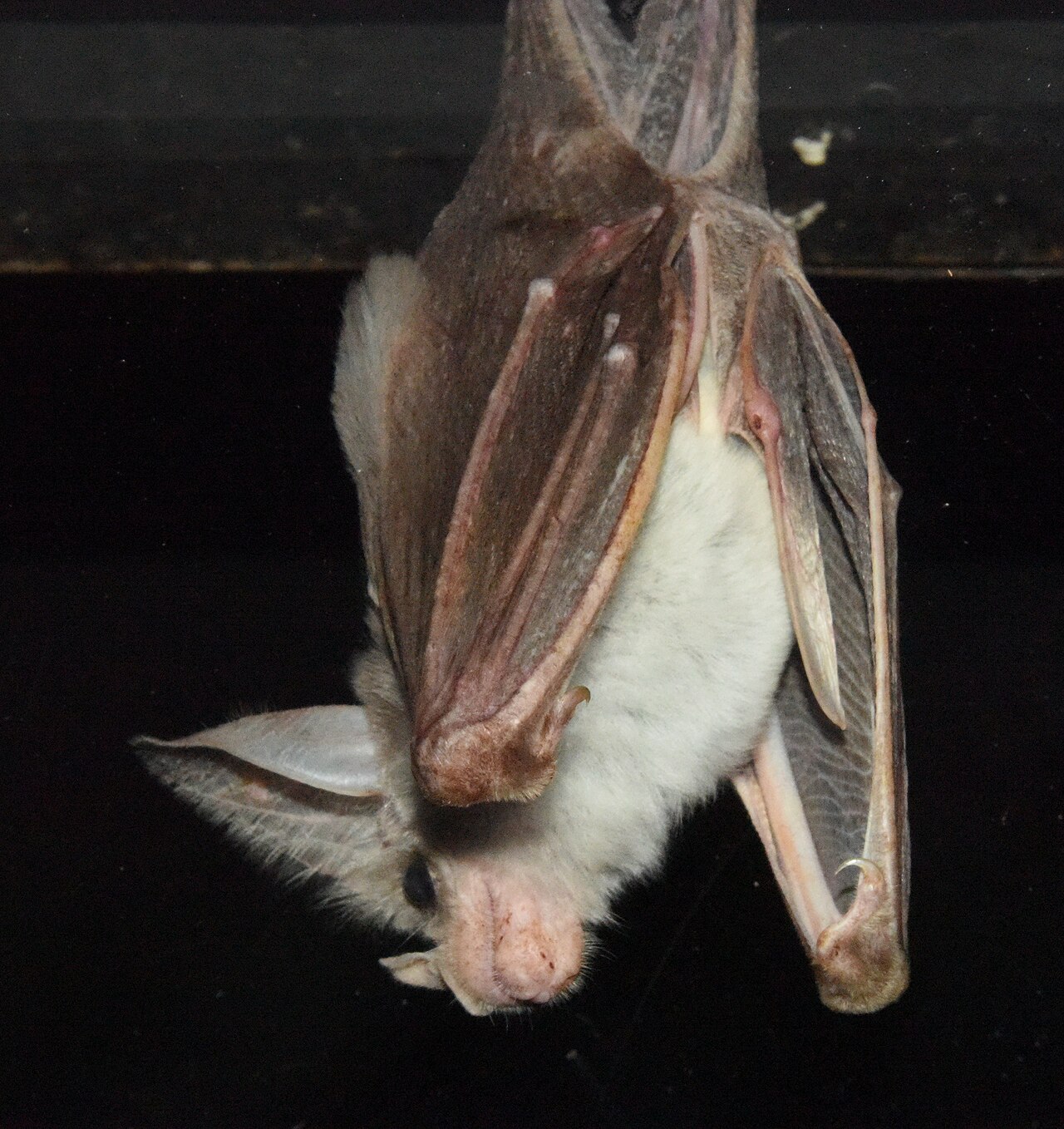
At a naming ceremony on 21 March 2022 at RAAF Base Amberley, the Loyal Wingman was officially designated the MQ-28A Ghost Bat, after an Australian bat known for hunting in packs—reflecting the drone’s sensor and intelligence, surveillance, and reconnaissance capabilities.
Quick Facts
- Aircraft Type
- Unmanned combat aerial vehicle / Loyal wingman drone
- National Origin
- Australia
- Manufacturer
- Boeing Australia · Boeing Defense, Space & Security
- Primary User
- Royal Australian Air Force (future)
- Prototypes
- 8 Block 1 / 9 Block 2
- Construction Date
- 2019–present
- Introduction
- 2028 (planned)
- First Flight
- 27 February 2021
Facts from the source article.
Lore & Background
The MQ-28 Ghost Bat was officially named at RAAF Base Amberley on 21 March 2022, after an Australian bat known for teaming together in a pack to detect and hunt, reflecting the aircraft's sensors and intelligence, surveillance and reconnaissance abilities. The RAAF initially planned to buy three Airpower Teaming System systems as part of the Loyal Wingman Advanced Development Program, with the order later increased to six. As of May 2023, the Australian government confirmed funding for 10 aircraft for the RAAF, not including three prototypes not owned by the government. In February 2024, an additional A$400 million was announced for three more aircraft built to the Block 2 standard, with improvements to the wing, GPS, sensors, mission payloads, integrated combat system and autonomous systems.
The first prototype achieved power-on in March 2020 and was rolled out in May 2020. The engine was powered up for the first time in September 2020, and low-speed taxi tests occurred in October 2020 at RAAF Base Amberley. The first test flight took place at RAAF Base Woomera on 27 February 2021. As of October 2024, eight Block 1 vehicles had been built with more than 100 hours of flight testing, including night flights. Operational tests occurred at RAAF Woomera Range Complex approximately every three months, with one to three sorties daily. The aircraft has been operated from RAAF Base Tindal and demonstrated deployment from a Boeing C-17 Globemaster III and control by an airborne Boeing E-7 Wedgetail. Three additional Block 2 airframes were to be produced by 2025, and in December 2025 it was announced that a further six Block 2 airframes would be produced and development would start on an enhanced Block 3 prototype.
The aircraft is designed and built in Melbourne at Boeing Australia, with future production planned in Wellcamp, Toowoomba. The wing is Boeing's largest resin-infused single composite component, featuring electromechanical actuators and controllers for the primary flight control system, and the aircraft has a modular, swappable mission nose package system. In July 2024, the Australian Assistant Minister for Defence clarified that there is an option to arm the UAV in the future in addition to its reconnaissance and surveillance roles.
Reader's Guide
The MQ-28 Ghost Bat represents a significant shift in air combat doctrine, functioning as a loyal wingman that can team with crewed aircraft such as the E-7 Wedgetail, F-35A or F/A-18F, or perform autonomous missions independently. Its development marks the first combat aircraft designed and built in Australia in over half a century, and the program remains a sovereign Australian effort with production only in Australia and the RAAF as lead partner. The aircraft's modular nose package allows for mission flexibility, and its artificial intelligence enables autonomous decision-making. The live fire test on 8 December 2025, in which an MQ-28 destroyed a Phoenix target drone with an AIM-120 AMRAAM while acting as a loyal wingman to an E-7 Wedgetail and an F/A-18F Super Hornet, was reportedly the first time an unmanned aircraft had fired an AIM-120 AMRAAM. The engagement involved the three aircraft taking off from different locations, with the MQ-28 overseen by an operator aboard the E-7, and data shared between all three. The MQ-28 adjusted its course based on Super Hornet tracking and received authorization from the E-7 to engage at an operationally representative range, then provided mid-course guidance to the missile. As of September 2025, the program was ahead of schedule and the government expected foreign orders. The MQ-28 has also drawn interest from the United States, with preliminary discussions about purchasing the aircraft for US service and a Combat Collaborative Aircraft Project Arrangement signed with the US in 2023.
Did You Know?
- The MQ-28 Ghost Bat is named after an Australian bat known for hunting in packs.
- On 8 December 2025, an MQ-28 fired an AIM-120 AMRAAM in what was reportedly the first such launch by an unmanned aircraft.
- The first non-Boeing pilot on the program, RAAF Wing Commander Phil Parsons, completed training in June 2024.
Pioneering the Loyal Wingman Concept
The Boeing MQ-28 Ghost Bat stands as one of the earliest tangible explorations of the loyal wingman concept, a category of military drone designed to fly alongside crewed combat aircraft. Alongside Turkey's Bayraktar Kızılelma, the MQ-28 helped move the idea from theoretical papers into operational reality. The core philosophy behind such platforms is straightforward in principle: replace the expensive human pilot and their associated life-support systems with an artificial intelligence autonomy package that is significantly lighter and lower in cost, while still delivering comparable capability in both flying the aircraft and executing its mission. The MQ-28 embodies the second major design approach to loyal wingmen rather than the first. Instead of building a single airframe that can be configured with either a human in the cockpit or an AI system in the same seat, the MQ-28 represents a dedicated, smaller, and more affordable autonomous platform. It carries its own munitions load and is intended to slot into a broader team of crewed and uncrewed aircraft, functioning as a force multiplier rather than a standalone fighter.
Positioning Within the CCA Program
The MQ-28 Ghost Bat found itself at the center of one of the most consequential procurement decisions in modern air power. Both it and the Kratos XQ-58 Valkyrie were evaluated as candidate options during the early stages of the United States Air Force's Collaborative Combat Aircraft program, a massive initiative that envisions autonomous fighters operating in close coordination with sixth-generation crewed aircraft. The financial stakes are enormous: the USAF has committed more than $8.9 billion to CCA development across fiscal years 2025 through 2029. Yet the program's trajectory shifted in a way that ultimately placed the MQ-28 on the outside of the final selection. On January 8, 2026, the U.S. Marine Corps announced its choice of Northrop Grumman and Kratos to develop its first operational CCA, a decision that effectively transitioned the XQ-58 from an experimental testbed into a combat-ready loyal wingman. The MQ-28's experience in these early CCA evaluations nonetheless cemented its role as a proving ground for the manned-unmanned teaming concepts that now define the next generation of air combat doctrine.
Autonomy Levels and the MUM-T Framework
The MQ-28 Ghost Bat operates within a broader doctrinal framework known as Manned-Unmanned Teaming, a concept the United States Army Aviation Center of Excellence defines as the synchronized employment of soldiers, manned and unmanned air and ground vehicles, robotics, and sensors to achieve enhanced situational understanding, greater lethality, and improved survivability. NATO formalized the technical maturity of such operations through STANAG 4586, which established five Levels of Interoperability ranging from basic remote-controlled systems at Level 1 to fully self-launching and self-recovering unmanned aerial vehicles at Level 5. The MQ-28 sits toward the higher end of this spectrum, where artificial intelligence and machine learning enable automatic take-off and landing, autonomous mission planning, and independent target recognition and engagement. In this regime, the human operator no longer flies the aircraft directly but instead assumes a supervisory role, approving or denying the machine's decisions. At the highest autonomy tier, a single operator can oversee multiple unmanned platforms simultaneously, and the drones can complete their missions even when human control becomes unavailable.
The Attritable Wingman Philosophy
A defining characteristic of the MQ-28 Ghost Bat and its loyal wingman peers is the deliberate embrace of affordability as a combat advantage. Defense analysts draw a clear distinction between traditional unmanned combat aerial vehicles, which are higher-performance aircraft capable of independent operations in fighter and strike roles, and collaborative combat aircraft like the MQ-28, which are designed to provide extended-range strikes, frontline intelligence, and additional protective layers for manned assets. The critical requirement for CCAs is what analysts call combat mass, the ability to field large numbers of aircraft at a cost low enough that losses are absorbable rather than catastrophic. This makes the platform attritable and replaceable. The operational philosophy elevates human pilots from individual aircraft operators to mission commanders, while AI-driven wingmen serve as high-skill operators of relatively low-cost robotic craft. In this model, the loyal wingman functions simultaneously as a sensor, a shooter, a weapons carrier, and a cost reducer, fundamentally reshaping how air superiority is achieved.
Gallery
Frequently Asked Questions
What is the Boeing MQ-28 Ghost Bat?
It is a stealthy, multirole unmanned combat aircraft built by Boeing Australia for the Royal Australian Air Force. Originally designated the Airpower Teaming System, it is engineered to fly either in close formation with crewed fighters or to carry out fully independent, AI-guided missions.
What combat role does the MQ-28 Ghost Bat fill?
It serves as a 'loyal wingman,' slotting into a broader integrated network that can include space-based sensors and manned aircraft. It can also operate on its own as an autonomous force multiplier, extending the RAAF's reach without putting a pilot at risk.
Who builds the MQ-28 Ghost Bat and where is it manufactured?
Boeing Australia is the manufacturer, producing the aircraft at a 9,000-square-metre factory complex in Wellcamp, Toowoomba. The Royal Australian Air Force is the sole operator.
When did the MQ-28 Ghost Bat first fly and how many airframes exist?
The prototype completed its maiden flight on 27 February 2021. By October 2024, eight Block 1 vehicles had been assembled and had accumulated more than 100 hours of flight-test time.
Why is the MQ-28 Ghost Bat a landmark for Australian defence?
It is the first combat aircraft designed and developed on Australian soil in over fifty years. Its dual mode—teaming with crewed jets or flying autonomously—positions Australia at the forefront of next-generation unmanned airpower.
More in Military Drones of Asia, Europe and the Americas 1-24
Spotted an error? Know more?
Reader corrections go straight into our review queue. Suggest an edit · How this site is sourced