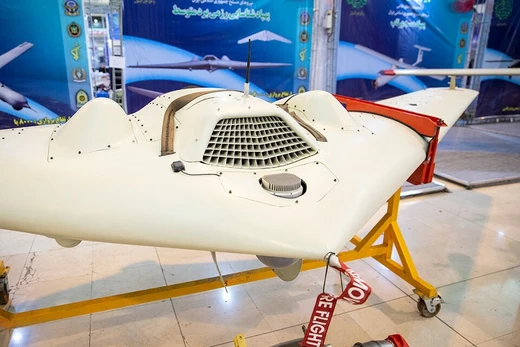
Lavochkin La-17
First Soviet operational UAV, serving from the 1950s into the 1980s.

Kaboldy · CC BY-SA 3.0
The Lavochkin La-17 holds the distinction of being the first Soviet unmanned aerial vehicle to enter operational service. Initial development began in 1950 at the Lavochkin design bureau, with flight tests starting in 1953. These prototype drones were carried aloft by a Tupolev Tu-4 four-engine bomber. Production of the La-17 commenced in 1956, and the type remained in service through the 1980s.
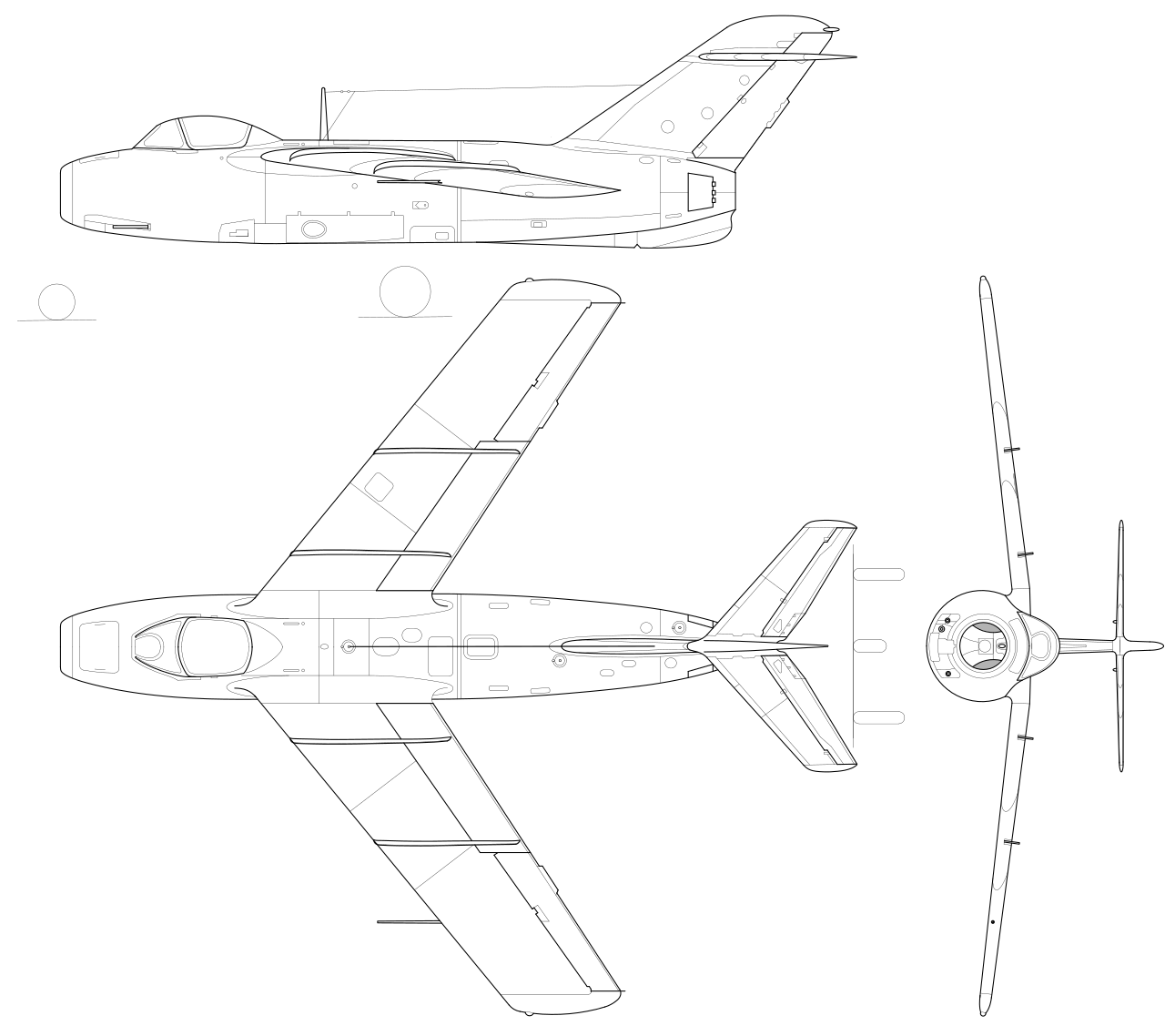
The original La-17 was an all-metal jet drone with straight wings and a jet engine housed in a nacelle beneath the fuselage. It was air-launched and powered by a Bondaryuk RD-900 ramjet producing 800 kgf (1,760 lbf) of thrust. A windmill-type electric generator in the nose, reminiscent of the system used on the German Me 163 rocket interceptor, supplied electrical power. The drone was guided by radio control and landed by simply "bellying in," with the engine absorbing the impact of touchdown. The ramjet was expendable and easily replaced. To enhance its radar signature, the drone could carry Luneburg lenses.
The original La-17 proved only marginally effective. Air launch was expensive and logistically cumbersome, making it difficult to simulate mass attacks. The ramjet's high fuel consumption led to such short endurance that a fighter pilot who missed the drone on a first pass would find it out of fuel before a second attempt. To address these issues, Lavochkin engineers developed a ground-launched variant, the La-17M. First flown in 1959 and entering service in 1960, it used a RATO booster under each wing root and launched from a four-wheel towed launcher derived from a standard 100 mm antiaircraft gun carriage.
The La-17M was powered by a Mikulin RD-9BK turbojet producing 1,950 kgf (4,300 lbf) of thrust—a derated, non-afterburning, simplified version of the RD-9B engine used in the MiG-19 fighter. Teardrop fairings on the wingtips contained compressed air fed to the engine to improve flight ceiling. Endurance improved from 40 minutes on the original La-17 to 60 minutes. Like its predecessor, the La-17M bellied in to land.
Early production La-17Ms lacked an autopilot and were quickly replaced by the La-17MA, which included one. Later production introduced the RD-9BKR engine, offering the same performance as the RD-9BK but with minor changes for low-level operation and a service life increased from 15 to 30 hours.
Quick Facts
- National Origin
- Soviet Union
- Manufacturer
- Lavochkin
- First Flight
- 1953
- Primary User
- Soviet Air Force
Facts from the source article.
Lore & Background
The La-17 was designed by the Lavochkin design bureau, with work beginning in 1950. Flight tests began in 1953, with prototype drones carried on a Tupolev Tu-4 four-engine bomber. Production began in 1956. The initial variant was air-launched, of all-metal construction with straight flight surfaces, and powered by a Bondaryuk RD-900 ramjet carried in a nacelle under the fuselage. A windmill-type electric generator in the nose provided power. The drone was radio-controlled and landed by belly landing, with the engine taking the abuse of touchdown. It could carry Luneburg lenses to enhance radar signature.
The original La-17 was only marginally effective; air launch was expensive and logistically clumsy, and the ramjet's high fuel consumption gave short endurance. To address these problems, the ground-launched La-17M was developed, performing initial flights in 1959 and entering service in 1960. It used RATO boosters under each wing root and was launched from a four-wheel towed launcher derived from a 100 mm antiaircraft gun carriage. The La-17M was powered by a Mikulin RD-9BK turbojet, a derated, non-afterburning version of the MiG-19's engine. Teardrop fairings on the wingtips held compressed air to improve flight ceiling. Endurance improved to 60 minutes. Early production lacked an autopilot and were quickly replaced by the La-17MA with autopilot. Later production featured the RD-9BKR engine with improved service life and an improved landing control system that caused the UAV to nose up before touchdown, plus a landing skid under the engine nacelle; these were designated La-17MM and entered service in 1964. Some old ramjet-powered La-17s were updated for ground launch as La-17n.
A ground-launched reconnaissance drone based on the La-17MM, the La-17R, was introduced in 1962. It had a stretched nose to accommodate reconnaissance payloads including film cameras, a real-time TV camera, and a radiation monitoring instrument. An improved La-17RM followed in 1965. Later, to rationalize production, the La-17UM (target) and La-17RU (reconnaissance) variants were manufactured with maximum parts commonality. The Lavochkin OKB eventually became more involved in space systems, and production continued into the late 1970s until RD-9BK engines were exhausted. The La-17 was then redesigned to use the R11K engine, a non-afterburning version of the Tumanskiy R11F-300 turbojet from the MiG-21. The Sokol design bureau began production of this reengined variant, internally designated La-17K, in the late 1970s. The La-17K remained in production into the early 1990s and apparently remains in lingering use in Russian service.
Reader's Guide
The La-17 family represents the Soviet Union's first operational UAV, bridging the gap between early experimental drones and sustained service use. Its evolution from a marginal air-launched ramjet target to a ground-launched turbojet platform with reconnaissance variants demonstrates a pragmatic response to operational shortcomings. The La-17's long service life—from the 1950s into the 1980s, with the La-17K continuing into the early 1990s—reflects its utility as a low-cost, expendable target and reconnaissance asset. The program also illustrates Soviet design bureau dynamics: Lavochkin initiated the design, but later production shifted to the Sokol OKB when engine supplies changed. The La-17's export was limited, though La-17RM reconnaissance drones were sent to Syria in the 1980s. More significantly, the La-17 was reverse-engineered in China without a license, leading to the Chang Kong CK-1 series, which itself saw multiple variants and remained in Chinese service. The La-17 thus had a quiet but lasting influence on Soviet and Chinese UAV development.
Did You Know?
- The La-17 was the first Soviet UAV to reach operational service.
- The La-17M improved endurance from 40 to 60 minutes by switching to a turbojet engine.
- China reverse-engineered the La-17 without a license, producing the Chang Kong CK-1 series.
Gallery
Frequently Asked Questions
Who made the Lavochkin La-17 and when did it first fly?
The Lavochkin design bureau began developing the La-17 in 1950, and prototype flight tests started in 1953. Production commenced in 1956, with the drone being air-launched from a Tupolev Tu-4 four-engine bomber during its testing phase.
What role did the Lavochkin La-17 perform in Soviet service?
As the first Soviet unmanned aerial vehicle to reach operational status, the La-17 served as a dedicated military UAV from its mid-1950s introduction through the 1980s. Its all-metal, straight-wing airframe with a single under-fuselage jet nacelle was purpose-built for unmanned flight.
What engine powered the Lavochkin La-17?
The initial La-17 was equipped with a Bondaryuk RD-900 ramjet delivering 800 kgf (1,760 lbf) of thrust. The upgraded La-17M variant swapped in a Mikulin RD-9BK turbojet rated at 1,950 kgf (4,300 lbf).
How long could the Lavochkin La-17 stay airborne?
The original La-17 variant had an endurance of roughly 40 minutes per sortie. Despite that modest flight time, the type remained in operational service from 1956 through the 1980s.
Why is the Lavochkin La-17 important in drone history?
It holds the distinction of being the Soviet Union's first operational UAV, laying the groundwork for decades of subsequent Russian and post-Soviet unmanned aircraft programs. Its roughly three-decade service life from the 1950s into the 1980s made it one of the longest-running early drone types of that era.
More in Military Drones of Asia, Europe and the Americas 1-24
Spotted an error? Know more?
Reader corrections go straight into our review queue. Suggest an edit · How this site is sourced