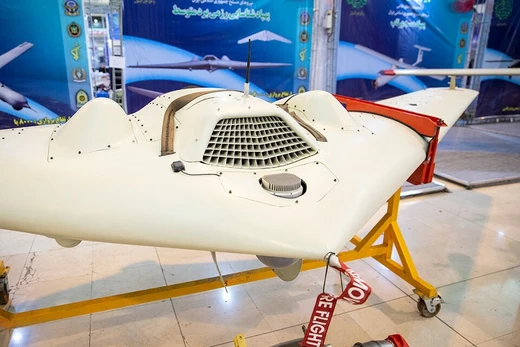
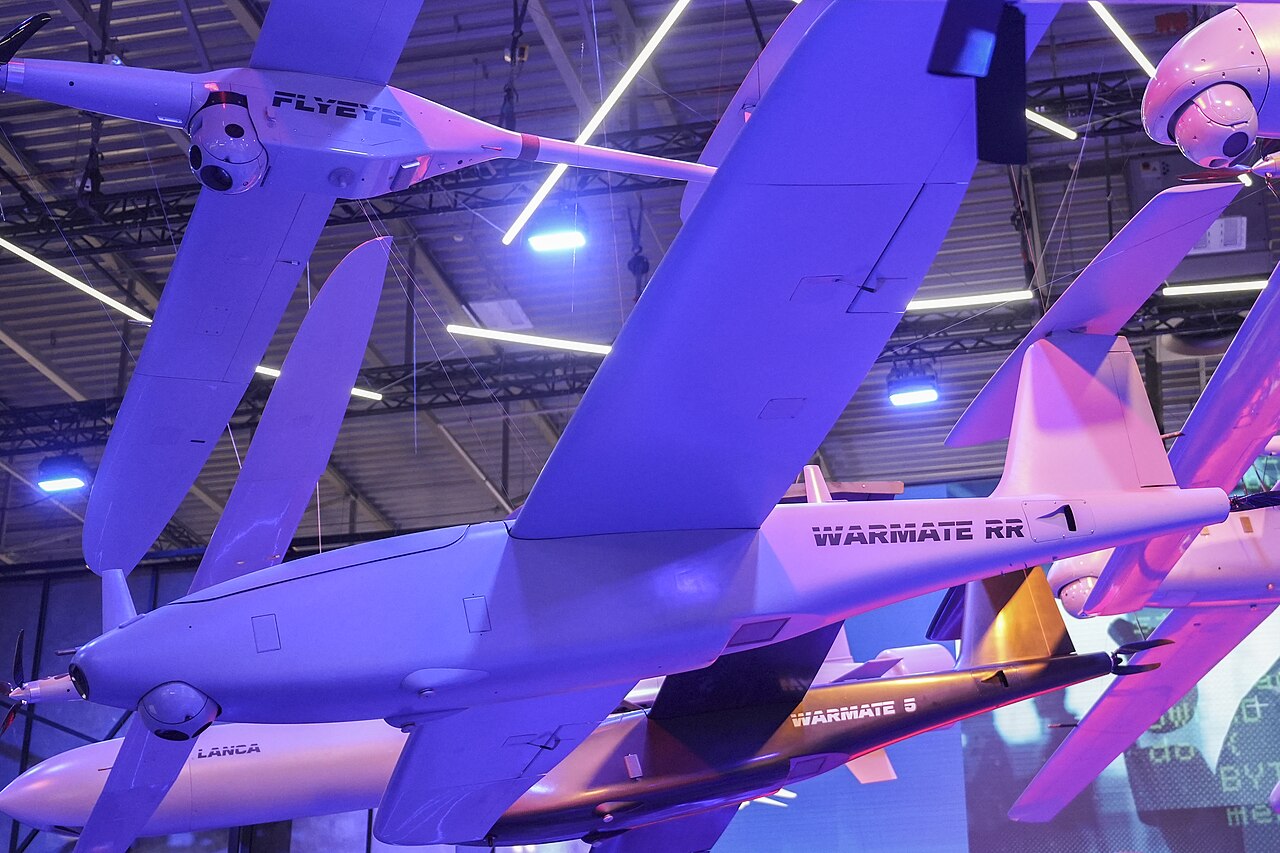
WB Electronics FlyEye
Polish mini UAV for close reconnaissance, hand-launched and widely used.

ESA/A. Baker · CC BY-SA 3.0 igo
The WB Electronics FlyEye is a Polish mini unmanned aerial vehicle (UAV) designed for close reconnaissance. Developed by Flytronic, a company within the WB Group, it is notable as the first Polish-designed and produced UAV to enter service with the Polish Armed Forces, where it became the most widely used unmanned vehicle. The drone is hand-launched, electrically powered, and capable of autonomous or manual flight, with a quiet operation that makes it difficult to detect.
Quick Facts
- Aircraft Type
- Unmanned aerial vehicle
- National Origin
- Poland
- Manufacturers
- WB Electronics
- Primary User
- Poland / Ukraine
- Number Built
- 1000+ (2024)
- Introduction
- 2010
- In Service
- 2011 - present
Facts from the source article.
Lore & Background
The FlyEye was first publicly presented on June 14, 2010 at Eurosatory in Paris. A modernized version, featuring a T-shaped empennage and modified wings, was shown later that year. In October 2010, the Nil Military Unit announced a tender for two sets of UAVs, which WB Electronics won; two sets with four cameras each were ordered on October 29, 2010. Further orders followed, including sets for KTO Rosomak combat vehicles and, in 2013, 12 sets for the Polish Army, with nine going to Special Forces and three to Land Forces. By 2022, 54 sets of four cameras had been ordered, and the thousandth FlyEye was produced by mid-March 2024.
The drone is a composite, high-wing cantilever monoplane that takes off by hand and can be ready in under 10 minutes. It has a foldable propeller at the front, with the payload under the fuselage. The flight can be fully manual up to 50 km or autonomous with manual correction. The drone glides for most of its flight, making it extremely quiet; the electric motor is also quiet. Before landing, the observation head is jettisoned and descends by parachute, while the rest glides to a designated spot. Initially using Windows-based software, it later switched to a Linux-based operating system. The improved FlyEye 3.0 introduced new cameras, a range up to 80 km, and automated cooperation with the ZZKO Topaz artillery system.
Operationally, FlyEye was used by Polish soldiers in Afghanistan and by Ukraine since March 2015 in combat against separatists. During the Russian invasion of Ukraine, Ukrainian FlyEyes performed about 250 flights per day, used for artillery correction. The drone is small, with low radar reflection, making it difficult to shoot down; a downed example was photographed by Russian forces on June 7, 2022.
Reader's Guide
The FlyEye's significance lies in its role as the first Polish-designed and produced UAV to be widely adopted by the Polish Armed Forces, where it became the most used unmanned vehicle. Its hand-launch capability and quiet electric propulsion allowed operations from confined areas such as urban zones and forest clearings, with minimal preparation time. The drone's integration with the ZZKO Topaz artillery system and its use in night missions—70% of flight hours in 2021 for the Territorial Defense Forces—highlight its value in reconnaissance and fire correction. Its combat use by Ukraine since 2015, including massive deployment during the Russian invasion, demonstrated its effectiveness in modern warfare, with Ukrainian forces conducting about 250 flights daily. The FlyEye's low radar signature and difficulty to shoot down contributed to its survival in contested environments. The production of the thousandth unit by 2024 underscores its sustained demand and legacy as a reliable, cost-effective mini UAV for close-range surveillance.
Gallery


Frequently Asked Questions
What is the WB Electronics FlyEye?
It is a Polish mini UAV purpose-built for close-range reconnaissance, developed by Flytronic under the WB Group umbrella. It holds the distinction of being the first drone both designed and manufactured in Poland to see active military service.
What are the WB Electronics FlyEye's key specifications?
The FlyEye carries a 3.6-metre wingspan and 1.8-metre length, cruises between 60 and 120 km/h, and can climb to roughly 3,000 metres (about 9,800 ft AMSL). Its electric propulsion system delivers a flight endurance of more than 2.5 hours.
What role does the WB Electronics FlyEye serve on the battlefield?
It is dedicated to close reconnaissance, letting operators pull real-time visual intelligence from near the front line. Its quiet electric motor and compact airframe make it difficult for adversaries to spot or track.
How is the WB Electronics FlyEye launched and controlled?
Operators simply throw it by hand to get it airborne, after which it can fly either on an autonomous pre-programmed mission or under direct manual control. The electric drive keeps acoustic noise low throughout the entire flight.
Why is the WB Electronics FlyEye significant in Polish military history?
It broke Poland's reliance on foreign suppliers by becoming the first domestically designed and produced UAV to enter armed-forces service. It subsequently became the most widely deployed unmanned vehicle across the Polish military.
More in Military Drones of Asia, Europe and the Americas 1-24
Spotted an error? Know more?
Reader corrections go straight into our review queue. Suggest an edit · How this site is sourced