Tupolev Tu-141
Soviet reconnaissance drone later repurposed as a loitering munition.

Алексей Петров · CC BY 3.0
The Tupolev Tu-141 Strizh, meaning "Swift," is a Soviet-era reconnaissance drone. It operated with the Soviet Army in the late 1970s and 1980s, and the Ukrainian Armed Forces have used it since 2014. This medium-range drone is relatively large, built for reconnaissance flights up to 1,000 kilometers at transonic speeds. It can carry various payloads, such as film cameras, infrared imagers, electro-optical imagers, and imaging radar.
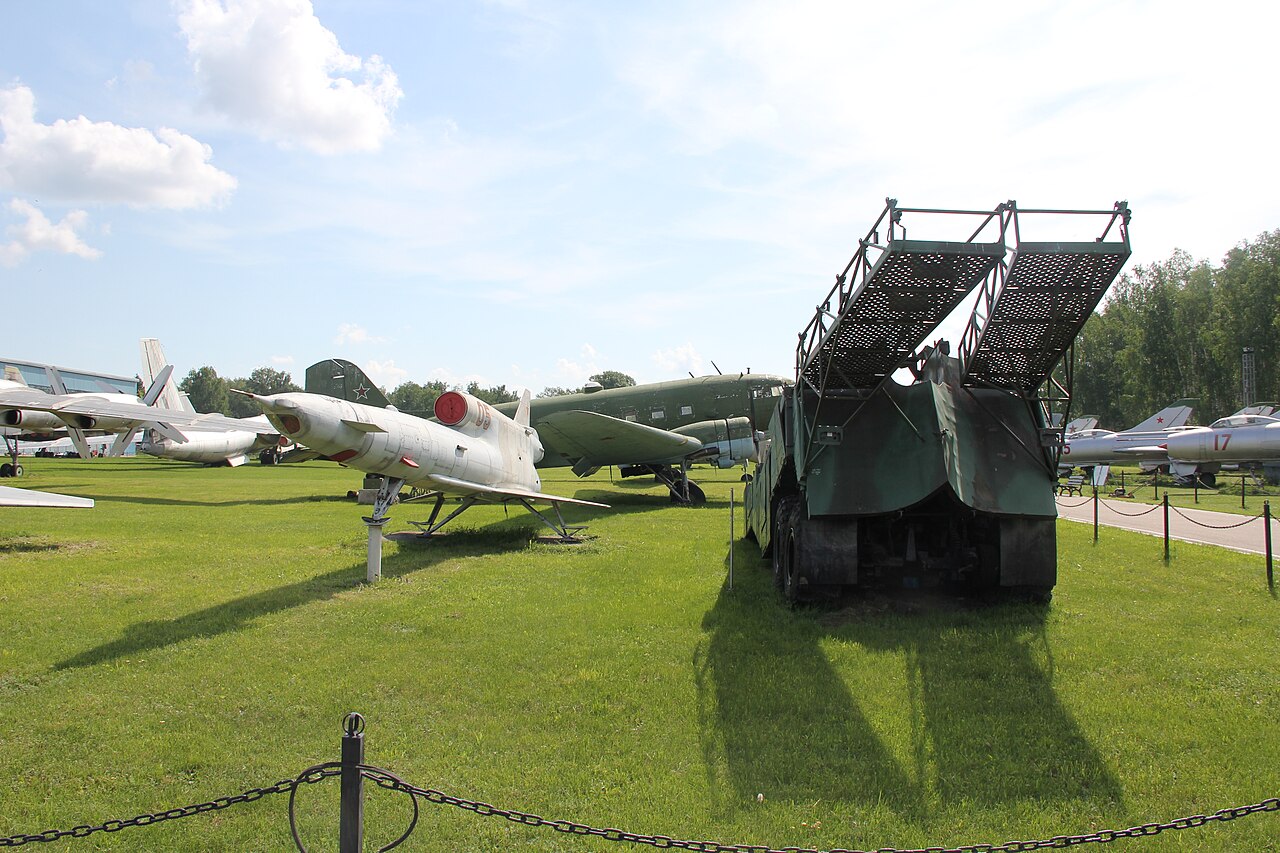
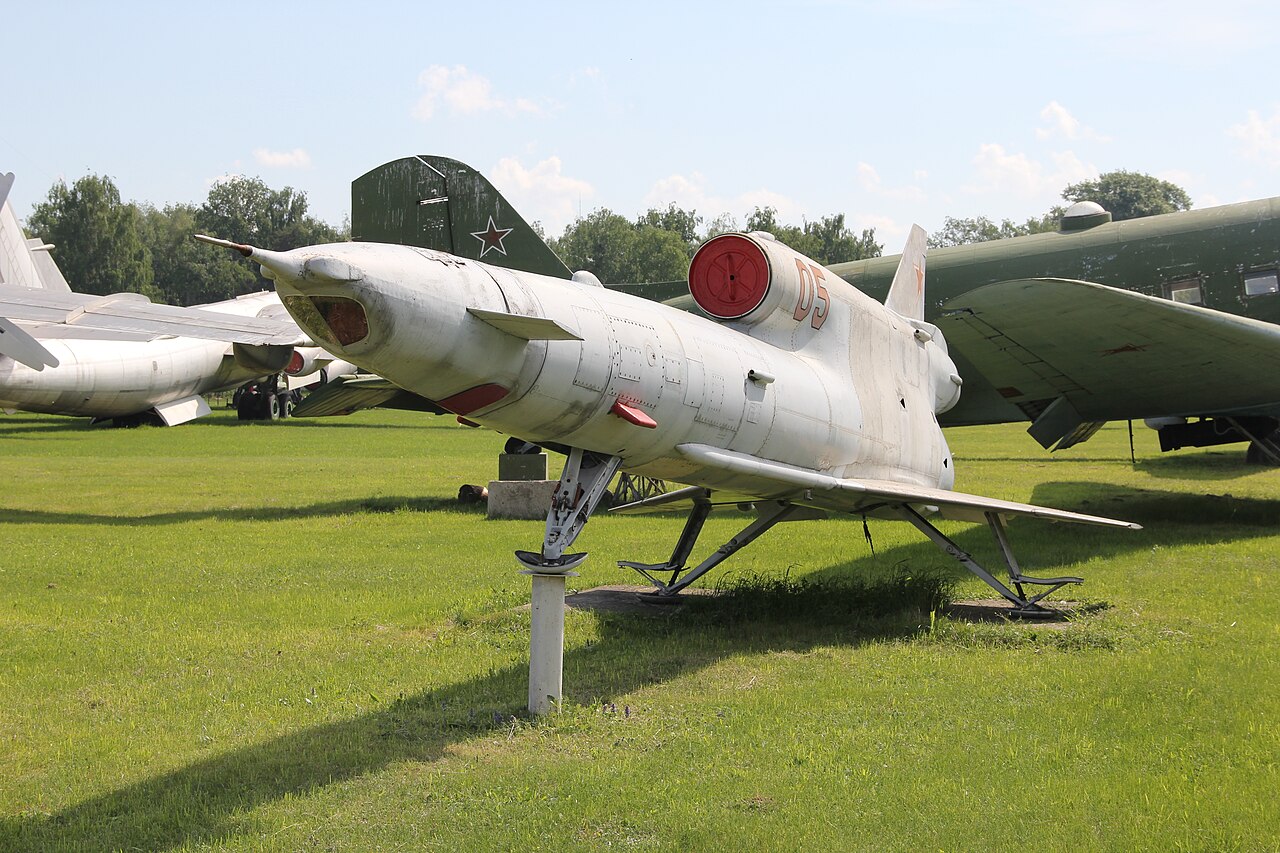
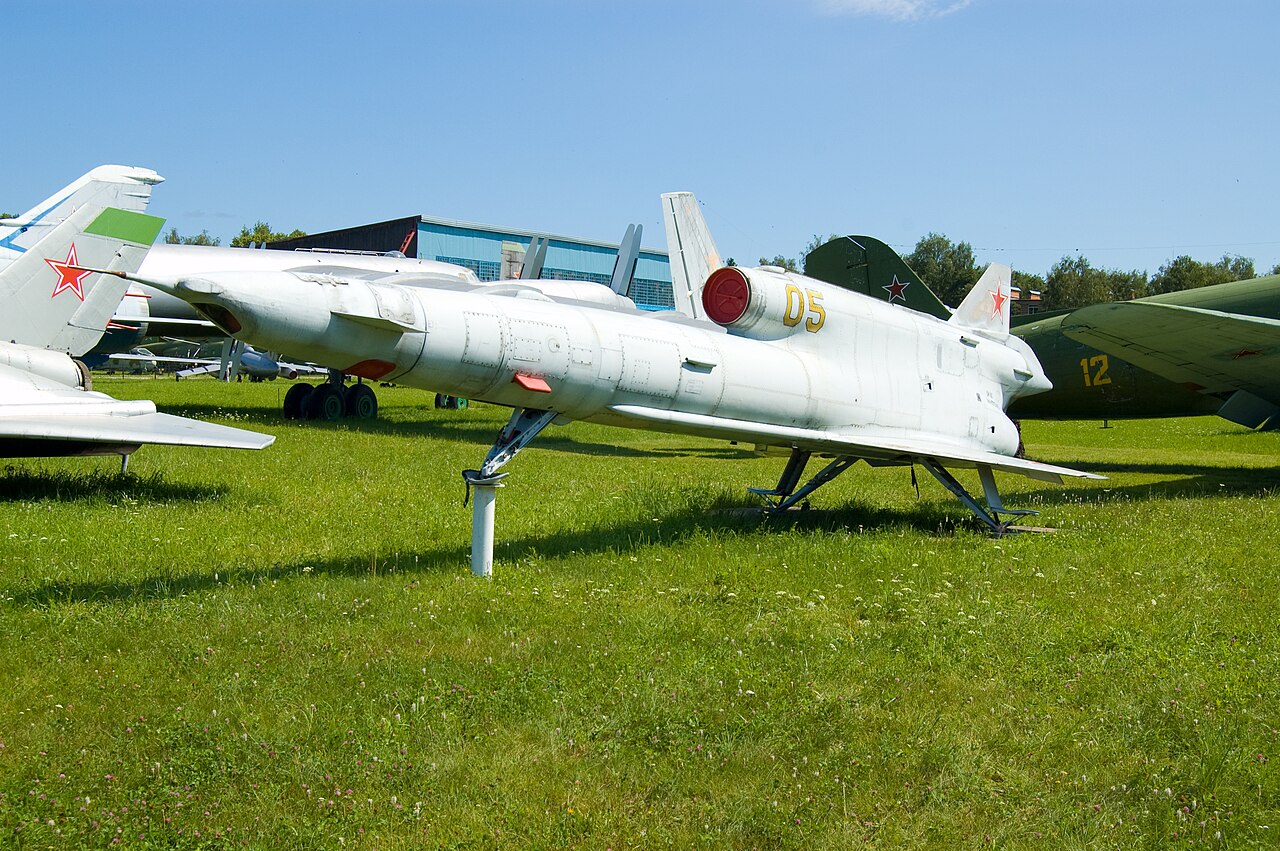
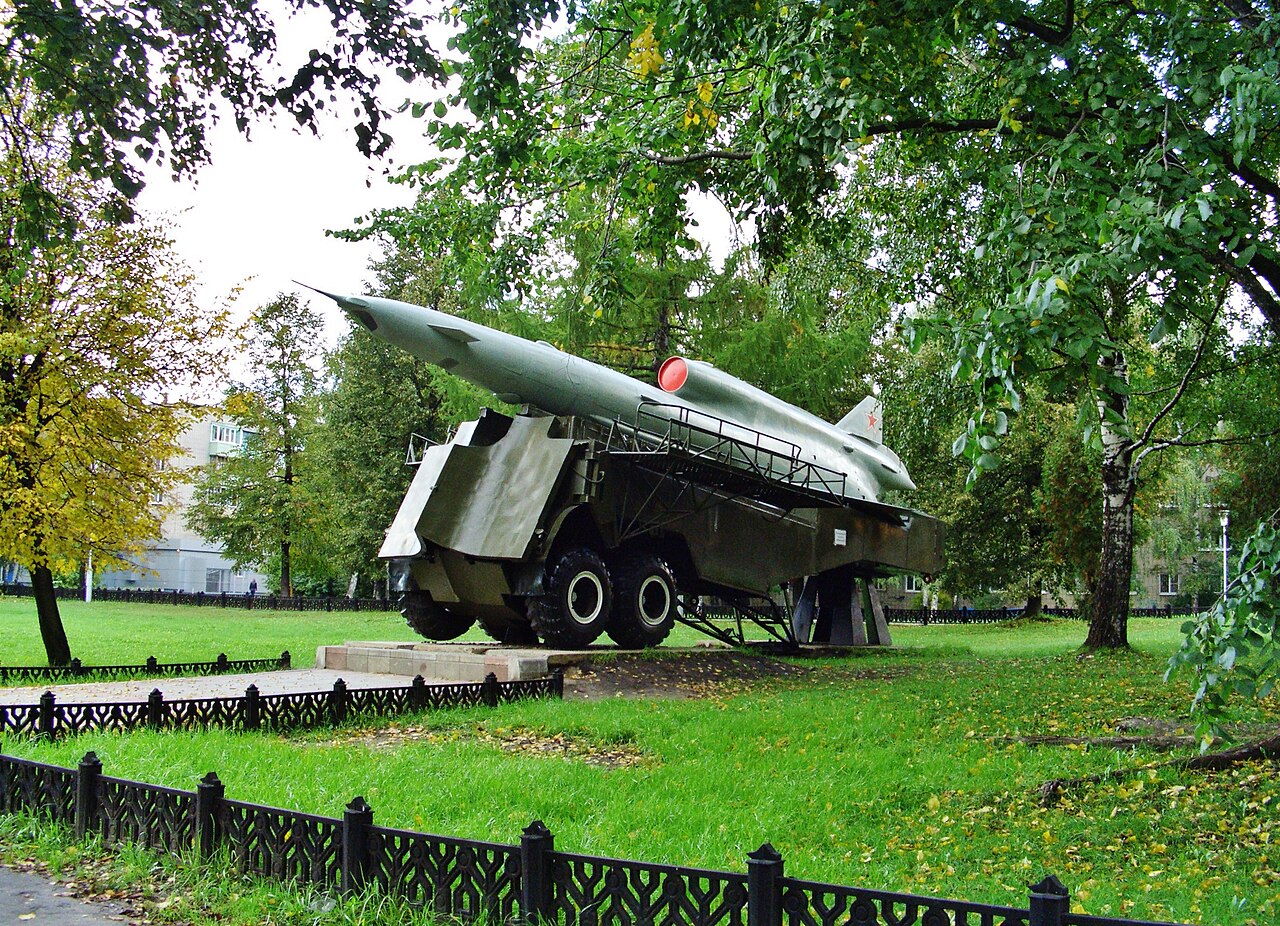
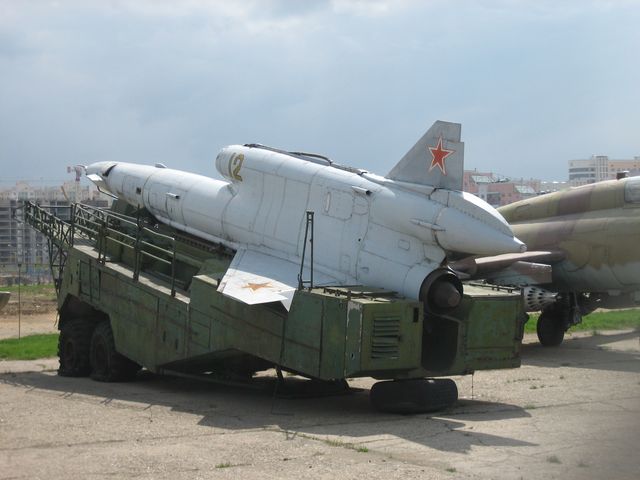
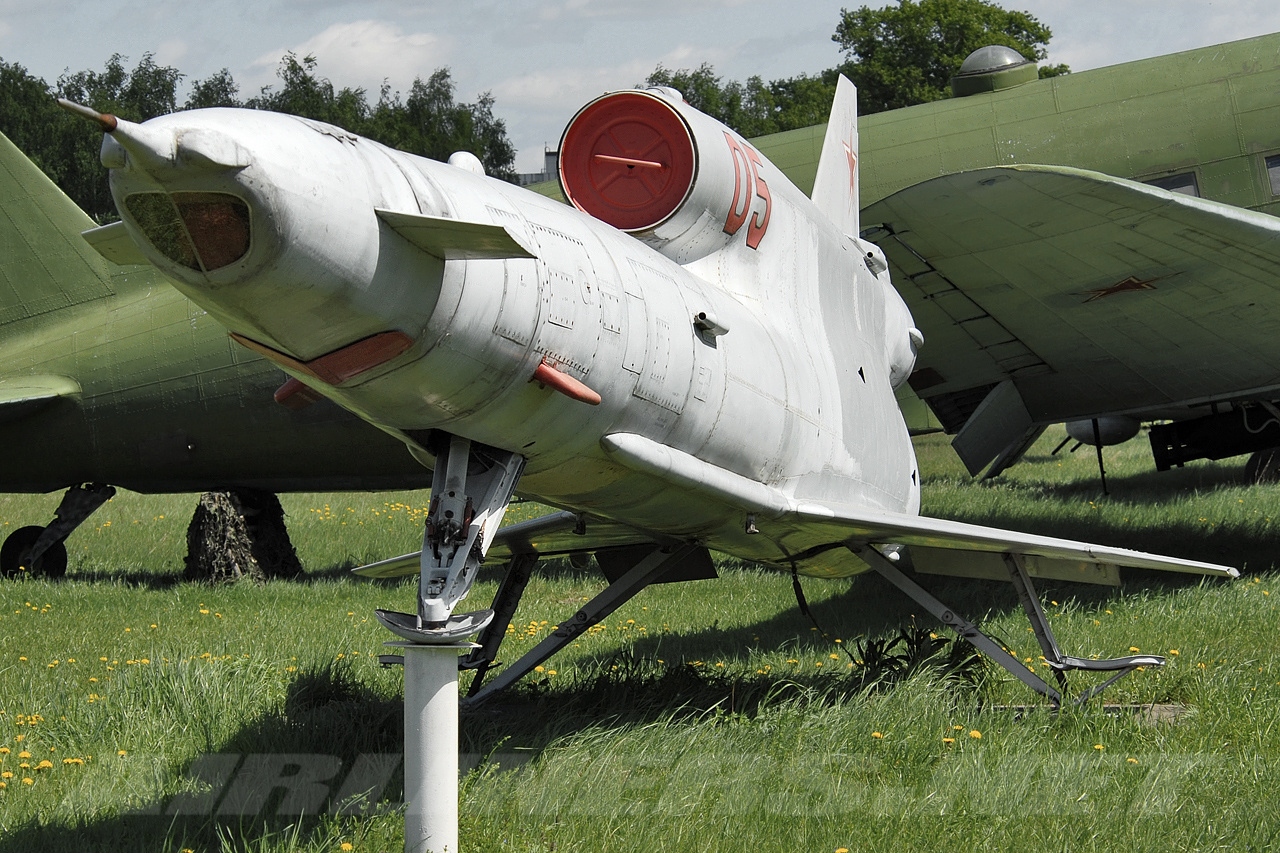
The Tu-141 succeeded the Tupolev Tu-123. Its design features a dart-like rear-mounted delta wing, forward canards, and a KR-17A turbojet engine positioned above the tail. Launch is from a trailer using a solid-propellant booster, and it lands with a tail-mounted parachute.
The drone served in the Soviet military from 1979 to 1989, mainly along the western borders. Ukraine reactivated it after 2014 for the war in Donbas. Following the Russian invasion of Ukraine in February 2022, the Tu-141 was adapted into a long-range loitering munition.
On 8 March 2022, a Tu-141 was reported to have crashed in Ukraine. Around midnight on 10 March 2022, another crashed near a student campus in Zagreb, Croatia, over 550 kilometers from Ukraine, after flying over Romania and Hungary. No casualties occurred. The Ukrainian Air Force denied the drone was theirs, while the Russian Embassy in Zagreb stated Russia had not used such drones since the Soviet Union dissolved in 1991. Croatian President Zoran Milanović noted the drone clearly came from Ukraine via Hungary. On 15 March, an unnamed source close to Croatia’s defense ministry told the magazine Nacional that the investigation concluded the drone belonged to Ukraine and carried a bomb intended for Russian positions, but it strayed off course and crashed after running out of fuel.
On 3 July 2022, the governor of Russia’s Kursk region reported on Telegram that air defenses shot down two Ukrainian Strizh drones. On 5 December 2022, explosions occurred at two Russian airbases: at Engels-2, reportedly damaging two Tu-95 bombers, and at Dyagilevo near Ryazan, destroying a fuel truck, damaging a Tu-22M3, and killing three people while injuring five. Russia’s Ministry of Defense stated Ukraine used Soviet-made jet drones, shot down at low altitude approaching the bases. Ukraine’s Ministry of Defense did not confirm this.
Quick Facts
- Manufacturer
- Tupolev
- First Flight
- 1974
- Introduction
- 1979
- Primary User
- Ukraine
- More Users
- Soviet Union (formerly)
- Produced
- 1979–1989
- Number Built
- 152
- Developed From
- Tupolev Tu-123
- Developed Into
- Tupolev Tu-143
Facts from the source article.
Lore & Background
The Tu-141 was a follow-on to the Tupolev Tu-123 and features a dart-like rear-mounted delta wing, forward-mounted canards, and a KR-17A turbojet engine mounted above the tail. It is launched from a trailer using a solid-propellant booster and lands with the aid of a tail-mounted parachute. The drone can carry a range of payloads including film cameras, infrared imagers, EO imagers, and imaging radar.
The Tu-141 was in Soviet service from 1979 to 1989, mostly on the western borders of the Soviet Union. It was pressed back into service by the Ukrainian Air Force after 2014 for the war in Donbas. After the Russian invasion of Ukraine began in February 2022, the Tu-141 was repurposed as a long range loitering munition.
Several incidents involving the Tu-141 occurred during the Russo-Ukrainian War. On 8 March 2022, a Tu-141 was reported crashed in Ukraine. About midnight on 10 March 2022, a Tu-141 crashed in front of a student campus in Zagreb, Croatia, over 550 km from Ukraine, after flying over Romania and Hungary. The Ukrainian Air Force claimed the drone did not belong to them; the Russian Embassy stated Russian forces had not had such drones since 1991. The Croatian president said it was clear the drone came from the direction of Ukraine. An undisclosed source later claimed the drone belonged to Ukraine and carried a bomb meant for Russian positions but strayed off course and crashed after running out of fuel.
Reader's Guide
The Tu-141's significance lies in its long service life and adaptation across decades and conflicts. Originally a Cold War reconnaissance asset for the Soviet Union, it was retired in 1989 but returned to active use by Ukraine after 2014. Its most notable transformation came during the 2022 Russian invasion of Ukraine, when it was repurposed as a long-range loitering munition. This shift from reconnaissance to strike role demonstrated the adaptability of older Soviet-era systems in modern warfare. The drone's use in attacks on Russian airbases, such as the explosions at Engels-2 and Dyagilevo in December 2022, highlighted its ability to penetrate deep into Russian territory. The incident in Zagreb, Croatia, in March 2022 underscored the risks of such operations, as the drone crashed far from its intended target. The Tu-141 remains in service with Ukraine's 383rd UAV Brigade, and its continued use reflects the resourcefulness of Ukrainian forces in employing available equipment for asymmetric warfare.
Cold War Ambition and Strategic Rationale
The Tu-144 emerged from a geopolitical imperative as much as an engineering one. Under Nikita Khrushchev's leadership, the Soviet Union treated aerospace supremacy as non-negotiable; the directive was not merely to match Western progress but to leapfrog it wherever possible. The vast expanse of Soviet territory, particularly the routes linking Moscow to Siberian and Central Asian cities, made supersonic travel a practical economic proposition. Where week-long rail journeys had long dominated, a Mach 2 airliner could compress those crossings dramatically. Aeroflot, the state flag carrier, maintained an extensive web of interconnected airfields and harbored ambitions to extend service as far as Sydney, Australia. Initial planning suggested a fleet of just twenty Tu-144s would satisfy both domestic and international demand. The aircraft was conceived as a direct challenge to American dominance in civil aviation, and even if Western nations refused landing rights, the Soviet Union's own airspace—ample and largely unpopulated along likely flight corridors—provided a viable operating environment free from the noise and pollution controversies that had stalled Western supersonic projects.
Engineering Distinctions and Design Evolution
Despite the nickname "Concordski" that reflected its visual resemblance to the Anglo-French Concorde, the Tu-144 was a substantially different machine. It was larger and capable of higher top speeds, reaching Mach 2.15 against Concorde's 2.04. The wing design tells a story of iterative learning: the prototype carried an ogival delta wing similar to Concorde's, but findings from the MiG-21I testbed—a dedicated simulator for the Tu-144's wing that arrived too late to inform the first prototype—drove a complete redesign. Production aircraft adopted a double delta wing with both spanwise and chordwise camber, plus a pair of small retractable canard surfaces nicknamed the "moustache," fitted just behind the cockpit. These canards, combined with fixed double-slotted leading-edge slats and retractable double-slotted flaps, countered the nose-down pitching moment that elevons generated on a delta wing, reducing landing speed to 315–333 km/h. Where Concorde relied on a Lucas electronic engine control package and used fuel as a coolant for cabin air conditioning, Tupolev employed fuel-hydraulic heat exchangers alongside separate cooling turbines for the cabin, a distinction born partly from the fact that the Lucas system was denied to Soviet engineers on military-application grounds.
Commercial Service and Operational Constraints
The Tu-144's commercial career was brief and troubled. Aeroflot inaugurated service between Moscow and Alma-Ata on 26 December 1975, but passenger-carrying flights did not begin until 1 November 1977. The aircraft cruised at roughly 2,200 km/h at an average altitude of 16,000 metres, yet across its entire operational life it completed only 102 commercial flights, of which just 55 actually carried passengers. Reliability problems and unresolved developmental issues undercut its viability for routine scheduling. The catastrophic crash at the 1973 Paris Air Show further eroded foreign customer confidence, while projections of high operating costs, rising fuel prices, and growing environmental concerns in Western markets sealed the aircraft's international prospects. The passenger era ended abruptly on 23 May 1978, when a new Tu-144 variant crash-landed during a test flight, prompting withdrawal of passenger operations less than seven months after they had begun. The type lingered in commercial service as a cargo carrier until the programme was formally cancelled in 1983.
Post-Service Legacy and Final Flights
Even after its commercial career ended, the Tu-144 found unexpected second lives. The Soviet space programme pressed surviving airframes into service as training platforms for pilots of the Buran orbital spacecraft, leveraging the aircraft's high-speed handling characteristics to prepare crews for re-entry profiles. In the post-Cold War era, NASA acquired a Tu-144 for a dedicated supersonic research programme that ran from June 1996 through April 1999, studying the aerodynamic and structural behaviours of a Mach 2 airframe under controlled conditions. The type's very last flight took place on 26 June 1999, bringing to a close a story that had begun with the prototype's maiden departure from Zhukovsky Airport on 31 December 1968—two months ahead of Concorde's first flight. Sixteen airframes had been built by the Voronezh Aircraft Production Association under the Tupolev Design Bureau's direction. Today, surviving examples rest in museums across Russia, the former Soviet Union, and Germany, or sit in storage, silent testaments to an era when two superpowers raced to put passengers at twice the speed of sound.
Gallery
Frequently Asked Questions
What is the Tupolev Tu-141 Strizh?
The Tu-141 Strizh (meaning "Swift") is a medium-range Soviet reconnaissance drone that entered service in 1979. It was designed to fly deep penetration missions up to 1,000 kilometers at transonic speeds, and after the Soviet era it saw renewed use with Ukrainian forces from 2014 onward.
What payloads can the Tu-141 carry?
The airframe is built to accept a range of imaging sensors, including film cameras, infrared imagers, electro-optical sensors, and imaging radar. This modularity let operators tailor each sortie to the specific intelligence need of the mission.
How is the Tu-141 launched into the air?
Rather than taking off from a runway, the drone is fired from a ground trailer using a solid-propellant booster. This launch method lets it be deployed from concealed field positions without needing a prepared airfield.
What happened to the Tu-141 after Soviet service ended?
Soviet Army operations with the type wrapped up around 1989, and the aircraft sat in storage for over two decades. Ukraine reactivated the platform in 2014 and has since repurposed it as a loitering munition, giving the 1970s design a second life in a very different tactical role.
What makes the Tu-141's airframe visually distinctive?
It features a dart-shaped rear-mounted delta wing paired with forward canards, giving it a sleek, arrow-like silhouette. A KR-17A turbojet sits above the fuselage rather than within it, a layout that keeps the internal volume free for payload bays and fuel.
More in Military Drones of Asia, Europe and the Americas 1-24
Spotted an error? Know more?
Reader corrections go straight into our review queue. Suggest an edit · How this site is sourced