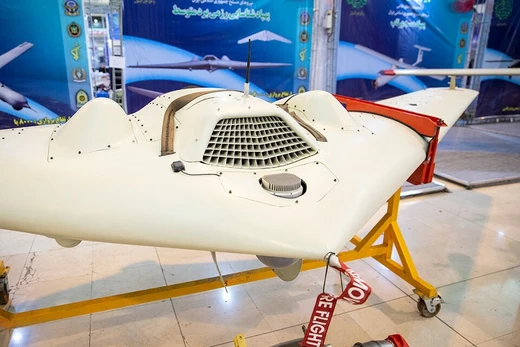
Kawasaki KAQ-1
Radio controlled target drone used by Japan and the United States.

The Kawasaki KAQ-1 was a small, radio controlled target drone aircraft manufactured by the Kawasaki Aerospace Company. It was used by the armed forces of Japan and the United States to train fighter pilots and anti-aircraft gunners.
Quick Facts
- Aircraft Type
- Aerial Target Drone
- Manufacturer
- Kawasaki Aerospace
- Primary User
- United States, Japan
- Introduction
- 1950s
Facts from the source article.
Lore & Background
The Kawasaki KAQ-1 served throughout the 1950s as a target drone for the armed forces of both Japan and the United States. In US service, the KAQ-1 was mainly used by units stationed in Japan. Its main purpose was to train fighter pilots in the use of air-to-air missiles and to train anti-aircraft gunners on the ground. Additionally, the drone was used as a target in the testing of new weapon systems.
In operation, the KAQ-1 was launched from a ramp and guided to a predetermined altitude, where it was then fired upon. If the drone was destroyed, a parachute rigged to the engine mounts allowed the engine to be recovered and reused. When the KAQ-1 was not destroyed in operation, it was recovered via a parachute triggered by the drone operator or when the minimum allowable flight altitude was reached.
Reader's Guide
The Kawasaki KAQ-1 represents a notable early example of a purpose-built target drone used by both Japanese and American forces during the 1950s. Its design incorporated practical recovery features: a parachute system allowed the engine to be salvaged if the drone was shot down, and a separate parachute enabled recovery of the entire airframe when it survived a training engagement. This reusability reduced costs and made sustained training exercises more feasible. The drone's use by US units stationed in Japan highlights the cooperative military arrangements of the period. By providing a realistic aerial target for air-to-air missiles and anti-aircraft gunnery, the KAQ-1 directly supported the development of combat skills and the testing of new weapon systems. Its role in training both fighter pilots and ground-based gunners underscores its versatility as a training asset. The KAQ-1's operational method—ramp launch, guided flight to altitude, and parachute recovery—was typical of early drone technology and set a pattern for later target drones.
Did You Know?
- The KAQ-1 was used by both the Japan Ground Self Defense Force and the United States Armed Forces.
- When not destroyed, the KAQ-1 was recovered via a parachute triggered by the operator or when minimum flight altitude was reached.
More in Military Drones of Asia, Europe and the Americas 1-24
Spotted an error? Know more?
Reader corrections go straight into our review queue. Suggest an edit · How this site is sourced