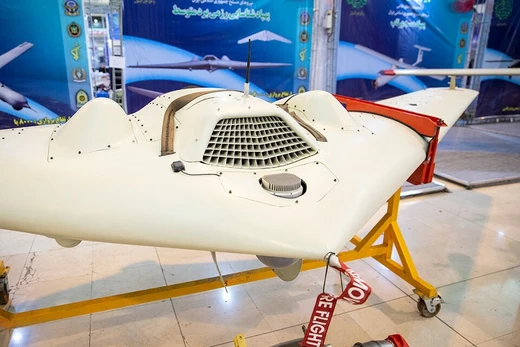
Alenia Aeronautica ITV
Italian technology demonstrator for unmanned combat aerial vehicle development.

The Alenia Aeronautica ITV (Integration Technology Vehicle) is an unmanned combat aerial vehicle demonstrator developed in Italy in the early 21st century. It serves strictly as a technology development and risk reduction platform, with a half-scale ground-test prototype unveiled in the spring of 2003.
Quick Facts
- Aircraft Type
- Technology demonstrator
- Manufacturer
- Alenia
Facts from the source article.
Lore & Background
The Alenia ITV was developed by Alenia Aeronautica as a half-scale demonstrator to integrate and test technologies for a future full-scale UCAV. A non-flying ground-test prototype was unveiled in the spring of 2003, with a flight prototype planned to follow. The vehicle features a high-mounted wing with 35 degrees of sweep, a vee tail, and a Microturbo TRI60-5 turbojet mounted on the back behind the wing. It has retractable tricycle landing gear and is constructed primarily of metal.
The ITV is explicitly a risk-reduction vehicle; a production UCAV from Alenia Aeronautica would be at least twice as large, use a tailless delta configuration, and be made mostly of composite materials. That future design would include a modular payload bay for smart weapons, synthetic aperture radar (SAR), or day-night electro-optical sensors. Alenia Spazio, a sister organization within the Finnmeccia Group, was to provide a satellite data link. Meteor, also part of the Finnmeccia Group, likely collaborated with Alenia Aeronautica on UAV design.
Reader's Guide
The Alenia ITV represents a deliberate, incremental approach to unmanned combat aerial vehicle development, focusing on integration and risk reduction before committing to a full-scale design. Its unveiling in 2003 as a non-flying ground-test prototype underscores the cautious strategy of validating subsystems and airframe concepts without the expense of flight testing. The ITV's metal construction and conventional layout (high wing, vee tail, rear-mounted turbojet) contrast sharply with the planned production UCAV, which would be larger, tailless, delta-winged, and composite-intensive—indicating that the ITV was a stepping stone rather than a prototype of the final form. The involvement of Alenia Spazio for satellite communications and likely collaboration with Meteor (both Finnmeccia Group members) highlights the corporate synergy leveraged for the project. Although the ITV itself never progressed to a production UCAV, its role as a technology testbed contributed to Italian expertise in unmanned systems and helped define the requirements for a future operational platform.
Did You Know?
- The ITV is a half-scale demonstrator, with a planned full-scale UCAV being at least twice as large.
- The ITV uses a Microturbo TRI60-5 turbojet producing 4.4 kN of thrust.
- Alenia Spazio, a sister company in the Finnmeccia Group, was to provide a satellite data link for the future UCAV.
More in Military Drones of Asia, Europe and the Americas 1-24
Spotted an error? Know more?
Reader corrections go straight into our review queue. Suggest an edit · How this site is sourced