
Motorola 68060
Last and fastest general-purpose 68000 family processor from Motorola.

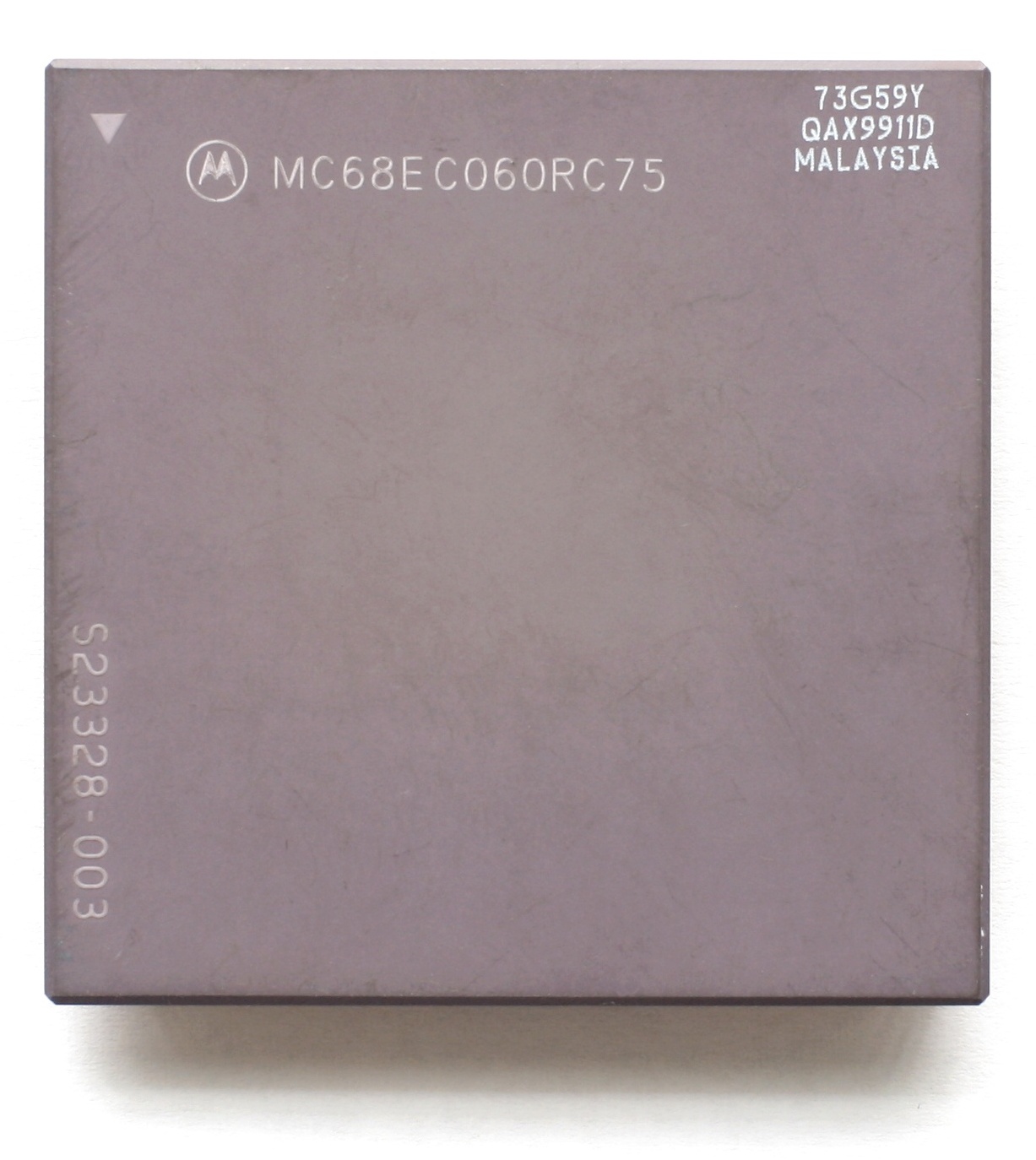
Konstantin Lanzet (with permission) · CC BY-SA 3.0
The Motorola 68060 is a 32-bit microprocessor released in April 1994 as the successor to the Motorola 68040 and the highest performing member of the 68000 series. It is often referred to as simply the 060. The 68060 is the last development of the 68000 family for general purpose use, abandoned in favor of the PowerPC chips.
Quick Facts
- Produced-Start
- April 1994
- Slowest
- 50 MHz
- Fastest
- 75 MHz; up to 133 MHz overclocked, or even 150 MHz with proper cooling
- Designfirm
- Motorola
- Arch
- Motorola 68000 series
- Application
- Desktop computers and embedded systems
- Predecessor
- Motorola 68040
- Successor
- PowerPC, Motorola ColdFire
- Variant
- 68LC060 and 68EC060
Facts from the source article.
Lore & Background
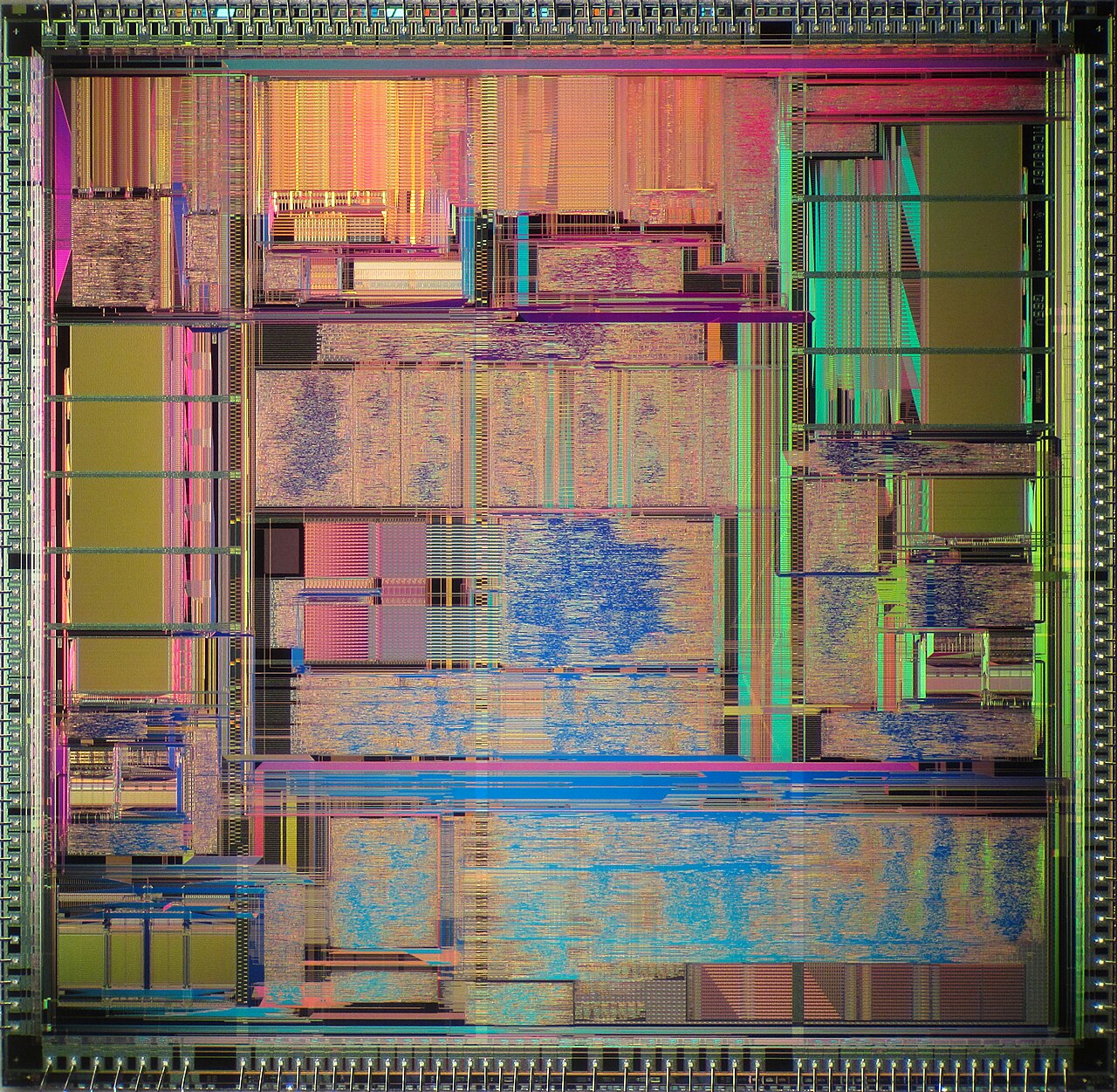
The 68060 shares most architectural features with the P5 Pentium, including a similar superscalar in-order dual instruction pipeline configuration and an instruction decoder that breaks down complex instructions into simpler ones before execution. These translated instructions are stored in a 16-entry FIFO buffer, with more complex 68000 instructions occupying multiple entries. A significant difference to the Pentium is that the 68060 FPU is not pipelined and is therefore up to three times slower in floating point applications, while integer multiplications and bit shifting instructions are significantly faster. The 68060 can execute simple instructions in the address generation unit (AGU) and supply the result two cycles before the ALU.
The 68060 was introduced at 50 MHz on Motorola's 0.6 μm manufacturing process, later shrunk to 0.42 μm with clock speeds raised to 66 MHz and 75 MHz. Some users managed to overclock rev6 68060 CPUs (mask 71E41J) up to 120 or 133 MHz. Motorola projected performance of around three-and-a-half times that of a 25 MHz 68040 at 50 MHz, described as 'about 77 MIPS', later adjusting to three times the performance for a 68060 running at twice the frequency of the 68040. Benchmarking of the 50 MHz 68060 in Amiga accelerator cards indicated Dhrystone 2.1 results of around 80,000 Dhrystones per second, broadly comparable to a Sun SPARCstation 10 workstation.
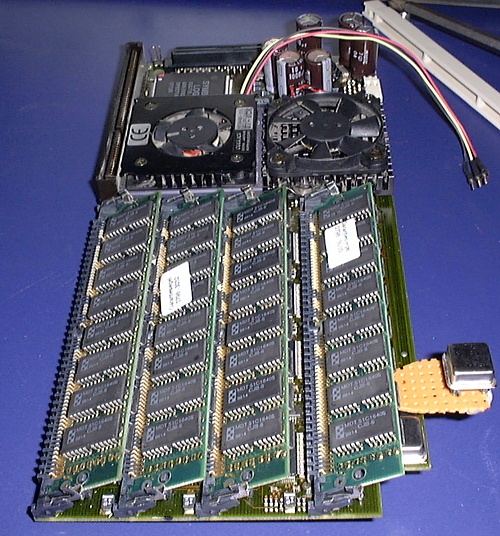
The 68060 saw use in late-model Amiga machines and accelerator cards, Atari ST clones and Falcon accelerator boards (CT60/CT63/CT60e, the latter created in 2015), and very late Alpha Microsystems multiuser computers. Apple Inc. had indicated commitment to the 68040 and its anticipated successor (the 68050) but by the arrival of the 68060 had already announced adoption of PowerPC. Motorola anticipated Apple might leave space for 68060-based products as 'a high performance hedge' against the RISC transition, but the Apple Workgroup Server range transitioned directly from 68040 to PowerPC processors.
Reader's Guide
The 68060 represents the culmination of the 68000 series for general-purpose computing, abandoned by Motorola in favor of the PowerPC architecture. Its design was heavily influenced by analysis of commercial compiled code to identify optimization opportunities. Against the Pentium, the 68060 could perform better on mixed code because its decoder could issue an FP instruction whenever the non-pipelined FPU could accept one, making optimization easier for programmers. However, with properly optimized and scheduled code, the Pentium's FPU could achieve double the clock-for-clock throughput. The 68060's legacy extends beyond desktop computing into embedded systems, where developments of its basic core continue under the names ColdFire and DragonBall, combined with peripheral interfaces to reduce complexity and power requirements. The processor also found use in telecommunications equipment such as Nortel Meridian 1 PBX systems and Wellfleet routers, as well as in television character generators from Chyron. The Q60 motherboard for the Sinclair QL demonstrated the architecture's longevity, running the same operating systems at over 100 times the speed of the original QL.
Did You Know?
- The 68060 design was led by Joe Circello.
- Motorola never produced a 68050, though it was planned at one point.
- Some users overclocked rev6 68060 CPUs up to 120 or 133 MHz.
- The 68060 is the last 68000 family processor from Motorola.
Superscalar Architecture and Microarchitectural Innovation
The 68060 represented a fundamental shift in how the 68k family approached instruction execution. As the sole member of the fourth generation, it abandoned the simpler pipeline designs of its predecessors in favor of a superscalar architecture capable of handling multiple instructions in parallel. Its ten-stage pipeline was the longest in the entire family, and a dual instruction pipeline allowed the processor to fetch and decode more than one instruction per cycle. Branch prediction was introduced to reduce the penalty of conditional jumps, while the address generation unit was engineered to deliver its results two full cycles before the arithmetic logic unit required them, effectively overlapping these two critical operations. The chip carried 8 KB of both instruction and data cache, double the capacity of the 68040. A dedicated unit completed integer multiplications in just two cycles without stalling the rest of the pipeline. Collectively, these design choices marked the most aggressive performance push Motorola ever made within the CISC 68k framework.
Culmination of a Four-Generation Evolution
The 68060 sat at the very top of a four-generation evolutionary ladder Motorola had been climbing since the original 68000. Each prior generation had layered on new capabilities: the 68020 delivered a fully 32-bit ALU, a three-stage pipeline, and a 256-byte instruction cache; the 68030 added split instruction and data caches of 256 bytes each plus an on-chip memory management unit; the 68040 expanded those caches to 4 KB, stretched the pipeline to six stages, and integrated a floating-point unit directly on the die. The 68060 inherited all of that groundwork and pushed further with its superscalar execution model. Motorola offered it in three tiers: the full-featured 68060, the 68EC060 which stripped out both the FPU and MMU for cost-sensitive designs, and the 68LC060 which omitted only the FPU. This tiered strategy echoed the approach used across every prior generation, yet the 68060's internal complexity made it the most ambitious chip the 68k line ever produced.
The Final Chapter and the PowerPC Transition
The 68060 was, in practical terms, the last word Motorola ever spoke in the 68k dialect. By the mid-1990s, the industry's center of gravity had shifted decisively toward reduced instruction set computing, and Motorola made the strategic decision to halt all development of the 680x0 architecture in 1994. The successor was PowerPC, a RISC-based design born from a collaborative effort among Motorola, IBM, and Apple Computer under the banner of the AIM alliance. This was not merely a product swap; it represented a philosophical break from the complex instruction set philosophy that had defined the 68k family for well over a decade. The 68060's superscalar pipeline, while technically impressive, could not match the cleaner execution models that RISC architectures offered at the time. Today, no mainstream computer ships with a 680x0-based processor, though derivative microcontrollers descended from the family continue to serve in embedded applications around the world.
A Vast Ecosystem, a Narrow Niche
The 68060 existed within a processor family whose reach was staggering. Across its lifetime, the 68k line powered Apple Macintosh computers, Commodore Amigas, Atari ST and Falcon machines, Sega Genesis and CD consoles, NeXT workstations, early Silicon Graphics IRIS systems, Sun Microsystems servers, AT&T UNIX PCs, Texas Instruments graphing calculators, Palm Pilot handhelds, and even radiation-hardened control systems aboard the Space Shuttle. Arcade boards from Sega, Capcom, and SNK also relied on 68k silicon. Yet the 68060 itself found a comparatively narrow deployment footprint. Notably, the Quantel Paintbox series of professional video-editing systems, which cycled through nearly every other 68k generation during its operational life beginning in 1981, never incorporated the 68060 into its hardware. The chip's late arrival and the industry's rapid pivot toward RISC architectures meant its superscalar innovations were deployed in far fewer systems than its predecessors had enjoyed.
Gallery
Frequently Asked Questions
What is the Motorola 68060?
The 68060, often shortened to just the "060," is a 32-bit microprocessor that Motorola shipped in April 1994. It stands as the final and most capable general-purpose design in the entire 68000 family.
How fast is the Motorola 68060?
At its initial 50 MHz clock it delivered roughly 77 MIPS, and later production runs pushed the speed to 66 MHz and 75 MHz. The chip was fabricated on a 0.6 μm process that was subsequently shrunk to 0.42 μm.
Who led the design of the Motorola 68060?
Joe Circello served as the lead engineer behind the 060. He steered the team through the last iteration of the 68000 architecture before Motorola pivoted its resources toward the PowerPC line.
Why did Motorola stop producing the 68060?
The 060 was the last general-purpose 68000-family part Motorola ever made, as the company redirected its R&D budget toward the newer PowerPC architecture. The 68000 lineage was effectively retired in favor of that successor platform.
What is the 68060's place in the 68000 family?
It is the direct successor to the 68040 and the highest-performing member of the entire 68000 series. In that sense it serves as both the capstone and the closing chapter of the 68000 lineage.
More in Microprocessors, Part 3 1-24
Spotted an error? Know more?
Reader corrections go straight into our review queue. Suggest an edit · How this site is sourced