
MicroVAX 78032
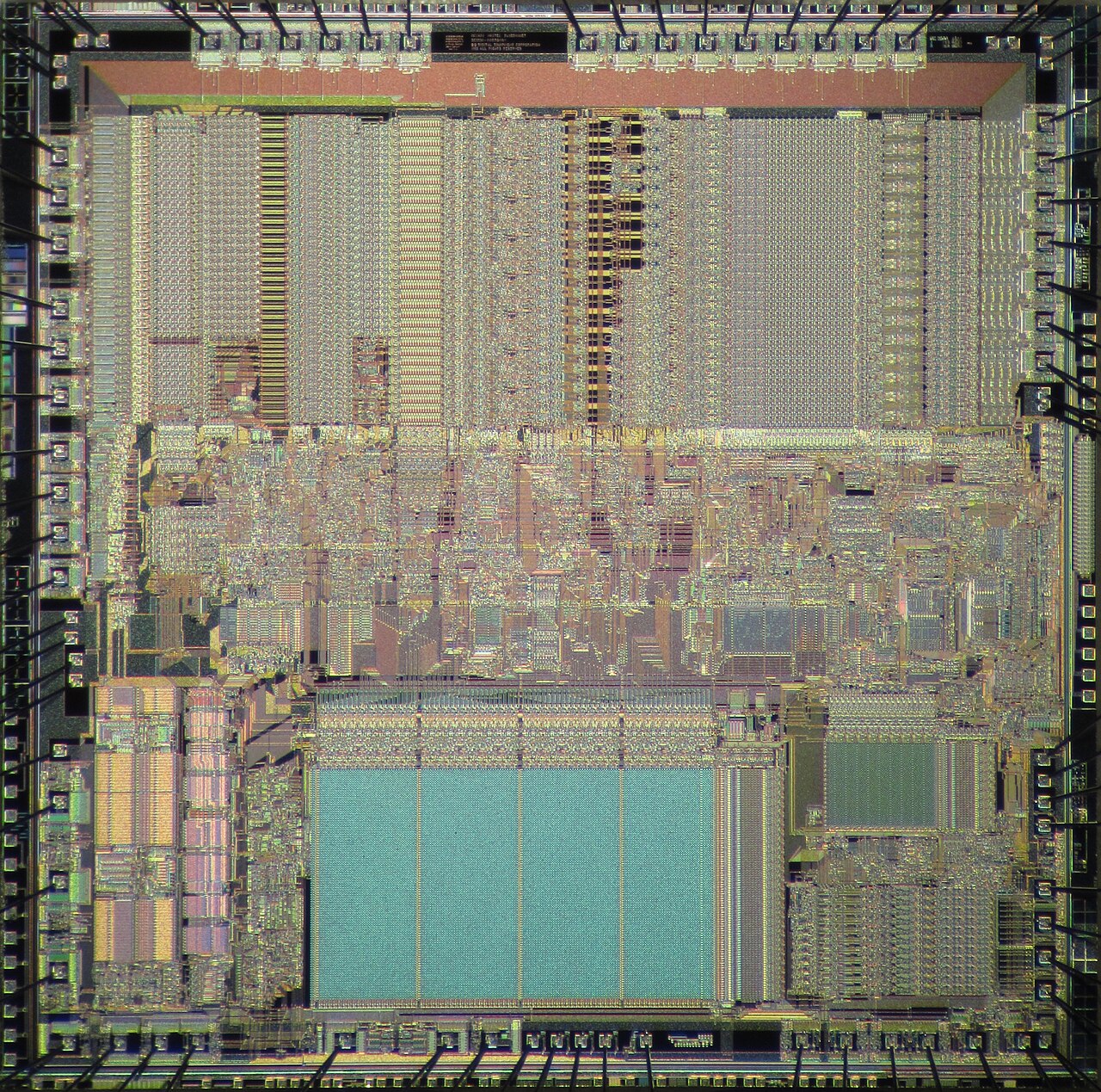
DEC's first single-chip VAX microprocessor, used in the MicroVAX II.

Phiarc · CC BY-SA 4.0
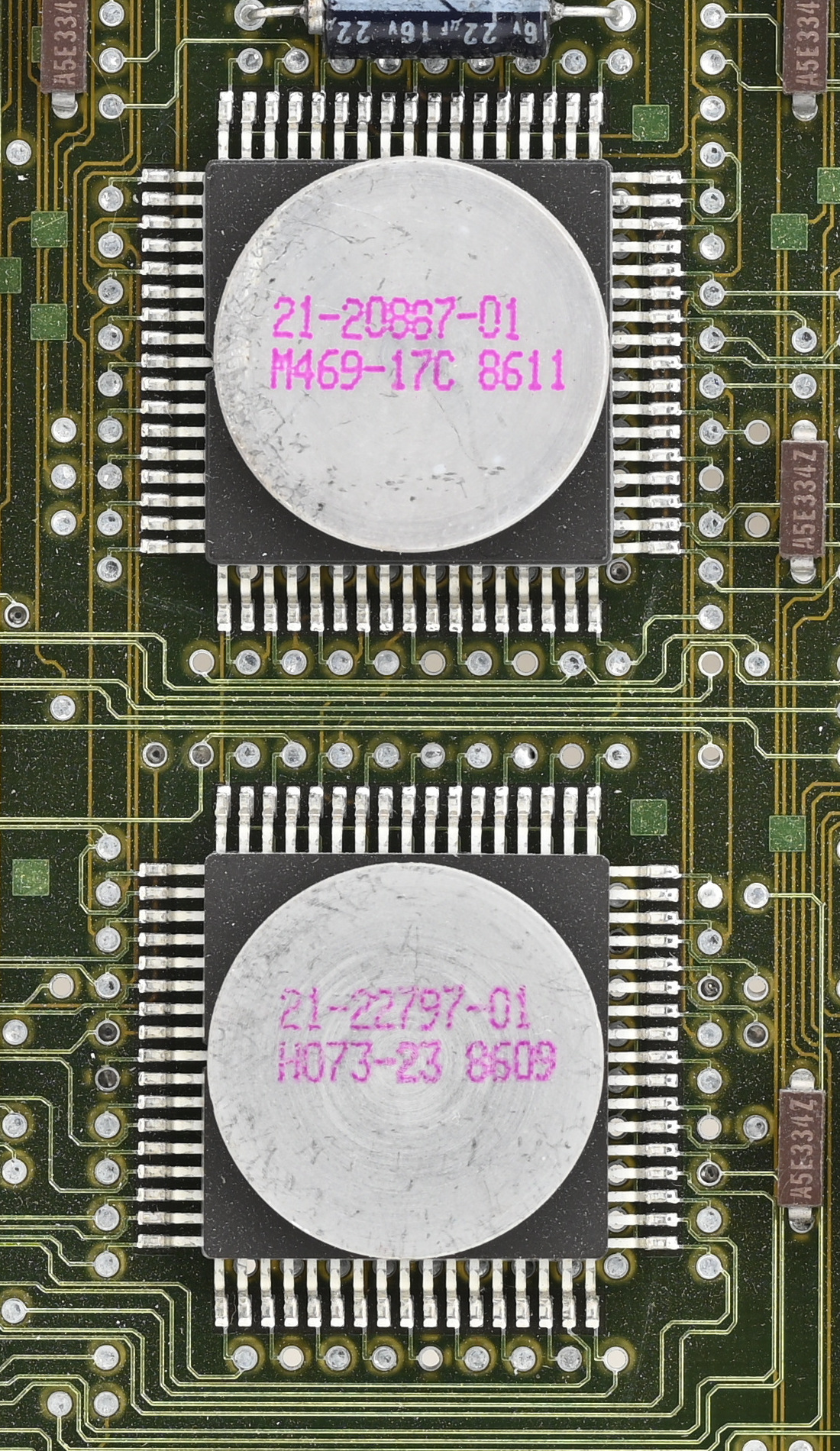
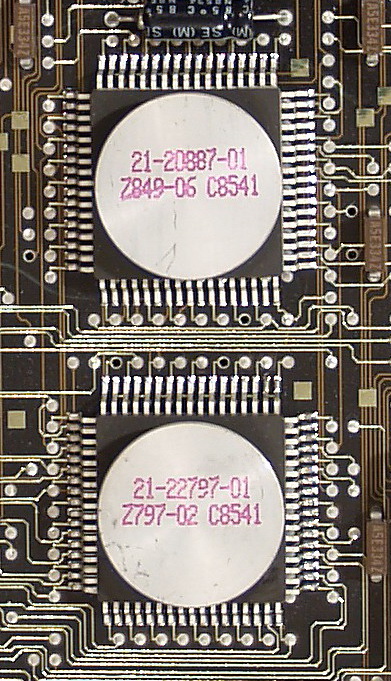
The MicroVAX 78032, designated DC333, is a microprocessor from Digital Equipment Corporation (DEC) that runs a reduced version of the VAX instruction set. It was DEC's first single-chip VAX microprocessor and the first chip the company fabricated itself. The 78032 also holds the distinction of being the first semiconductor device registered under the Semiconductor Chip Protection Act of 1984. The chip contains 125,000 transistors on a die measuring 8.7 by 8.6 mm, built using DEC's 3.0 µm ZMOS NMOS process with two aluminum interconnect layers, and comes in a 68-pin surface-mounted leaded chip carrier. Running at 5 MHz, its integer performance matches that of the original VAX-11/780 from 1977. The 78032 can be combined with the MicroVAX 78132 floating-point accelerator to boost floating-point calculations. The 78132 coprocessor, also known as DC337, handles 61 of the 70 floating-point instructions in the MicroVAX VAX subset and accelerates nine integer instructions. It connects to the 78032 via the DAL bus and control lines, operates on a 100 ns microcycle split into four 25 ns phases from a 40 MHz clock, and consists of five elements: a 67-bit fraction processor, a 13-bit exponent processor, a 1-bit sign processor, a microsequencer, and a bus interface unit. The 78132 has 32,141 transistors on an 8.4 by 6.6 mm die, fabricated in the same ZMOS process and packaged identically. A reverse-engineered copy of the 78032, the U80701, was produced in East Germany around 1989/90, and a Soviet clone existed under the designation KL1807VM3.
- Transistor count
- 125,000
- Die size
- 8.7 by 8.6 mm (74.82 mm²)
- Fabrication process
- DEC's ZMOS process, a 3.0 µm NMOS logic process with two layers of aluminum interconnect
- Package
- 68-pin surface-mounted leaded chip carrier
- Clock frequency
- 5 MHz
- Integer performance
- Comparable to the original VAX-11/780 of 1977
Lore & Background
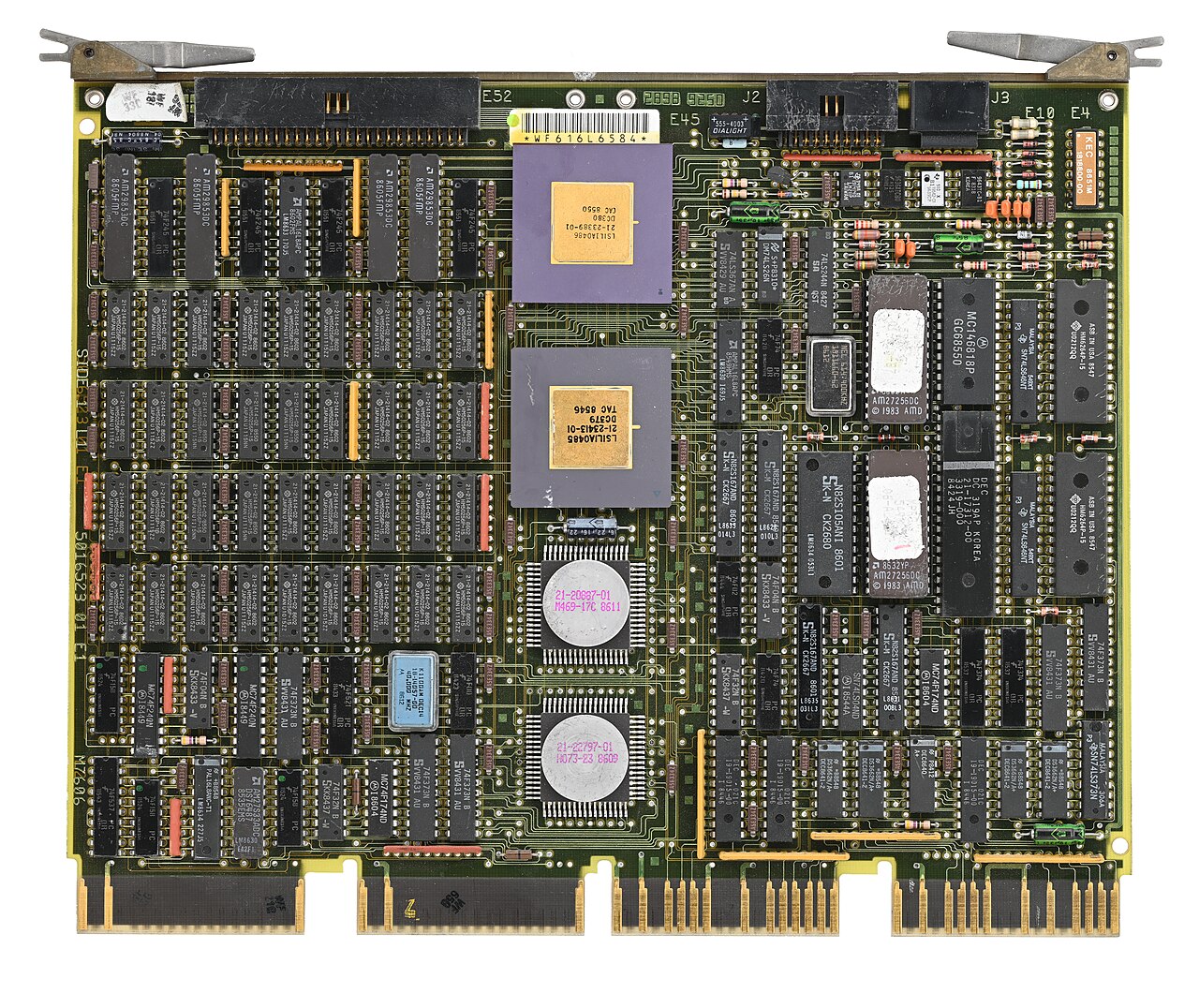
The MicroVAX 78032 was introduced in 1985 and used exclusively in DEC's VAX-based systems, starting with the MicroVAX II. When clocked at 5 MHz, its integer performance is comparable to the original VAX-11/780 from 1977. The microprocessor can be paired with the MicroVAX 78132 floating-point coprocessor for improved floating-point performance.
The 78032 contains 125,000 transistors on a die measuring 8.7 by 8.6 mm (74.82 mm²), fabricated in DEC's ZMOS process—a 3.0 µm NMOS logic process with two layers of aluminum interconnect. It is packaged in a 68-pin surface-mounted leaded chip carrier.
An identical, reverse-engineered copy of the 78032 was manufactured in 1989/90 in East Germany as the U80701. Another clone was manufactured in the Soviet Union under the designation KL1807VM3.
Reader's Guide
The MicroVAX 78032 holds significance as DEC's first single-chip microprocessor implementation of the VAX instruction set architecture, marking a shift from multi-chip implementations to a more integrated design. Its use in the MicroVAX II brought VAX computing to a smaller, more affordable platform. The 78032 is also notable as DEC's first self-fabricated microprocessor and the first semiconductor device registered for protection under the Semiconductor Chip Protection Act of 1984, reflecting early legal recognition of chip designs. Its integer performance at 5 MHz matched that of the original VAX-11/780, demonstrating that a single-chip design could achieve comparable throughput. The existence of reverse-engineered clones in East Germany (U80701) and the Soviet Union (KL1807VM3) indicates the microprocessor's perceived strategic value and the extent of technology copying during the Cold War. The 78032's pairing with the MicroVAX 78132 floating-point coprocessor allowed for accelerated floating-point and integer operations, extending its applicability in scientific and engineering tasks.
Did You Know?
- An identical reverse-engineered copy was manufactured in East Germany as the U80701.
- The 78032 contains 125,000 transistors on a 74.82 mm² die.
Gallery
Frequently Asked Questions
What is the MicroVAX 78032?
The MicroVAX 78032, internally designated DC333, is a single-chip microprocessor built by Digital Equipment Corporation that executes a reduced subset of the VAX instruction set. It served as the central processor in the MicroVAX II system.
What makes the 78032 historically significant?
It was DEC's first microprocessor fabricated on a single die and the first chip the company produced in its own fabrication facilities. It also holds the record as the very first semiconductor design registered under the U.S. Semiconductor Chip Protection Act of 1984.
What are the key technical specifications of the 78032?
The chip integrates 125,000 transistors across a die measuring 8.7 by 8.6 mm, manufactured using DEC's 3.0-micron ZMOS NMOS process with two aluminum interconnect layers. It operates at a 5 MHz clock and is housed in a 68-pin surface-mounted leaded chip carrier package.
How does the 78032's performance compare to earlier VAX machines?
Despite being a single-chip design, its integer throughput is comparable to that of the original VAX-11/780 introduced back in 1977. This made it a practical choice for a compact, lower-cost VAX-class system.
Where was the MicroVAX 78032 used in a commercial product?
It was the primary processor in the MicroVAX II, DEC's compact microcomputer that brought VAX-class computing to a smaller form factor. The chip's single-die architecture was central to that system's compact design.
More in Microprocessors, Part 3 1-24
Spotted an error? Know more?
Reader corrections go straight into our review queue. Suggest an edit · How this site is sourced