
Motorola 68000
A 16/32-bit CISC microprocessor introduced in 1979 by Motorola.

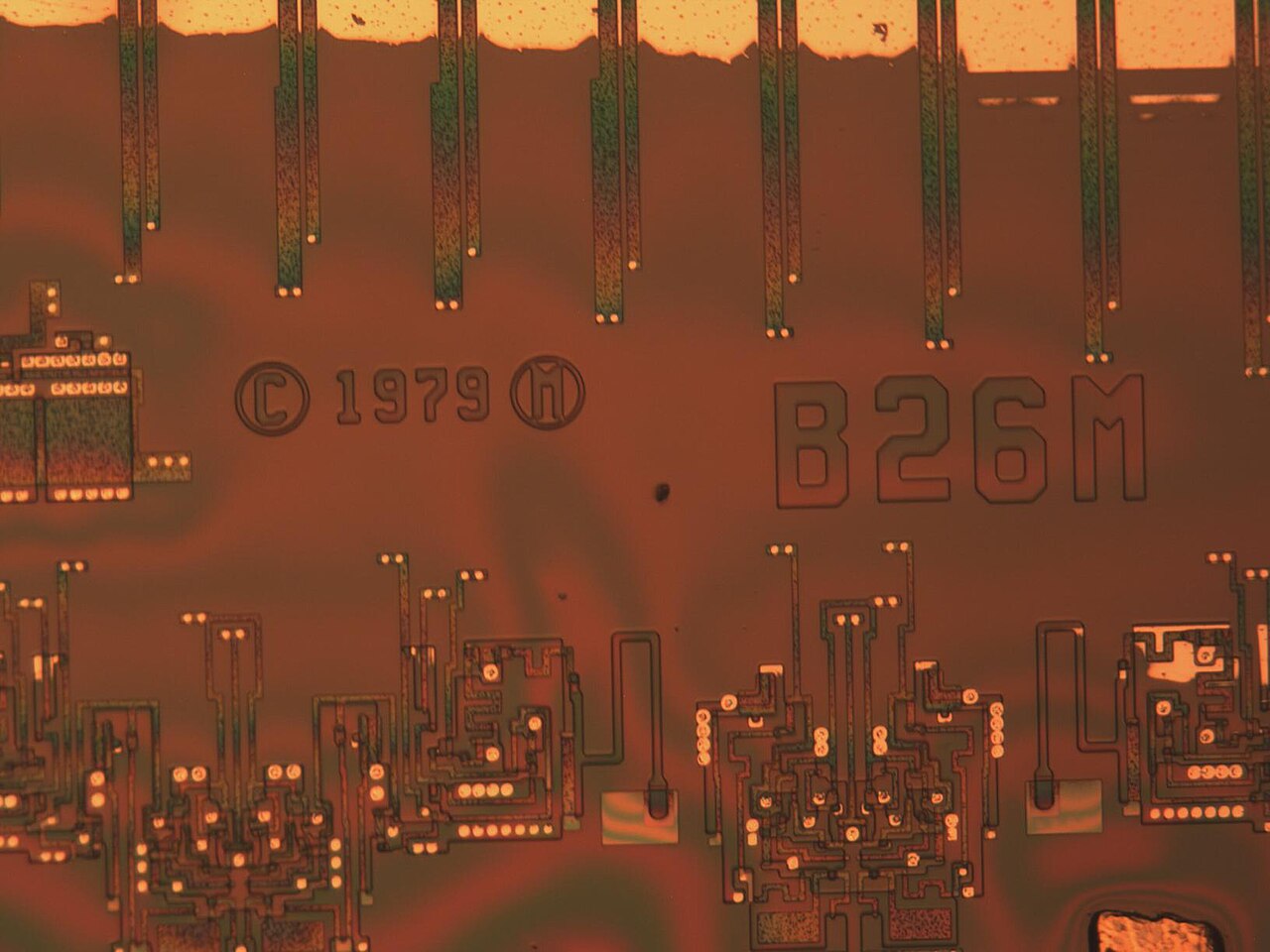
John McMaster · CC BY 4.0
The Motorola 68000 (often shortened to Motorola 68k or m68k and usually pronounced 'sixty-eight-thousand') is a 16/32-bit complex instruction set computer (CISC) microprocessor introduced in 1979 by Motorola Semiconductor Products Sector. It implements a 32-bit instruction set with 32-bit registers and a 16-bit internal data bus, using a 24-bit address bus without memory segmentation. As one of the first widely available processors with a 32-bit instruction set, large unsegmented address space, and relatively high speed for the era, the 68k was a popular design through the 1980s, used in personal computers with graphical user interfaces such as the Macintosh 128K, Amiga, Atari ST, and X68000, as well as video game consoles like the Sega Genesis/Mega Drive and several arcade game systems.
Quick Facts
- Designfirm
- Motorola
- Produced-Start
- 1979
- Produced-End
- 1996-06-01
- Arch
- Motorola 68000 series
- Slowest
- 4
- Slow-Unit
- MHz
- Fastest
- 16.67
- Data-Width
- 16 bits
- Address-Width
- 24 bits
- Transistors
- 68,000
- Successor
- Motorola 68010
Facts from the source article.
Lore & Background
The Motorola 68000 was developed by the Motorola Advanced Computer System on Silicon (MACSS) project, formed by Operations Manager Colin Crook in late 1976. Principal architect Tom Gunter began forming his team in January 1977. The design abandoned backward compatibility with the earlier 6800 microprocessor, instead being influenced by the PDP-11 minicomputer. The team set a performance goal of 1 million instructions per second (MIPS) and aimed to win back microcomputer vendors like Apple Computer and Tandy, as well as minicomputer companies like NCR and AT&T. The chip used extensive microcode, among the first microprocessors to do so, and retained a bus protocol compatibility mode for existing 6800 peripheral devices.
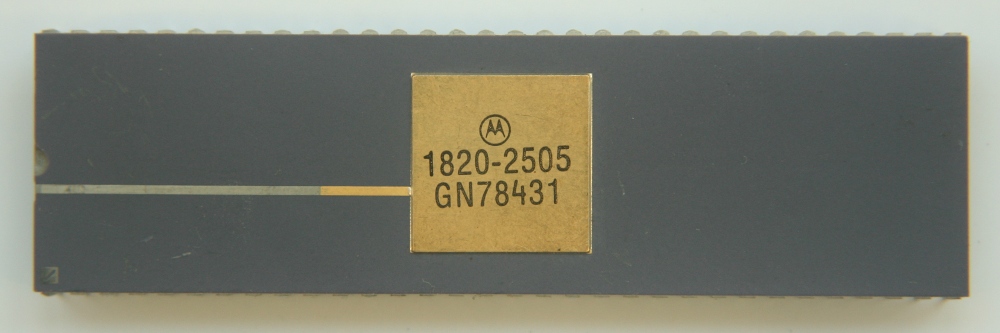
To fit in a 64-pin package, the design used a hybrid approach: a 32-bit instruction set architecture with 16-bit components implementing it, including a 16-bit arithmetic logic unit (ALU) and two 16-bit arithmetic units for addresses. The external interface had 16 data pins and 24 address pins. Motorola entered a technology exchange program with Hitachi in the late 1970s, improving production capabilities, and built a new fab named MOS-8 using 5-inch wafers and Intel's HMOS process with a 3.5 μm feature size. Initial samples were released in February 1980, with production chips available over the counter in November. Speed grades included 4, 6, and 8 MHz initially, with 10 MHz chips in 1981, 12.5 MHz by June 1982, and the fastest 16.67 MHz '12F' version produced in the late 1980s.
Reader's Guide
The Motorola 68000's significance lies in its role as one of the first widely available processors with a 32-bit instruction set and large unsegmented address space, making it easier to program for than segmented designs. Its relatively high speed for the era made it a popular choice through the 1980s, powering a new generation of personal computers with graphical user interfaces, including the Macintosh 128K, Amiga, Atari ST, and X68000, as well as video game consoles such as the Sega Genesis/Mega Drive and several arcade game systems. The original 68k is generally software forward-compatible with later processors in the Motorola 68000 series, such as the 68020, which use full 32-bit ALUs and address and data buses. Although the processors are no longer in production, functionally identical clones and reproductions of the 68000 are still actively made. The design's hybrid 16/32-bit architecture allowed it to fit in a 64-pin package while delivering 32-bit performance, and its use of microcode was innovative for a microprocessor at the time.
Did You Know?
- The design implements a 32-bit instruction set with 32-bit registers but uses a 16-bit internal data bus and a 16-bit external data bus.
- The 68000 was used in the Sega Genesis/Mega Drive video game console.
- The fastest version of the original HMOS chip was the 16.67 MHz '12F' version of the MC68000, produced in the late 1980s.
The Hybrid Architecture Dilemma
The 68000's design was shaped by a hard physical constraint: the 64-pin dual inline package was the largest practical option at the time, and anything beyond that was considered prohibitively expensive and unwieldy. A straightforward 32-bit data and 32-bit address design would have demanded 64 pins just for those two buses, leaving no room for power connections or other signals. Motorola's solution was a hybrid approach—implementing a full 32-bit instruction set architecture while relying on 16-bit internal components, including the arithmetic logic unit and two dedicated 16-bit arithmetic units primarily for address calculations. The external data bus was trimmed to 16 bits, and the address bus to 24 bits, all squeezed into that 64-pin footprint. The result was a processor that Motorola itself described as 16/32-bit. The 24-bit address space, while limited compared to later successors, was notable for its lack of memory segmentation, which simplified programming considerably. This architectural compromise gave the chip a 32-bit register file and instruction set while its internal datapath operated at 16-bit width, a trade-off that defined both its strengths and its ceiling.
A Bet Against the 16-bit Crowd
By late 1976, Motorola's 6800 microprocessor—introduced in early 1974—was losing momentum. Sales had plateaued as competitors like the Zilog Z80 and the cheaper MOS Technology 6502 outpaced it, and the division was only kept afloat by a General Motors engine-control contract. Operations Manager Colin Crook recognized that simply matching Intel's upcoming 8086 or a rumored 16-bit Z80 would be a losing strategy; Intel's market position would dominate any near-equivalent product. Instead, Crook set an aggressive benchmark: deliver twice the power at the same price, or half the cost at equal performance. The answer, decided by the end of 1976, was to leapfrog the 16-bit category entirely and build a processor with genuine 32-bit capabilities. He launched the Motorola Advanced Computer System on Silicon project, hiring Tom Gunter as principal architect in early 1977. The team targeted one million instructions per second and aimed not just at microcomputer vendors like Apple and Tandy but at minicomputer houses such as NCR and AT&T. Backward compatibility with the 6800 was deliberately dropped, as the team judged 8-bit foundations too limiting for the ambitions they had set.
The PDP-11's Ghost and Microcode
The 68000's instruction set philosophy drew heavily from the PDP-11, the dominant minicomputer of the 1970s. The PDP-11 was celebrated for its orthogonal design, where virtually any operation could act on any data type, producing a rich but varied instruction set full of subtle addressing-mode variations. The MACSS team embraced this principle, but implementing it on a single microprocessor chip posed a significant engineering challenge. Rather than hardwiring every data path, they turned to microcode—tiny programs stored in read-only memory that fetched the necessary operands, directed the arithmetic units, and wrote back results. This technique had long been standard in mainframes and minicomputers, but the 68000 was among the first microprocessors to rely on it so extensively. The approach allowed the chip to present a clean, powerful 32-bit instruction set to programmers while keeping the internal 16-bit hardware manageable. The design also preserved a bus-protocol compatibility mode so that existing 6800 peripherals, such as UARTs and other interfacing chips, could still connect to the new system, protecting the ecosystem Motorola had built around its earlier processor.
A Decade of Dominance and a Lasting Echo
Introduced in 1979, the 68000 became one of the first widely available processors to combine a 32-bit instruction set, a large unsegmented address space, and competitive speed for the era. That combination made it the natural choice for a wave of new personal computers built around graphical user interfaces, including the original Macintosh 128K, the Commodore Amiga, the Atari ST, and the Sharp X68000. It also found a home in consumer electronics, powering the Sega Genesis (Mega Drive) console and numerous arcade game systems throughout the 1980s. Its influence extended beyond its own lifetime: the 68020, 68010, and 68012 that followed all adopted full 32-bit ALUs and wider address and data buses, yet the original 68k remained largely software forward-compatible with the rest of the family despite its narrower external bus. Although Motorola ceased production of the line, functionally identical clones and reproductions of the 68000 continue to be manufactured, keeping the chip in active use decades after its introduction.
Gallery
Frequently Asked Questions
What is the Motorola 68000?
The Motorola 68000, often shortened to 68k, is a CISC microprocessor that Motorola's semiconductor division launched in 1979. It pairs a 32-bit instruction set and 32-bit registers with a 16-bit external data bus and a 24-bit address bus that uses no memory segmentation.
What were the Motorola 68000's initial clock speeds?
At its 1979 debut, the 68k shipped in 4, 6, and 8 MHz speed grades. The fastest variant ever produced was the 16.67 MHz '12F' revision of the MC68000.
Why was the Motorola 68000 significant in computing history?
It was among the first broadly available processors to deliver a full 32-bit instruction set alongside a large, unsegmented address space, which was unusual for the late 1970s. Those traits, combined with competitive speed, made it a go-to design throughout the 1980s.
Who manufactured the Motorola 68000?
The chip was designed and produced by Motorola's Semiconductor Products Sector, the division that handled the company's microprocessor line at the time.
What made the Motorola 68000 popular in the 1980s?
Its straightforward unsegmented addressing, 32-bit instruction set, and solid performance for the era made it an attractive choice for system designers. It ended up powering a wide range of personal computers, workstations, and embedded applications during that decade.
More in Microprocessors, Part 3 1-24
Spotted an error? Know more?
Reader corrections go straight into our review queue. Suggest an edit · How this site is sourced