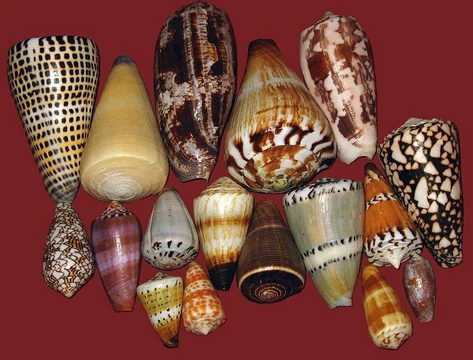
Clanculus consobrinus
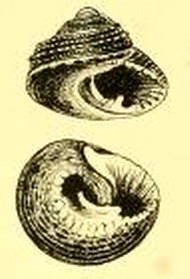
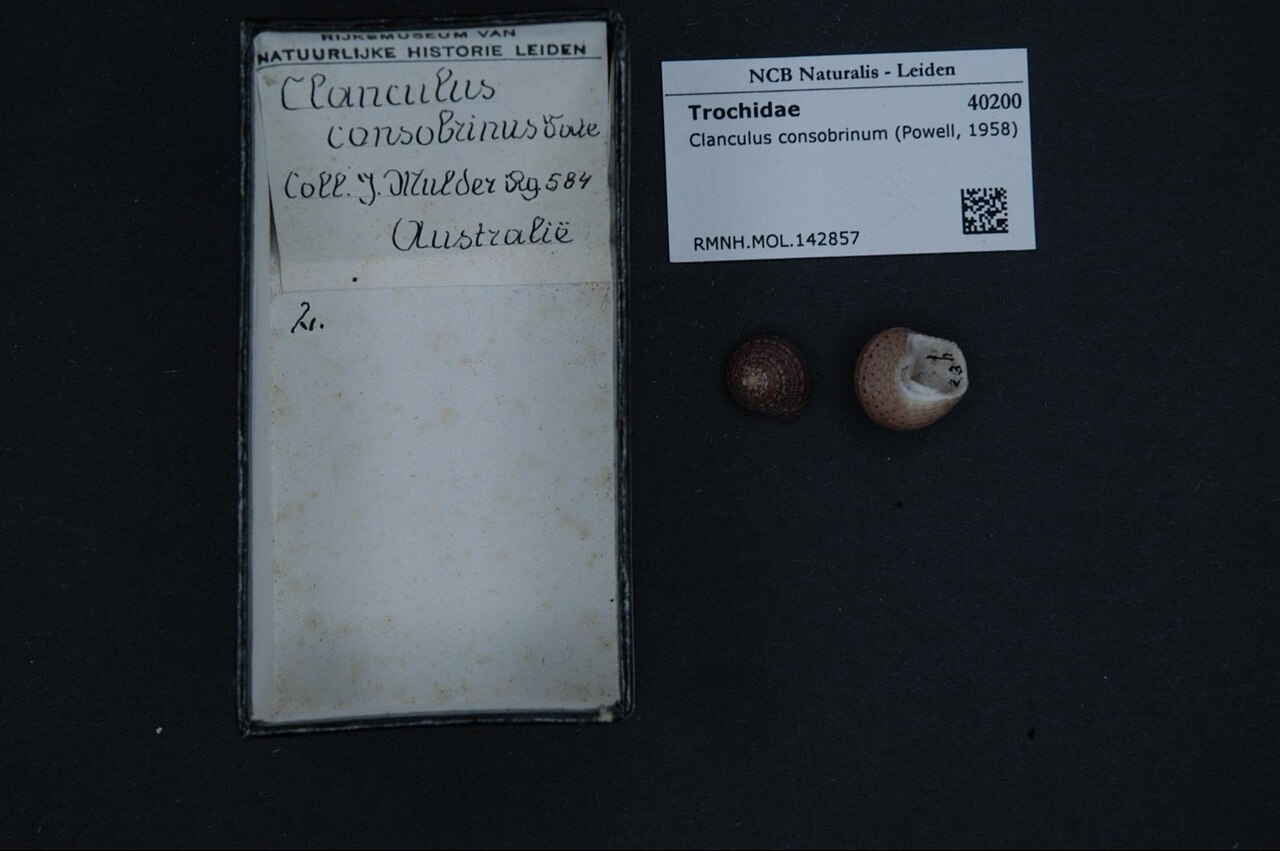
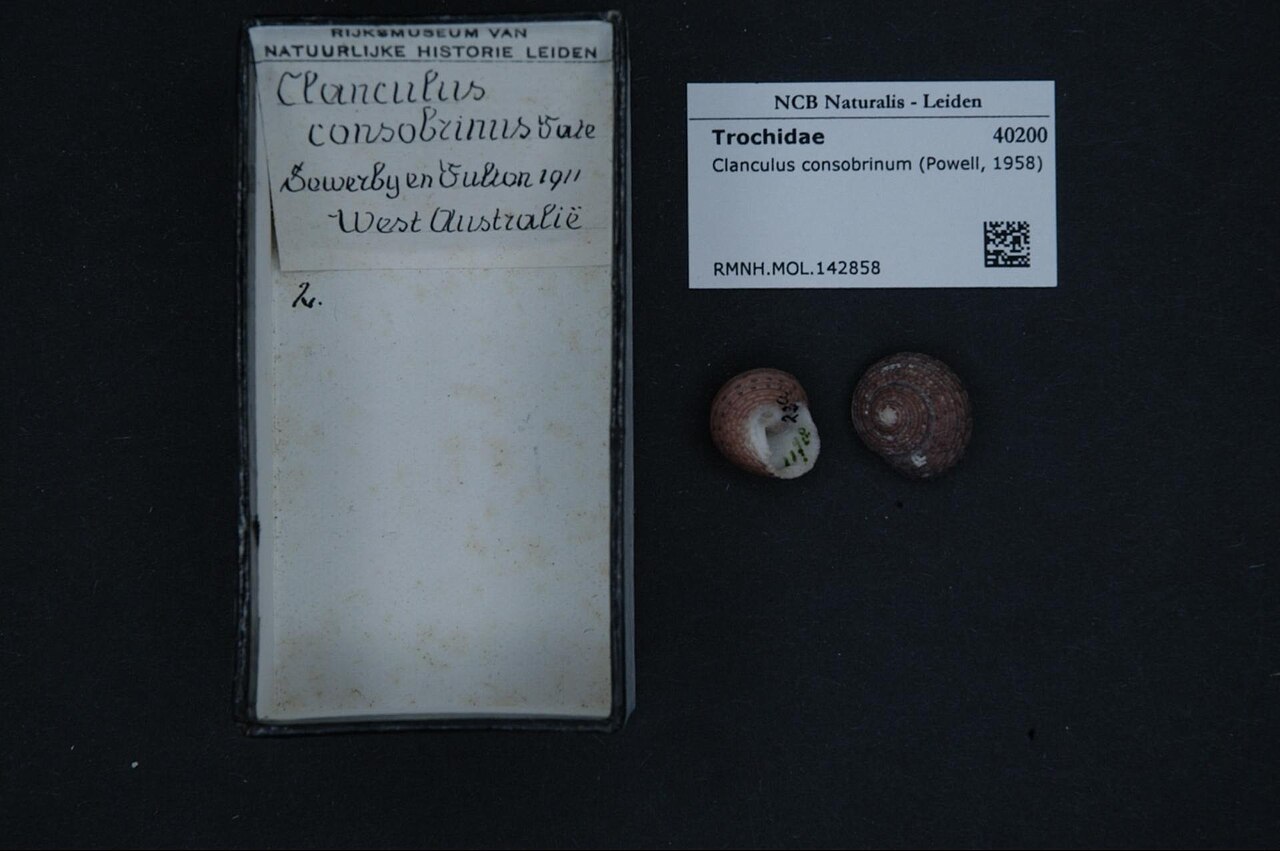
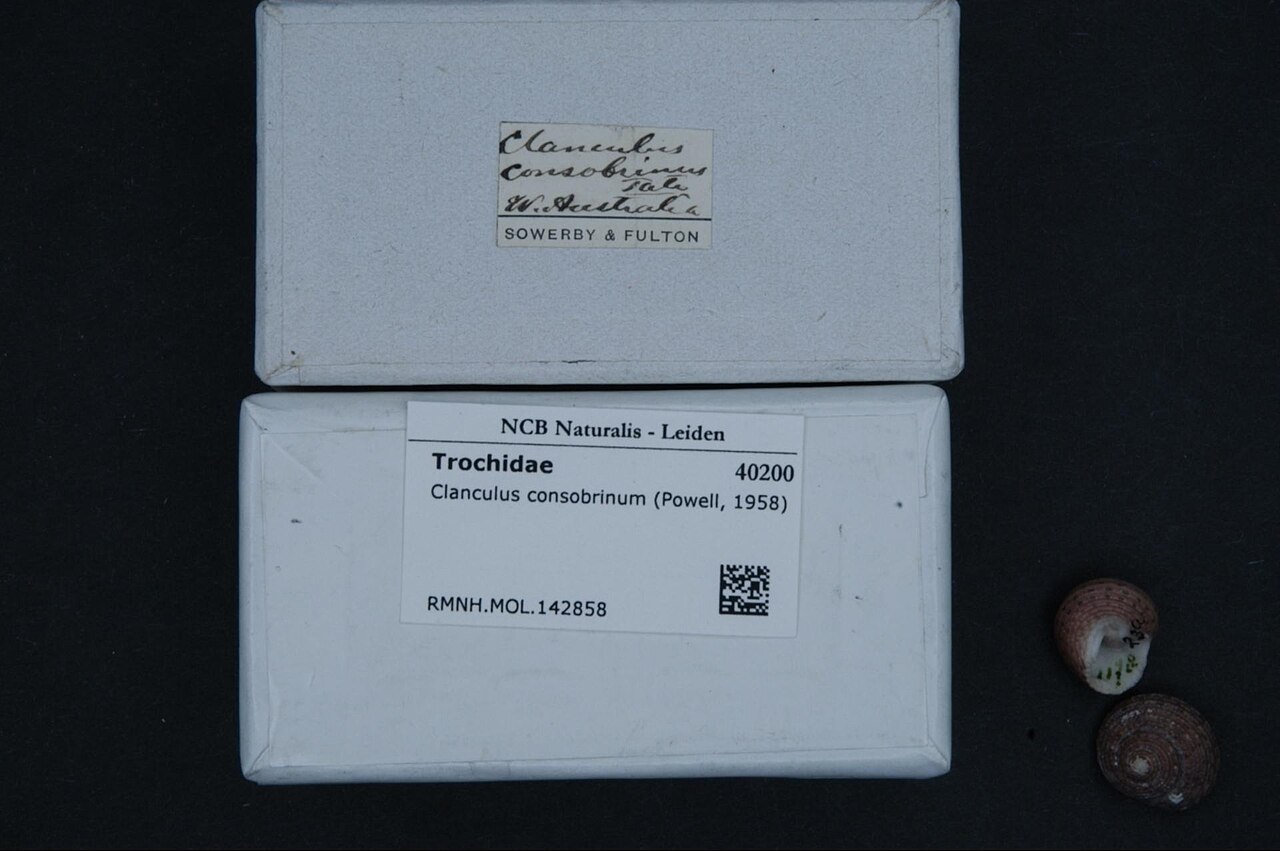
A perforate, depressed top snail with pinkish-brown shell.

Tate, 1893 · CC0
Clanculus consobrinus is a marine gastropod mollusk belonging to the family Trochidae, commonly known as top snails. This sea snail is endemic to Australia, found off the coasts of South Australia and Western Australia.
The shell, which ranges from 8 to 13 mm in size, is perforate and depressed in shape, with a pinkish-brown color and sparse black dots. Its spire is low-conic with an acute apex and five whorls, and the suture is subcanaliculate. The body whorl is obtusely bi-angular at the periphery, and the shell’s base is somewhat convex. The aperture is rounded and oblique, with outer and basal margins that are lirate-dentate. The columella is oblique, not tortuous above, and does not enter the umbilicus; its front edge is plain except for a tooth at the base. The umbilicus is wide and deep, with a crenate-dentate margin.
On the penultimate whorl, ornamentation consists of four equal, equidistant granulose lirae and obliquely transverse raised threads. On the body whorl, a small granulose lira is interposed between the third and fourth lirae; anterior to the fourth are two smaller, equally spaced lirae. The fifth lira is slightly granulose, while the sixth, at the periphery, is broad and obtuse. The interspaces between lirae are faintly spirally striate. The base has seven concentric lirae, with the inner ones subgranose and the outer ones plain, and a few coincident striae in the interspaces.
Quick Facts
- Taxon
- Clanculus consobrinus
Facts from the source article.
Lore & Background
The shell of Clanculus consobrinus is perforate and depressed, colored pinkish-brown with sparse black dots. The spire is low-conic with an acute apex and five whorls, and the suture is subcanaliculate. The body whorl is obtusely bi-angular at the periphery, and the base is somewhat convex. The aperture is rounded and oblique, with outer and basal margins lirate-dentate. The columella is oblique, neither tortuous above nor entering the umbilicus, with a plain front edge except a tooth at the base. The umbilicus is wide and deep, with a crenate-dentate margin. The ornament of the penultimate whorl consists of four equal and equidistant granulose lirae and obliquely transverse raised threads. On the body whorl, a small granulose lira is interposed between the third and fourth, with two smaller equally distant from one another anterior to the fourth; the fifth is slightly granulose, while the sixth at the periphery is broad and obtuse. The interspaces between the lirae are faintly spirally striate. The base has seven concentric lirae, the inner ones subgranose and the outer ones plain, with a few coincident striae in the interspaces.
Reader's Guide
Clanculus consobrinus is a notable species within the Trochidae family, documented in several references including works by Tate (1893), Wells & Bryce (1986), Wilson (1993), and Jansen (1995). Its shell size ranges from 8 mm to 13 mm, and its distinctive ornamentation—such as the four equal granulose lirae on the penultimate whorl and the seven concentric lirae on the base—provides key taxonomic characteristics. The species is endemic to Australia, specifically recorded off South Australia and Western Australia. The detailed description of its shell morphology, including the wide and deep umbilicus and the lirate-dentate margins, contributes to the understanding of trochid diversity in Australian waters. Its presence in multiple scientific publications underscores its importance in regional malacological studies.
Did You Know?
- The shell size of Clanculus consobrinus varies between 8 mm and 13 mm.
- The shell is pinkish-brown and sparsely black-dotted.
- This species is endemic to Australia, occurring off South Australia and Western Australia.
Taxonomic Placement Within the Top Shells
Clanculus consobrinus is a marine gastropod mollusc that belongs to the genus Clanculus, a group of sea snails classified within the family Trochidae, commonly known as the top shells. This placement situates the species among a lineage of conical, ribbed shells that have been studied by malacologists for centuries. The genus itself carries a distinguished taxonomic heritage: its type species, Clanculus pharaonius, was originally described by Carl Linnaeus in 1758 under the name Trochus pharaonius, anchoring the group in one of the earliest frameworks of modern biological nomenclature. Over the following two and a half centuries, numerous additional species were described under the Clanculus name, many of which have since been reassigned or synonymized. This long history of description and revision reflects both the morphological diversity within the genus and the ongoing challenges malacologists face in distinguishing closely related top shells. For C. consobrinus, its identity as a member of this well-established genus provides a stable taxonomic home within the broader Trochidae family.
A Cosmopolitan Presence Across Ocean Basins
Clanculus consobrinus inhabits a genus whose members enjoy a truly worldwide distribution, occurring across tropical and temperate waters on every continent. Individuals of Clanculus species are found ranging from the intertidal zone, where waves regularly wash over the substrate, down to depths of approximately 200 metres on the continental shelf. The geographic footprint is remarkably broad: populations have been recorded in Australian and New Zealand waters, throughout the Indo-Pacific region, along the coasts of the Philippines, Sri Lanka, the Seychelles, and Japan, as well as in South African, Zanzibari, and broader Indian Ocean habitats. The Red Sea, West African shores, Angolan waters, North African coasts, and European seas all host members of this genus. In certain localities, particular species can appear in very large aggregations, suggesting that suitable reef or rocky substrates support dense communities. For C. consobrinus, this cosmopolitan range underscores the ecological versatility of the Clanculus lineage and its ability to colonize diverse marine environments across ocean basins.
Shell Architecture and Colour Palette
The shell of Clanculus consobrinus shares the characteristic architecture of its genus: a broad conical form with a relatively low spire, giving the overall silhouette a squat, rounded appearance rather than a tall, pointed one. The most striking surface feature is a pattern of spiral ribs formed by prominent, evenly spaced rows of thick, spherical beads that wrap around each whorl and lend the shell a distinctly beaded texture. The whorls are separated by a deep suture, and the final whorl is notably inflated, producing a rounded, almost globular profile at the shell's base. The aperture is oval in shape and framed by a strongly ridged lip, while the umbilicus at the centre is generally deep. In terms of colouration, Clanculus shells display a warm palette, shifting from vivid orange through dark red to a rich chocolate brown. These combined traits—beaded sculpture, deep suture, inflated body whorl, ridged aperture, and warm earthy tones—make the genus readily recognizable among other top shells.
Deep Time and Taxonomic Reckoning
The genus Clanculus, to which C. consobrinus belongs, has a fossil record stretching back to the Pliocene epoch. Specimens identified as C. corallinus, C. elevatus, C. bonfittoi, and C. jussieui have been recovered from Italian deposits of that age, confirming that this lineage of beaded top shells was already well established millions of years ago. Beyond its ancient origins, the genus presents a remarkable case study in taxonomic complexity. The synonymy list for Clanculus is extensive: dozens of names originally described by authors such as A. Adams, Gould, Pilsbry, Turton, Tenison-Woods, and Crosse have been collapsed into a smaller set of valid species. Many of these redundant names were erected in the mid- to late-nineteenth century, when malacologists working in different collections and regions independently described what were in fact the same organisms. This pattern of over-description followed by later consolidation highlights how difficult it is to delineate species boundaries within a morphologically consistent but geographically widespread genus like Clanculus.
Gallery
Frequently Asked Questions
What is Clanculus consobrinus?
It is a small marine top snail in the family Trochidae, found only in Australian waters. Its shell is perforate and depressed, showing a pinkish-brown tone with a few scattered black dots.
Where does Clanculus consobrinus occur?
This species is endemic to Australia, restricted to the coastal waters of South Australia and Western Australia. It has no recorded presence outside those two regions.
How large is a Clanculus consobrinus shell?
Adult shells fall in the 8-to-13-millimetre range. The spire is low-conic, bears five whorls, and tapers to an acute apex.
What does the shell of Clanculus consobrinus look like?
The shell is depressed and perforate, pinkish-brown in colour with sparse black spotting. The body whorl is slightly angular at its outer edge, and the aperture is rounded and set obliquely.
Why do shell collectors seek out Clanculus consobrinus?
Its range is limited to just two Australian states, making it a geographically constrained find. The combination of its tiny size, perforate structure, and distinctive pinkish-brown speckled colouring distinguishes it from other common Trochidae.
More in Marine Snails, Part 3 1-24
Spotted an error? Know more?
Reader corrections go straight into our review queue. Suggest an edit · How this site is sourced