Clanculus berthelotii
A small top snail with a globose-conic shell and granose ridges.

D'Orbigny, 1840 · CC0
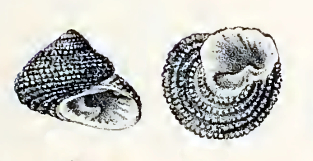
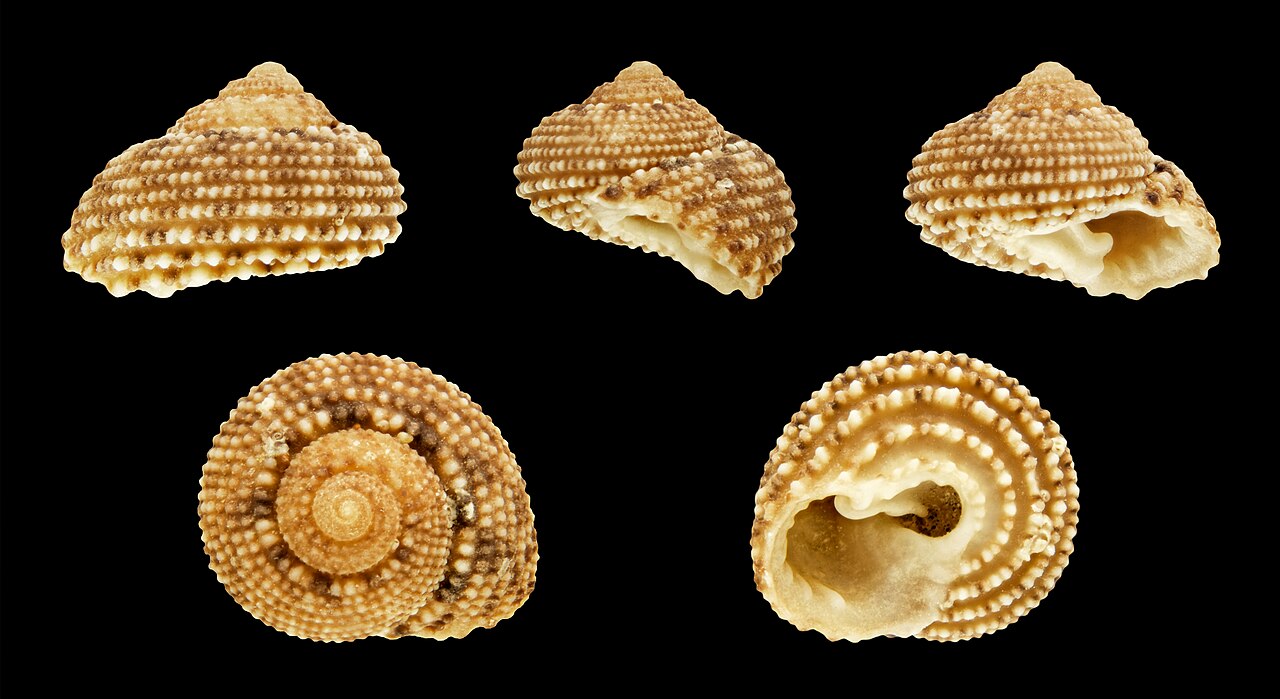
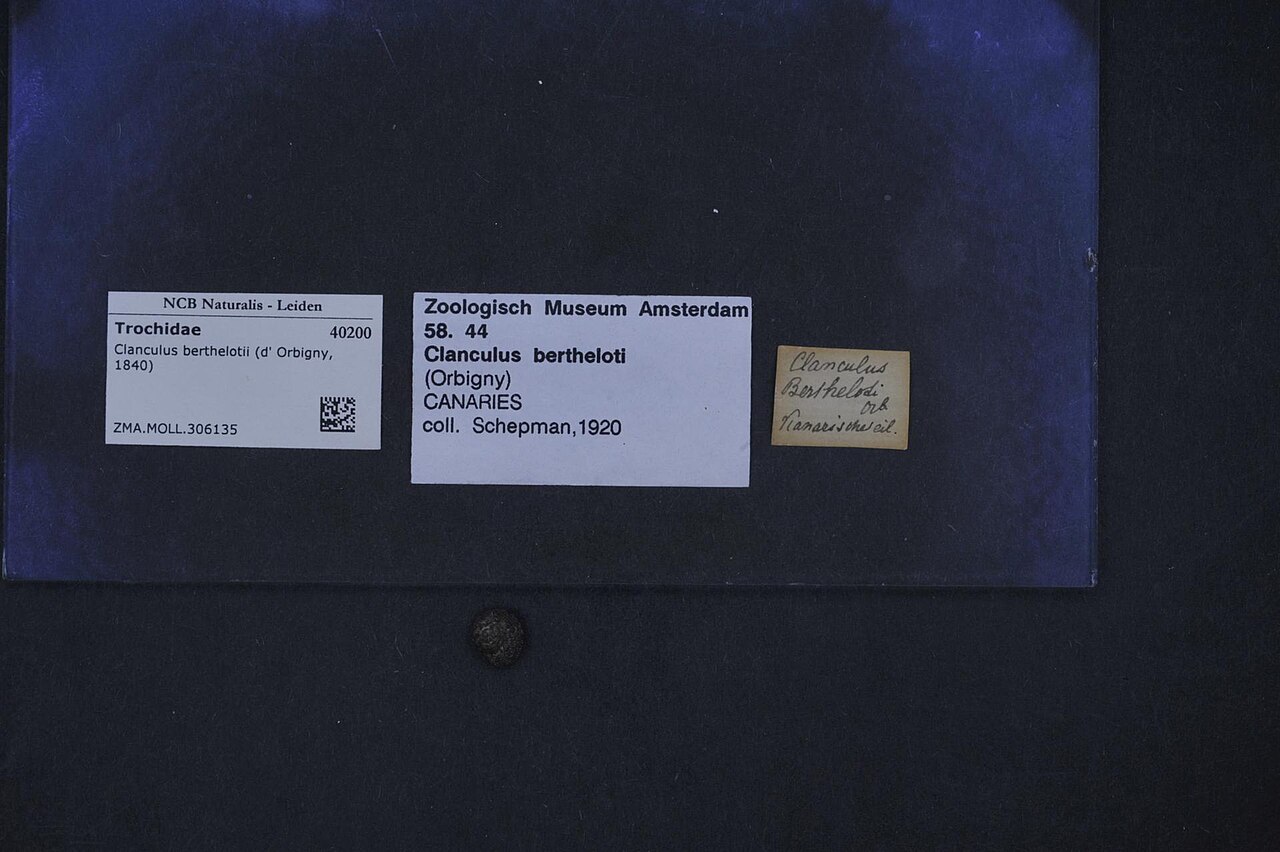
Clanculus berthelotii is a marine gastropod mollusk belonging to the family Trochidae, commonly known as top snails. Its shell, which ranges from 5 mm to 11 mm in size, is small, globose-conic, and closely resembles that of Clanculus corallinus. The five whorls are brown with finely grooved, beaded ridges, and often show blackish mottling just below the sutures. The shell’s base is dotted with white. The body whorl has 11 sharply beaded ridges, separated on the base by deep grooves that are wider than the ridges themselves. The aperture is similar to that of Clanculus corallinus, but the tooth at the base of the columella is smaller and more pointed. This species is found in the North Atlantic Ocean, specifically around the Azores, Madeira, and the Canary Islands.
Quick Facts
- Taxon
- Clanculus berthelotii
Facts from the source article.
Lore & Background
The shell of Clanculus berthelotii is small, globose-conic in shape, and very similar in form to Clanculus corallinus. It has five whorls that are acutely granose-lirate, colored brown and more or less maculated with blackish below the sutures. The base of the shell is dotted with white, and the body whorl is encircled by 11 sharply granose ridges, with those of the base profoundly separated by deep grooves wider than the ridges. The aperture is as in Clanculus corallinus, but the tooth at the base of the columella is more pointed and smaller.
Reader's Guide
Clanculus berthelotii is documented in the North Atlantic Ocean, specifically around the Azores, Madeira, and the Canary Islands. The species was described by d'Orbigny in a work covering mollusks, echinoderms, foraminifera, and polyps collected in the Canary Islands by Webb and Berthelot. Later, Thorson (1967) studied this species, noting its brooding behavior in the intertidal zone of Tenerife. The species is also listed in the European register of marine species (2001). Its shell characteristics, including the granose ridges and distinctive columellar tooth, help distinguish it from similar trochids. The species has been referenced in taxonomic and ecological literature, contributing to the understanding of marine gastropod diversity in the eastern Atlantic.
Taxonomic Tangle
The story of how Clanculus species have been classified is one of the most tangled in all of malacology. The genus itself was anchored by what we now call Clanculus pharaonius, originally described by Carl Linnaeus back in 1758 under the name Trochus pharaonius. Since then, dozens of names have been proposed, re-examined, and ultimately collapsed into existing species. A single species like Clanculus miniatus, first named by Anton in 1838, has absorbed at least seven other names over the decades — from alfredensis and becki to laceyi and trochiformis. Similarly, Clanculus plebejus has swallowed up angeli, dominicanus, nodiliratus, and plabeius. This pattern of repeated description and subsequent synonymy reflects both the difficulty of distinguishing closely related top shells and the sheer volume of specimens collected from tropical waters worldwide. For any species within this genus, including C. berthelotii, the taxonomic journey is one of constant revision.
Shell Architecture
The shell of a Clanculus species presents a distinctive architectural profile that sets it apart from many other top shells. The overall form is wide-conical with a notably low spire, giving the whorls a flattened, spreading appearance. What immediately catches the eye is the sculpture: rows of robust, round beads arranged in regular spiral lines across the surface. The whorls themselves show a deep suture line, and the final whorl is characteristically inflated, lending the shell a full, rounded profile. The aperture takes an oval shape, bordered by a strongly ridged lip that adds to the shell's textured character. At the base, the umbilicus tends to be deep, a feature that helps distinguish these shells from some related genera. Coloration runs through warm earthy tones — orange, dark red, and chocolate brown — giving the shells a rich, almost metallic quality when held up to the light.
A Global Citizen
Clanculus is not a genus confined to a single ocean or coastline. Its members enjoy a truly worldwide distribution, with individuals of various species occurring in great numbers across a remarkably broad range of marine environments. The vertical range is impressive: these top shells can be found from the intertidal zone, where waves crash and the substrate is constantly shifting, down to depths of two hundred meters in the dim, cooler waters below. Horizontally, the genus spans an extraordinary list of regions. Australia, New Zealand, and the broader Indo-Pacific are well represented, as are the Philippines, Sri Lanka, the Seychelles, and Japan. The Red Sea, the Indian Ocean, and the waters off Zanzibar all host Clanculus species. In the Atlantic and Mediterranean, they appear along the coasts of West Africa, Angola, North Africa, and Europe. This cosmopolitan presence underscores the genus's ecological versatility.
Deep Time
The genus Clanculus carries a fossil record that stretches back millions of years, making it one of the older lineages within the family Trochidae. Fossils recovered from Italian deposits date to the Pliocene epoch, and they include several now-recognized species: C. corallinus, C. elevatus, C. bonfittoi, and C. jussieui. The fact that these Pliocene forms can still be matched to living representatives tells us that the basic body plan of the genus — the wide-conical shell, the beaded spiral sculpture, the deep umbilicus — has remained remarkably stable over a vast span of geological time. This longevity is not merely a curiosity; it speaks to a successful ecological niche that has persisted through significant climatic and sea-level changes. For a marine gastropod, a Pliocene fossil record is a testament to both the durability of the genus's design and the continuity of the habitats it occupies from the intertidal zone to the deeper continental shelf.
Gallery
Frequently Asked Questions
What is Clanculus berthelotii?
It is a small marine top snail in the family Trochidae, native to the eastern North Atlantic around the Azores, Madeira, and the Canary Islands. Its shell is globose-conic and measures roughly 5 to 11 millimeters across.
How many whorls and ridges does Clanculus berthelotii have?
The shell shows five whorls, and the body whorl carries eleven sharply beaded ridges. On the base, those ridges are separated by deep grooves that are wider than the ridges themselves.
How do you tell Clanculus berthelotii apart from Clanculus corallinus?
The two species share a very similar overall shape and aperture, but C. berthelotii typically displays blackish mottling just below the sutures and a base dotted with white. Subtle differences in the internal tooth structure of the aperture also separate them.
Where in the wild can you find Clanculus berthelotii?
This top snail is restricted to the North Atlantic Ocean, with known occurrences in the Azores, Madeira, and the Canary Islands. It is not a broadly distributed species and is essentially a regional endemic of that eastern Atlantic zone.
What does the shell of Clanculus berthelotii look like?
The shell is small, brown, and globose-conic, covered in finely grooved beaded ridges. The base is dotted with white, and the whorls often show dark mottling near the sutures, giving it a subtly patterned appearance.
More in Marine Snails, Part 3 1-24
Spotted an error? Know more?
Reader corrections go straight into our review queue. Suggest an edit · How this site is sourced