Clanculus aloysii
A small, carinated top snail endemic to southeastern Australian waters.

Tenison-Woods, 1876 · CC0
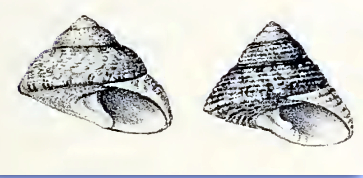
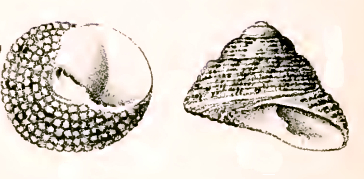
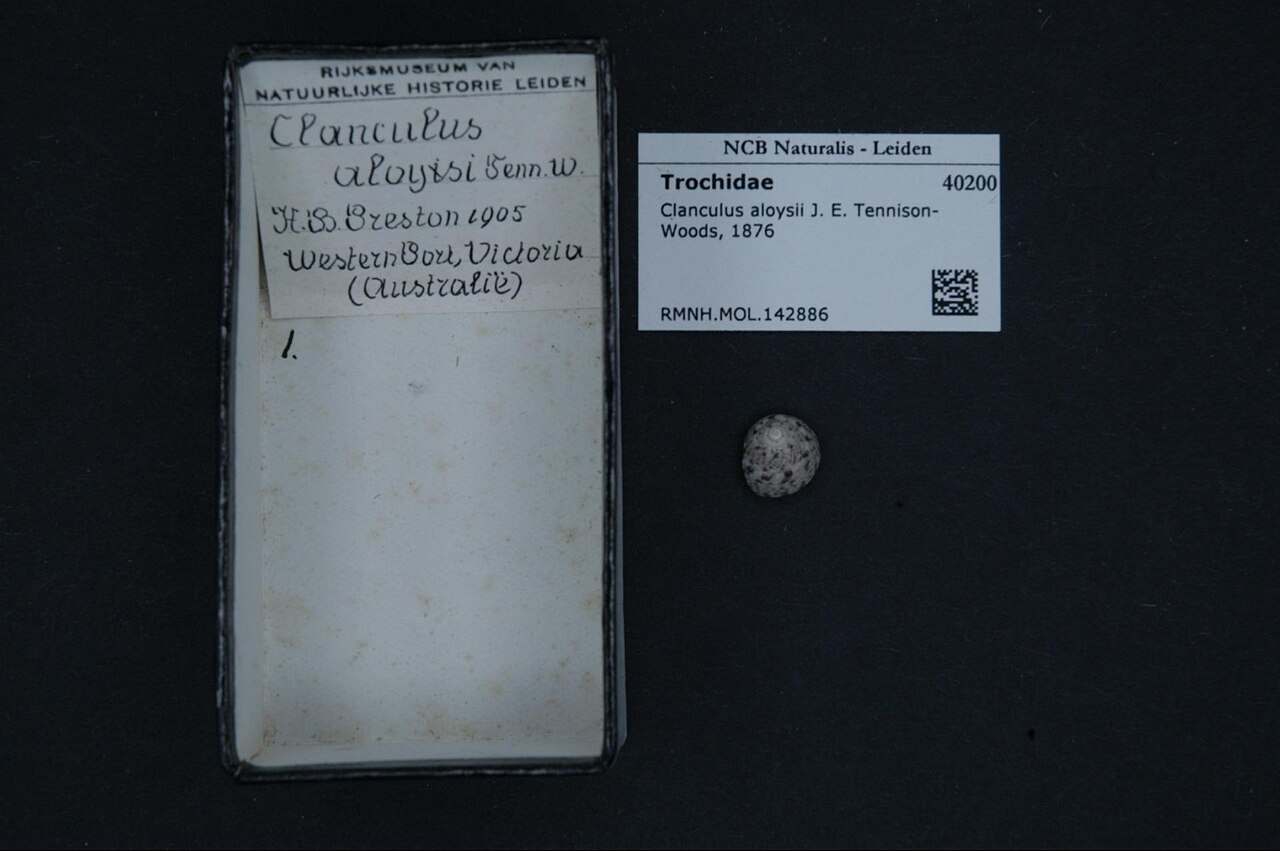
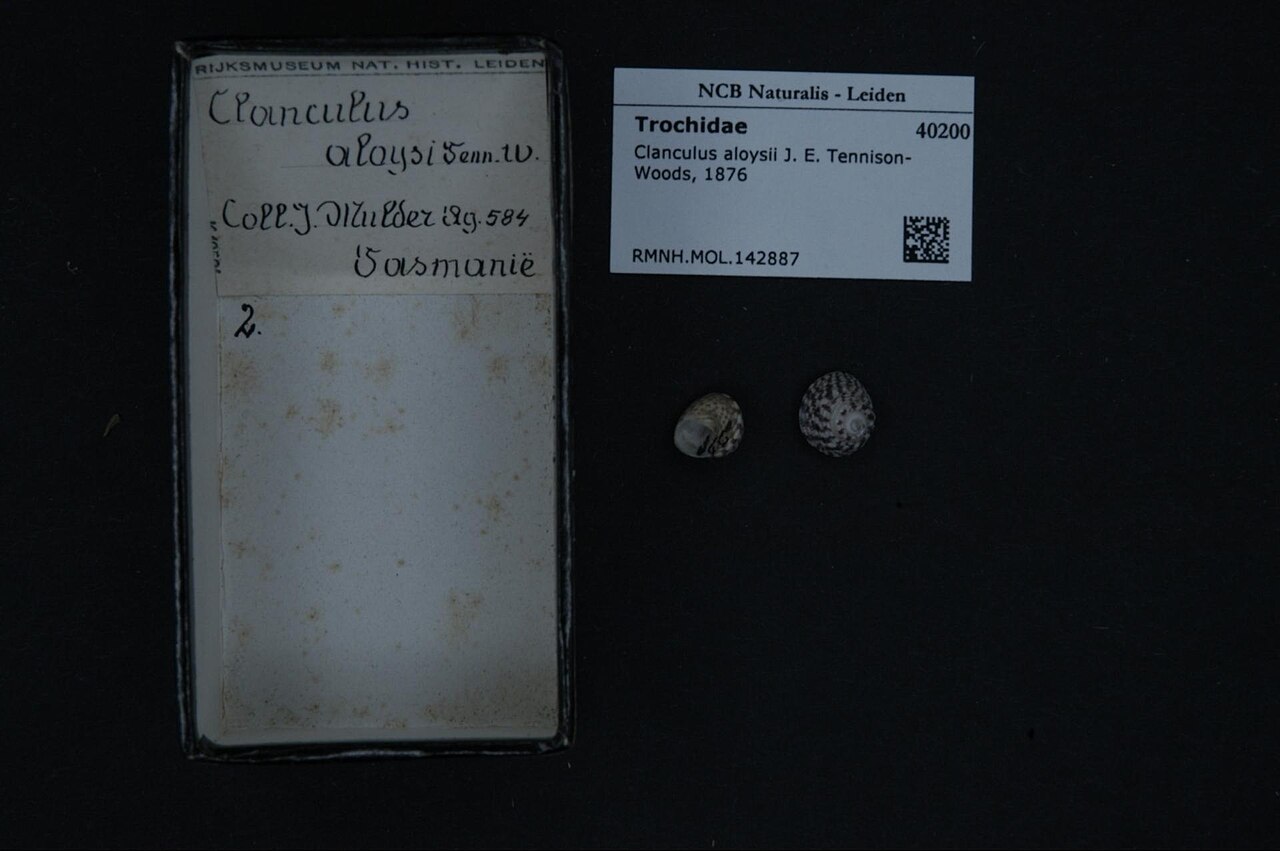
Clanculus aloysii is a marine gastropod mollusk in the family Trochidae, commonly known as a top snail. The small, conical shell is carinated and umbilicated, reaching 8 to 9 mm in height and 9 to 11 mm in diameter. Its coloration is whitish or corneous, with zigzag radiating stripes—sometimes broken into dots—of sepia or black on the upper surface, while the underside is either plain white or sparsely dotted with black. A series of black spots decorates the peripheral carina. The spire is rather straightly conical with an acute apex and about six whorls, separated by subcanaliculate sutures. The upper surface bears about six coarse, conspicuously granose spiral lirae, with the first and sixth (peripheral) being most prominent. The base is slightly convex, with six to seven concentric, coarse, conspicuously granose lirae. The rhomboidal aperture has an iridescent outer lip that is plicate within, and the basal margin is rounded and denticulate. The oblique columella is nearly straight, slightly folded above, and bidentate at its base. In fully adult specimens, the umbilicus has a crenate marginal rib, white inside, and perforates scarcely deeper than the columella’s insertion. This species is endemic to Australia, found off New South Wales, Tasmania, and Victoria.
Quick Facts
- Taxon
- Clanculus aloysii
Facts from the source article.
Lore & Background
The shell of Clanculus aloysii is small and conical, with a carinated and umbilicated shape. Its coloration is whitish or corneous, marked above with zigzag radiating stripes (sometimes broken into dots) of sepia or black, while below it is unicolored white or sparsely dotted with black. The peripheral carina bears a series of black spots. The spire is rather straightly conical with an acute apex and about six whorls, separated by subcanaliculate sutures. The upper surface is spirally sculptured with about six coarse, conspicuously granose lirae, of which the first and the sixth (or peripheral) are most prominent. The base is slightly convex, with six to seven concentric, coarse, conspicuously granose separated lirae. The aperture is rhomboidal, the outer lip iridescent and plicate within, and the basal margin rounded and denticulate. The oblique columella is nearly straight, slightly folded above and bidentate at its base. The umbilicus, in fully adult specimens, has a crenate marginal rib, white within, and perforates scarcely deeper than the insertion of the columella.
Reader's Guide
Clanculus aloysii is documented in multiple references spanning from Tenison-Woods in 1876 through Jansen in 1995, reflecting a long history of study within Australian malacology. The species is endemic to Australia, with records from New South Wales, Tasmania, and Victoria. Its distinctive shell morphology—particularly the carinated periphery, granose lirae, and zigzag color pattern—has been consistently described across these works. The species appears in major regional checklists and censuses, including those by Tate & May (1901), Pritchard & Gatliff (1902), and Macpherson & Gabriel (1962), indicating its recognized place in the marine fauna of southeastern Australia. The detailed description of the umbilicus with a crenate marginal rib in fully adult specimens suggests careful observation of ontogenetic variation. The species is also listed in Wilson's 1993 Australian marine shells compendium and Jansen's 1995 review of the genus Clanculus in Australia, underscoring its taxonomic stability within the Trochidae.
Did You Know?
- The shell height varies between 8 mm and 9 mm, and its diameter between 9 mm and 11 mm.
- The peripheral carina is ornamented with a series of black spots.
- This species is endemic to Australia, occurring off New South Wales, Tasmania and Victoria.
Gallery
Frequently Asked Questions
What is Clanculus aloysii?
It's a tiny top snail in the Trochidae family, found exclusively in the coastal waters of southeastern Australia. Picture a miniature conical shell decorated with a distinctive zigzag stripe pattern.
How big does Clanculus aloysii get?
The shell reaches roughly 8–9 mm in height and 9–11 mm in diameter, making it a genuinely pocket-sized gastropod. It's small enough to rest comfortably between two fingertips.
What does Clanculus aloysii's shell look like?
The upper surface has a pale, bone-colored base crossed by zigzag stripes in sepia or black that can break up into scattered dots. The underside is either clean white or lightly speckled, and a row of dark spots marks the peripheral rim.
Where can you find Clanculus aloysii?
This species is strictly endemic to Australian coastal waters, occurring off New South Wales, Tasmania, and Victoria. You will not encounter it in any other ocean or region of the world.
What distinguishes Clanculus aloysii from other top snails?
Its spire is notably straight and sharply pointed with about six whorls, and the shell carries six granose ridges on the upper surface plus six or seven on the base. Combined with its restricted range, these structural details set it apart from its trochid relatives.
More in Marine Snails, Part 3 1-24
Spotted an error? Know more?
Reader corrections go straight into our review queue. Suggest an edit · How this site is sourced