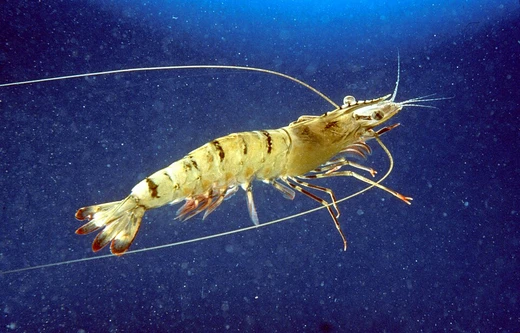
Ogyrides
Monotypic genus of long-eyed shrimps with 13 species.

Ogyrides, commonly called long eyed shrimps, is a genus of decapod crustaceans that includes 13 species. It is the sole genus within the family Ogyrididae, which contains no other genera.
Their most striking feature is the elongated eyes, which extend almost to the tip of the antennular peduncle. The first pair of pereiopods is sturdy and about the same size as the second pair, both ending in distinct pincers. The second pair of pereiopods is split into four segments. The first maxilliped has an exopod positioned far from the endite, while the second maxilliped has its segments arranged in the usual sequence, with an exopod and a four-segmented endopod. The mandible typically has incisor and molar processes plus a palp. The second maxilla has a palp and a well-developed endite.
In their early years, these shrimps mostly eat sea plankton, sea plants, and seaweed. Adults feed on small worms and microscopic organisms, and occasionally they consume dead fish or crabs, sometimes even turning to cannibalism.
The 13 species are found along tropical and subtropical coasts worldwide, with most recorded off the coasts of Australia and Mexico, where conditions and temperatures are optimal. One species, *Ogyrides mjoebergi*, has entered the eastern Mediterranean from the Red Sea via the Suez Canal, a migration known as Lessepsian.
These shrimps display complex behaviors, including eusociality. Newly molted individuals have been observed shifting their entire body forward, tilting the cephalothorax downward relative to the pleon, and extending both chelipeds forward and toward each other. They also jerk rapidly backward with the pleon curled and walking pereiopods extended, tilt the cephalothorax upward while spreading the chelipeds apart and moving them backward, and produce continuous undulations of the pleopods. These actions occur only when the shrimp are inside their burrows and exposed to light.
The genus name *Ogyrides* was introduced by English zoologist Thomas Roscoe Rede Stebbing in 1914 as a replacement. The original name, *Ogyris*, was proposed by William Stimpson in 1860, with *Ogyris orientalis* as the type species, but it was invalid because *Ogyris* had already been used in 1847 by George French Angas for a genus of butterflies. The family Ogyrididae was established by Lipke Holthuis in 1955.
Quick Facts
- Taxon
- Ogyrides
- Type Species
- Ogyris orientalis
- Type Species Authority
- Stimpson, 1860
Facts from the source article.
Lore & Background
The genus Ogyrides was proposed by the English zoologist Thomas Roscoe Rede Stebbing in 1914 as a replacement name. The genus had originally been named Ogyris in 1860 by William Stimpson, with Ogyris orientalis as its type species, but this name was invalid as it was preoccupied by a genus in Lepidoptera, Ogyris, proposed by George French Angas in 1847. The family Ogyrididae was proposed by Lipke Holthuis in 1955.
These shrimps have elongate eyes reaching nearly to the distal end of the antennular peduncle. Their first pair of pereiopods is robust and similar in size to the second pair, distinctly chelate. The second pair of pereiopods is divided into four articles. The first maxilliped has an exopod far removed from the endite, while the second maxilliped has segments arranged in usual serial manner, bearing an exopod and a 4-segmented endopod. The mandible usually has incisor and molar processes and a palp. The second maxilla has a palp and a well-developed endite.
During early years, the majority of their diet is composed of sea plankton, sea plants, and sea weed. A grown long-eyed shrimp would eat small worms and microscopic organisms. From time to time they might consume dead fish or crabs and occasionally they would turn and eat their own.
Reader's Guide
Ogyrides is significant as the sole genus in the monotypic family Ogyrididae, highlighting its unique evolutionary lineage among decapod crustaceans. The genus contains 13 species distributed along tropical and subtropical coasts around the world, with most species found off Australia and Mexico coasts, where optimal conditions and temperature exist. One species, Ogyrides mjoebergi, has colonised the eastern Mediterranean from the Red Sea via the Suez Canal, a process known as Lessepsian migration. The taxonomy of the genus reflects a nomenclatural history: the original name Ogyris was preoccupied by a butterfly genus, leading to the replacement name Ogyrides by Stebbing in 1914. The family Ogyrididae was later established by Holthuis in 1955. The shrimps exhibit complex behaviors such as eusociality, with newly molted individuals displaying specific postural shifts and rapid movements, but only when in their burrows and in the presence of light. Their diet shifts from plankton and plants in early years to small worms and microscopic organisms as adults, with occasional scavenging and cannibalism.
Frequently Asked Questions
What is Ogyrides?
Ogyrides is a genus of decapod crustacean shrimp, commonly referred to as long-eyed shrimps, that currently encompasses 13 recognized species. It stands as the only genus within the family Ogyrididae, making that family monotypic.
Who originally named Ogyrides and when?
The genus was first proposed by Thomas Roscoe Rede Stebbing in 1914 under the name Ogyris, with Ogyris orientalis serving as the type species. The family Ogyrididae itself was later established by Lipke Holthuis.
What makes Ogyrides visually distinctive?
The most eye-catching trait is their remarkably elongated eyes, which stretch nearly to the tip of the antennular peduncle. Additionally, the first pair of pereiopods is robust and roughly equal in size to the second pair, both terminating in clear pincers, while the second pair is divided into four segments.
How many species belong to Ogyrides?
Thirteen species are currently assigned to the genus. The type species, Ogyris orientalis, anchors the classification and was the original reference point when Stebbing described the group.
Why is Ogyrides considered taxonomically unique among shrimp families?
Because Ogyrides is the sole genus in Ogyrididae, the family contains no other genera whatsoever. This makes it a monotypic family, a relatively rare arrangement in decapod shrimp taxonomy.
More in Marine Shrimp, Part 3 1-24
Spotted an error? Know more?
Reader corrections go straight into our review queue. Suggest an edit · How this site is sourced