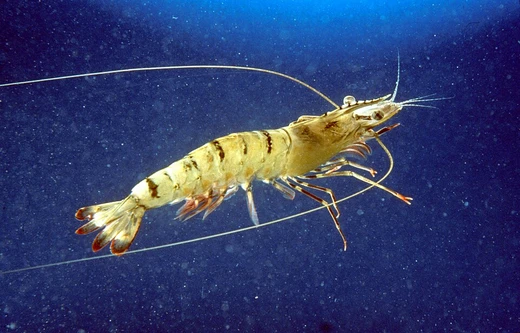
Thor amboinensis
A small shrimp with a curved abdomen and pantropical distribution.

Thor amboinensis, also called the squat anemone shrimp or sexy shrimp, is a small marine shrimp that lives in the Indo-West Pacific and parts of the Atlantic. It forms symbiotic relationships with corals, sea anemones, and other invertebrates in shallow reef areas.
This shrimp reaches about 13 millimeters (0.5 inches) in length. Its body is olive brown, marked with symmetrical white patches edged in thin blue lines. A distinctive feature is its habit of curling its abdomen upward so that its tail fan sits above its head.
Despite its name—referring to Ambon Island in Indonesia—Thor amboinensis has a pantropical range. It appears in the Red Sea, Indian Ocean, Pacific Ocean, Caribbean Sea, Gulf of Mexico, Madeira, and the Canary Islands.
The species lives commensally with another invertebrate, typically a shallow-water sea anemone or mushroom coral. In Bermuda, common hosts include the carpet anemone (Stichodactyla haddoni), stinging anemone (Lebrunia danae), and adhesive anemone (Cryptodendrum adhaesivum). One or several shrimp dwell among the host’s tentacles, feeding on tentacle tissue and on planktonic particles trapped in the host’s mucus. In the Bahamas, Thor amboinensis is part of a community of symbiotic invertebrates living on the anemone Lebrunia danae, with each shrimp, crab, or brittle star occupying a specific part of the anemone. The shrimp hides deep among the pseudotentacles.
Females carry fertilized eggs under their abdomen until hatching. The zoea larvae go through several stages before metamorphosis. They are attracted to potential host anemones by both chemical and visual cues. Research shows the larvae are generalists, accepting several anemone species, though in some experiments they preferred the same species of anemone as the parent shrimp.
Thor amboinensis is popular in marine aquaria. Sexy shrimp are often kept in groups of three or more due to their small size, which also makes them suitable for nano reefs. They will host in any anemone present, or in certain corals if no anemone is available. They scavenge meaty scraps such as mysis shrimp, clam, and prepared fish foods, and may feed on a host cnidarian’s mucus.
Quick Facts
- Taxon
- Thor amboinensis
Facts from the source article.
Lore & Background
Thor amboinensis is a small shrimp growing to a length of about 13 millimetres (0.5 in). It is an olive brown colour with symmetrically placed white patches edged with thin blue lines. It characteristically carries its abdomen curved upwards with its tail fan above its head. Though it is named for Ambon or Amboyna Island, one of the Maluku Islands in Indonesia, Thor amboinensis has a pantropical distribution being found in the Red Sea, the Indian Ocean, the Pacific Ocean, the Caribbean Sea, the Gulf of Mexico, Madeira and the Canary Islands. It forms a commensal relationship with another invertebrate, usually a shallow water sea anemone or mushroom coral. The species most often used as host in Bermuda include the carpet anemone (Stichodactyla haddoni), the stinging anemone (Lebrunia danae) and the adhesive anemone (Cryptodendrum adhaesivum). One or several shrimps live among the tentacles of their host, feeding on the tentacle tissue and on the mucus-trapped planktonic particles adhering to it. In the Bahamas, Thor amboinensis forms part of an assemblage of symbiotic invertebrates associated with the anemone Lebrunia danae. Each shrimp, crab and brittle star inhabits its own part of the sea anemone and Thor amboinensis is found hidden deep among the pseudotentacles.
Reader's Guide
Thor amboinensis is a popular species for marine aquaria. Sexy shrimp are often kept in groups of three or more, due to their small size, a quality that also makes them popular nano reef inhabitants. They will readily host in any anemones present in the aquarium and if an anemone is not available, may host in certain types of coral. Sexy shrimp will scavenge for meaty food scraps, like mysis shrimp, clam, and other prepared fish foods. If a host cnidarian is present, they may feed on the host's mucus. The female carries the fertilised eggs under her abdomen until they are ready to hatch. The zoea larvae pass through several stages and, before undergoing metamorphosis, are attracted by both chemical cues in the water and visual cues which cause them to settle near potential host anemones. Researchers found that the larvae of Thor amboinensis were generalists, being attracted by and accepting several different species of anemone as hosts. In some experiments they had a preference for the species of anemone from which the parent shrimp had been collected.
Did You Know?
- In Bermuda, common hosts include the carpet anemone, stinging anemone, and adhesive anemone.
- Larvae are generalists but in some experiments preferred the anemone species from which the parent shrimp had been collected.
More in Marine Shrimp, Part 2 1-24
Spotted an error? Know more?
Reader corrections go straight into our review queue. Suggest an edit · How this site is sourced