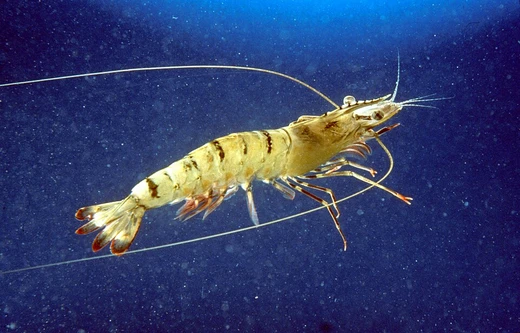
Periclimenes
A genus of symbiotic, translucent shrimp found worldwide in tropical reefs.

Periclimenes, also called glass shrimp or cleaner shrimp, is a genus of mostly transparent shrimp in the family Palaemonidae. These shrimp are known for symbiotic and often commensalistic relationships. The genus is large, with many species displaying a broad range of colors and patterns, and they are found across tropical oceans worldwide. Their appearance makes them popular in the aquarium trade.
**Taxonomy** The classification of Periclimenes has shifted repeatedly due to recent molecular studies, though these studies have examined only about 20% of the species likely belonging to the genus. Most of this genetic work has focused on Indo-Pacific species, leaving Atlantic members unexamined. The genus has been suggested to be polyphyletic, and it has already been split into several new genera. Further research is expected to lead to more classification changes in the coming years.
**Habitat** Periclimenes species are widely distributed across tropical and temperate reef ecosystems in the Atlantic, Caribbean, Mediterranean, and Indo-Pacific Oceans.
**Behavior** Many Periclimenes species live symbiotically within reef ecosystems, forming relationships with fish, cnidarians, echinoderms, and sponges. For example, Periclimenes caraibicus acts parasitically, living inside sponges and feeding directly on their tissue. In contrast, Periclimenes soror is commonly found on cushion stars without harming them, a commensalistic arrangement; anecdotal evidence suggests it may choose a host star whose color matches its own for camouflage. Another species, Periclimenes yucatanicus, engages in mutualistic cleaning with reef fish in the Pacific, waving its antennae to signal availability and then eating parasites from the fish.
**Characteristics** Species in this genus typically have a transparent or semi-transparent body with antennae extending from the head. They display considerable variation in color and pattern, which makes them highly sought after as ornamental species in the marine aquarium industry.
Quick Facts
- Taxon
- Periclimenes
- Type Species
- Periclimenes amethysteus
- Type Species Authority
- (Risso, 1827)
Facts from the source article.
Lore & Background
The genus Periclimenes has undergone several changes in classification based on recent molecular studies, though most studies have involved only approximately 20% of the known species likely to belong to the genus. Additionally, most molecular studies performed involved Indo-Pacific species and did not include presumed Periclimenes found in the Atlantic Ocean. Periclimenes has previously been suggested as being a polyphyletic taxa and has already undergone splits into several new genera; it is likely the genus will undergo further changes in classification with further research.
Many species of Periclimenes are symbiotic organisms within their reef ecosystems. Some species, such as Periclimenes caraibicus, have been observed to interact parasitically with species of sponges, living within the sponge and directly eating the sponge tissue. Another species, Periclimenes soror, is commonly found on cushion stars with no effect on the star, making it a commensalistic relationship; anecdotal evidence suggests that P. soror may choose a host star that matches its own coloration for camouflage.
Research demonstrated that the Periclimenes species P. yucatanicus has a mutualistic cleaning relationship with different species of reef fish studied in the Pacific. P. yucatanicus performed a waving motion with its antennae to signal to reef fish that it is available to clean, and the cleaner shrimps then ate parasitic organisms present on the reef fish species. Species in this genus typically have a transparent to semi-transparent body with antennae protruding from the head region, and large variation of color and patterns exist throughout, making them highly sought out ornamental species in the marine aquarium industry.
Reader's Guide
Periclimenes is notable for its wide distribution across tropical and temperate reef ecosystems of the Atlantic, Caribbean, Mediterranean, and Indo-Pacific Oceans, and for the variety of symbiotic relationships its species exhibit. These range from parasitism (as seen in Periclimenes caraibicus eating sponge tissue) to commensalism (Periclimenes soror living on cushion stars with no effect) to mutualism (Periclimenes yucatanicus cleaning parasites from reef fish). The genus is also significant in the marine aquarium trade due to the large variation of color and patterns on its translucent bodies. However, its taxonomy remains uncertain: molecular studies have involved only about 20% of known species, mostly from the Indo-Pacific, and the genus is considered likely polyphyletic, having already been split into several new genera. Further research is expected to continue reclassifying the group.
Did You Know?
- Periclimenes is also known as glass shrimp or cleaner shrimp.
- Periclimenes caraibicus has been observed living within and eating sponge tissue, a parasitic relationship.
- Periclimenes yucatanicus uses a waving motion of its antennae to signal reef fish that it is available to clean.
- Most molecular studies of Periclimenes have involved only about 20% of the known species and have not included Atlantic species.
Taxonomic Identity & Discovery
The cleaner shrimp now classified as Ancylomenes pedersoni first entered the scientific literature in 1958, when Fenner A. Chace Jr. formally described the species under the binomial name Periclimenes pedersoni. Subsequent taxonomic work reassigned it to the genus Ancylomenes, yet the specific epithet honoring its namesake has persisted unchanged. In everyday usage, the animal is most commonly called Pederson's shrimp or Pederson's cleaner shrimp, both names immediately conveying its ecological function within reef ecosystems. As a member of the cleaner-shrimp group, its life is defined by mutualistic relationships—first with a sea anemone that provides shelter, and then with the fish that visit it for parasite removal. The Caribbean Sea is its known geographic range, and within that region its distinctive appearance makes it unlikely to be confused with any other species. Though formally described over six decades ago, much of what is known about its behavior comes from direct field observation of its interactions with anemones and client fish on shallow reefs.
Appearance & Caribbean Habitat
At first glance, Ancylomenes pedersoni presents a striking contrast between transparency and color. Its body is small and largely see-through, yet it is decorated with bluish and violet markings that trace across its form, giving it a distinctive appearance within its range. Extending from the head are long, slender white antennae that serve as both sensory organs and visual signals to approaching fish. These combined features—transparency, cool-toned body markings, and prominent white antennae—make it virtually impossible to mistake for another species in the Caribbean waters it inhabits. The shrimp occupies shallow reef environments, typically found at depths between one and fifteen metres, a band that receives sufficient light for the anemone-fish interactions that define its ecology. The reefs off Bermuda are a well-known location where these animals can be observed in their natural habitat, often nestled among the tentacles of their anemone hosts in the clear tropical water.
The Anemone Bond
The most remarkable aspect of Pederson's shrimp biology is its intimate partnership with sea anemones, specifically the species Bartholomea annulata or Condylactis gigantea. Unlike most small crustaceans that would be stung on contact, this shrimp ultimately lives among the anemone's tentacles with complete impunity. However, this tolerance is not innate—it must be earned through a deliberate acclimatization process. The shrimp progressively presses its body and appendages against the tentacles, beginning with brief contacts and gradually extending the duration of each session. Once this immunizing procedure is complete, it can move freely between the tentacles without suffering any sting. Crucially, this protection is not permanent. If the shrimp is separated from its host anemone for even a few days, the immunity fades and the entire acclimatization sequence must be repeated from the beginning. In terms of numbers, researchers have recorded as many as twenty-six individuals sharing a single anemone, though the more typical arrangement involves just one or two shrimps per host.
Cleaning Station & Client Interactions
Beyond its anemone home, Ancylomenes pedersoni operates as a dedicated cleaner for the reef's fish population. It advertises its services by vigorously lashing its long white antennae, a visual display that draws the attention of passing fish. Once a client approaches, it holds stationary while the shrimp meticulously removes external parasites, consuming them as it works. The cleaning is thorough, extending not only across the body surface but also inside the gill covers and into the mouth cavity. In a notable example of cooperative behavior, if a neon goby establishes its own cleaning station nearby, the shrimp will service the same client fish at the same time as the goby, effectively working in tandem. Research has also revealed that fish appear to recognize Bartholomea annulata anemones as reliable indicators that shrimp cleaning services are available nearby. Moreover, the size of the anemone appears to matter: larger specimens attract more client visits, suggesting that fish use the anemone's size as a cue for locating a well-established cleaning station.
Frequently Asked Questions
What is Periclimenes?
Periclimenes is a large genus of mostly transparent shrimp in the family Palaemonidae, commonly referred to as glass shrimp or cleaner shrimp. They are recognized for their see-through bodies and their tendency to live in close association with other reef animals.
What makes Periclimenes unique among reef shrimp?
These shrimp form symbiotic or commensal partnerships with a remarkably wide range of hosts, including fish, cnidarians, echinoderms, and sponges. On top of that, the genus displays a broad spectrum of body colors and patterns despite its overall translucent appearance.
Where can you find Periclimenes in the wild?
They are distributed across warm reef habitats in the Atlantic, Caribbean, Mediterranean, and Indo-Pacific regions. Essentially, any tropical or temperate reef in those ocean basins is a likely place to spot a member of the genus.
Why are Periclimenes so popular in the aquarium trade?
Their glassy, semi-transparent bodies paired with vivid color and pattern variation make them a visual standout in a reef tank. They are also generally compatible with a wide range of tankmates, which makes them practical choices for hobbyists.
How settled is the taxonomy of Periclimenes?
The genus has been reclassified repeatedly as new molecular phylogenetic data have come to light. To date, however, those studies have sampled only about 20 percent of the species likely belonging to the group, so the full taxonomic picture remains incomplete.
More in Marine Shrimp, Part 2 1-24
Spotted an error? Know more?
Reader corrections go straight into our review queue. Suggest an edit · How this site is sourced