Alpheus macrocheles
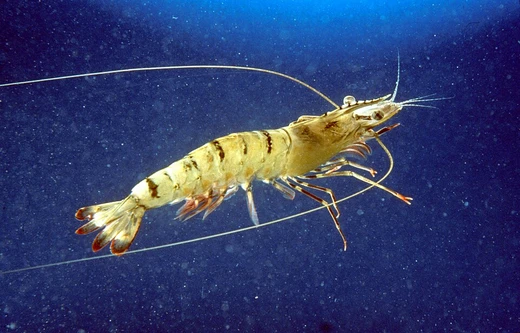
A snapping shrimp with asymmetrical claws and bright orange coloration.

The orange European snapping prawn, *Alpheus macrocheles*, is a member of the Alpheidae family. This shrimp reaches a maximum length of 35 mm. Its claws are asymmetrical, with one significantly larger than the other; the larger claw is used for hunting small prey and for defense against predators and rivals. The chela is highly twisted and compressed, and the joint of the movable finger is set at an angle to the top edge. Distinct grooves often run along the side of the claw. While most individuals are bright orange, some are yellow.
This species lives in marine waters, inhabiting fissures and hollows beneath rocks and boulders, especially larger ones on the lower shore. Ocean currents push sand into these hollows, allowing the shrimp to excavate tunnels. A breeding pair typically shares a tunnel with two entrances, each guarded by one shrimp.
*Alpheus macrocheles* is found in the English Channel along the southern coasts of England and France. Its range also includes the Mediterranean Sea, both sides of the Atlantic Ocean, and waters near Ascension Island in the central Atlantic. It has been recorded off the coasts of Spain, Portugal, Greece, and the Azores Archipelago.
Quick Facts
- Genus
- Alpheus
- Species
- macrocheles
Facts from the source article.
Lore & Background
Alpheus macrocheles grows up to 35 mm long and has a cheliped morphology. The chela is highly twisted and compressed, and the dactylar articulation deviates from the perpendicular plane to the dorsal margin. Distinct grooves are often present on the chela's lateral face. Most individuals are bright orange, though yellow individuals also exist. Like other species in the genus Alpheus, its claws are asymmetrical, with one claw larger than the other. The larger claw is used for hunting small prey and for self-defense against predators and other members of its own species.
Reader's Guide
Alpheus macrocheles is a marine species found in the English Channel along the south coast of England and France, as well as in the Mediterranean Sea, the Atlantic Ocean on both sides, and waters around Ascension Island in the Central Atlantic. It has also been recorded off the coasts of Spain, Portugal, Greece, and the Azores Archipelago. It lives underwater in fissures and hollows beneath rocks and boulders, generally favoring larger boulders on the lower shoreline. Ocean currents push sediment such as sand into the hollow, allowing the shrimp to excavate tunnels. These tunnels are usually shared by a breeding pair and possess two entrances, each guarded by an individual shrimp. The species' significance lies in its distinctive morphology and behavior, including its use of the larger claw for hunting and defense, and its tunnel-dwelling social structure.
More in Marine Shrimp, Part 2 1-24
Spotted an error? Know more?
Reader corrections go straight into our review queue. Suggest an edit · How this site is sourced