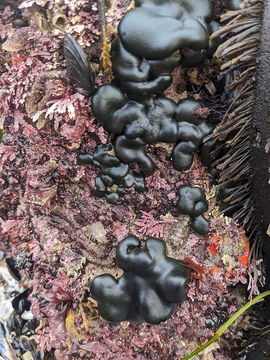
Pseudorhizoclonium
A green algal genus with high tolerance for fluctuating environments.

Pseudorhizoclonium is a genus of green algae that belongs to the Cladophoraceae family. It was separated from the genus *Rhizoclonium* sensu stricto after molecular studies showed it forms its own distinct evolutionary branch.
According to AlgaeBase, ten species are currently accepted in the genus, based on the literature available as of 2021. These include *Pseudorhizoclonium africanum*, *P. australe*, *P. fractum*, *P. hawaiiense*, *P. mangroviorum*, *P. minutissimum*, *P. philippinense*, *P. rhizophilum*, *P. subaerophilum*, and *P. umbraticum*.
In terms of appearance, *Pseudorhizoclonium* often forms mats or tufts of filaments that can be straight or curled, creating tangled strands or woolly masses in the upper intertidal zone. Compared to *Rhizoclonium*, its cells are generally larger and shorter, and it has a basal cell with a small holdfast. Some species have intercalary or lateral rhizoids, while others do not. The filaments often feature sharp-angled bends called “knees,” and field-collected material tends to have very thick cell walls. However, the only trait that reliably distinguishes *Pseudorhizoclonium* from *Rhizoclonium* is a higher number of nuclei per cell. Many other morphological features overlap considerably among species within the genus.
The genus is found in tropical and subtropical regions around the world. Based on the Global Biodiversity Information Facility, there are 213 georeferenced records. Reported locations include South America, Central America, the East African coast, Southern Asia, the Pacific, Australia, and New Zealand, as well as specific countries such as French Polynesia, Brazil, Japan, the United States, Mexico, Puerto Rico, Thailand, Guyana, Bermuda, Saudi Arabia, Portugal, the Dominican Republic, Ghana, Papua New Guinea, Costa Rica, Micronesia, Jamaica, Panama, Colombia, Indonesia, and Ecuador.
*Pseudorhizoclonium* thrives in a wide range of environments, from marine and brackish waters to freshwater streams and even terrestrial settings. Habitats include mangroves, lagoons, and high intertidal zones. This suggests the genus can survive in areas with changing salinity and is tolerant of desiccation. It represents an independent case of a lineage within the Cladophorales that moved from marine into freshwater and terrestrial habitats.
Quick Facts
- Taxon
- Pseudorhizoclonium
- Type Species
- Pseudorhizoclonium africanum
- Type Species Authority
- (Kützing) Boedeker
Facts from the source article.
Lore & Background
The genus Pseudorhizoclonium was recognized by Boedeker et al. in their 2016 manuscript as a separate clade from Rhizoclonium sensu stricto based on molecular data. This led to the transfer of Rhizoclonium africanum and Rhizoclonium rhizophilum to Pseudorhizoclonium. According to Sherwood et al., Pseudorhizoclonium may appear as bunches or mats of relatively straight or curled filaments, forming intertwined strands and woolly masses in the upper intertidal.
Boedeker et al. (2016) observed morphological features including larger cell dimensions and shorter cells than Rhizoclonium, the presence of a basal cell and small holdfast, variable presence or absence of intercalary/lateral rhizoids, sharp-angled bends in filaments called 'knees', very thick cell walls in field-collected material, and more nuclei per cell than Rhizoclonium. Sherwood et al. affirmed that the only definitive character distinguishing Pseudorhizoclonium from Rhizoclonium is the larger number of nuclei per cell, noting substantial overlap in other morphological characteristics among species.
Based on the Global Biodiversity Information Facility, there are 213 georeferenced records for the genus. The environment where this genus thrives ranges from marine, brackish, freshwater streams to terrestrial areas, with identified habitats including mangroves, lagoons and high intertidal areas. According to Sherwood et al., this genus represents an independent case of transition from marine into freshwater and terrestrial environments in the Cladophorales.
Reader's Guide
Pseudorhizoclonium holds significance as a genus that exemplifies the transition from marine to freshwater and terrestrial habitats within the Cladophorales, as noted by Sherwood et al. Its recognition as a separate clade from Rhizoclonium sensu stricto, based on molecular data by Boedeker et al. in 2016, resolved taxonomic confusion and highlighted the importance of nuclear count as the definitive distinguishing character. The genus's high tolerance for fluctuating environmental conditions—such as changing salinity, brackish habitats, and desiccation—is considered a factor in its remarkable number of habitat transitions. The ten taxonomically accepted species as of 2021, listed by AlgaeBase, include species transferred from Rhizoclonium and newly described taxa from tropical and subtropical regions worldwide. Chemical analysis of Pseudorhizoclonium africanum revealed the presence of flavanones, condensed tannins, and a variety of fatty acids and other compounds, indicating potential biochemical interest. The genus's distribution across 23 countries, from South America to the Pacific islands, underscores its adaptability and ecological breadth.
Did You Know?
- Pseudorhizoclonium was separated from Rhizoclonium sensu stricto based on molecular data in a 2016 manuscript by Boedeker et al.
- The genus includes ten taxonomically accepted species as of 2021 according to AlgaeBase.
- Pseudorhizoclonium africanum contains flavanones and condensed tannins based on phytochemical analysis.
More in Marine Green Macroalgae 1-24
Spotted an error? Know more?
Reader corrections go straight into our review queue. Suggest an edit · How this site is sourced