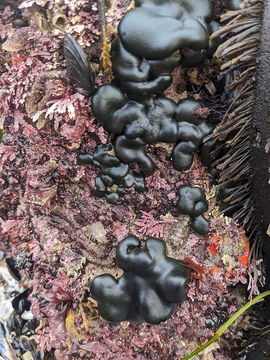
Ulvophyceae
A class of green algae with diverse morphology and life cycles.

The Ulvophyceae, or ulvophytes, are a class of green algae distinguished mainly on the basis of ultrastructural morphology, life cycle, and molecular phylogenetic data. Notable members include the sea lettuce Ulva, as well as Caulerpa, Codium, Acetabularia, Cladophora, Trentepohlia, and Monostroma. They are diverse in morphology and habitat, with most being marine seaweeds, though some live in freshwater and are considered weeds.
Quick Facts
- Taxon
- Ulvophyceae
Facts from the source article.
Lore & Background
The class Ulvophyceae was originally defined by K. R. Mattox and K. D. Stewart based on ultrastructural characters, including a counter-clockwise arrangement of flagellar basal bodies, cytokinesis by furrowing, a closed persistent mitotic spindle, and the lack of a phycoplast. The cell wall composition is highly variable, and in flagellate life stages some organisms lack a cell wall entirely. The order Trentepohliales has unique ultrastructural features such as a phragmoplast, and was once considered its own separate class, the Trentepohliophyceae. Most of these ultrastructural characters are found in other algal lineages, making the definition of Ulvophyceae difficult.
The origin and early diversification of the Ulvophyceae likely took place in the late Neoproterozoic, though possibly earlier in the Mesoproterozoic. Although most contemporary ulvophytes are marine macroalgae, ancestral ulvophytes may have been freshwater, unicellular green algae. Molecular phylogenetic evidence suggests macroscopic growth was achieved independently in the major lineages. The fossil record is generally sparse, but the earliest known representative is Proterocladus antiquus from the Mesoproterozoic-Neoproterozoic boundary in North China, though its taxonomic placement is uncertain. Because Ulvophyceae lacks a consistent set of ultrastructural characteristics, its monophyly has been questioned; molecular studies have found it monophyletic, albeit without strong support.
Reader's Guide
The Ulvophyceae are notable for their morphological and ecological diversity, ranging from unicellular forms to large siphonous thalli composed of a single giant cell with thousands of nuclei and chloroplasts. Their life cycles are similarly varied, including asexual reproduction via aplanospores, akinetes, zoospores, or fragmentation, and sexual reproduction that may be isogamous or anisogamous, with haplontic or diplohaplontic patterns. In several taxa, the zygote exists as a microscopic dormant stage called the Codiolum phase.
Ecologically, ulvophytes are most diverse in marine habitats but also occur in brackish and freshwater environments, often attached to substrates such as rocks, sediments, other algae, or animals. Some species are beneficial as ecosystem engineers—Cladophora provides niches for other organisms—while others, including Cladophora, Pithophora, and Ulva, form nuisance blooms due to eutrophication. Certain ulvophytes are endosymbiotic within other algae or form symbioses with lichens. The family Trentepohliaceae contains parasitic genera such as Cephaleuros, which causes economic damage to crop plants.
The class's evolutionary history is uncertain, with molecular evidence suggesting independent origins of macroscopic growth in different lineages. The lack of consistent ultrastructural characters and weak molecular support for monophyly leave internal relationships among clades unclear.
Did You Know?
- The zygote in several ulvophyte taxa exists as a microscopic dormant stage called the Codiolum phase.
- The order Trentepohliales has a unique set of ultrastructural features including a phragmoplast, and was once considered its own class.
- Some ulvophytes, such as Cladophora, are described as ecosystem engineers that provide niches for other aquatic organisms.
Morphological Diversity and Reproductive Strategies
The Ulvophyceae encompass an extraordinary range of body plans, from single-celled organisms to complex multicellular thalli. Colonial forms dominate, but some lineages retain a unicellular mode of life. Among the multicellular types, you will find unbranched and branched filaments, tubular structures, broad blade-like sheets as seen in the familiar sea lettuce Ulva, and the remarkable siphonous thalli—giant single cells packed with thousands of nuclei and chloroplasts. A few taxa, such as Oltmannsiellopsis, even carry flagella during their vegetative phase. Reproduction in this class is equally varied. Asexual propagation can proceed through aplanospores, akinetes, or flagellated zoospores bearing two or four flagella, and some species simply fragment their thallus so that each piece regenerates into a whole new individual. Sexual reproduction ranges from isogamy to anisogamy, and the life cycle may be haplontic or diplohaplontic with alternation of generations. In several lineages, the zygote persists as a tiny dormant stage known as the Codiolum phase, which some researchers interpret as a unicellular sporophyte.
Ecological Roles and Symbiotic Relationships
Ulvophyceae occupy a wide spectrum of ecological niches, from open marine environments to brackish and freshwater systems, and even terrestrial substrates like soil, rocks, trees, and artificial surfaces. In temperate zones, their populations typically peak during spring and summer. They attach to rocks, sediments, other algae, or occasionally animal shells such as those of turtles and molluscs. Their ecological impact is dual-edged. Cladophora, for instance, has been recognized as an ecosystem engineer, creating a mosaic of microhabitats that support diverse aquatic communities. Yet the same species, along with Pithophora and Ulva, can form problematic blooms when nutrient enrichment accelerates their growth. Beyond free-living existence, several ulvophytes live as symbionts. Ulvella grows endosymbiotically inside other filamentous algae. Within the terrestrial order Trentepohliales, certain taxa serve as the algal partner in lichen associations, and marine lichens also harbor ulvophyte symbionts whose diversity remains poorly characterized. The family Trentepohliaceae stands out for containing parasitic genera; Cephaleuros, for example, colonizes the leaves of vascular plants and can inflict serious economic damage on agricultural crops.
Evolutionary Origins and Fossil Evidence
Molecular and morphological evidence points to the origin and initial diversification of Ulvophyceae in the late Neoproterozoic, though some researchers push the timeline back to the Mesoproterozoic. Despite the fact that most living ulvophytes are large marine seaweeds, ancestral forms were likely small, unicellular, freshwater green algae. A striking finding from molecular phylogenetics is that macroscopic, multicellular growth evolved independently in each of the major lineages—Ulvales-Ulotrichales, Trentepohliales, Cladophorales, Bryopsidales, and Dasycladales—rather than once in a common ancestor. The fossil record for this group is thin because most algae lack biomineralized structures that preserve well in sediment. However, the Dasycladales and Bryopsidales produce calcified thalli, giving them a somewhat richer paleontological footprint. The earliest candidate is Proterocladus antiquus, a Cladophorales species from the Mesoproterozoic-Neoproterozoic boundary in North China, though its precise taxonomic placement remains uncertain.
Taxonomic Definition and Ultrastructural Challenges
The class Ulvophyceae was originally delineated by K. R. Mattox and K. D. Stewart on the basis of specific ultrastructural features: a counter-clockwise arrangement of flagellar basal bodies, cytokinesis accomplished by furrowing, a closed and persistent mitotic spindle, and the absence of a phycoplast. Cell wall composition and architecture vary enormously across the group, and in the flagellate stages of certain organisms no cell wall is present at all. Defining the class has proven difficult because many of these ultrastructural traits also appear in unrelated algal lineages, blurring the boundaries. The order Trentepohliales is particularly distinctive, possessing features such as a phragmoplast that led to its former classification as a separate class, Trentepohliophyceae. The question of whether Ulvophyceae is truly monophyletic has been debated. Molecular phylogenetic analyses support monophyly, but the statistical support is not strong, and the relationships among the major internal clades remain unresolved. This taxonomic uncertainty underscores how challenging it is to draw clean boundaries around a group whose members are united more by a shared evolutionary history than by a single, consistent suite of structural characters.
Frequently Asked Questions
What are Ulvophyceae?
Ulvophyceae is a class of green algae that includes many well-known marine seaweeds such as sea lettuce (Ulva) and Caulerpa. The group is defined by shared cell-level structure, life-cycle patterns, and genetic relationships, and while most members are marine, a handful of freshwater species are familiar as pond weeds.
Which genera are part of Ulvophyceae?
The class spans a broad set of genera, including Ulva, Caulerpa, Codium, Acetabularia, Cladophora, Trentepohlia, and Monostroma. Freshwater representatives like Rhizoclonium and Pithophora also fall under this class, and the Trentepohliaceae family even hosts the parasitic genus Cephaleuros.
How do Ulvophyceae reproduce?
Asexually, members can produce aplanospores, akinetes, zoospores, or simply break apart by fragmentation. Sexually, they employ either isogamous or anisogamous strategies, and their life cycles range from haplontic to diplohaplontic. This reproductive diversity is a major reason the class shows such a wide spread of body forms.
What ultrastructural traits set Ulvophyceae apart from other green algae?
Ulvophytes are characterized by a counter-clockwise arrangement of flagellar basal bodies, cytokinesis that proceeds by furrowing, a closed and persistent mitotic spindle, and the complete absence of a phycoplast. Together with molecular phylogenetic data, these cellular features are what separate the class from other green-algal lineages.
How far back does the Ulvophyceae fossil record go?
The oldest known fossil representative is Proterocladus antiquus, a Cladophorales member recovered from deposits at the Mesoproterozoic–Neoproterozoic boundary in North China. That finding pushes the documented presence of the class back to an exceptionally ancient geological interval.
More in Marine Green Macroalgae 1-24
Spotted an error? Know more?
Reader corrections go straight into our review queue. Suggest an edit · How this site is sourced