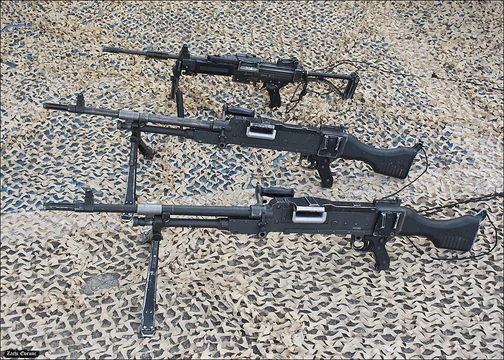
Machine gun
A fully automatic firearm for sustained direct fire support.

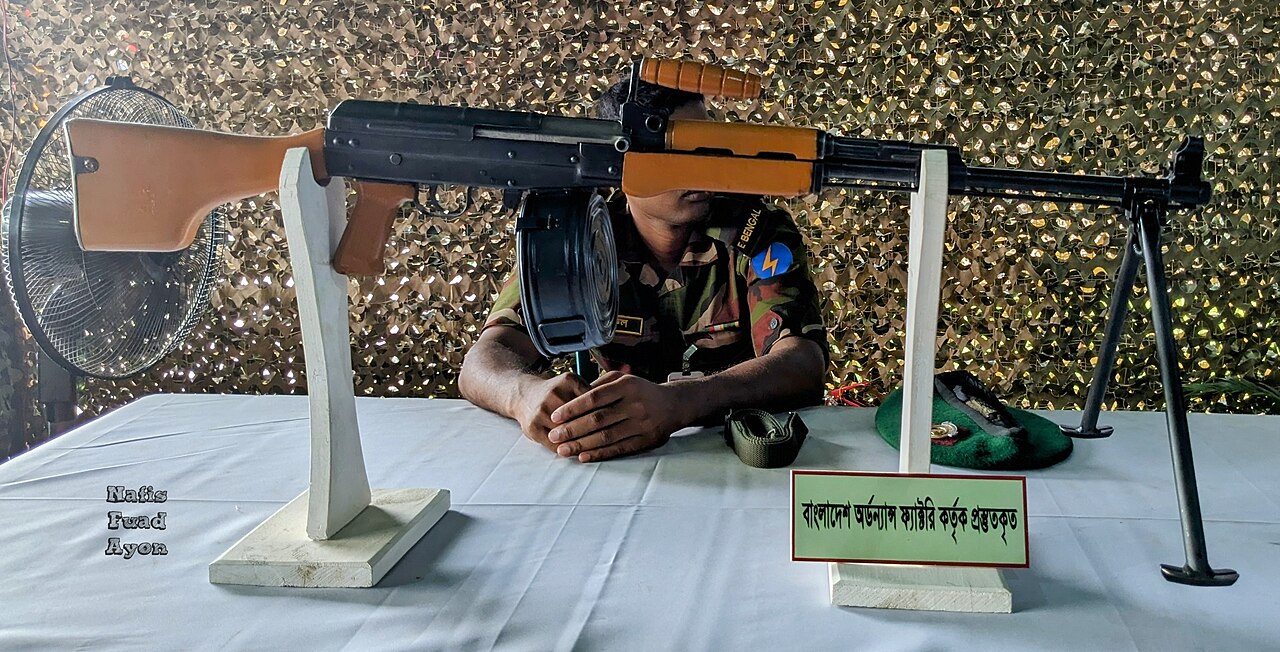
Nafis Fuad Ayon · CC BY-SA 2.0
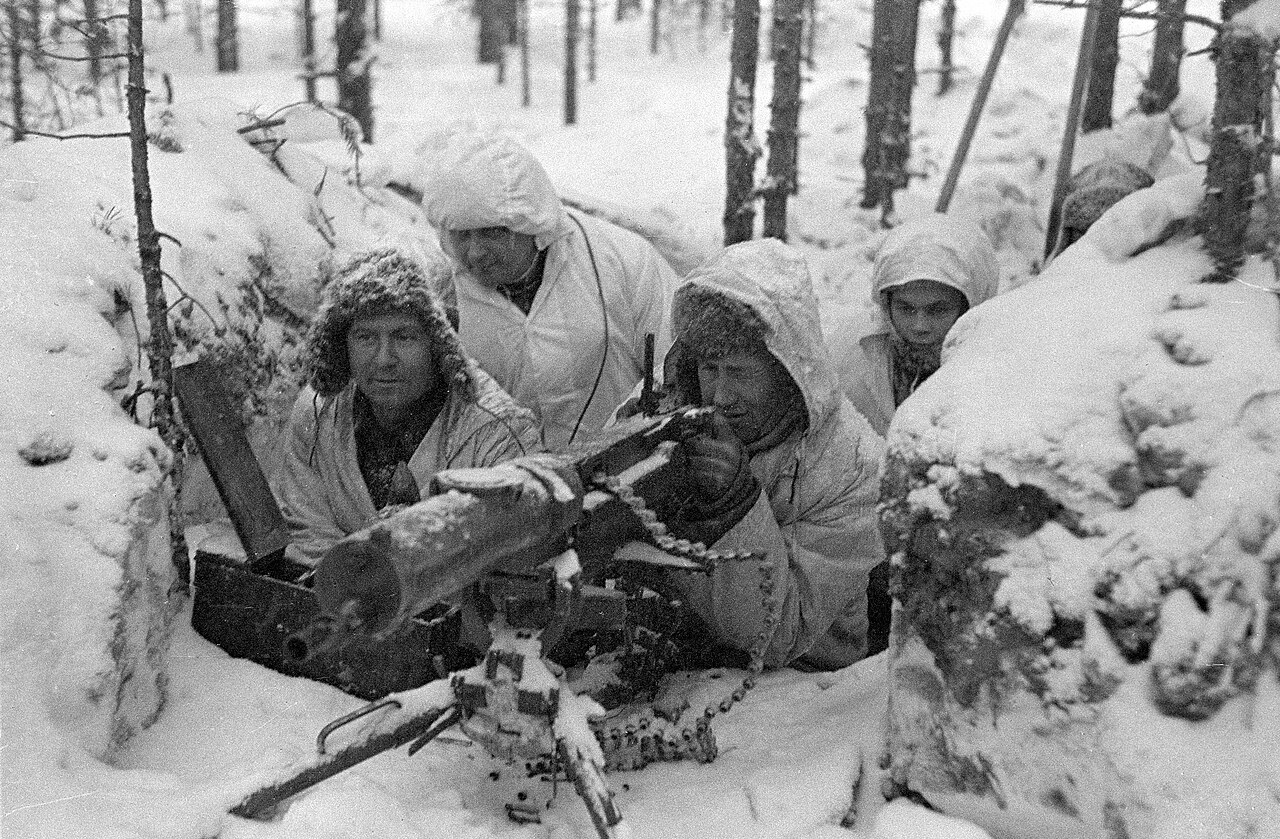
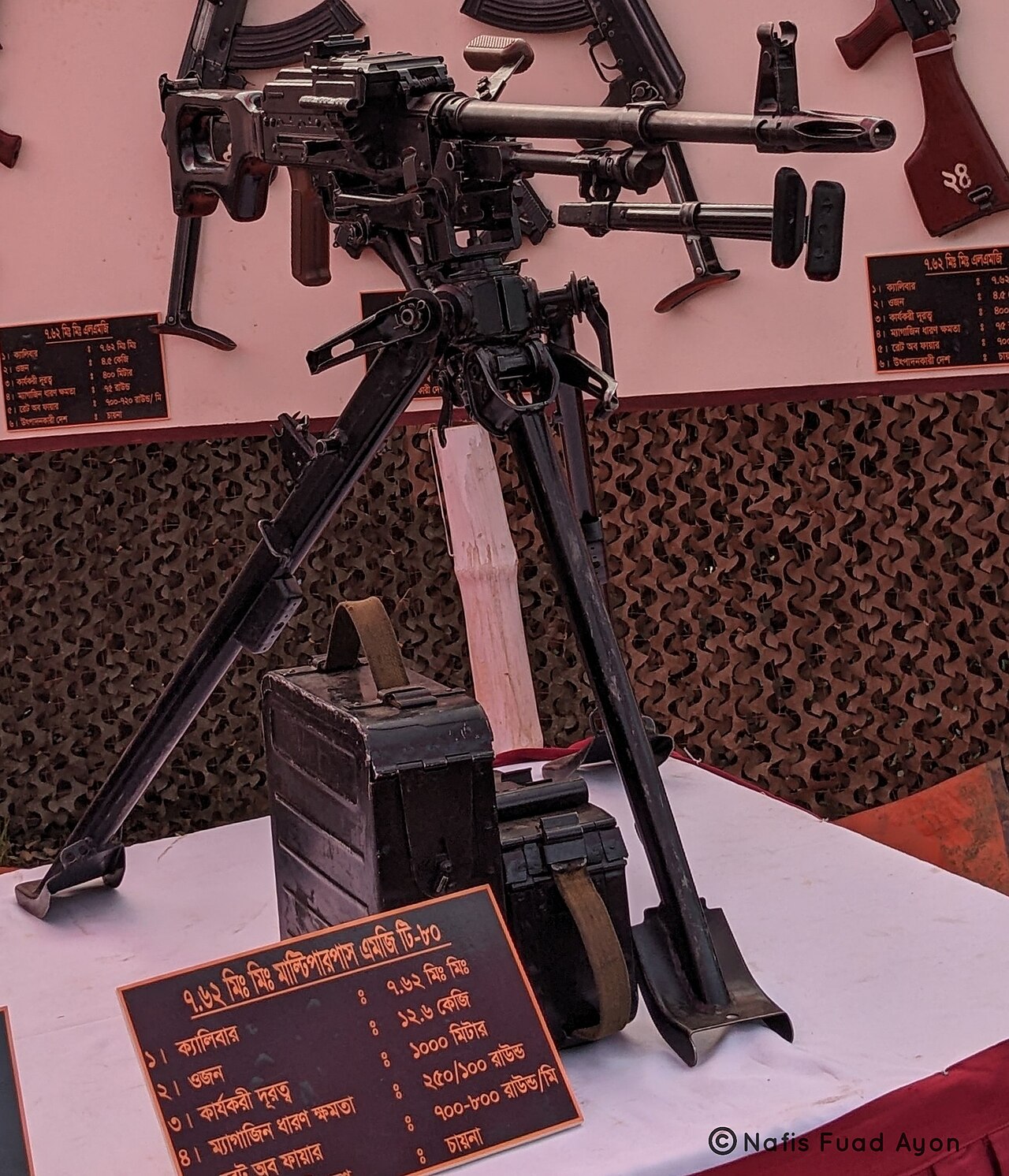
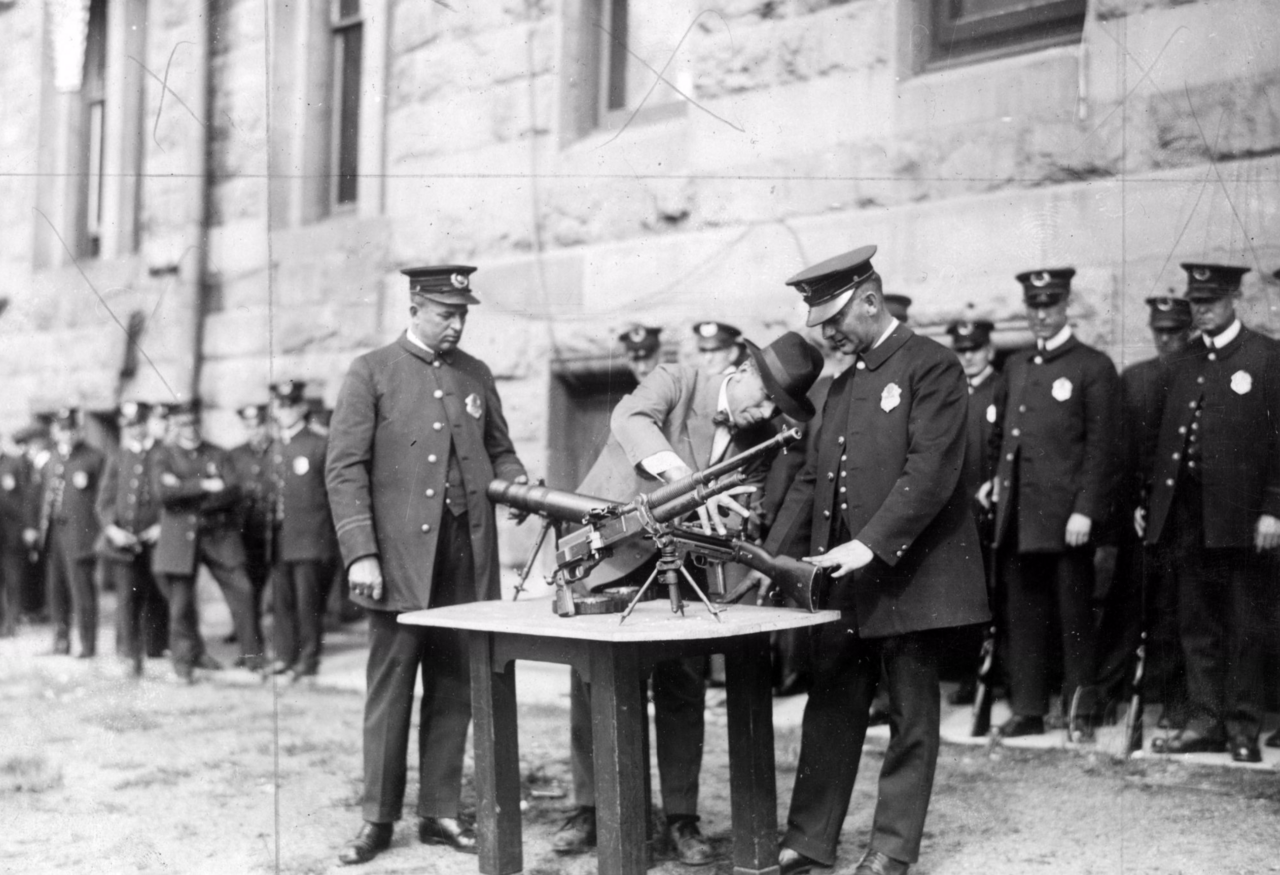
A machine gun is a fully automatic and rifled firearm designed for sustained direct fire. As a class of military kinetic projectile weapons, machine guns are mainly used as infantry support weapons and are generally attached to a bipod, tripod, fixed mount, or heavy weapons platform for stability against recoil. Many machine guns use belt feeding and open bolt operation, features not normally found on other infantry firearms. Unlike semi-automatic firearms, a machine gun continues firing as long as the trigger is held down, providing continuous or frequent bursts of automatic fire for as long as ammunition can be fed.
- Caliber range
- At least 12.7 mm but less than 20 mm for heavy machine guns
- Notable design
- Browning M2 .50 BMG machine gun
- Longest recorded shot
- 7382 ft by Carlos Hathcock during the Vietnam War
- First successful mechanically loaded des
- Model 1862 Gatling gun
- First recoil operated design
- Maxim machine gun
Lore & Background
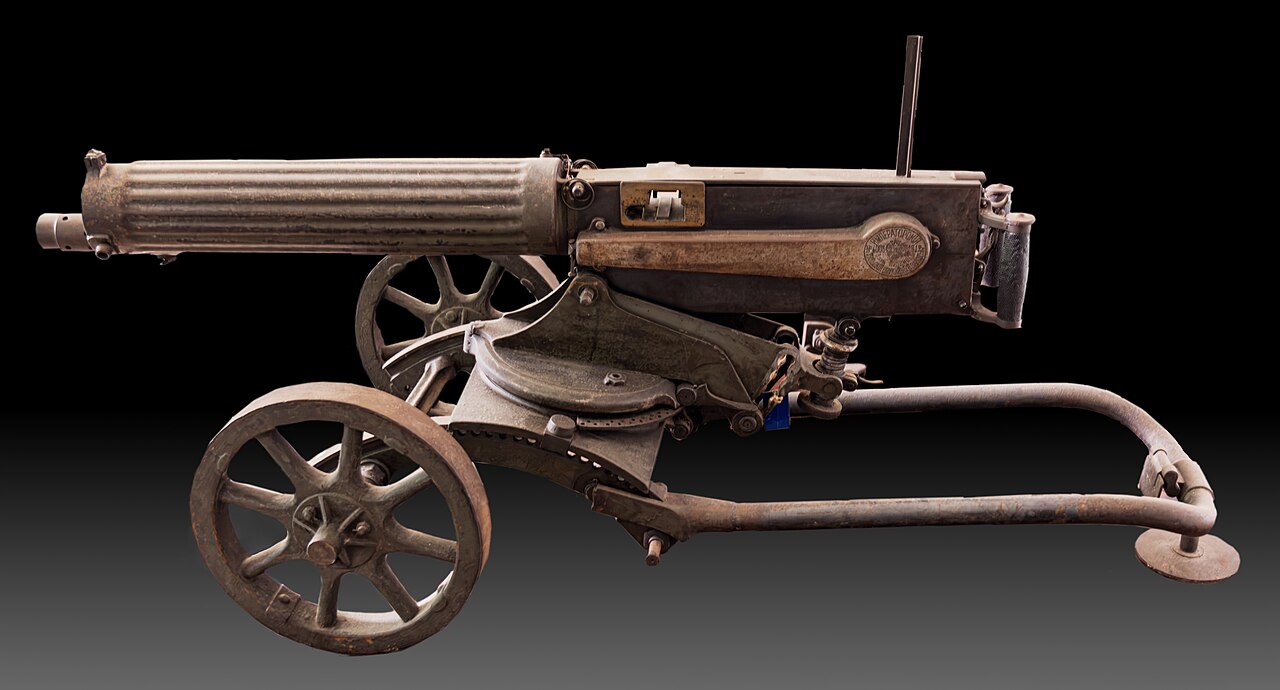
The first successful machine-gun designs were developed in the mid-19th century. The key characteristic of modern machine guns—their relatively high rate of fire and mechanical loading—first appeared in the Model 1862 Gatling gun, adopted by the United States Navy. These weapons were still powered by hand, but Hiram Maxim's idea of harnessing recoil energy to power reloading changed this with his Maxim machine gun. Dr. Gatling also experimented with electric-motor-powered models.
Machine guns are used against infantry, low-flying aircraft, small boats, and lightly or unarmored land vehicles. They can provide suppressive fire directly or indirectly and enforce area denial with grazing fire. They are commonly mounted on fast attack vehicles, armored vehicles such as tanks, and on aircraft as defensive armament or for strafing ground targets. Although subdivided into light, medium, heavy, or general-purpose, even the lightest dedicated machine guns are substantially larger and heavier than standard infantry arms. Heavy machine guns are mounted on a tripod or vehicle and require additional crew members when carried on foot.
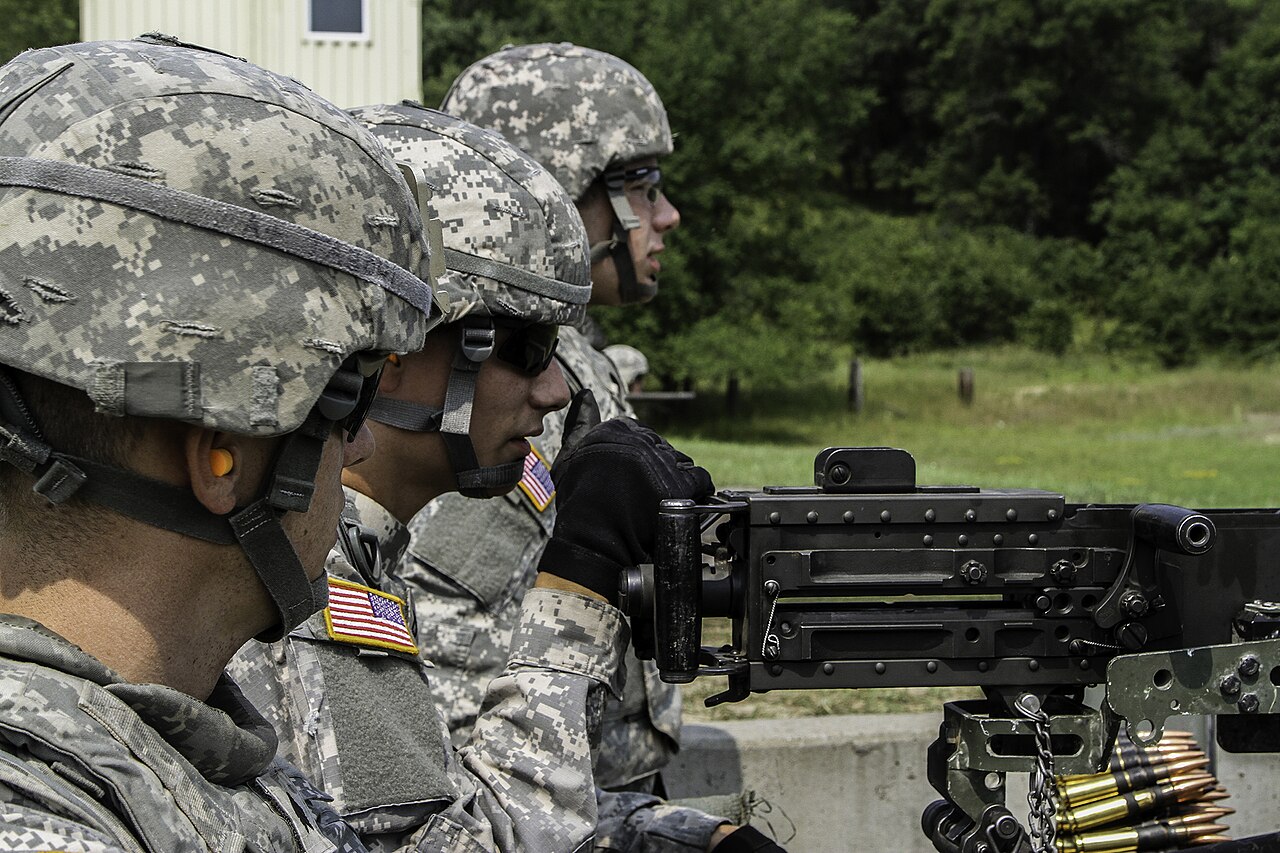
The term heavy machine gun originated in World War I to describe heavyweight medium machine guns and persisted into World War II with Japanese Hotchkiss M1914 clones. Today it refers to automatic weapons with a caliber of at least 12.7 mm but less than 20 mm. Many heavy machine guns, such as the Browning M2 .50 BMG, are accurate enough to engage targets at great distances. During the Vietnam War, Carlos Hathcock set a record for a long-distance shot at 7382 ft with a .50 caliber heavy machine gun equipped with a telescopic sight, leading to the introduction of .50 caliber anti-materiel sniper rifles like the Barrett M82.
Reader's Guide
The machine gun's significance lies in its ability to provide sustained automatic fire, fundamentally changing infantry tactics and battlefield dynamics. Its development from hand-cranked designs like the Gatling gun to recoil-operated systems like the Maxim allowed for higher rates of fire and greater reliability. The machine gun's role in suppressive fire and area denial made it a critical infantry support weapon, while its mounting on vehicles and aircraft extended its utility across all domains of warfare. The evolution of heavy machine guns, particularly the Browning M2 .50 BMG, demonstrated accuracy at extreme ranges, influencing the development of anti-materiel sniper rifles. The machine gun's legacy is seen in its continued use in modern conflicts, where it remains a staple for direct fire support, mounted on technicals, armored vehicles, and aircraft. Its design principles—belt feeding, open bolt operation, and crew-served deployment—have persisted, though on fighter aircraft true machine guns have mostly been supplanted by large-caliber rotary guns.
Did You Know?
- The first successful mechanically loaded machine gun was the Model 1862 Gatling gun, adopted by the United States Navy.
- Hiram Maxim harnessed recoil energy to power reloading in his Maxim machine gun.
- Carlos Hathcock set a long-distance shot record of 7382 ft with a .50 caliber heavy machine gun during the Vietnam War.
Service History and Global Reach
The M1919 Browning carved out a remarkable career spanning the entire twentieth century. Born as an air-cooled refinement of John M. Browning's water-cooled M1917 from World War I, it went on to see extensive combat in World War II, the Korean War, and the Vietnam War. Its versatility was extraordinary: the U.S. military employed it as a light infantry weapon, a coaxial mount, a vehicle-mounted gun, an aircraft gun, and even an anti-aircraft platform. Beyond American service, numerous other nations adopted the weapon. The U.S. Navy took a particularly interesting path, converting many examples to 7.62 mm NATO caliber under the designation Mk 21 Mod 0, where they found a home on riverine craft throughout the 1960s and 1970s during the Vietnam conflict. Many NATO allies similarly re-chambered their stock to 7.62 mm, and these modernized guns remained operational well into the 1990s, with some countries still fielding them to this day.
Design Trade-Offs and the Road to Obsolescence
The M1919 represented a deliberate attempt to lighten and modernize the heavy water-cooled M1917 by switching to air cooling. However, this design choice carried significant trade-offs. Because the weapon fired from a closed bolt and lacked a quick-change barrel, it was inherently limited in its ability to sustain prolonged fire compared to later designs. Gunners had to manage barrel temperature carefully, firing in short controlled bursts of three to five rounds to prevent overheating. These limitations became increasingly apparent as the 1950s brought the era of general-purpose machine guns. The arrival of the M60 in U.S. Army service was particularly decisive, relegating the M1919 to secondary and supporting roles. Where the M1919 had once been a frontline workhorse, it gradually became a stopgap, a backup, or a specialized mount, its days of primary infantry support effectively over.
The Cook-Off Hazard and Gunner Discipline
One of the M1919's most dangerous design quirks stemmed from the combination of air cooling and its closed-bolt firing mechanism. After sustained firing, the barrel could become red-hot, and a cartridge resting in the chamber could heat up enough for its propellant to ignite spontaneously, a phenomenon known as a cook-off. Because the trigger was not the cause of the ignition, the gun could continue cycling uncontrollably, ejecting rounds at increasing frequency as the barrel temperature climbed. Gunners were specifically trained to counter this threat. They learned to pull the cocking handle with the palm facing upward so that a sudden discharge would not dislocate their thumb. They were also drilled to seize the ammunition belt and yank it free if the weapon began an uncontrollable cooking-off cycle. The standard procedure of firing in short three-to-five-round bursts was fundamentally a heat-management strategy, a discipline born directly from the weapon's thermal vulnerability.
The Firing Cycle and Belt-Feed Mechanics
The M1919's internal mechanics followed a carefully choreographed sequence. Originally fed by woven cloth belts and later by disintegrating metal M1 links, ammunition entered from the left side. The gunner would insert the belt's pull tab until the feeding pawl caught the first round, then work the cocking handle twice to chamber the cartridge. Once firing began, each cycle followed a precise rhythm: the bolt recoiled rearward, the extractor-ejector pivoted to strip the spent case and pull the next round from the belt, and the bolt drove forward to chamber the fresh cartridge while the feed lever advanced the belt. The firing pin dropped, the round ignited, and the cycle repeated at roughly ten rounds per second. The locking block, accelerator assembly, and camming tracks in the receiver all worked in concert to coordinate bolt travel, case ejection, and belt feeding in a single fluid motion.
Gallery
Frequently Asked Questions
What exactly is a machine gun?
A machine gun is a fully automatic, rifled firearm built specifically for sustained direct-fire support. Unlike semi-automatic weapons, it keeps cycling rounds for as long as the shooter holds the trigger, delivering continuous or rapid bursts of fire.
What is the most iconic heavy machine gun design?
The Browning M2 .50 BMG is widely considered the benchmark heavy machine gun. It fires a 12.7 mm cartridge and has seen decades of military service across multiple conflicts.
What caliber range classifies a weapon as a heavy machine gun?
Heavy machine guns are defined by a caliber of at least 12.7 mm but under 20 mm. This places them above lighter infantry support guns while below anti-materiel or naval-class weapons.
What was the first machine gun that actually worked?
The Model 1862 Gatling gun holds the distinction of being the first mechanically loaded design to function reliably. The Maxim machine gun later introduced the first recoil-operated operating principle.
What is the longest shot ever recorded with a machine gun?
Carlos Hathcock achieved a documented 7,382-foot shot during the Vietnam War. That mark still stands as the furthest verified round fired from a machine gun platform.
More in Machine Guns 1-24
Spotted an error? Know more?
Reader corrections go straight into our review queue. Suggest an edit · How this site is sourced