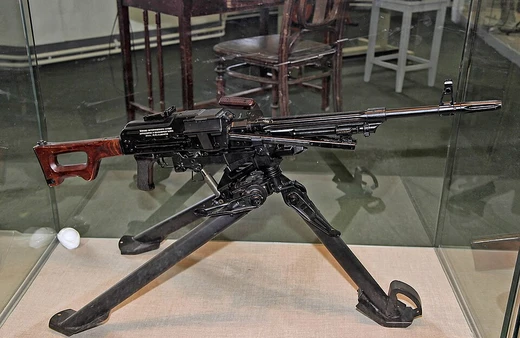
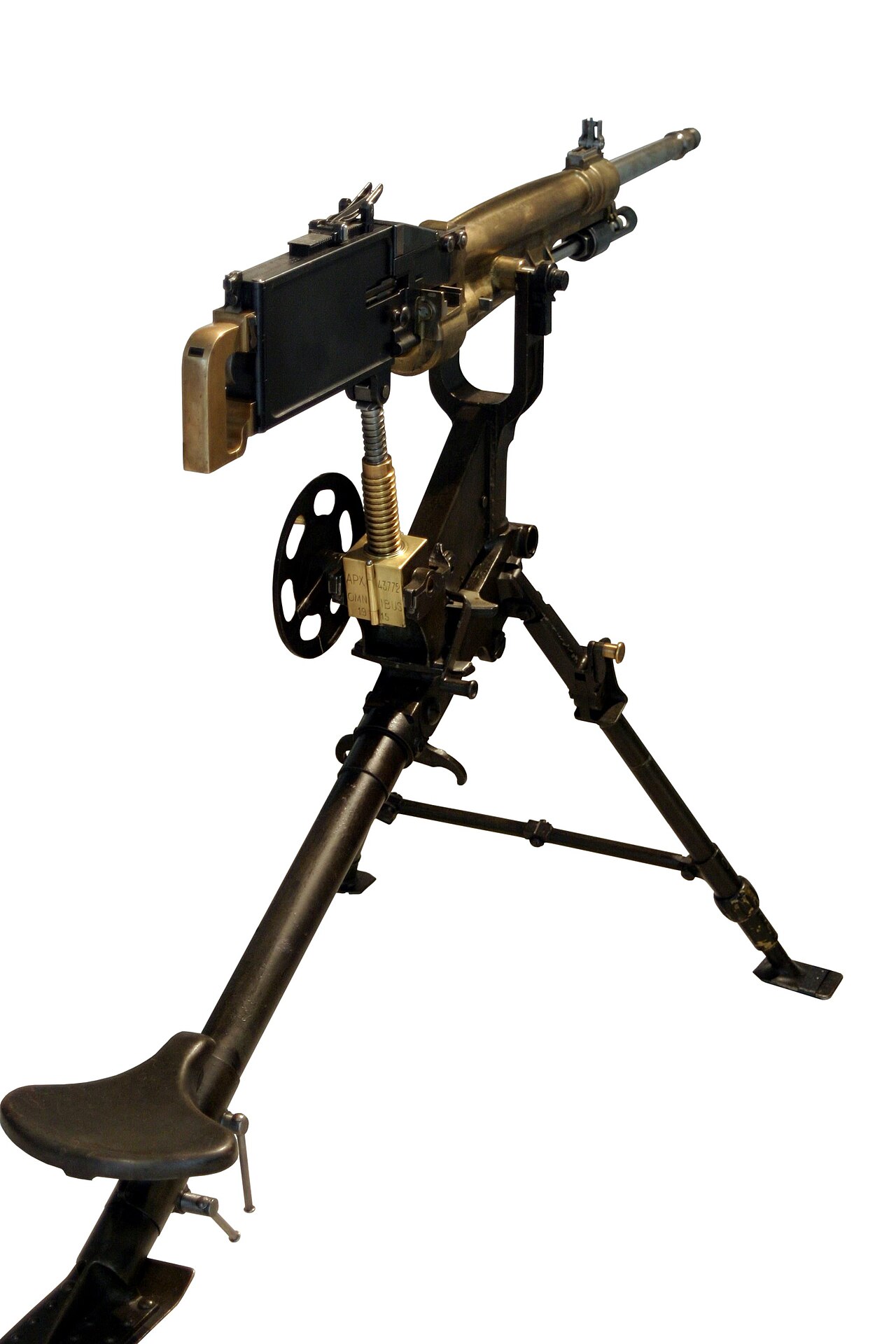
St. Étienne Mle 1907
A complex French machine gun designed to bypass Hotchkiss patents.

Rama . · CC BY-SA 2.0 fr
The St. Étienne Mle 1907 was a French gas-operated, air-cooled machine gun chambered in 8mm Lebel. It is notable for being developed by a state-owned arsenal to avoid patent infringement on the Hotchkiss machine gun, incorporating a blow-forward design derived from the Bang rifle of 1903. Widely used only in the early years of the First World War, it was eventually replaced by the more reliable Hotchkiss M1914.
Quick Facts
- Is Ranged
- yes
- Origin
- France
- Manufacturer
- Manufacture d'Armes de Saint-Etienne (MAS).
- Production Date
- 1907–1916
- Wars
- Italo-Turkish War · World War I · Greco-Turkish War (1919–1922) · Warlord Era · Spanish Civil War · World War II
- Caliber
- 8 mm
- Part Length
- 710 mm
- Cartridge
- 8mm Lebel
- Feed
- 25-round metal strips or 300-round fabric belts (1916)
- Action
- Gas-operated
- Rate
- adjustable: 8 to 600 round/min
- Velocity
- 724 m/s
Facts from the source article.
Lore & Background
Around the turn of the century, the French military evaluated machine guns from the private firm Hotchkiss et Cie. Although the tests were technically convincing and Hotchkiss guns were purchased for alpine and colonial troops, it was decided for political reasons that a machine gun for French line infantry had to come from state-owned manufacturers. The first attempt, the Puteaux M1905 machine gun, was inspired by the Bang rifle system of 1903 and deliberately avoided the patented Hotchkiss design. However, the Puteaux proved unsatisfactory, leading to a thorough rework by the arsenal at Saint-Étienne, resulting in the Mle 1907.
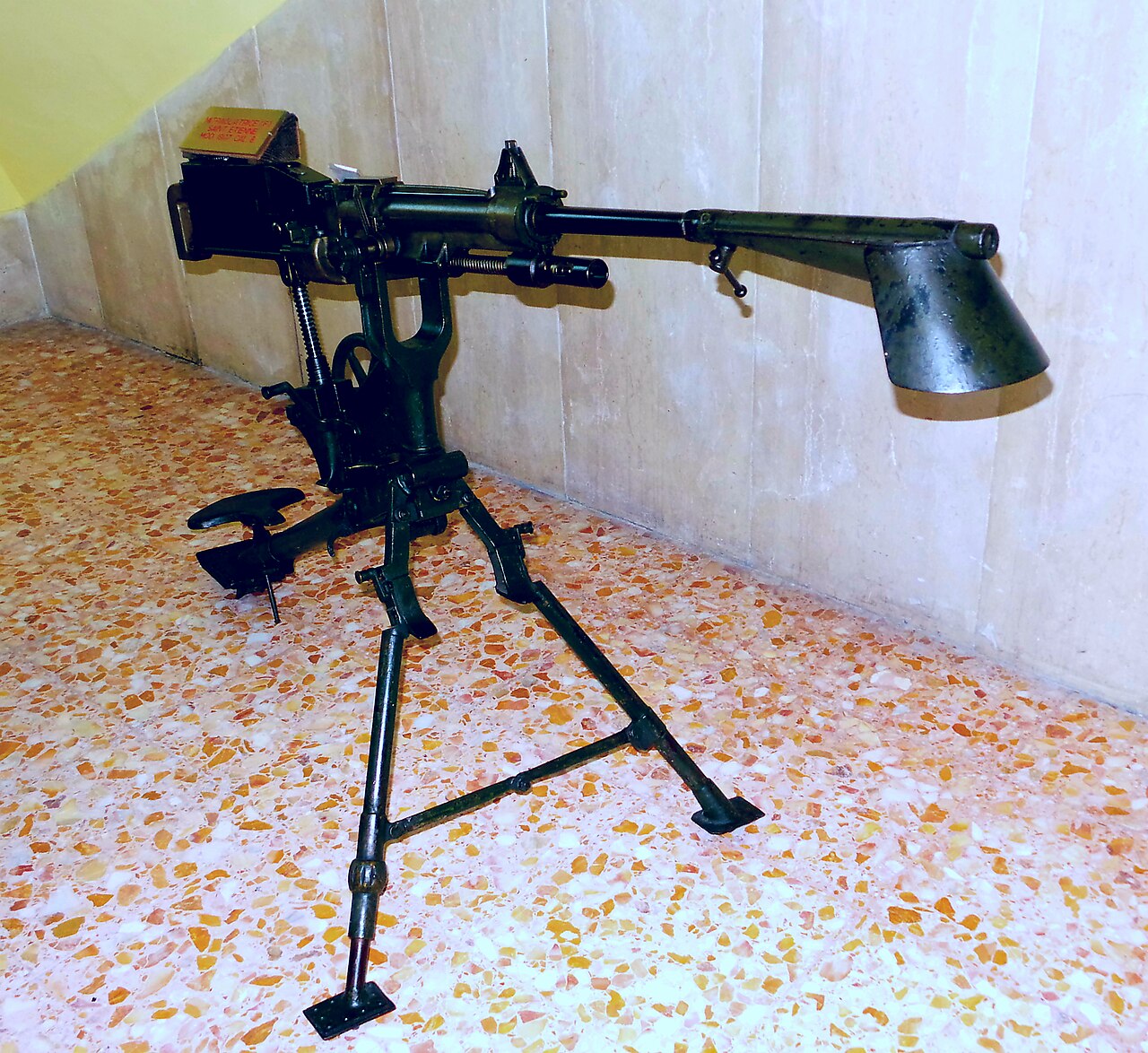
The St. Étienne Mle 1907 kept the original blow-forward gas piston, rack-and-pinion system, and bolt mechanism of the Puteaux, only slightly modified. It had 64 component parts compared to 32 for the Hotchkiss Mle 1914. Barrel changes were much easier than on the Puteaux, and the firing rate could be set between eight and about 600 rounds per minute. It could use either metal strips (different from those of the Hotchkiss) or fabric belts, the latter introduced in 1916. In the muddy environment of trench warfare, the mechanically complex St. Étienne suffered frequent stoppages and was difficult to maintain. A French post-war evaluation described it as an 'admirable weapon, patented clockwork, but very delicate and sparing its whims only for machine-gun virtuosos.'
Reader's Guide
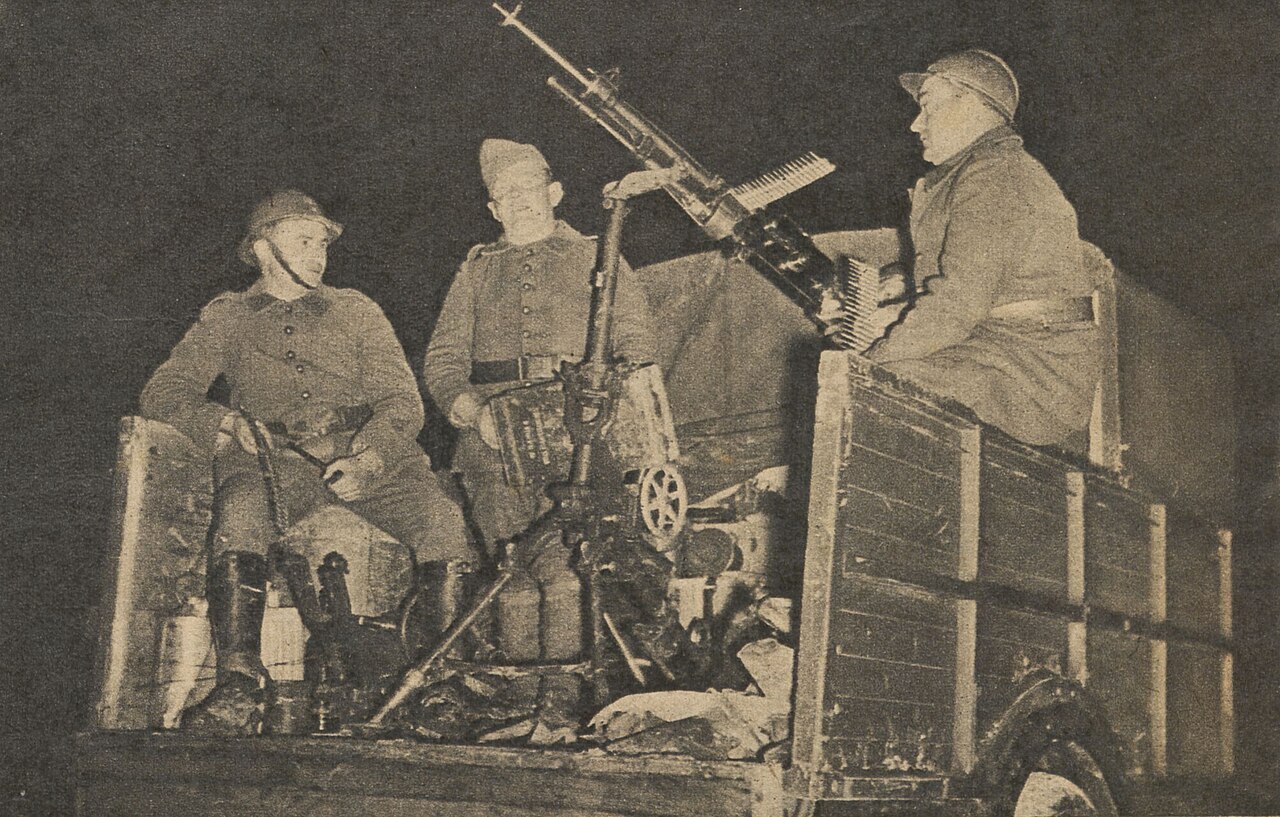
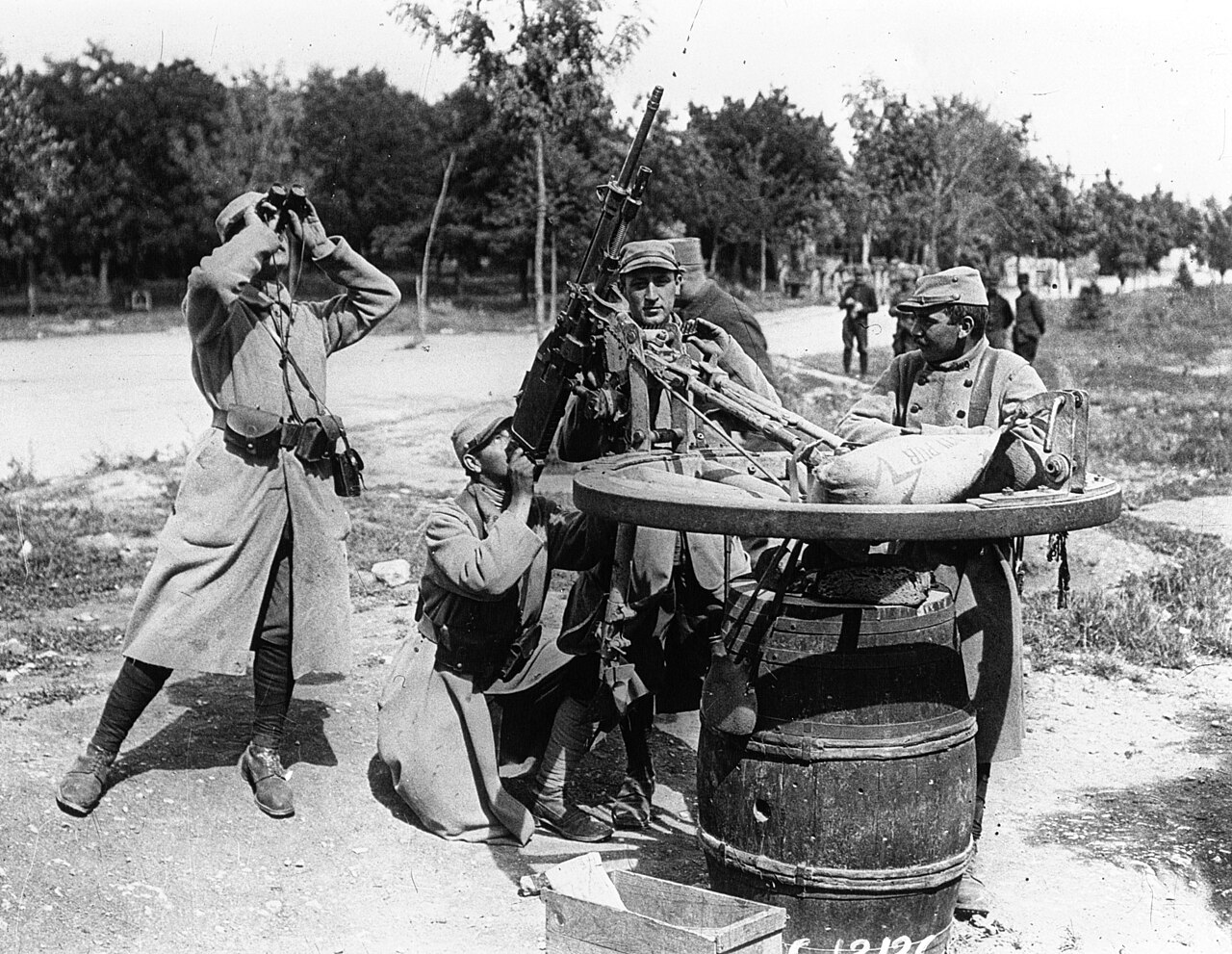
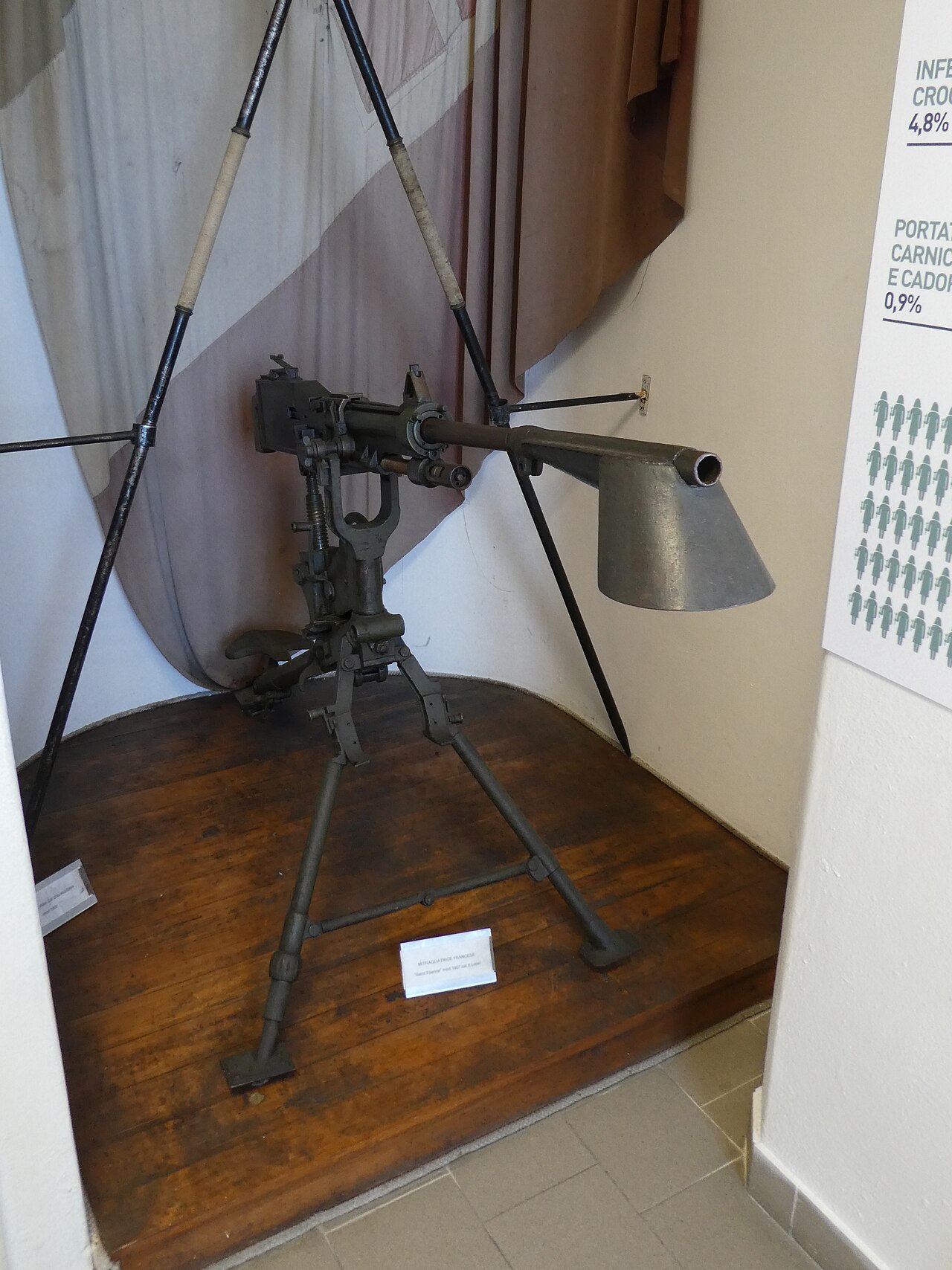
The St. Étienne Mle 1907 was a controversial weapon that saw widespread use only in the early part of the First World War. Its development was driven by political rather than purely technical considerations, as the French government sought to avoid royalties on the Hotchkiss patents. The resulting design, based on the Bang blow-forward system, was mechanically complex and proved unreliable in the conditions of trench warfare. By July 1917, it was gradually withdrawn from front-line service and replaced by the simpler and more reliable Hotchkiss M1914. Large numbers were then transferred to rear-echelon units, French colonies, and the Italian Army. Many also ended up in the Greek Army during the 1920s. The Mle 1907-T was still in service at the beginning of World War II with second-line units. Romania contracted 500 machine guns in July 1916, with 268 delivered before the war started on the Romanian front. The American Expeditionary Forces used it as an anti-aircraft weapon. Its legacy is that of a well-intentioned but flawed attempt to create a state-produced machine gun, ultimately overshadowed by the Hotchkiss it was meant to circumvent.
Did You Know?
- The St. Étienne Mle 1907 borrowed its blow-forward design from the semi-automatic Bang rifle of 1903 to avoid patent infringement on the Hotchkiss machine gun.
- It had 64 component parts, twice as many as the Hotchkiss Mle 1914 which had 32.
- Its rate of fire could be adjusted between 8 and about 600 rounds per minute.
- Romania ordered 500 of these machine guns in July 1916, receiving 268 before the war started on the Romanian front.
Origins and French Infantry Adoption
The St. Étienne Mle 1907 emerged as the upgraded evolution of the earlier Puteaux Mle 1905, representing the French Army's chosen path for equipping its infantry with automatic weapons during the period of 1907 through 1909. The decision to standardize on this design came after a period of comparative evaluation in which the military had acquired fifty Hotchkiss machine guns in 1906 for side-by-side testing. Despite the Hotchkiss offering a simpler mechanical arrangement, French command ultimately selected the Puteaux lineage, which was characterized as the more complex of the two competing systems. This choice placed the St. Étienne at the center of French infantry firepower for the remainder of the pre-war era, while the Hotchkiss found its initial market in overseas colonial deployments, with six hundred units of the earlier Mle 1900 variant procured for that purpose. The St. Étienne thus occupied the role of primary infantry automatic weapon in a military that would soon face the unprecedented demands of total war.
Production Strain and the Reliability Question
When the First World War erupted, the Manufacture d'armes de Saint-Étienne, the state arsenal responsible for producing the St. Étienne Mle 1907, found itself unable to meet the surging demand for the weapon. This production shortfall forced the French military to look for alternatives, and it turned to the Hotchkiss Mle 1900, which was adopted with minor modifications as the Mitrailleuse Automatique modèle 1914. The St. Étienne's reputation for unreliability became a persistent concern throughout the conflict, standing in stark contrast to the Hotchkiss, which was widely regarded as a sturdy and dependable weapon. The complexity that had been accepted at the time of adoption in 1907 now proved to be a liability on the factory floor and in the field alike. By 1916, the evidence of the St. Étienne's shortcomings had accumulated to the point where even second-line units were being issued the Hotchkiss as a stopgap, and front-line formations began receiving it as well. The weapon that had been chosen as the backbone of French infantry automatic fire was increasingly seen as the problem rather than the solution.
The 1916 Parliamentary Inquiry and Final Replacement
In 1916, a parliamentary committee of inquiry examined the comparative performance of France's two principal machine guns and reached a definitive conclusion: the Hotchkiss was more reliable than the St. Étienne. The committee's findings carried immediate operational consequences, as production of the St. Étienne was ordered to cease. The Hotchkiss Mle 1914, which had initially been distributed to second-line troops at the war's outset, was progressively pushed forward to front-line units throughout 1916. By late 1917, the transition was complete, and the Hotchkiss had fully assumed the role of standard French infantry machine gun, formally displacing the St. Étienne from the position it had held since 1907. The American Expeditionary Forces, arriving in France during this same period, also procured seven thousand Hotchkiss guns in the 8mm Lebel caliber and employed them extensively along the Western Front in 1917 and 1918. The St. Étienne's tenure as France's primary automatic weapon, which had spanned roughly a decade, was thus brought to a close by the very war it had been designed to serve.
Shared Equipment and the Broader French Machine Gun Story
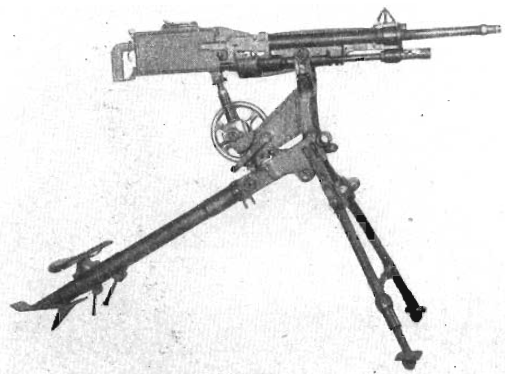
Although the St. Étienne Mle 1907 and the Hotchkiss were competing designs from different manufacturing traditions, they were not entirely isolated from one another in practical terms. In 1915, the French military introduced the so-called "Omnibus Tripod," a mounting platform designed to accommodate both the St. Étienne and the Hotchkiss, reflecting the reality that both weapons were in service simultaneously during the war years. This shared infrastructure underscored the transitional nature of the period, in which the old standard and its replacement coexisted on the same battlefields. The St. Étienne occupied a specific niche in the broader history of French arms manufacturing: it was the product of the Puteaux design lineage, adopted during a time when the Hotchkiss company—founded in the 1860s by American industrialist Benjamin B. Hotchkiss—was still building its reputation through international sales to countries including Brazil, Chile, Japan, Mexico, Norway, and Venezuela. The eventual obsolescence of the St. Étienne in favor of the Hotchkiss marked a shift in French military procurement toward a weapon that would remain in active French service until the early 1940s.
Gallery
Frequently Asked Questions
What is the St. Étienne Mle 1907?
It is a French gas-operated, air-cooled machine gun chambered in 8mm Lebel, manufactured at the state-owned arsenal in Saint-Étienne. It served as France's domestically produced alternative to the Hotchkiss design during the early First World War.
Why was the St. Étienne Mle 1907 created?
French authorities wanted a machine gun that would not violate Hotchkiss's existing patents, so the Saint-Étienne arsenal developed one in-house. Its blow-forward mechanism was adapted from the Bang rifle introduced in 1903.
How does the St. Étienne Mle 1907's firing mechanism work?
It operates on a gas-powered blow-forward system, where propellant gases drive the bolt forward to cycle the action. The rate of fire can be adjusted anywhere from roughly 8 up to about 600 rounds per minute.
How long was the St. Étienne Mle 1907 in production and service?
Production ran from 1908 until late 1917, yielding more than 39,700 examples. It saw its heaviest combat use in the opening phases of the Great War before reliability issues led to its replacement by the Hotchkiss M1914.
What makes the St. Étienne Mle 1907 notable among early 20th-century machine guns?
It stands out as a state-designed weapon built specifically to sidestep a private company's patent portfolio, which was unusual for the period. Its adjustable rate-of-fire selector and blow-forward gas system also made it mechanically distinctive compared to contemporary designs.
More in Machine Guns, Part 4 1-24
Spotted an error? Know more?
Reader corrections go straight into our review queue. Suggest an edit · How this site is sourced