Salvator-Dormus M1893
Austro-Hungarian heavy machine gun with adjustable rate of fire.

M11rtinb · CC BY-SA 4.0
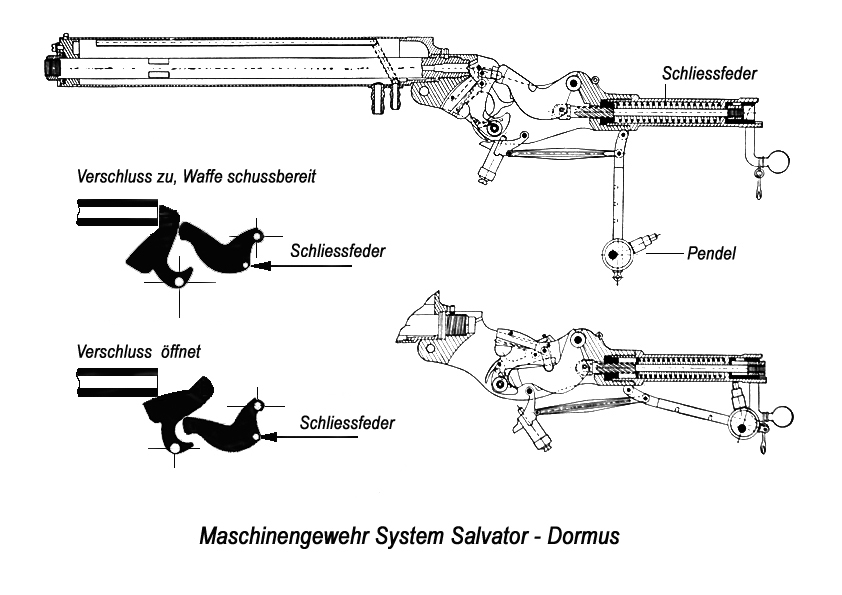
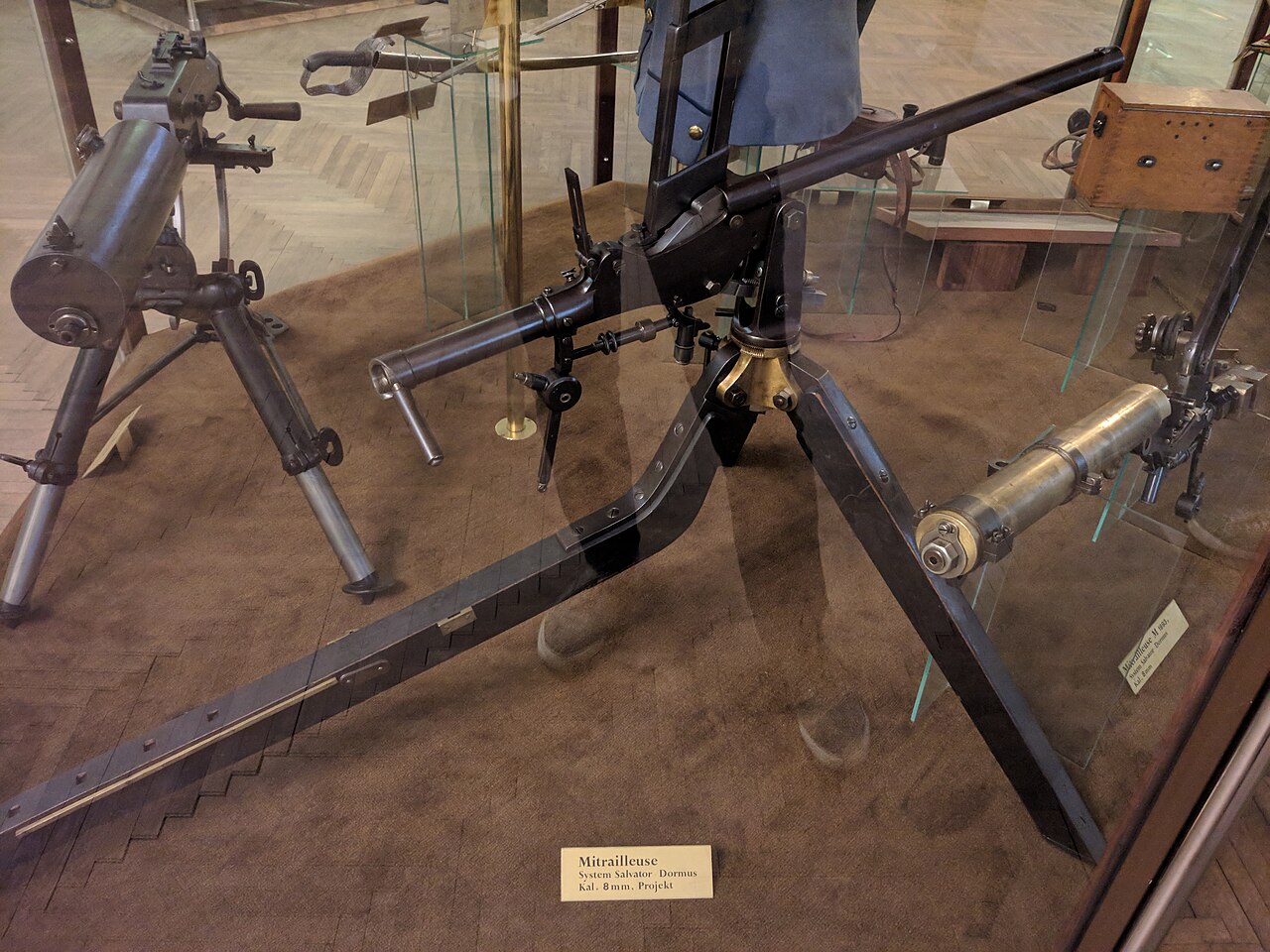
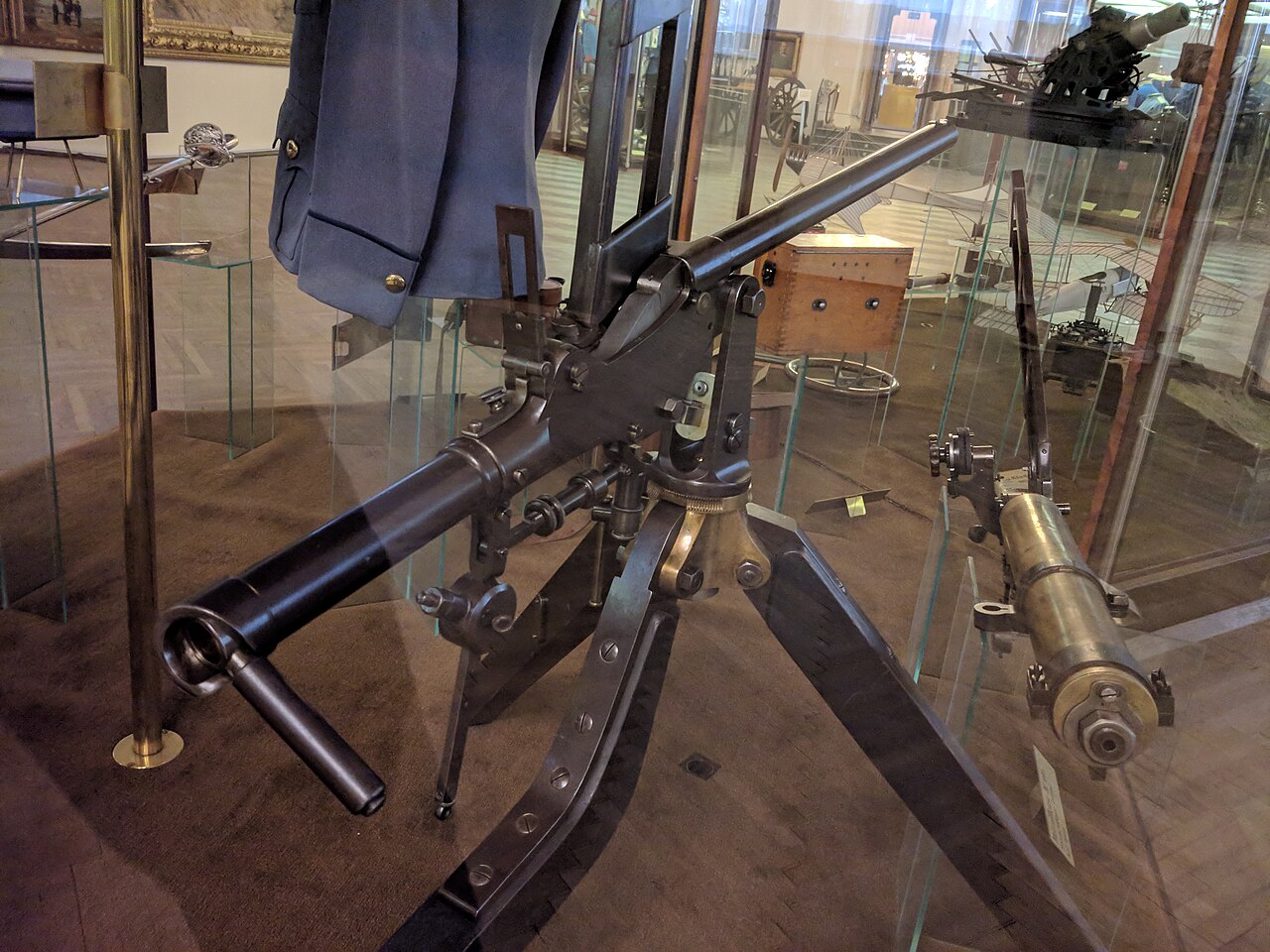
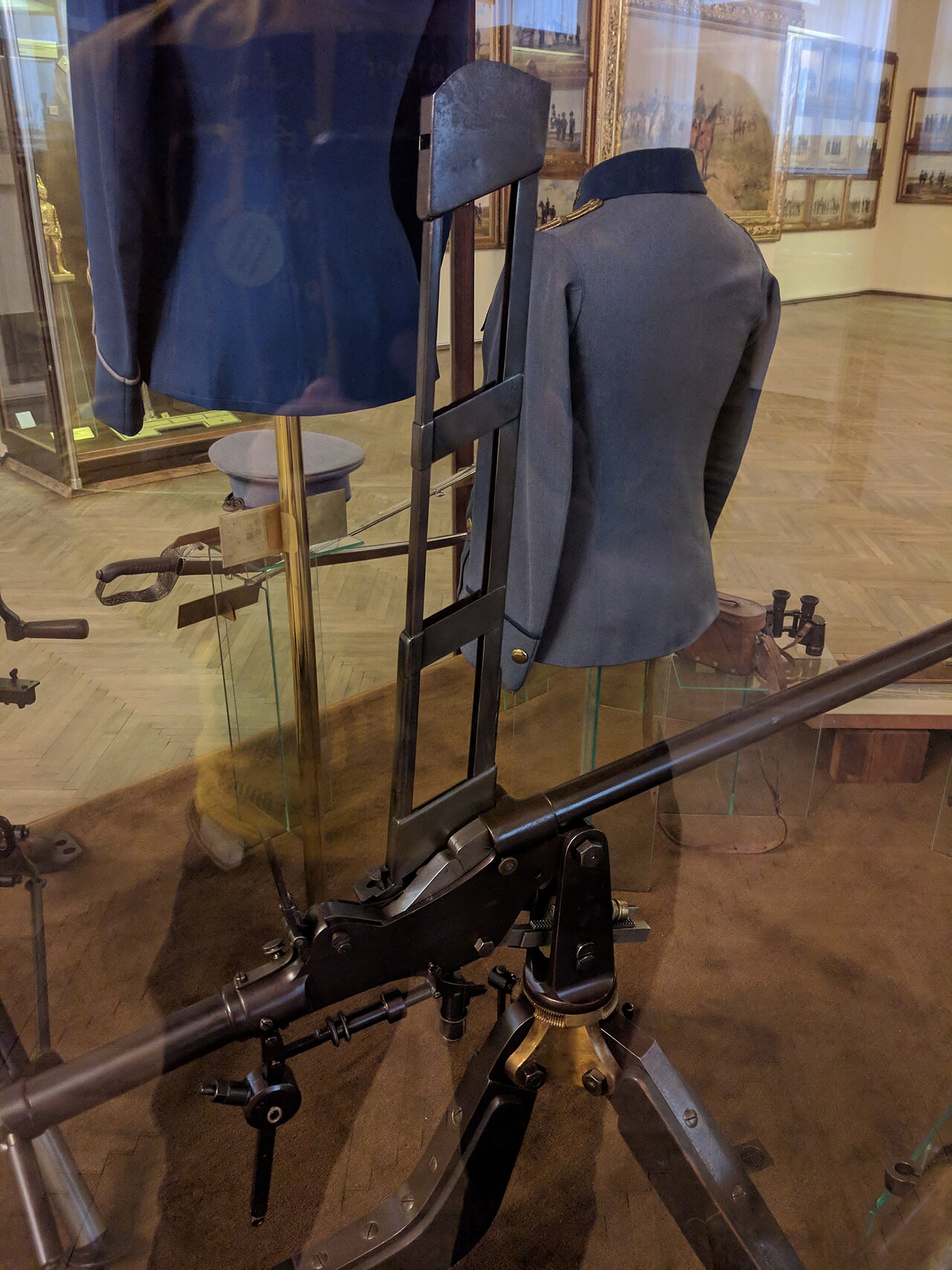
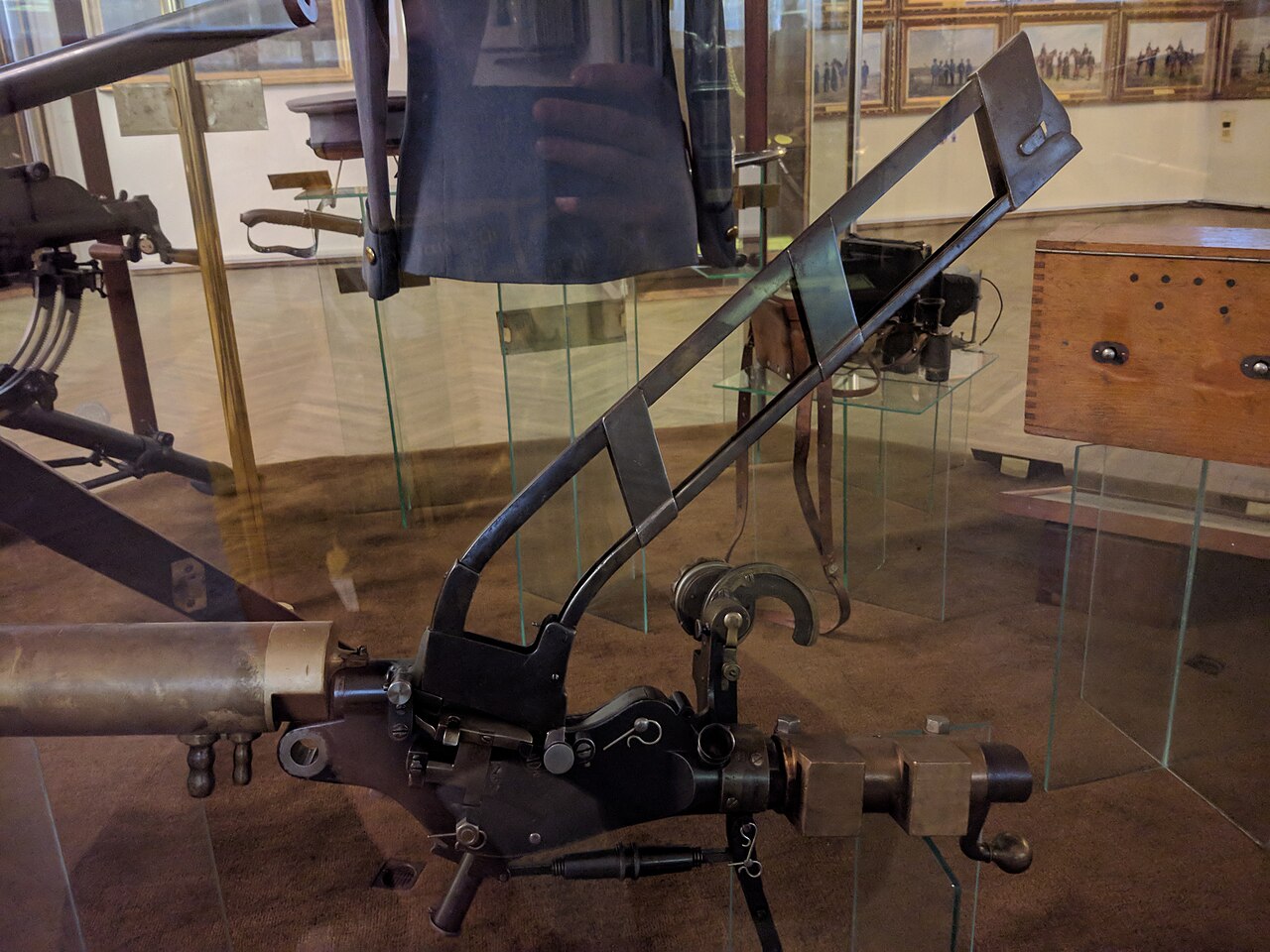
The Salvator-Dormus M1893, sometimes called the Škoda M1893, was a heavy machine gun from Austria-Hungary. Its designers were Archduke Karl Salvator of Austria and Georg von Dormus, and the Škoda Works in Plzeň handled production. The gun fired the 8×50mmR Mannlicher round, kept its barrel cool with water, and fed ammunition from an overhead magazine. Manufacturing began in the 1890s, and it eventually saw its role in Austro-Hungarian forces taken over by newer designs like the Schwarzlose MG M.07/12. The weapon featured an adjustable system that let operators set its rate of fire between roughly 180 and 250 rounds per minute. Austro-Hungarian troops used the M1893 during the Boxer Rebellion, notably while defending their legation in Peking in 1900. Period photographs show the gun mounted on both tripods and naval landing carriages, confirming it could be set up in at least two different ways.
Quick Facts
- Origin
- Austria-Hungary
- Is Ranged
- yes
- Wars
- Boxer Rebellion / World War I
- Designer
- Archduke Karl Salvator of Austria / Georg von Dormus · de · Georg von Dormus
- Design Date
- 1893
- Manufacturer
- Škoda Works
- Production Date
- 1893–1918
- Variants
- M1893, M1902
- Weight
- 20 kg
- Part Length
- 530 mm
- Cartridge
- 8×50mmR
- Action
- Delayed blowback
Facts from the source article.
Lore & Background
The Salvator-Dormus M1893 was designed by Archduke Karl Salvator of Austria and Georg von Dormus, and manufactured by Škoda Works in Plzeň. It was chambered for the 8×50mmR Mannlicher cartridge and featured a water-cooled barrel and an overhead magazine. The weapon entered production in the 1890s and incorporated an adjustable mechanism that allowed its cyclic rate of fire to be regulated between approximately 180 and 250 rounds per minute.
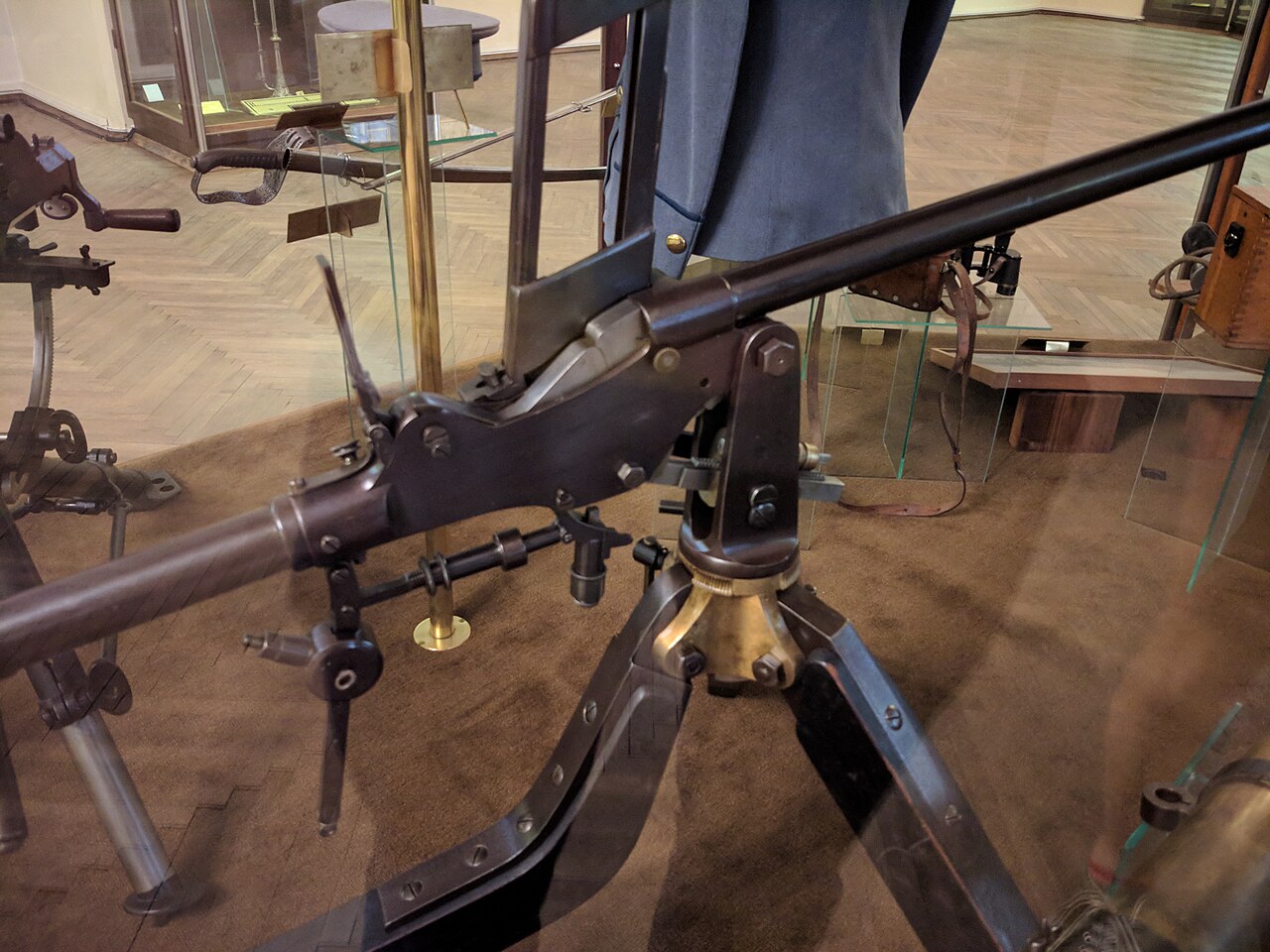
The M1893 was used by Austro-Hungarian forces during the Boxer Rebellion, including during the defence of the Austro-Hungarian legation in Peking in 1900. Contemporary photographs show the weapon mounted on tripods and naval landing carriages, indicating that it was used in more than one mounting configuration. It was later supplemented and replaced in Austro-Hungarian service by newer machine guns, including the Schwarzlose MG M.07/12.
Reader's Guide
The Salvator-Dormus M1893 represents an early Austro-Hungarian heavy machine gun design that saw limited but notable service. Its adjustable cyclic rate of fire, ranging from approximately 180 to 250 rounds per minute, was a distinctive feature for its time. The weapon's use during the Boxer Rebellion, particularly in the defence of the Austro-Hungarian legation in Peking in 1900, marks its involvement in a significant international conflict. The availability of both tripod and naval landing carriage mountings suggests the M1893 was intended for versatile deployment, including possible naval or coastal defence roles. Although it was eventually supplemented and replaced by the Schwarzlose MG M.07/12, the M1893 stands as an early example of Austro-Hungarian machine gun development and the collaboration between Archduke Karl Salvator and Georg von Dormus. Its production by Škoda Works in Plzeň also highlights the industrial capacity of the Austro-Hungarian Empire in the late 19th century.
Did You Know?
- The Salvator-Dormus M1893 is also known as the Škoda M1893.
- Its cyclic rate of fire could be adjusted between approximately 180 and 250 rounds per minute.
From Patent to Battlefield: The Design Philosophy
In 1888, Archduke Karl Salvator of Austria partnered with Count George von Dormus to patent a delayed blowback machine gun. The Austro-Hungarian Army adopted their design, with minor modifications, as the Škoda M1893, intended primarily for fixed fortifications. Škoda Works later refined the feed system in an M1902 variant, though only a handful were ever produced. The lineage continued when Andreas Wilhelm Schwarzlose, filing patents as early as 1900, developed his own delayed blowback system. In 1907, the Army selected his design to replace the aging Škoda. Firearms historian George M. Chinn noted that the blowback principle was deliberately favored because it was far simpler to manufacture than the Maxim's complex mechanism and sidestepped the gas-operated approach used by Hotchkiss. The result was a gun with just one spring where the Maxim required fourteen, eleven breech components against thirty-five, and thirteen fasteners versus fifty-two. It also shed roughly ten kilograms of weight, making it a practical, field-friendly weapon for infantry, cavalry, and mountain troops alike.
Wartime Service and Tactical Employment
Throughout the First World War, the Schwarzlose served as the Austro-Hungarian Army's standard heavy machine gun, distributed across infantry, cavalry, and mountain branches in batteries of four. By 1914 the Army held 2,761 of these weapons, with each infantry regiment theoretically fielding four sections of two guns, one per battalion. Infantry crews rode with tripod-mounted M 07s carried by pack horses at the regimental level. Cavalry units organized a three-horse team—one bearing the gun and five hundred rounds, the other two hauling fifteen hundred—adding two more ammunition horses upon mobilization. Mountain batteries followed a similar pattern, with a single horse carrying the weapon plus eleven thousand rounds and companion horses each bearing two thousand. Each gun was operated by three or four soldiers under a non-commissioned officer. The Navy mounted Schwarzloses as anti-aircraft guns aboard the Erzherzog Karl and Tegetthoff-class battleships, while the Aviation Troops struggled to synchronize the weapon with aircraft engines, often resorting to improvised field mountings. On the Italian Front, the gun proved devastatingly effective during the Isonzo battles, helping repel numerically superior Italian forces.
Global Proliferation and Manufacturing
The Schwarzlose's appeal extended well beyond the Austro-Hungarian borders. Before 1912, the Netherlands adopted the design in 1908, followed by Greece, Serbia, Romania, Bulgaria, Sweden, and the Ottoman Empire. Steyr held exclusive manufacturing rights until 1917, when wartime pressures prompted other nations to build their own. The Dutch established a production line at the Hembrug Arsenal that ran continuously until 1940, while Sweden produced licensed copies at the Carl Gustafs Stads Gevärsfaktori factory in Eskilstuna from 1917 through 1939. Even unlicensed copies appeared in China: the Sichuan Arsenal manufactured a small batch for warlord Xiong Kewu beginning in 1918, and the Guangdong Arsenal turned out a limited number in the early 1920s. A key factor in the gun's international popularity was cost—the Schwarzlose priced at roughly half that of a Maxim, making it an attractive option for armies with constrained budgets. Its 400-rounds-per-minute cyclic rate also outperformed the older Škoda, and the 1912 M 07/12 revision pushed that figure to 580 rounds per minute through a stronger mainspring.
A Half-Century of Service: Legacy and Longevity
Few weapons of the early twentieth century enjoyed a career as long as the Schwarzlose family. After the collapse of Austria-Hungary, successor states including Austria, Hungary, Czechoslovakia, Poland, and Yugoslavia all kept the M 07/12 in their arsenals, deploying it in the Russian Civil War, the Polish-Soviet War, the Greco-Turkish War, the Colombia-Peru War, and the Spanish Civil War. Italy received approximately nine hundred M 07/12s as war reparations, issuing them to colonial troops in Africa—often in an anti-aircraft capacity—and retained them until the very end of the Second World War. During that conflict, the Wehrmacht pressed captured Austrian, Dutch, Greek, Italian, and Yugoslav guns into service, assigning them to second-line units for anti-partisan operations or to reinforce anti-aircraft batteries. In the war's final months, even the Volkssturm militia took up the weapon. Its enduring appeal lay in simplicity and robustness; while it excelled in its intended infantry role, it proved less adaptable in unconventional applications than the highly versatile Maxim-derived guns it had ultimately replaced.
Gallery
Frequently Asked Questions
Who designed the Salvator-Dormus M1893?
The weapon was developed by Archduke Karl Salvator of Austria together with Georg von Dormus, which is how the gun got its dual-name designation. Production was carried out by the Škoda Works in Plzeň, so you'll also see it listed under the shorter name Škoda M1893.
What cartridge does the M1893 fire and how is the barrel cooled?
It chambers the 8×50mmR Mannlicher round, the standard military cartridge of the Austro-Hungarian army at the time. The barrel is water-cooled, and ammunition is fed into the mechanism from an overhead magazine.
What makes the M1893's rate of fire stand out?
Unlike most fixed-cyclic-rate machine guns of the era, the M1893 included an adjustable mechanism that let the operator dial the firing speed anywhere between roughly 180 and 250 rounds per minute. This gave crews a degree of control over ammunition expenditure and barrel heat that was unusual for the 1890s.
When was the Salvator-Dormus M1893 manufactured and by whom?
Production at the Škoda Works in Plzeň began in the 1890s, making it one of the earlier heavy machine guns adopted by Austria-Hungary. It served as a crew-served defensive weapon for Austro-Hungarian forces during that period.
What eventually replaced the M1893 in Austro-Hungarian service?
The gun was phased out in favor of newer designs, most notably the Schwarzlose MG M.07/12, which offered a more modern operating system and better logistics. By the time of the Great War the M1893 had largely been superseded in frontline roles.
More in Machine Guns, Part 4 1-24
Spotted an error? Know more?
Reader corrections go straight into our review queue. Suggest an edit · How this site is sourced