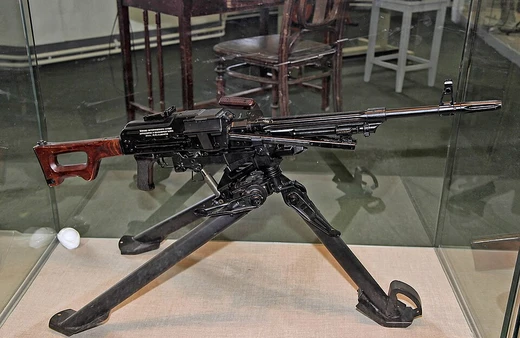
Breda M37
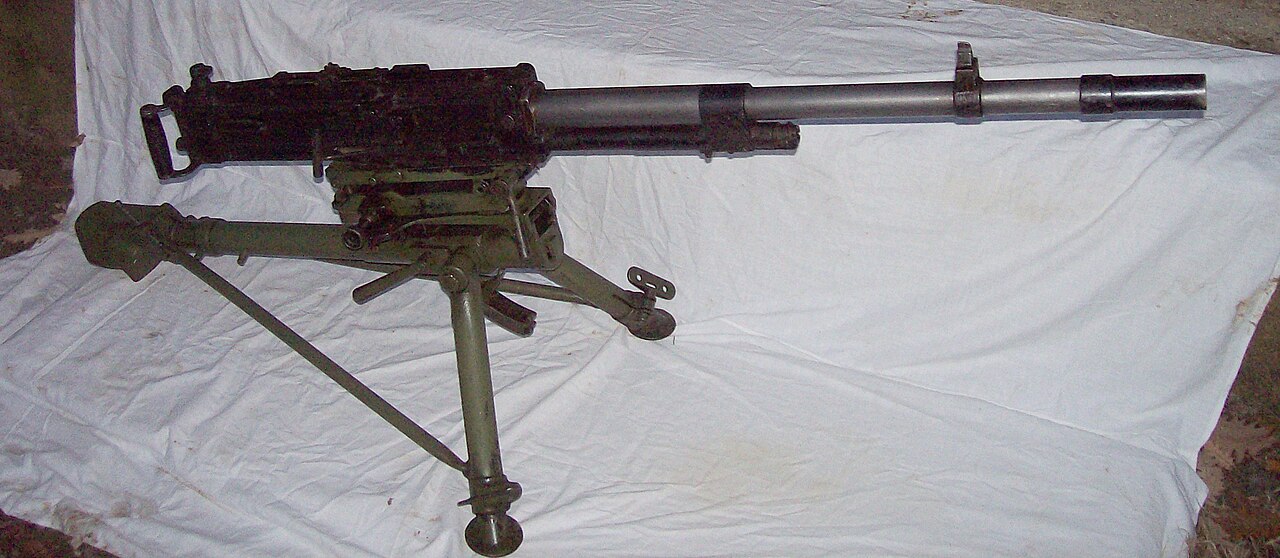
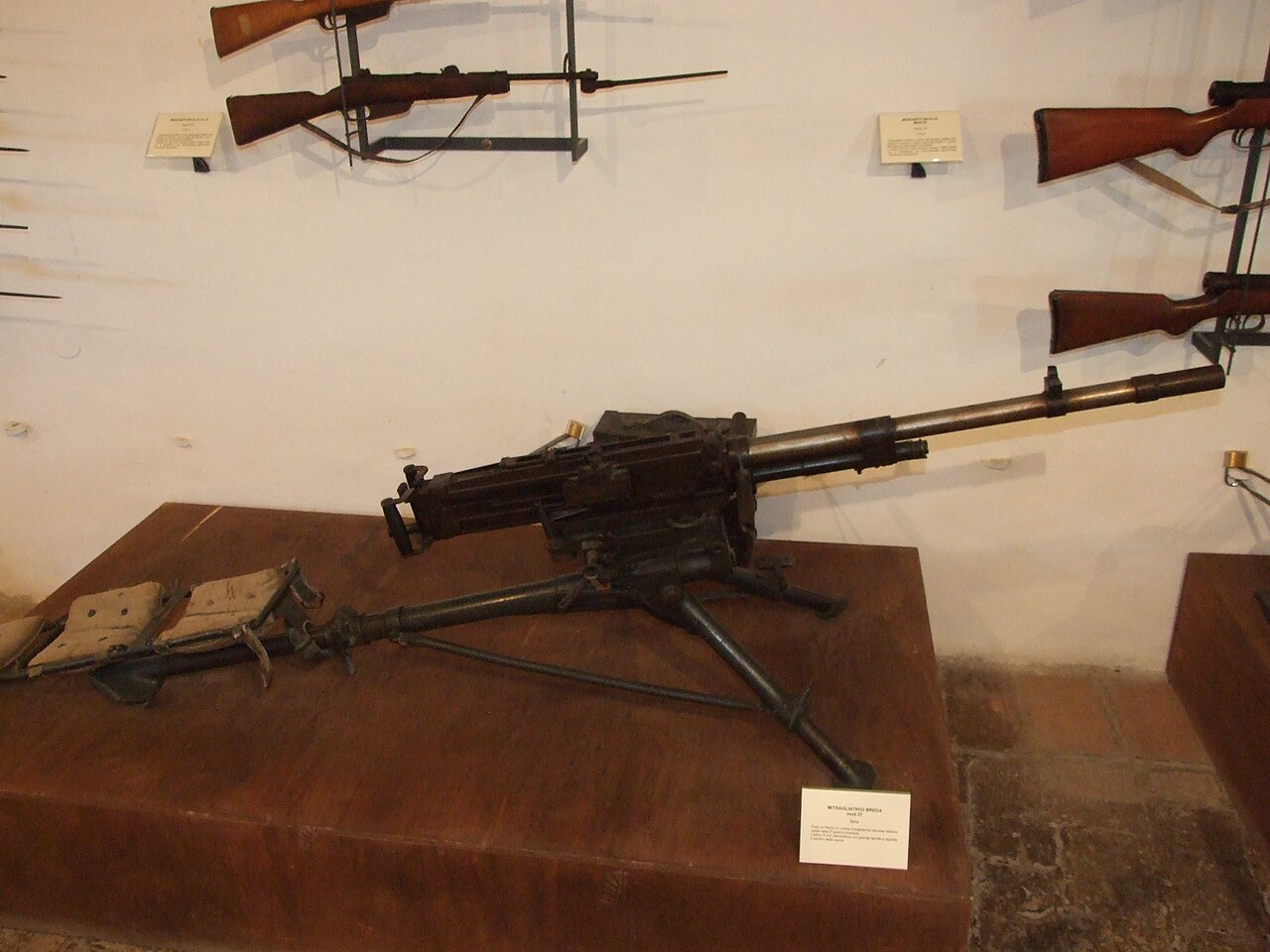
Italian heavy machine gun with a unique case-reinsertion feed system.

Amendola90 · CC BY-SA 4.0
The Breda M37 was an Italian heavy machine gun produced by Breda and adopted by the Royal Italian Army in 1937. It was the standard heavy machine gun for that army during World War II and remained in Italian service after the war. It also saw use with the Marines and Blackshirt militia. Some were supplied to Nationalist forces in the Spanish Civil War and to Italian-trained Ustaše troops during World War II. Post-war, it was used in the early stages of the Portuguese Colonial War until replaced by the MG42/59. A few African countries kept it in service or in strategic storage into the late 1980s.
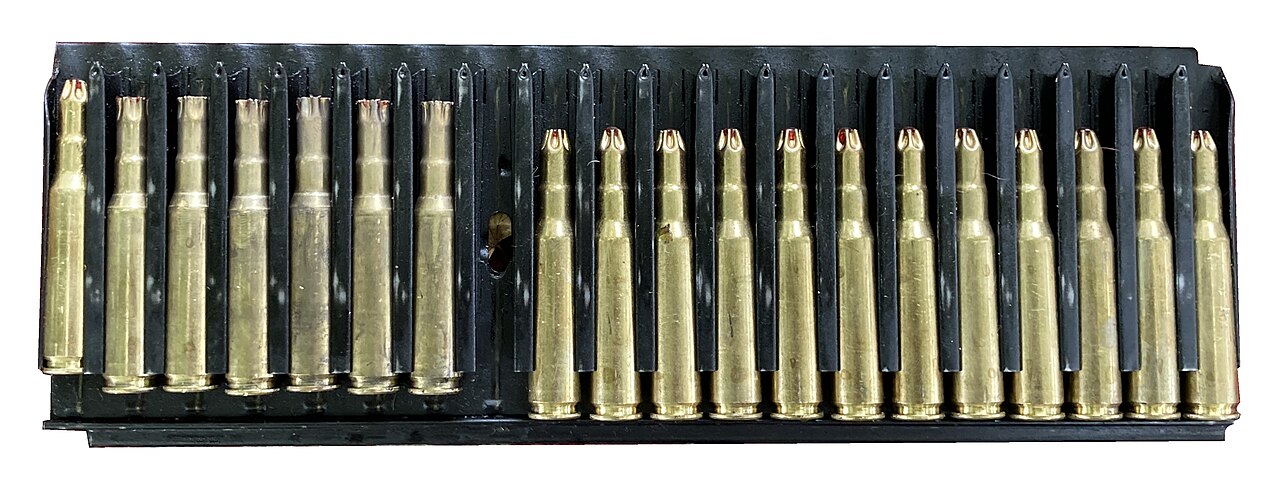
The M37 was a downscaled version of the 13.2 mm Breda M31, which was too large for the tankettes used by the Royal Italian Army. It used the same rising block breech-locking system but fed from 20-round metal strips similar to those of the Hotchkiss machine gun. Development was delayed because the 8×59mm Rb Breda cartridge was not approved until 1935, and the gun itself appeared two years later.
The strips were inserted on the left side of the gun. A gas-piston driven bolt removed a cartridge, fed it to the chamber, fired it, and placed the spent case back into the strip, which then moved one notch to the right. This cycle repeated until the last round was fired, at which point the strip was ejected on the right side. The assistant fed fresh strips while the gunner kept the trigger pulled. Crews used a crank-operated machine to remove spent cases from strips and reload them; this device also had a hopper for storing spent cases. Barrels had a service life of about 20,000 rounds and had to be changed every 400 rounds to cool down.
The cartridges did not need oiling, but the 20-round strips limited the rate of fire to about 200 rounds per minute. The gun was air-cooled and could not be fired continuously anyway. Despite weighing 83 pounds with the tripod—heavier than the British Bren or German MG 42—and having a low rate of fire, it was rugged, accurate, and popular with its crews.
The spent-case reinsertion feature may have been intended to prevent tank crews from slipping on cases, or to keep ejected cases from jamming exposed mechanisms inside 1930s tanks. However, the tank-mounted Breda 38 used a bag to collect spent cases instead. Another suggestion is that the feature allowed reuse of cases to save strategic metals.
Quick Facts
- Origin
- Kingdom of Italy
- Is Ranged
- yes
- Service
- 1937−1960s
- Wars
- Spanish Civil War / World War II / Portuguese Colonial War
- Design Date
- 1935−1937
- Manufacturer
- Società Italiana Ernesto Breda
- Production Date
- 1937−1945
- Spec Label
- Mod. 37
- Mass
- 19.4 kg (gun) / 18.8 kg (tripod)
- Length
- 1270 mm
- Cartridge
- 8×59mm Rb Breda
- Action
- Gas-operated
Facts from the source article.
Lore & Background
The Breda M37 was developed as a downscaled version of the 13.2 mm Breda M31, which was considered too large for the tankettes used by the Royal Italian Army. It retained the same rising block breech-locking system as its predecessor. Development faced delays because the 8×59mm Rb Breda cartridge was not approved until 1935, and the machine gun finally appeared two years later. The weapon was fed with 20-round metal strips similar to those used by the Hotchkiss machine gun. The strips were inserted into the left side of the gun; the gas-piston driven bolt removed a cartridge, fired it, and then placed the spent cartridge case back into the strip, which moved one notch to the right. The strip was ejected on the right side after the last round. Continuous fire required an assistant to feed one strip after another while the gunner kept the trigger pulled. Crews used a crank-operated machine to remove spent cases from strips and reload them with fresh cartridges. The cartridges did not need to be oiled. The weapon was air-cooled and could not be continuously fired. Several explanations have been offered for the spent-case reinsertion feature: that it prevented tank crews from slipping on scattered cases; that it kept ejected cases from interfering with exposed tank machinery; or that it allowed economical reuse of spent cartridges to save strategic metals. Regardless of the reason, the feature proved impractical on the battlefield.
Reader's Guide
The Breda M37 was the standard heavy machine gun of the Royal Italian Army during World War II and remained in Italian service into the 1960s. It was also used by the Blackshirt militia and Marines, including the Decima Flottiglia MAS. In North Africa, the M37 was mounted on SPA-Viberti AS.42 reconnaissance cars, each carrying up to three guns that could be dismounted. The British made wide use of captured M37s, particularly with the Long Range Desert Groups. After the Italian surrender in 1943, production continued in the Italian Social Republic to supply German allies, who designated the M37 as the 8 mm sMG 259(i) and the M38 as the 8 mm Kpfw.MG 350(i). Portugal adopted the weapon as the Metralhadora m/938 and used it extensively in its African colonies during the early stages of the Portuguese Colonial Wars, until it was replaced by the MG42/59. Post-war attempts to rechamber the gun to fire the 7.62×51mm NATO cartridge were unsuccessful. The M37 remained in service or in strategic storage with a handful of African countries, including Somalia, Libya, and Chad, until the late 1980s. Despite its weight of 83 lb with tripod and low rate of fire compared to German machine guns, it was considered rugged and accurate and was popular with its crews.
Did You Know?
- The spent cartridge cases were reinserted into the ammunition strip after firing, a feature that proved impractical on the battlefield.
- The British Long Range Desert Groups made wide use of captured M37s during the North African campaign.
- Portugal designated the Breda M37 as the Metralhadora m/938 and used it in the early stages of the Portuguese Colonial Wars.
Classification and Arsenal Context
The Breda M37 is identified as an Italian medium machine gun, a designation that places it in a specific tier of the Italian automatic weapons family. In the documented inventory of World War II infantry weapons for the Albanian theater, it appears alongside the Breda M30, classified as a light machine gun used by Italian-equipped Albanian units, the Fiat-Revelli Modello 1914, an older Italian design retained in limited service, and the Maxim gun, present in limited numbers from older stocks. The Schwarzlose MG M.07/12, a former Austro-Hungarian weapon that had remained in Balkan service, also figures in this same listing. This constellation of machine guns spanning multiple national origins and generations illustrates the layered, mixed approach to sustained automatic fire that characterized the Albanian operational environment, where the M37 represented the current Italian standard for medium-caliber suppression while older and lighter models filled complementary roles.
The Italian Protectorate and Equipment
Following the Italian invasion of Albania in April 1939, the small Albanian military force was absorbed into the Italian Empire as a protectorate, and its units were reorganized under Italian command. The equipment delivered to these restructured formations was predominantly Italian-made, and the Breda M37 formed part of the machine gun complement used by Italian forces stationed in the country. The broader armament package included Carcano rifles as the primary long guns, Beretta pistols for sidearms, and submachine guns such as the Beretta M38 and M1918. The M37's deployment in this context reflects the Italian strategy of maintaining a coherent, standardized weapons ecosystem across the protectorate, with the medium machine gun providing the backbone of sustained automatic fire for garrison and support elements. The entire arrangement underscored how deeply the Italian military presence shaped the Albanian armed forces during the protectorate years.
The Greco-Italian War Context
During the Greco-Italian War of 1940 to 1941, Albanian units participated as part of the broader Italian military effort against Greece. These formations were equipped mainly with Italian small arms, and the automatic weapons component of their arsenal included the Breda M37 as the medium machine gun, supported by the Breda M30 for lighter roles. The inclusion of the M37 in this operational setting highlights how the Italian war effort in the Balkans relied on a standardized set of automatic weapons to deliver sustained suppressive fire. Alongside the machine guns, these units fielded Carcano M1891 and M38 rifles, Beretta M38 and M1918 submachine guns, and various Beretta and Glisenti pistols, creating a cohesive Italian armament system. The M37's role in this theater was thus embedded within a larger Italian military campaign, supporting the offensive operations directed against Greek positions during a critical phase of the broader conflict.
The 1943 Transition
The Armistice of Cassibile in 1943 brought a sudden end to the Italian military presence in Albania. Italian forces withdrew, and German forces moved in to occupy the country. In the resulting power vacuum, the weapons landscape shifted dramatically. The Wehrmacht supplied some Albanian formations with German-made arms, including the MG 34 general-purpose machine gun, while the National Liberation Movement and Albanian partisans obtained their weapons through Allied airdrops, captured Italian equipment, and seized German supplies. The Breda M37, as part of the Italian machine gun stocks present in Albania, became part of this broader redistribution of armaments. Its transition from an instrument of Italian military authority to a contested asset in the hands of resistance fighters or German-equipped units mirrors the wider upheaval that swept through the Albanian armed forces as the war's alliances shifted and the old protectorate structure collapsed.
Gallery
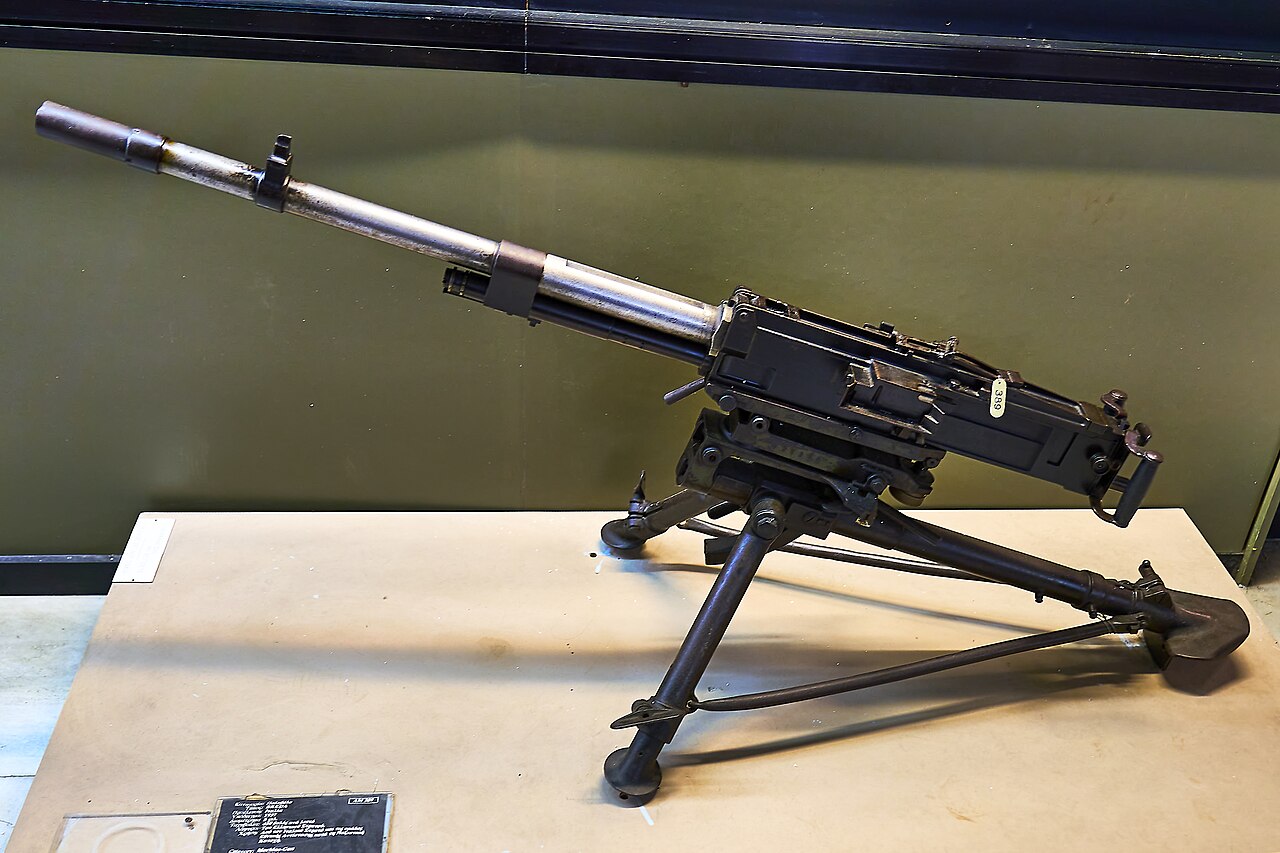
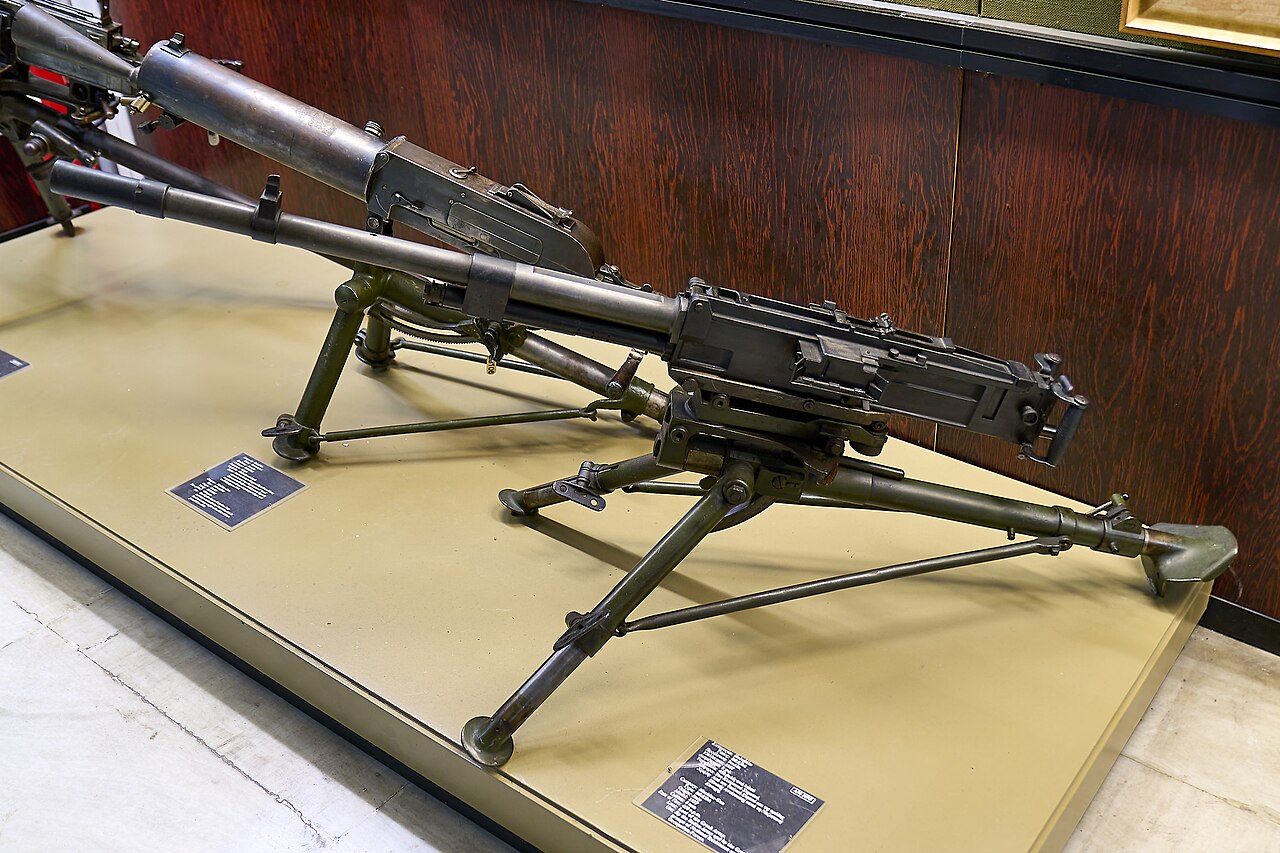
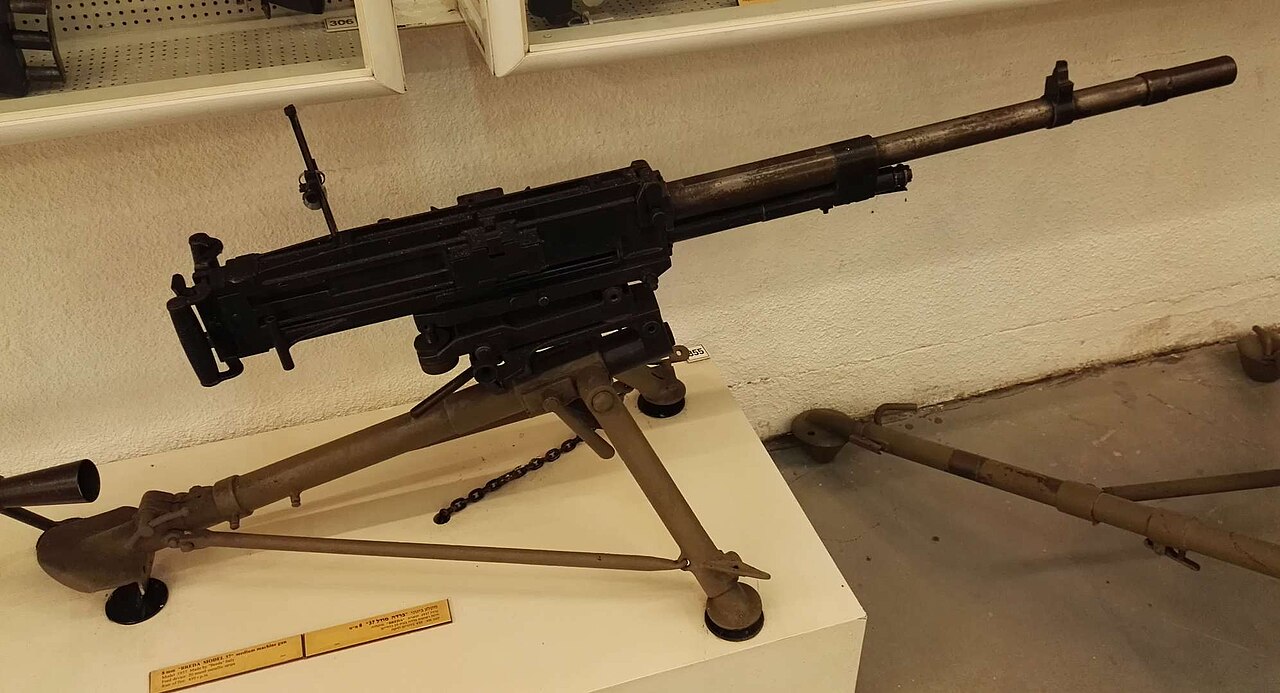
Frequently Asked Questions
What is the Breda M37?
The Breda M37 is an Italian heavy machine gun built by Breda and adopted by the Royal Italian Army in 1937. It became the standard heavy machine gun for Italian forces during World War II and remained in service well after the war ended.
What makes the Breda M37's feed system unique?
Rather than relying on a separate feed belt, the M37 uses a case-reinsertion mechanism in which spent cartridges are pushed back into the 20-round metal strip to chamber the next round. This keeps the weapon compact and eliminates the need for a trailing belt.
What are the Breda M37's key specs?
It fires the 8×59mm Rb Breda cartridge at roughly 200 rounds per minute and tips the scales at about 83 lb on its tripod. The barrel was rated for around 20,000 rounds of service life, though crews swapped it out every 400 rounds in practice.
Where did the Breda M37 see combat?
It served as the standard heavy machine gun for the Italian Army, Marines, and Blackshirt militia in WWII, with some examples supplied to Nationalist forces in the Spanish Civil War and to Ustaše troops. After the war it appeared in the early Portuguese Colonial War and lingered in service or strategic storage in several African nations into the 1980s.
How does the Breda M37 relate to the Breda M31?
The M37 is essentially a downscaled derivative of the larger 13.2 mm Breda M31, retaining the same core design philosophy and case-reinsertion feed concept. It was adapted to the smaller 8mm caliber for general infantry support rather than the heavy anti-aircraft role of its predecessor.
More in Machine Guns, Part 4 1-24
Spotted an error? Know more?
Reader corrections go straight into our review queue. Suggest an edit · How this site is sourced