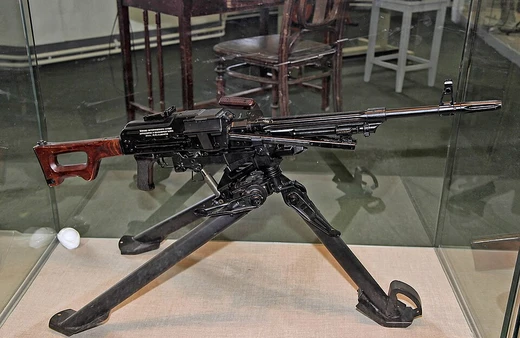
Schwarzlose machine gun
A simple, robust delayed-blowback machine gun of World War I.

Thomas Quine · CC BY 2.0
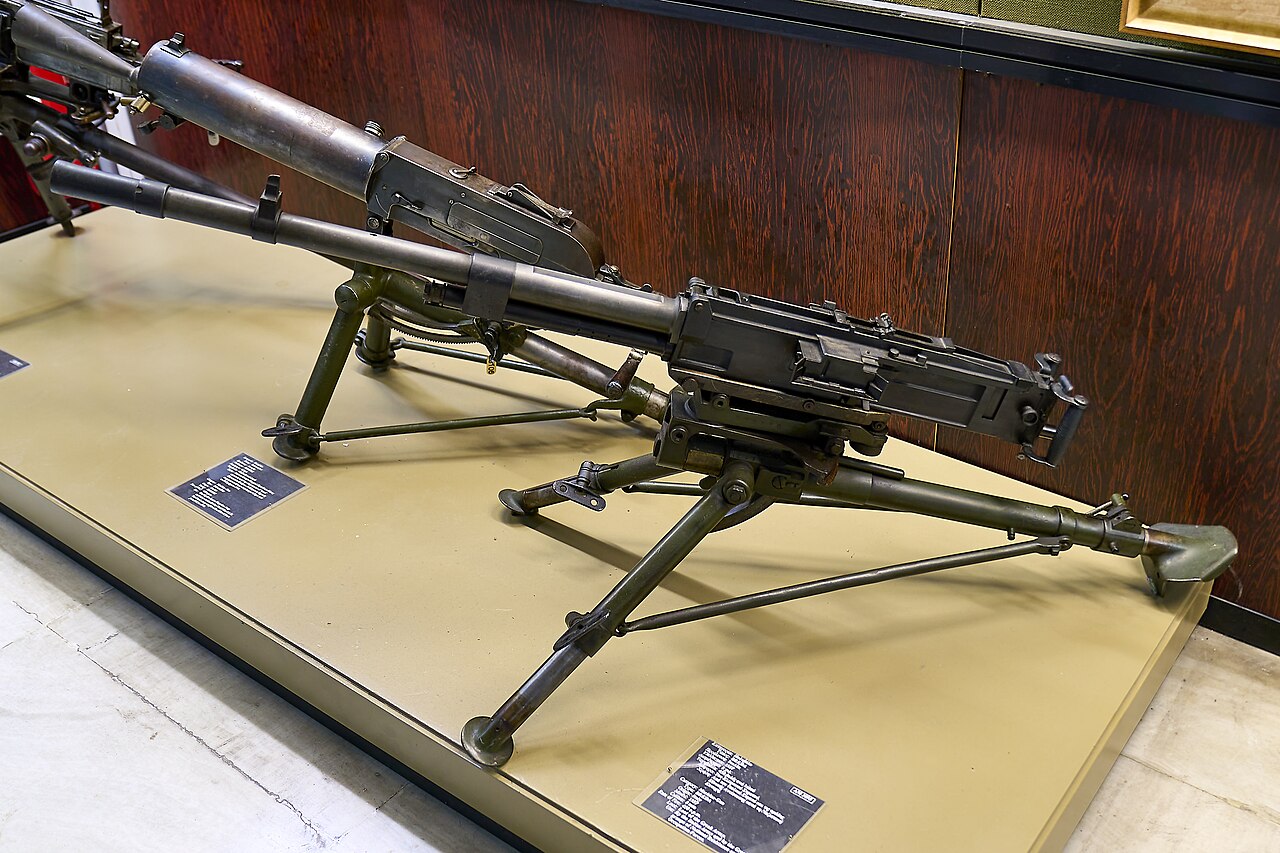
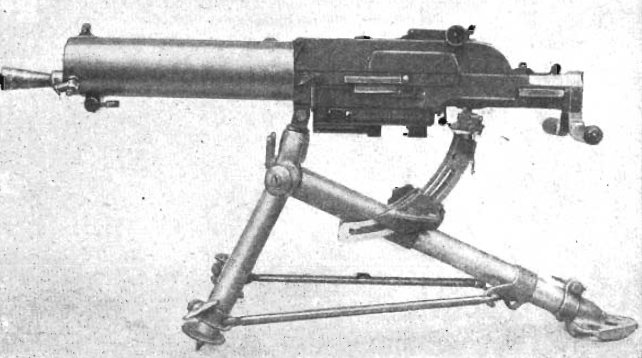
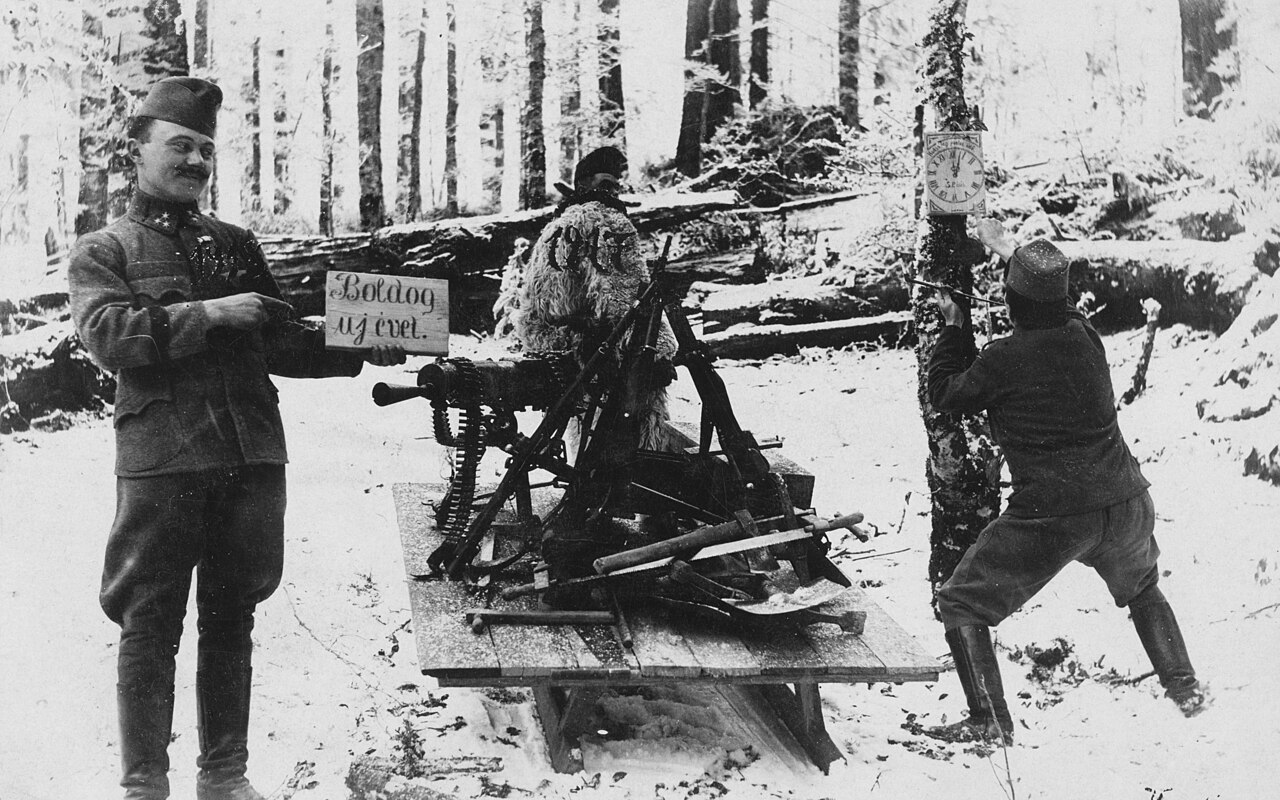
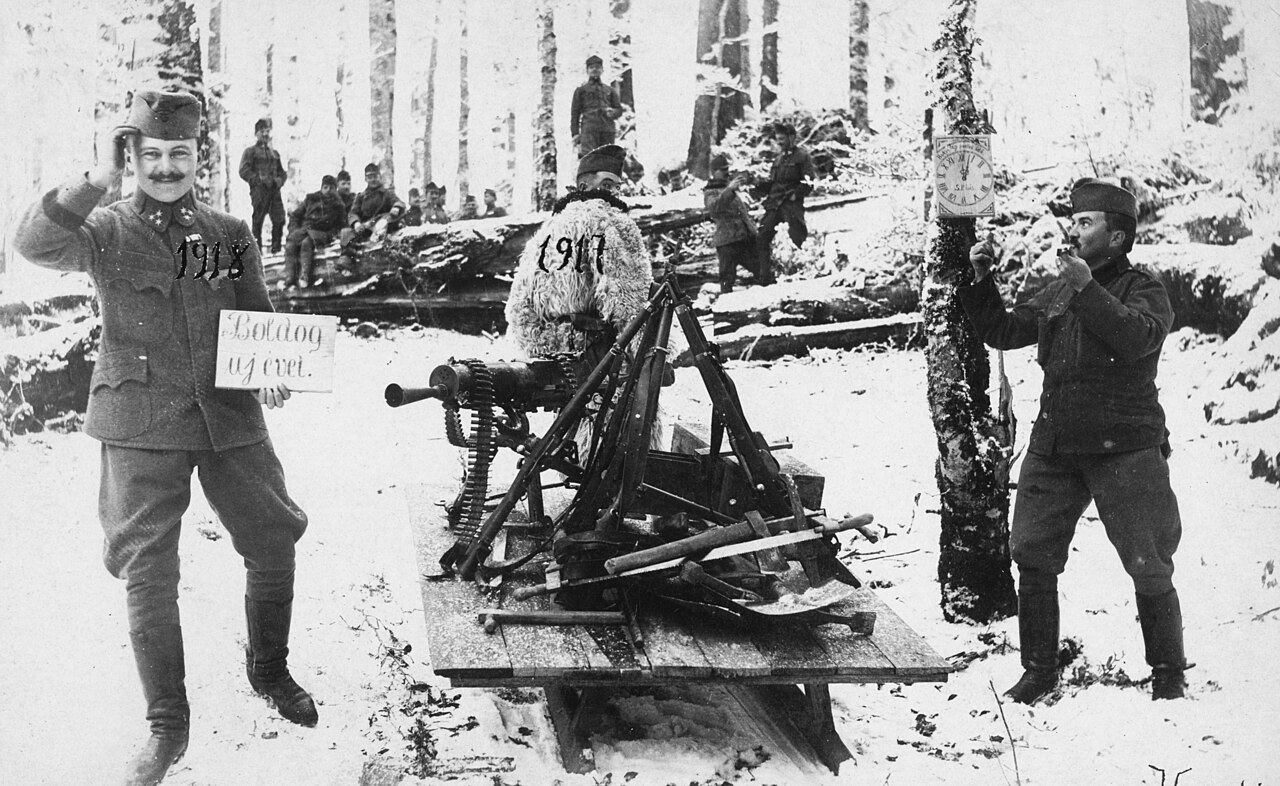
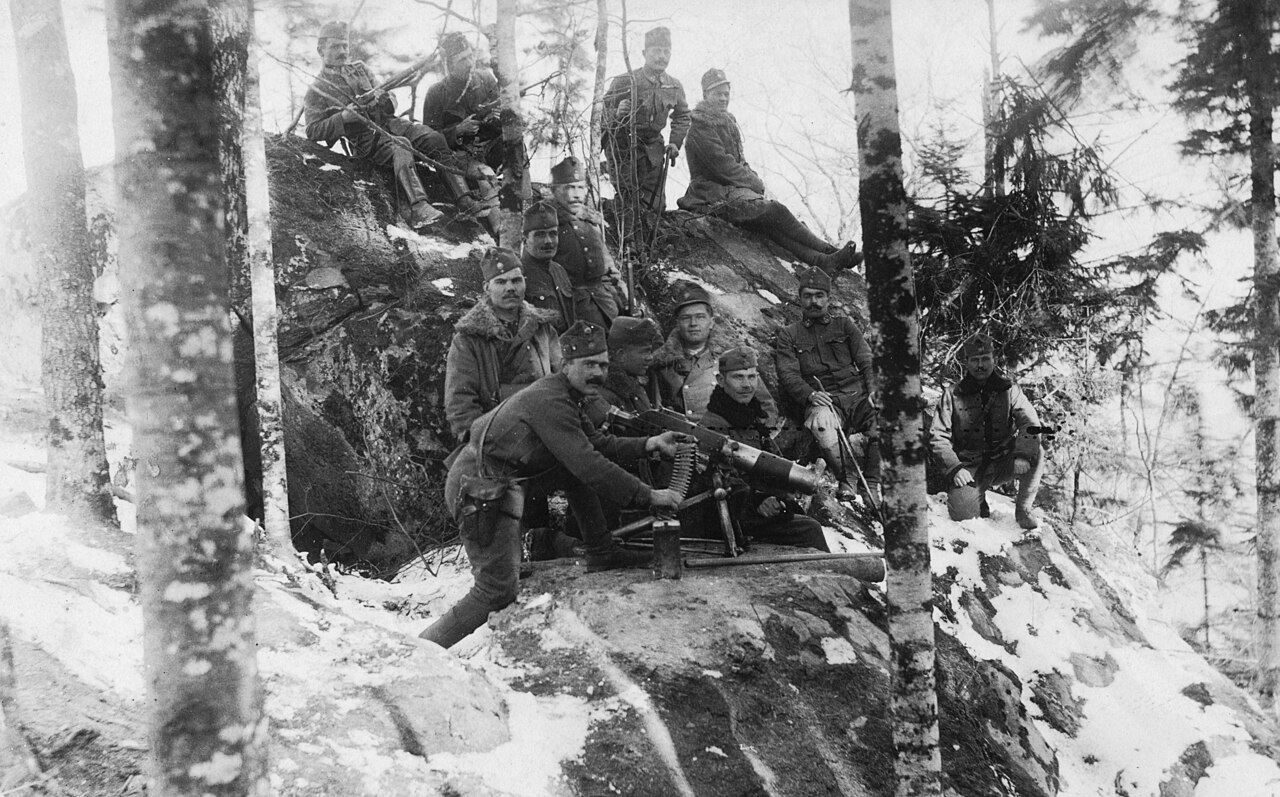
The Schwarzlose M.7, a heavy machine gun, was the standard firearm for Austro-Hungarian forces during World War I. Its toggle-delayed blowback system was chosen for simpler manufacturing than the Maxim and to avoid the gas operation of the Hotchkiss, according to firearms author George M. Chinn. This design, robust and straightforward, kept it in service with Italy and Hungary through World War II.
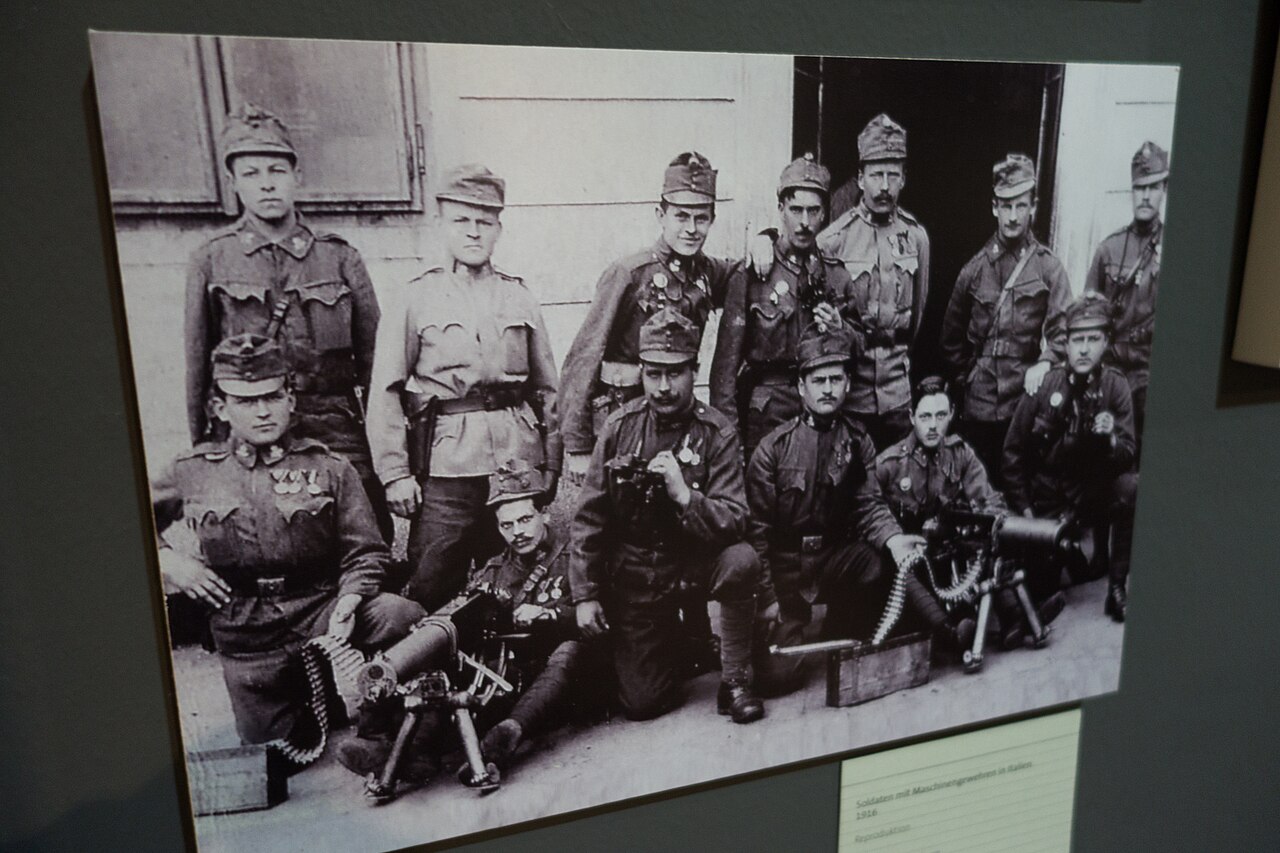
Andreas Wilhelm Schwarzlose began working on his own delayed blowback design in the early 1900s, filing patents by 1900. In 1907, the Austro-Hungarian Army selected it to replace the earlier Škoda machine gun, which had originated from an 1888 patent by Archduke Karl Salvator. Steyr produced the first Schwarzlose guns in 1905. By 1914, the army had 2,761 machine guns in service, with each infantry regiment theoretically having four sections of two guns each—one per battalion. Infantry units used tripod-mounted M 07s, transported by pack horses at the regimental level. Cavalry teams used three horses: one carrying the gun and 500 rounds, the others 1,500 rounds; during mobilization, two more ammunition horses were added per gun. Mountain batteries organized similarly, with one horse carrying the gun and 11,000 rounds, while ammunition horses each carried 2,000 rounds. Each gun had a crew of three or four soldiers, plus extra troops for ammunition, typically led by a non-commissioned officer.
The Austro-Hungarian Navy mounted Schwarzloses on surface ships like the Erzherzog Karl and Tegetthoff-class battleships for anti-aircraft use. The M 07/12 variant, introduced in 1912 with a higher rate of fire, was also used by the Austro-Hungarian Aviation Troops. Synchronizing it with aircraft engines proved difficult, and due to shortages of precision tools for synchronization gears, field units often improvised mountings. The gun was simple to operate, reliable, and fired 400 rounds per minute—superior to the Škoda—while costing about half as much as a Maxim.
Before 1912, the Schwarzlose was adopted by the Netherlands (1908), Greece, Serbia, Romania, Bulgaria, Sweden, and the Ottoman Empire. Steyr was the sole manufacturer until 1917, when the Dutch set up their own line at Hembrug, producing guns until 1940. Sweden also produced copies at Carl Gustafs Stads Gevärsfaktori from 1917 to 1939.
Quick Facts
- Origin
- Austria-Hungary
- Is Ranged
- yes
- Service
- 1907–1948
- Designer
- Andreas Wilhelm Schwarzlose
- Design Date
- 1904
- Manufacturer
- Steyr / Hembrug Arsenal / Carl Gustafs stads gevärsfaktori
- Production Date
- 1905–1940
- Mass
- Gun & tripod: / 41.4 kg
- Length
- 945 mm
- Part Length
- 530 mm
- Action
- Toggle-delayed blowback
Facts from the source article.
Lore & Background
Andreas Wilhelm Schwarzlose began developing his delayed blowback machine gun design in the early 1900s, filing patents as early as 1900. In 1907, the Austro-Hungarian Army selected his design to replace the Škoda M1893, deliberately choosing a blowback system for ease of manufacture compared to the Maxim and to avoid the gas operation of the Hotchkiss. First produced by Steyr in 1905, the Schwarzlose was issued to infantry, cavalry, and mountain units in batteries of four guns each. By 1914, the Austro-Hungarian Army had 2,761 machine guns in service, with each infantry regiment equipped with four machine gun sections of two Schwarzloses each.
The Schwarzlose was also used by the Austro-Hungarian Navy as an anti-aircraft gun on surface ships, including the Erzherzog Karl and Tegetthoff-class battleships. The M 07/12 variant was employed by the Austro-Hungarian Aviation Troops, though it proved difficult to synchronize with aircraft engines, leading to improvised field mountings. The design was simple to operate and reliable, with a rate of fire superior to the Škoda and costing about half the price of a Maxim gun. Prior to 1912, it was adopted by the Netherlands, Greece, Serbia, Romania, Bulgaria, Sweden, and the Ottoman Empire. The improved M 07/12 with an increased rate of fire entered service in 1912.
Reader's Guide
The Schwarzlose machine gun's significance lies in its role as the standard Austro-Hungarian heavy machine gun of World War I, where it proved effective on the Italian Front, inflicting heavy casualties on Italian forces during the Battles of the Isonzo. Its simple toggle-delayed blowback mechanism made it cheaper and lighter than the Maxim, contributing to its adoption by numerous countries before 1912. During the interwar period, the M 07/12 was used by successor states of Austria-Hungary and saw action in conflicts such as the Russian Civil War, Polish–Soviet War, Greco–Turkish War, Colombia–Peru War, and Spanish Civil War. Italy received about 900 M 07/12s as war reparations and issued them to colonial troops in Africa, often in the anti-aircraft role, keeping them in service until the end of World War II. The Wehrmacht pressed captured Austrian, Dutch, Greek, Italian, and Yugoslav guns into service for second-line troops and anti-partisan operations, and the Schwarzlose was used by the Volkssturm militia in the final months of the war. Its legacy is that of a robust, reliable infantry weapon that, while less adaptable than Maxim-derived guns, served across multiple continents for over three decades.
Did You Know?
- The Schwarzlose used a single spring compared to the Maxim's 14, and had only 11 breech components plus 13 screws and pins versus the Maxim's 35 and 52.
- The M 07/12's rate of fire was increased to 580 rounds per minute by using a stronger mainspring.
- Unlicensed copies of the Schwarzlose were produced by Chinese arsenals, including the Sichuan Arsenal starting in 1918.
- The Schwarzlose was adapted by Czechoslovakia as the těžký kulomet vz. 7/24 and used in light fortifications built against Nazi Germany.
Design Philosophy & Evolution
John Moses Browning first filed a patent for a recoil-powered automatic gun in 1900, but he did not return to the project until 1910, when he constructed a water-cooled prototype based on that original design. The gun performed well, yet Browning refined it further: he swapped side ejection for bottom ejection, introduced a buffer to smooth the cycling action, replaced the hammer with a two-piece firing pin, and made additional minor adjustments. Despite these changes, the fundamental architecture remained the 1900 design. The resulting weapon was a water-cooled heavy machine gun weighing 47 pounds, substantially lighter than the 137-pound German Maschinengewehr 08 while remaining comparable to the British Vickers. Crucially, Browning's sliding-block locking mechanism eliminated the need for Maxim's toggle-lock system, saving both weight and mechanical complexity. The belt fed left-to-right with cartridges stacked more tightly than in Maxim or Vickers designs, and the gun shared with those systems the principles of recoil operation, a T-slot breechblock, and forward ejection, yet its internal locking philosophy was distinctly Browning's own.
The Springfield Trials & Production Race
The U.S. Army Ordnance Department showed almost no interest in modernizing its machine gun inventory until war was declared in April 1917, at which point the arsenal held only 1,100 guns, most of them obsolete. Browning arranged a demonstration at Springfield Armory in May 1917. In the initial trial, the weapon cycled 20,000 rounds with only a handful of malfunctions, most traced to poorly loaded cloth belts. Impressed, Browning pushed further, firing another 20,000 rounds and suffering just one broken component: a sear that failed near the 39,500-round mark. The Ordnance Board remained skeptical that production models would match that reliability, so Browning brought a second gun that not only replicated the original trial but also fired continuously for 48 minutes and 12 seconds, exceeding 21,000 rounds in a single run. The Army adopted the weapon as its principal heavy machine gun, chambered for the M1906 .30-06 cartridge with a 150-grain flat-base bullet. Production, however, proved arduous. By 30 June 1918, Westinghouse had delivered only 2,500 guns and Remington just 1,600. By the Armistice, those figures had grown to 30,150 and 12,000 respectively, with Colt contributing 600.
A Weapon That Arrived Too Late
Because of the production delays, only about 1,200 Model 1917s actually reached the front during World War I, and they arrived in the conflict's final two and a half months. Some units never saw them in combat at all: the 6th Machine Gun Battalion, attached to the Second Division, did not swap its Hotchkiss M1914s for Brownings until 14 November, three days after the armistice. The U.S. equipped roughly one-third of the divisions sent to France with the M1917; the rest received French Hotchkiss 8 mm guns or British Vickers built by Colt domestically. In fact, the Hotchkiss was the most common heavy machine gun in the American Expeditionary Force. Where the Browning did fight, its rate of fire and reliability proved highly effective. Yet it was outclassed in indirect-fire roles because the British and French cartridges offered roughly 50 percent greater range than the .30-06, a deficiency rooted in the poor aerodynamics of the M1906's flat-base bullet. The M1917A1 variant later saw service in World War II, the Korean War, and Vietnam, and was even supplied to the British Home Guard when all .303 Vickers production was needed to replace equipment abandoned during the Fall of France.
Technical Distinctions & Long Service
The M1917 occupied a unique niche in the American arsenal. As a crew-served, belt-fed, water-cooled heavy machine gun, it served at the battalion level and was frequently mounted on vehicles such as jeeps, operating alongside the much lighter air-cooled Browning M1919. Two main iterations existed: the original M1917, which saw service in World War I and could also be fitted to aircraft, with a cyclic rate of 450 rounds per minute, and the M1917A1, used thereafter with a rate of 450 to 600 rounds per minute. In 1926 the rear sight was revised to accommodate both the older M1906 flat-base ammunition and the newer M1 Ball 172-grain boat-tail bullet, extending maximum range to approximately 5,500 yards with the M1 Ball and about 3,500 yards with M2 ammunition. The sight included both a battle sight and a raised leaf-type sight for engaging ground or air targets. In World War II, the gun's weight and bulk meant it was typically employed as a fixed defense or battalion and regimental support weapon, with machine gun squads carrying the disassembled weapon on foot and rapidly deploying it to support infantry in offensive operations. At the Battle of Momote Airstrip in the Admiralties, 5th Cavalry machine gunners killed several hundred Japanese in a single night using their M1917s, and one gun was left in position afterward as a memorial.
Gallery
Frequently Asked Questions
What is the Schwarzlose machine gun?
The Schwarzlose M.7 is a heavy, air-cooled machine gun that served as the standard automatic weapon for Austro-Hungarian troops throughout World War I. It was first produced in 1905 and manufactured primarily by Steyr.
How does the Schwarzlose's firing mechanism work?
It uses a toggle-delayed blowback system, which was selected over gas-operated designs like the Hotchkiss because it was simpler to manufacture. This robust, straightforward locking mechanism made the gun reliable in demanding field conditions.
Who invented the Schwarzlose machine gun?
Andreas Wilhelm Schwarzlose developed his delayed-blowback concept in the early 1900s, filing patents by 1900. The Austro-Hungarian Army officially adopted the weapon in 1907 to replace the earlier Škoda machine gun.
Why was the Schwarzlose preferred over the Maxim gun?
The Schwarzlose was roughly 10 kg lighter than a Maxim, and its toggle-lock design was simpler to produce than the Maxim's more complex mechanism. This made it a practical choice for a large army needing to equip many units quickly and cheaply.
How long did the Schwarzlose stay in service?
Despite being a World War I-era design, the gun remained in active use with Italian and Hungarian forces well into World War II. Its durability and ease of maintenance kept it relevant for nearly three decades after its initial adoption.
More in Machine Guns, Part 4 1-24
Spotted an error? Know more?
Reader corrections go straight into our review queue. Suggest an edit · How this site is sourced