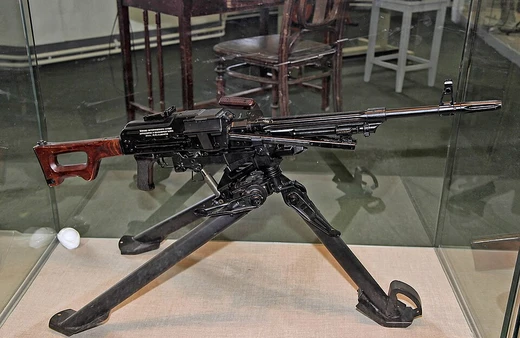
Breda Model 1931 machine gun
Italian license-built heavy machine gun used by navy and army.

User:Bukvoed · CC BY 2.5
The 13.2 mm Breda Model 31 was an Italian heavy machine gun manufactured by Società Italiana Ernesto Breda. It saw service with both the Italian Navy and Army during World War II. At sea, it functioned as a light anti-aircraft weapon; on land, it was fitted to armored command vehicles as a heavy machine gun. After the war, it continued to be used on patrol boats operated by the Guardia di Finanza.
The Model 31 was a licensed copy of the French Hotchkiss M1929 machine gun. Breda obtained the production license in 1929, but production did not start until 1931. It was often mounted in single or twin configurations on surface ships, and on a disappearing twin mount aboard submarines. Intended for close-range air defense, the gun’s light, short-range bullets proved ineffective against low-level torpedo-bombers or high-altitude level bombers, a shortcoming shared with similar small-caliber weapons of other nations. Though reliable and well-performing, it was eventually replaced by the Breda 20/65 Mod. 1935.
The Model 31 was gas-operated, air-cooled, and used a tilting bolt action. It fed from a top-mounted, semi-circular, thirty-round magazine, with cooling air drawn through a sleeve over finned sections of the barrel.
Naval users included numerous Italian ship classes—such as the Adua, Archimede, Argo, Balilla, Brin, Cagni, Calvi, Ciclone, Conte di Cavour, Curtatone, Flutto, Foca, Folgore, Freccia, Giussano, Glauco, Liuzzi, Maestrale, Marcello, Marconi, Navigatori, Oriani, Orsa, Perla, Sauro, Sella, Soldati, Spica, Squalo, Trento, Turbine, and Zara classes—as well as the Swedish T11 and T14 torpedo boats. The Italian Navy was the primary user, while the Swedish Navy designated it the 13,2 mm kulspruta M/It (13,2 mm ksp M/It).
Quick Facts
- Origin
- France
- Is Ranged
- yes
- Service
- 1931−1950
- Used By
- Italy / Swedish navy
- Wars
- World War II
- Designer
- Hotchkiss
- Design Date
- 1929
- Manufacturer
- Breda
- Production Date
- 1931
- Weight
- 47.5 kg
- Length
- 1.65 m
- Part Length
- 1 m L/76
Facts from the source article.
Lore & Background
The Breda Model 31 was a license-built copy of the French Hotchkiss M1929 machine gun. Breda acquired a production license in 1929, but it did not enter production until 1931. The Model 31 was often mounted on single and twin mounts aboard surface ships and on a disappearing twin mount aboard submarines. It was intended to provide close-range air defense, but like its counterparts in other nations, these small-caliber guns were found incapable of defending against low-level torpedo-bombers or high altitude level-bomber attacks because their bullets were too light and short ranged. Although a reliable gun with good performance, it was later replaced by the Breda 20/65 Mod. 1935.
The Model 31 was a gas-operated, air-cooled machine gun with a tilting bolt action. It was fed by top mounted, semi-circular, thirty round magazines, with cooling air drawn through the sleeve to fins along the barrel. After World War II it remained in use aboard the patrol boats of the Guardia di Finanza.
Reader's Guide
The Breda Model 1931 was a widely used Italian heavy machine gun that saw extensive service with the Italian Navy and Italian Army during World War II. Its significance lies in its role as the standard close-range anti-aircraft weapon for Italian warships, mounted on numerous ship classes including the Conte di Cavour-class, Zara-class, and many submarine and destroyer classes. The gun was also adopted by the Swedish Navy, where it was designated the 13,2 mm kulspruta M/It. Despite being a reliable gun with good performance, its limitations became apparent during the war: its 13.2 mm bullets were too light and short-ranged to effectively defend against low-level torpedo-bombers or high-altitude level-bomber attacks. This led to its replacement by the Breda 20/65 Mod. 1935. After World War II, the Model 31 continued in service with the Guardia di Finanza aboard patrol boats, demonstrating its longevity. The gun's design, based on the French Hotchkiss M1929, featured a gas-operated tilting bolt action and top-mounted semi-circular 30-round magazines, with cooling air drawn through a sleeve to fins along the barrel.
Origins and Design Heritage
The 13.2 mm Hotchkiss project traces back to 1922, when it was initially conceived as an aircraft machine gun. However, the French government classified the belt-fed variant and declined to fund its further development, leaving only the magazine-fed version available for export beginning around 1927. This restriction shaped the weapon's entire identity, steering it toward ground and naval roles rather than its original airborne purpose. The mechanical heart of the design drew directly from the 8 mm Hotchkiss Mle 1914, whose gas-operated action had earned a reputation for exceptional reliability during the First World War and remained in service well into the interwar period. Hotchkiss et Cie applied this proven architecture across a family of anti-aircraft automatic weapons spanning 13.2, 25, and 37 mm calibers, all sharing the same fundamental gas-operated mechanism. The 13.2 mm variant thus benefited from nearly two decades of field-tested engineering before entering production in the late 1920s, and it would see service with multiple nations, including Italy and Japan, where it was manufactured under license.
Firepower and the Cartridge Problem
On paper, the M1929 delivered a cyclic rate of 450 rounds per minute, a respectable figure for a heavy machine gun of its era. In practice, sustained fire was constrained to roughly 200 to 250 rounds per minute because the standard overhead 30-round curved box magazine would be exhausted in approximately four seconds, forcing the gunner into frequent reloads. This magazine capacity limitation was the single biggest factor capping the weapon's effective output. The ammunition story added another layer of complexity. The gun was originally chambered for the 13.2 × 99 mm Hotchkiss Long cartridge, essentially a necked-up version of the 12.7 × 99 mm Browning .50 BMG round. In service, this cartridge proved excessively hard on barrels, accelerating wear to an unacceptable degree. Hotchkiss responded in 1935 with the 13.2 × 96 mm Short cartridge, which shortened the case neck just enough to reduce barrel erosion while keeping the overall design so close to the original that existing weapons and production lines required no modification whatsoever to fire the new round.
Naval Service and the Breda License
The 13.2 mm Hotchkiss found its most extensive operational role aboard warships. Early in the Second World War, the French, Italian, and Japanese navies all fielded twin (designated CAD Mle 1929) and quadruple (CAQ Mle 1929) anti-aircraft mountings across their fleets. In Italy, the Società Italiana Ernesto Breda took over license production from 1931 onward, designating the weapon the Breda Mod.31. Italian naval forces employed it on surface ships, submarines, and armored trains, and after the war the Guardia di Finanza continued to operate it on patrol craft. The Spanish Navy acquired the system in December 1935 and mounted it on Republican destroyers and cruisers during the Civil War, with domestic cartridge production at the Pirotecnia Militar plant in Sevilla beginning after 1939. By 1943, French warships refitted in the United States, including the battleship Richelieu and the destroyer Le Terrible, had their 13.2 mm guns swapped out for the more powerful Oerlikon 20 mm cannon, marking the end of the weapon's frontline naval career in French service.
Ground Roles, Armored Vehicles, and the Greek Variant
Beyond the ship's deck, the 13.2 mm Hotchkiss served in a variety of ground configurations. It appeared in single, double, and quadruple-barreled anti-aircraft arrangements on high-angle pedestal and tripod mounts, as well as in low-angle bipod setups intended for anti-tank and heavy machine gun duties. French infantry commanders, however, balked at adopting it for light anti-aircraft work, arguing that spent 13.2 mm rounds falling from altitude posed a lethal hazard to friendly troops and preferring larger calibers with self-destructing shells. The weapon nonetheless saw extensive use on armored vehicles: the Belgian T15 and French AMR 35 light tanks, the White-Laffly AMD 80 armoured car, and various fortifications all carried the gun. The Breda Mod.31 armed command tanks of the Royal Italian Army and the L3/33 light tanks exported to Brazil, while Japan fitted its license-produced version to Type 92 heavy armored cars. A distinctive Greek variant employed a rigid metal feed strip rather than a box magazine and was mounted on an articulated tripod for dual anti-aircraft and anti-tank use during the Second World War.
Gallery
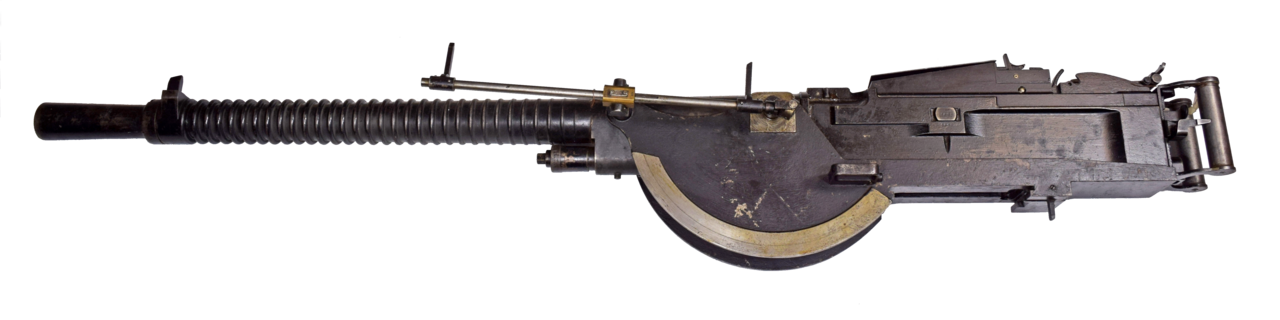
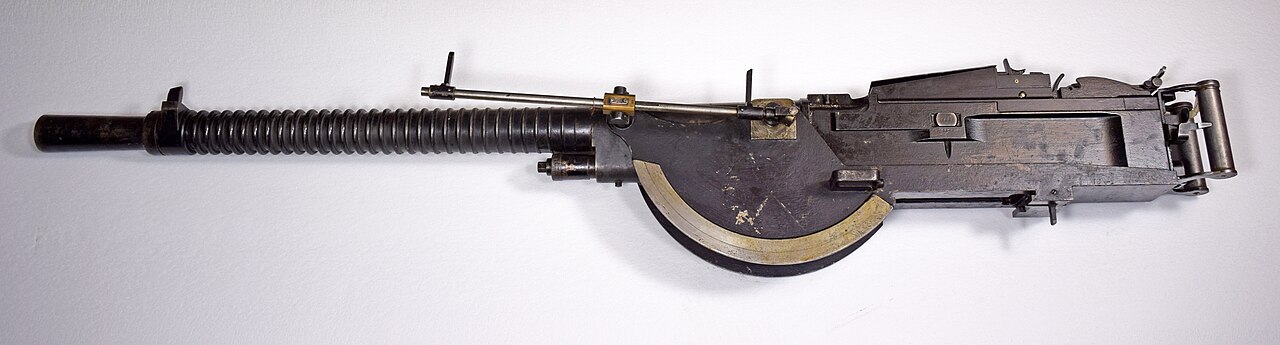
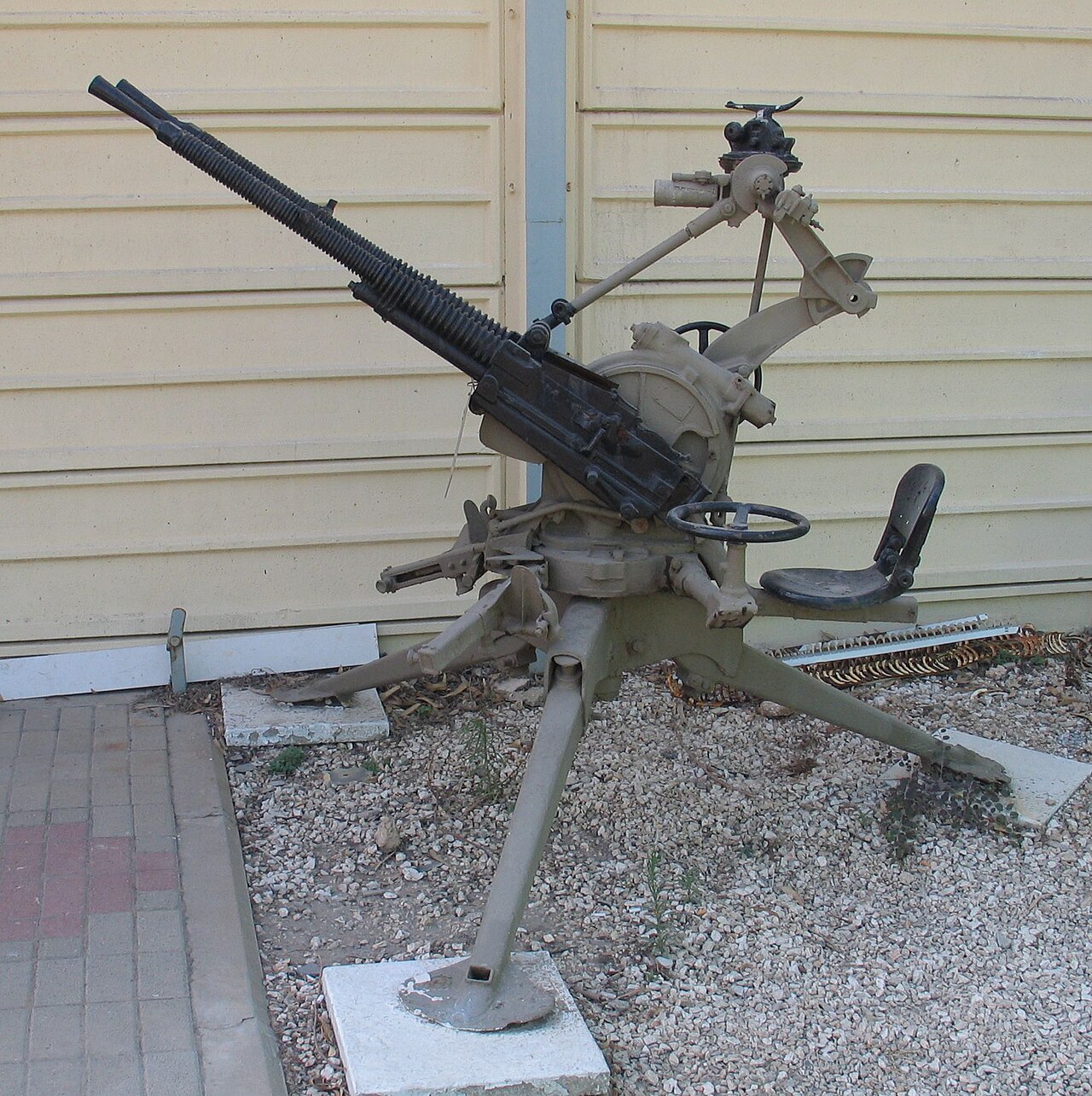
Frequently Asked Questions
What is the Breda Model 1931 machine gun?
It is a 13.2 mm heavy machine gun built by Società Italiana Ernesto Breda for Italian military forces during the 1930s and 1940s. It served as a light anti-aircraft weapon on naval vessels and as a heavy gun on armored command vehicles.
Where does the Breda Model 31 design come from?
Breda produced it under a manufacturing license for the French Hotchkiss M1929, securing the rights in 1929 and starting actual output in 1931. The gas-operated, air-cooled tilting bolt mechanism and top-fed 30-round semi-circular magazines are carried over directly from that French original.
How was the Breda Model 31 employed in World War II?
The Italian Navy mounted it as a light anti-aircraft gun on ships, while the Army fitted it to armored command vehicles as a heavy machine gun. It was typically installed in single or paired configurations depending on the platform.
What are the key technical specs of the Breda Model 31?
It fires 13.2 mm ammunition through a gas-operated, air-cooled tilting bolt action and is fed from top-mounted semi-circular 30-round magazines. The layout was designed for straightforward maintenance by both naval and armored-vehicle crews.
Did the Breda Model 31 see service after World War II?
Yes, it remained on patrol boats operated by the Guardia di Finanza, Italy's financial police force. The weapon also found a foreign buyer, entering service with the Swedish Navy.
More in Machine Guns, Part 4 1-24
Spotted an error? Know more?
Reader corrections go straight into our review queue. Suggest an edit · How this site is sourced