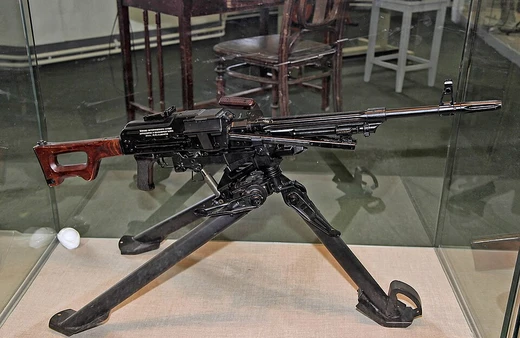
Breda-SAFAT machine gun
Italian aircraft machine gun, widely used but outclassed by 1940.

Unknown author · Public domain
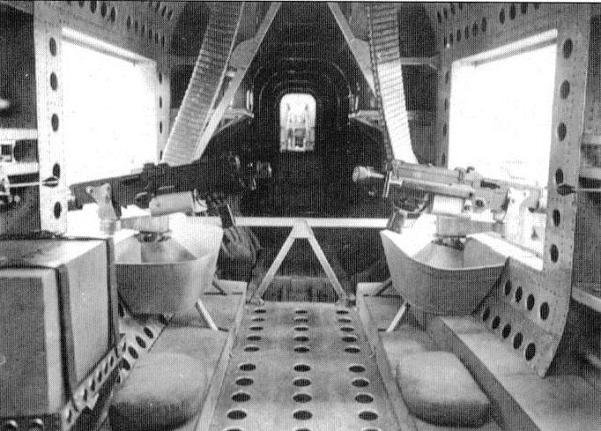
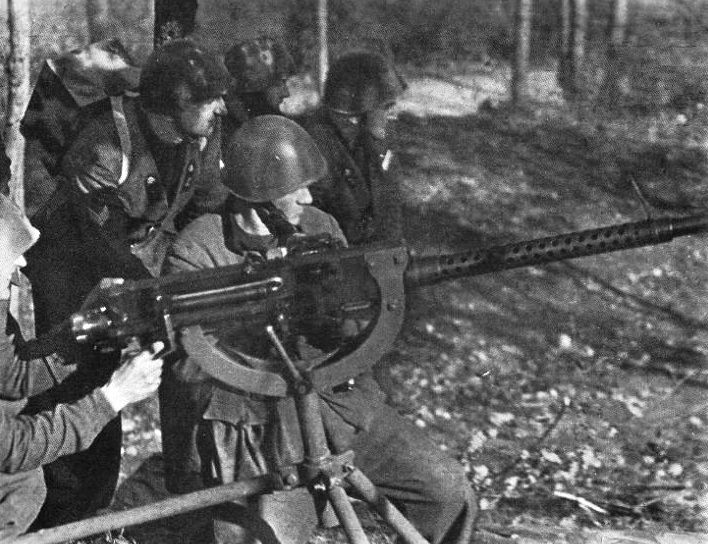
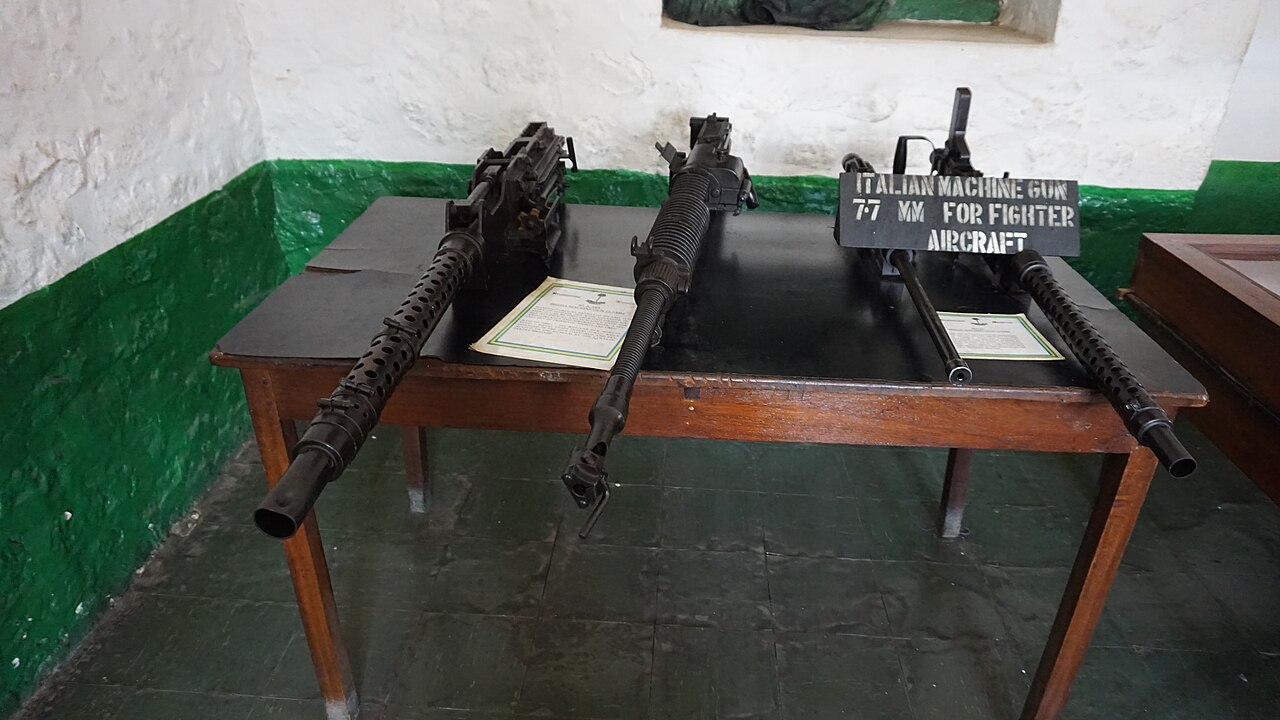
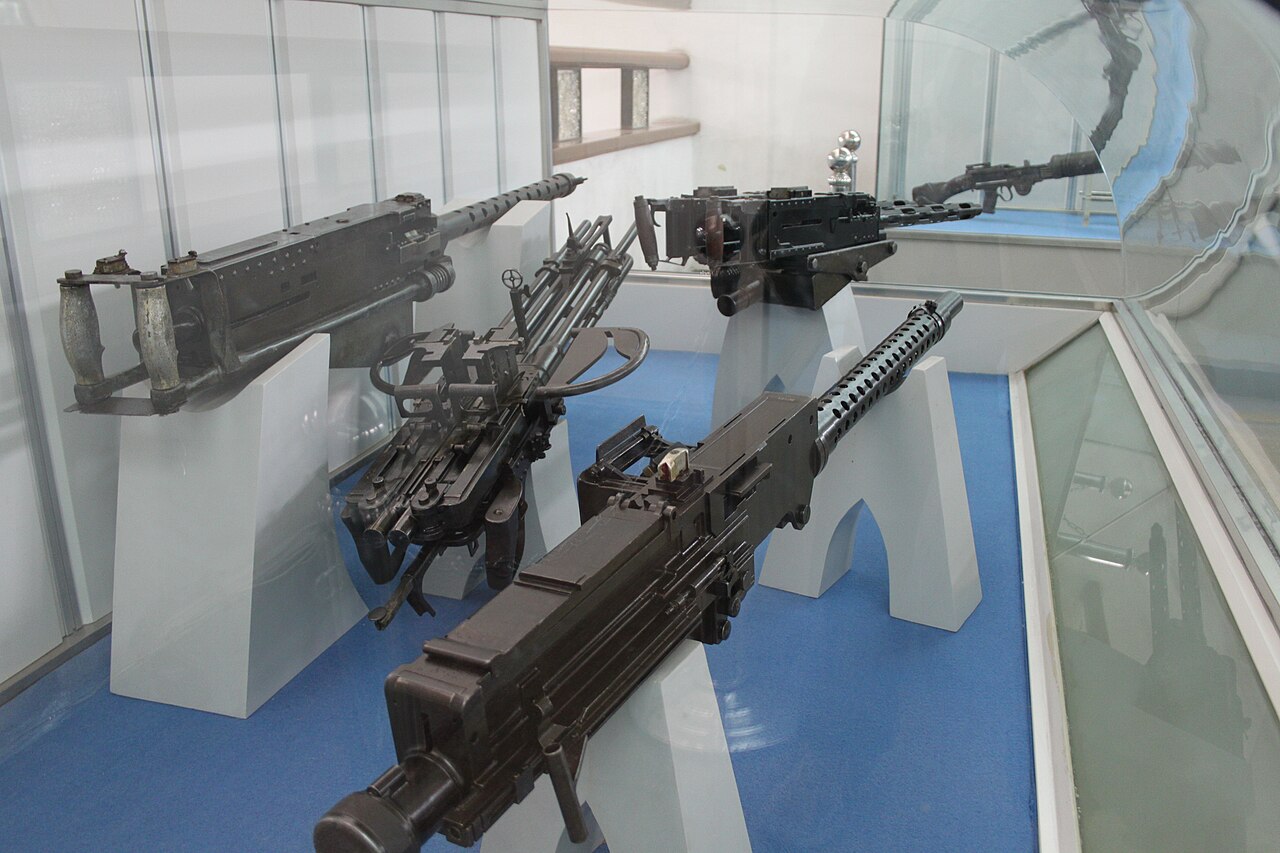
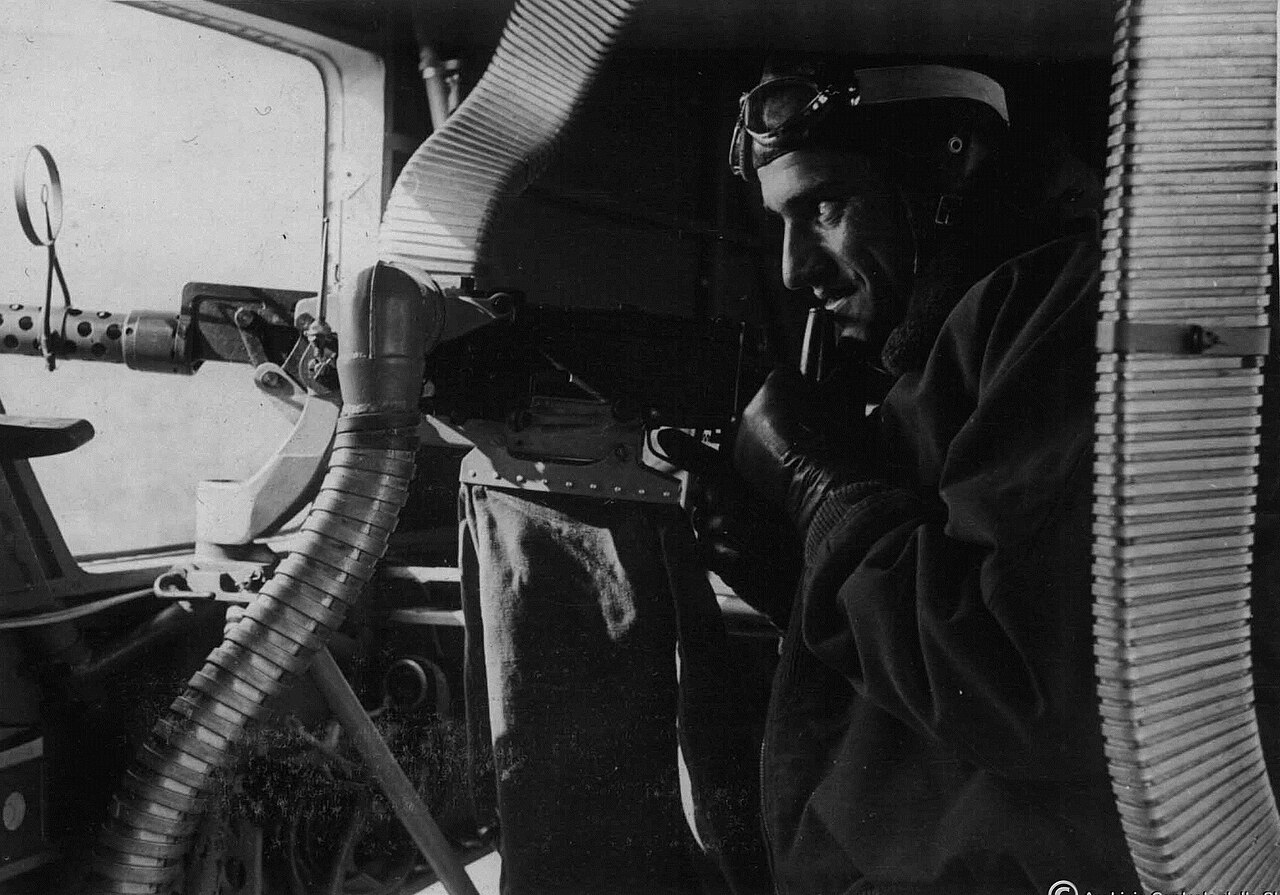
The Breda-SAFAT machine gun is an Italian aircraft machine gun designed by Giuseppe Mascarucci, produced in 7.7 mm and 12.7 mm calibers. It armed nearly every Italian fighter and bomber of the 1930s and 1940s, and was also adapted for anti-aircraft use.
Quick Facts
- Origin
- Italy
- Is Ranged
- y
- Service
- Since 1928 to 1970s
- Wars
- Spanish Civil War / Second Sino-Japanese War / World War II / Six Day War
- Design Date
- 1927
- Designer
- Giuseppe MascarucciMascarucci · 1929 · Mascarucci · 1930
- Manufacturer
- SAFAT from 1928 to 1930 / Breda since 1930
- Weight
- 12 kg (7.7 mm) / 28.9 kg (12.7 mm)Ministero dell'Aeronautica · 1940
- Length
- 108.5 cm (7.7 mm) / 138.5 cm (12.7 mm)Ministero dell'Aeronautica · 1940
- Part Length
- 66 cm (7.7 mm) / 80 cm (12.7 mm)Ministero dell'Aeronautica · 1940
- Cartridge
- 7.7x56mmR light, 12.7x81mmSR heavy
- Caliber
- 7.7 mm / 12.7 mmMinistero dell'Aeronautica · 1940
Facts from the source article.
Lore & Background
During the late 1920s, both Breda and SAFAT (a division of FIAT) were tasked with designing a new light machine gun for the Regia Aeronautica. SAFAT's design, the FIAT mod.1928 Avio cal. 7.7, was preferred, but FIAT lost a separate army competition, leading to the closure of SAFAT and the sale of its patents to Breda. Breda, despite losing the aeronautical competition, thus became the manufacturer of the former competitor's weapon, renaming it the Mitragliatrice Breda - Mod. SAFAT cal. 7.7. During production, four sub-variants of the 7.7 mm gun were created.
From 1931–1932, the Regia Aeronautica requested a heavy machine gun, and Breda responded by enlarging the 7.7 mm design to chamber the 12.7x81mmSR cartridge. The resulting weapon suffered from low muzzle velocities due to low propellant capacity rounds, high weight, modest rates of fire, and an ineffective high explosive incendiary tracer round. Despite these shortcomings, Italian pilots praised its long range and apparent hitting power, while armourers valued its reliability.
Italian fighters of the early 1940s—such as the Fiat CR.42, Fiat G.50, Macchi MC.200, Macchi MC.202, and Reggiane Re.2000—typically carried only two 12.7 mm Breda-SAFATs, sometimes supplemented by two 7.7 mm guns. Late-war aircraft like the Macchi MC.205, Fiat G.55, and Reggiane Re.2005 adopted German 20 mm MG 151 cannons to improve firepower, while retaining synchronized cowl-mounted 12.7 mm Breda-SAFATs.
Reader's Guide
The Breda-SAFAT machine gun was the standard aerial armament of the Regia Aeronautica throughout the 1930s and into World War II, equipping nearly every Italian fighter and bomber of the period. Thousands were built, and the weapon was also adapted for ground anti-aircraft roles, remaining in reserve service into the 1970s even after all aircraft it equipped had been phased out. However, by 1940 the design was outclassed. Compared to contemporary 12.7 mm weapons from other nations—such as the Soviet Berezin UB, German MG 131, American Browning M2, and Japanese Ho-103—the Breda-SAFAT lacked light weight, high rate of fire, good muzzle velocity, and projectile weight. Its use of low-propellant rounds resulted in significantly lower muzzle velocities than similar-caliber weapons. The high explosive incendiary tracer round was also ineffective. Despite these deficiencies, the gun was generally praised by Italian pilots for its long range and apparent hitting power, and by armourers for its reliability. Late-war Italian fighters attempted to compensate by adding German 20 mm MG 151 cannons, but the Breda-SAFAT remained a fixture on Italian aircraft throughout the conflict.
Did You Know?
- The Breda-SAFAT was originally designed by SAFAT (a FIAT division) as the FIAT mod.1928 Avio, but was manufactured by Breda after SAFAT closed and sold its patents.
- The 12.7 mm version was simply an enlargement of the 7.7 mm design, chambered in 12.7x81mmSR.
- The 7.7 mm HEI-T round contained 0.8 grams of PETN.
- Breda-SAFAT guns were adapted for anti-aircraft use and remained in reserve service until the 1970s.
Classification and the Machine Gun Identity
The Breda-SAFAT occupies a well-defined niche within the broader family of military kinetic projectile weapons. As a machine gun, it belongs to a class of fully automatic, rifled firearms engineered for sustained direct fire, distinguished from autocannons which begin at 20 millimeters in caliber. What sets this category apart from ordinary infantry arms is a combination of mechanical traits: belt-fed ammunition systems and open-bolt firing cycles are hallmarks that most other small arms simply do not share. Even the lightest dedicated machine guns in this family are noticeably bulkier and heavier than a standard rifle or carbine carried by a single soldier. The taxonomy further subdivides these weapons into light, medium, heavy, and general-purpose tiers, with the heavy designation—originating in the First World War to describe particularly large medium guns—now reserved for automatic weapons firing at least 12.7 millimeter rounds but remaining below the 20-millimeter autocannon threshold. The Breda-SAFAT, as a member of this lineage, inherits all of these structural and operational expectations.
Operational Versatility and Platform Integration
In the hands of a military unit, the Breda-SAFAT functions as a crew-served support weapon whose primary mission is delivering continuous or rapid bursts of automatic fire for as long as ammunition supply allows. Unlike a semi-automatic rifle that demands a fresh trigger pull for every round, this class of weapon keeps cycling the moment the trigger is held rearward, exhausting its belt or magazine before the operator releases pressure. The Breda-SAFAT's targets span a wide spectrum: exposed infantry, low-flying aircraft, small watercraft, and lightly armored ground vehicles all fall within its engagement envelope. Beyond direct kills, it excels at generating suppressive fire and enforcing area denial through grazing fire across a sector. In practice, the gun is stabilized against recoil by mounting it on a bipod, tripod, fixed vehicle mount, or heavy weapons platform. It has seen service on fast attack vehicles for mobile heavy firepower, on armored fighting vehicles to engage targets too small or too fast for a main cannon, and on aircraft for defensive or strafing roles—though on modern fighters, true machine guns have largely yielded to large-caliber rotary cannons.
Ancestral Lineage and the Road to Modern Design
The Breda-SAFAT did not appear in a vacuum; it stands at the far end of a long mechanical lineage stretching back to medieval organ guns and the mechanized engine of war attempted in mid-1570s England, which could discharge 160 to 320 projectiles in a single volley at roughly triple the rate of a typical arquebusier. In East Asia, the Wu-Pei-Chih military manual of the early 1600s documented a hopper-fed repeating cannon that fired its charges sequentially using slow-burning powder, while a commoner named Dai Zi built a similar device in the late 1600s that never reached mass production. The true leap toward the modern machine gun came in 1862 with the Gatling gun, whose mechanical loading and high cyclic rate were adopted by the United States Navy, though it still required hand-cranking. Hiram Maxim then revolutionized the concept by harnessing recoil energy to drive the reloading cycle automatically. Dr. Gatling also explored electric-motor-driven models, a principle that resurfaces in certain modern externally powered weapons. Each of these incremental breakthroughs laid groundwork that the Breda-SAFAT's design ultimately builds upon.
Precision, Range, and the Wider Tactical Impact
One of the most striking capabilities associated with the machine gun class to which the Breda-SAFAT belongs is its potential for long-range accuracy. Heavy machine guns firing 12.7-millimeter or larger rounds have proven precise enough to engage targets at considerable distances, a fact dramatically illustrated during the Vietnam War when Carlos Hathcock recorded a confirmed shot at 7,382 feet (2,250 meters) using a .50 caliber heavy machine gun fitted with a telescopic sight. That single engagement helped catalyze the development of dedicated anti-materiel sniper rifles such as the Barrett M82, blurring the line between heavy machine guns and precision long-range weapons. In broader tactical terms, the sustained automatic fire these guns produce—whether mounted on a vehicle, a tripod, or an aircraft—gives commanders a tool for both direct engagement and indirect suppression. The ability to hold a sector under continuous grazing fire, to deny an area to enemy forces, or to provide overwatch for advancing infantry makes the Breda-SAFAT's class of weapon a cornerstone of combined-arms doctrine rather than merely a high-volume shooter.
Gallery

Frequently Asked Questions
Who is Breda-SAFAT machine gun?
The Breda-SAFAT is an Italian-designed aircraft machine gun created by Giuseppe Mascarucci, built in both 7.7 mm and 12.7 mm calibers. It was manufactured under the Breda and SAFAT brand names and became the standard aerial armament for Regia Aeronautica fighters and bombers.
What are Breda-SAFAT machine gun's powers and role?
In its 7.7 mm form it fired ball, tracer, and high-explosive incendiary tracer (HEI-T) rounds carrying 0.8 g of PETN, while the 12.7 mm variant (12.7x81mmSR) offered ball, tracer, and armour-piercing options. Beyond its primary role in aircraft, the weapon was also adapted for ground-based anti-aircraft use.
Why is Breda-SAFAT machine gun important to the canon?
It armed nearly every Italian fighter and bomber of the 1930s and 1940s, making it the single most widespread aerial weapon in Regia Aeronautica history. Its ubiquity means that virtually every Italian air engagement of the era was fought with Breda-SAFAT on board.
How many sub-variants does the Breda-SAFAT have?
The 7.7 mm model alone was produced in four distinct sub-variants, each with slightly different mounting or feed arrangements. The 12.7 mm version, using the 12.7x81mmSR cartridge, rounded out the family as the heavier companion weapon.
More in Machine Guns, Part 4 1-24
Spotted an error? Know more?
Reader corrections go straight into our review queue. Suggest an edit · How this site is sourced