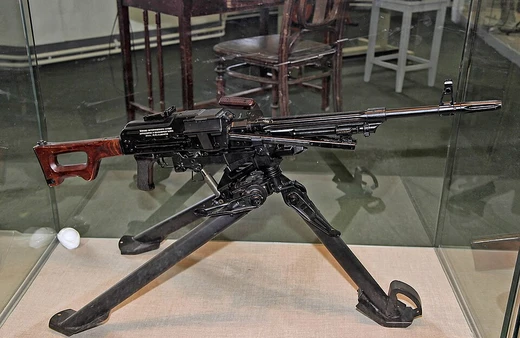
Besa machine gun
British tank machine gun derived from the Czechoslovak ZB-53.

HBTSG · CC0
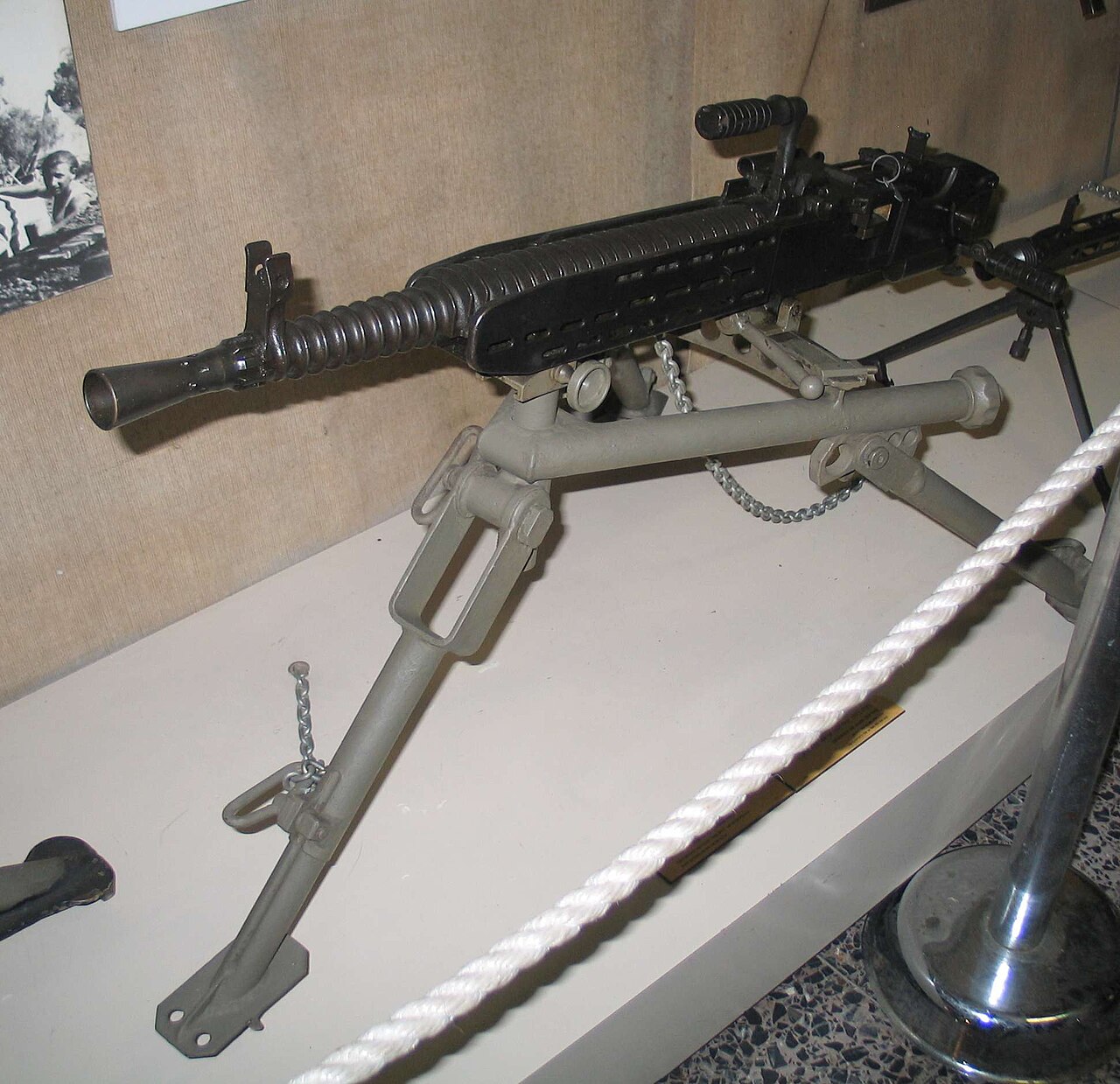
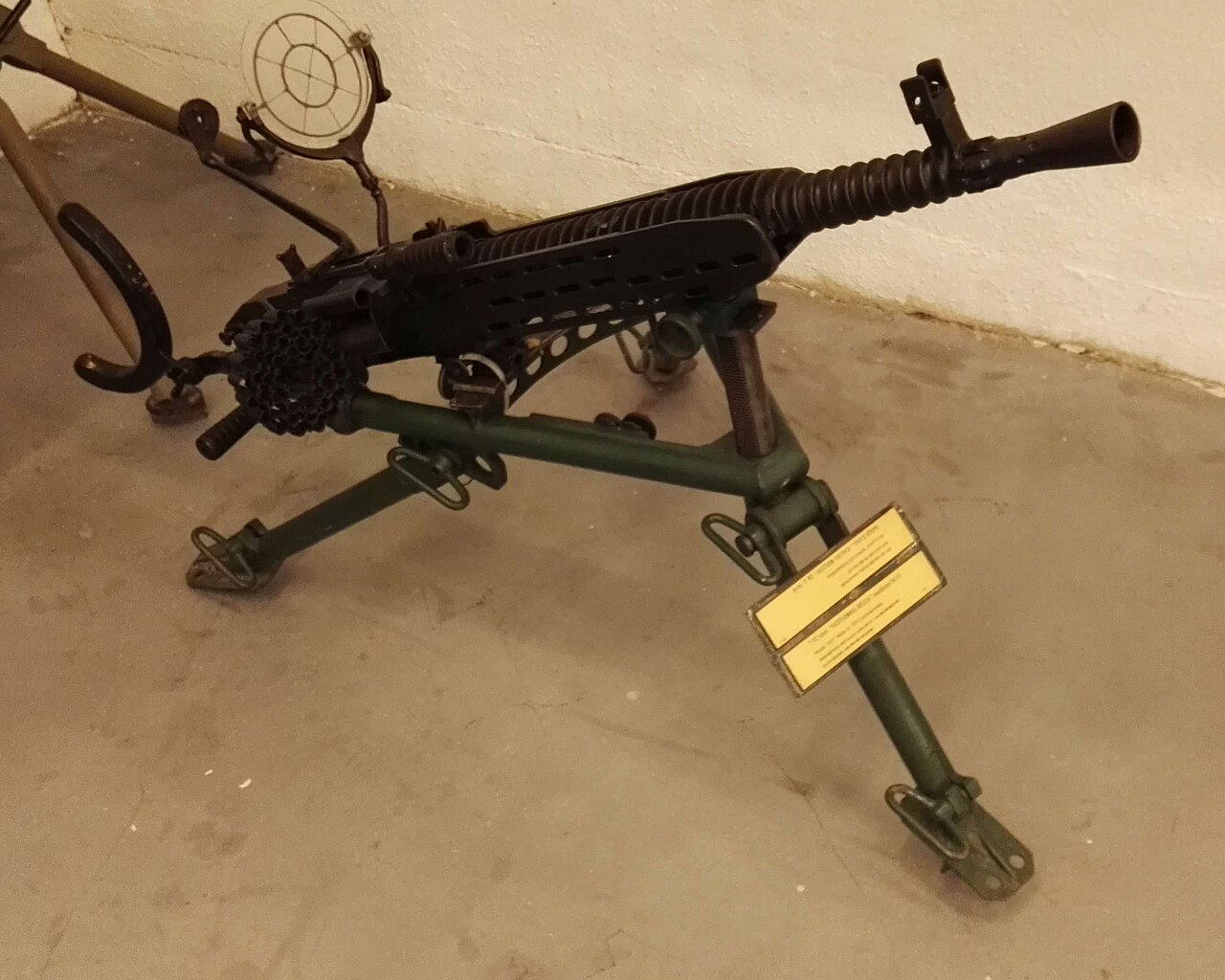
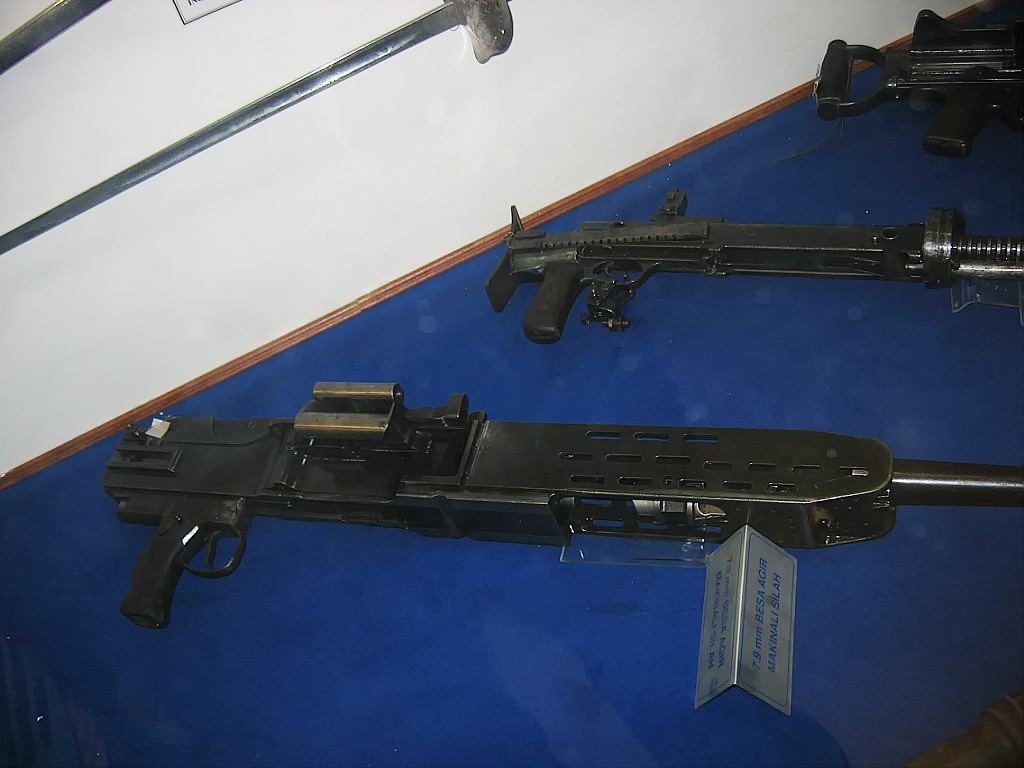
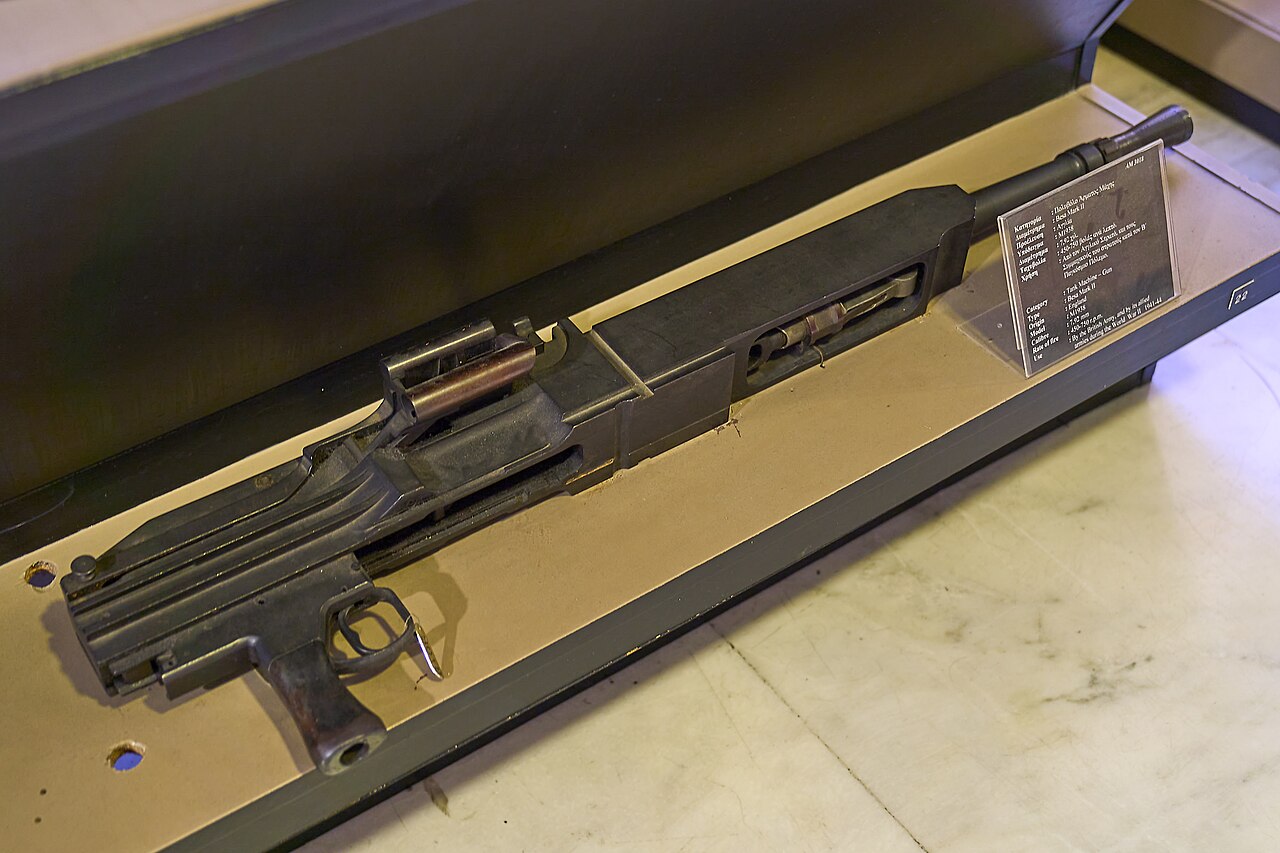
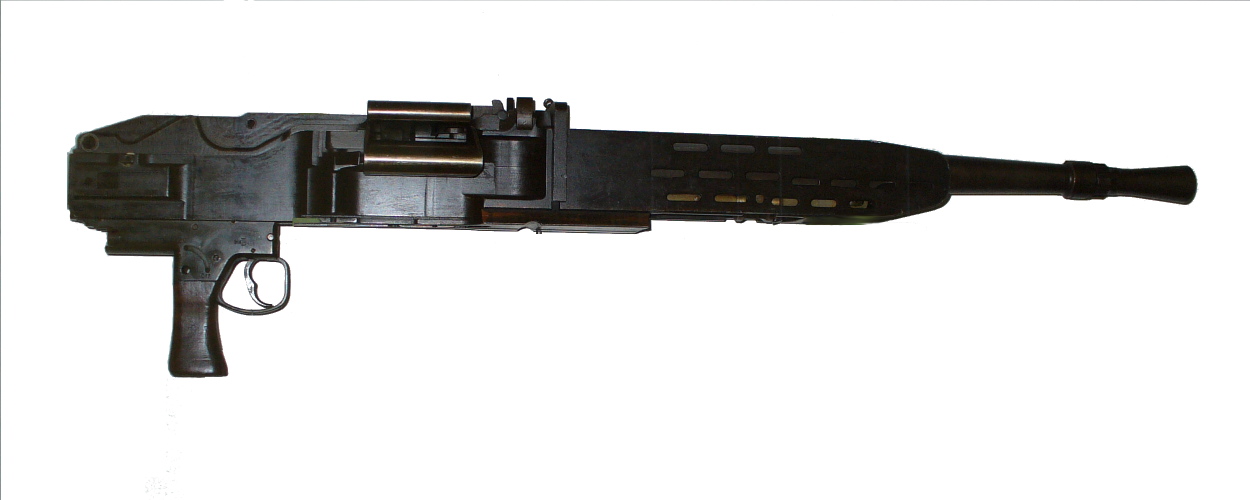
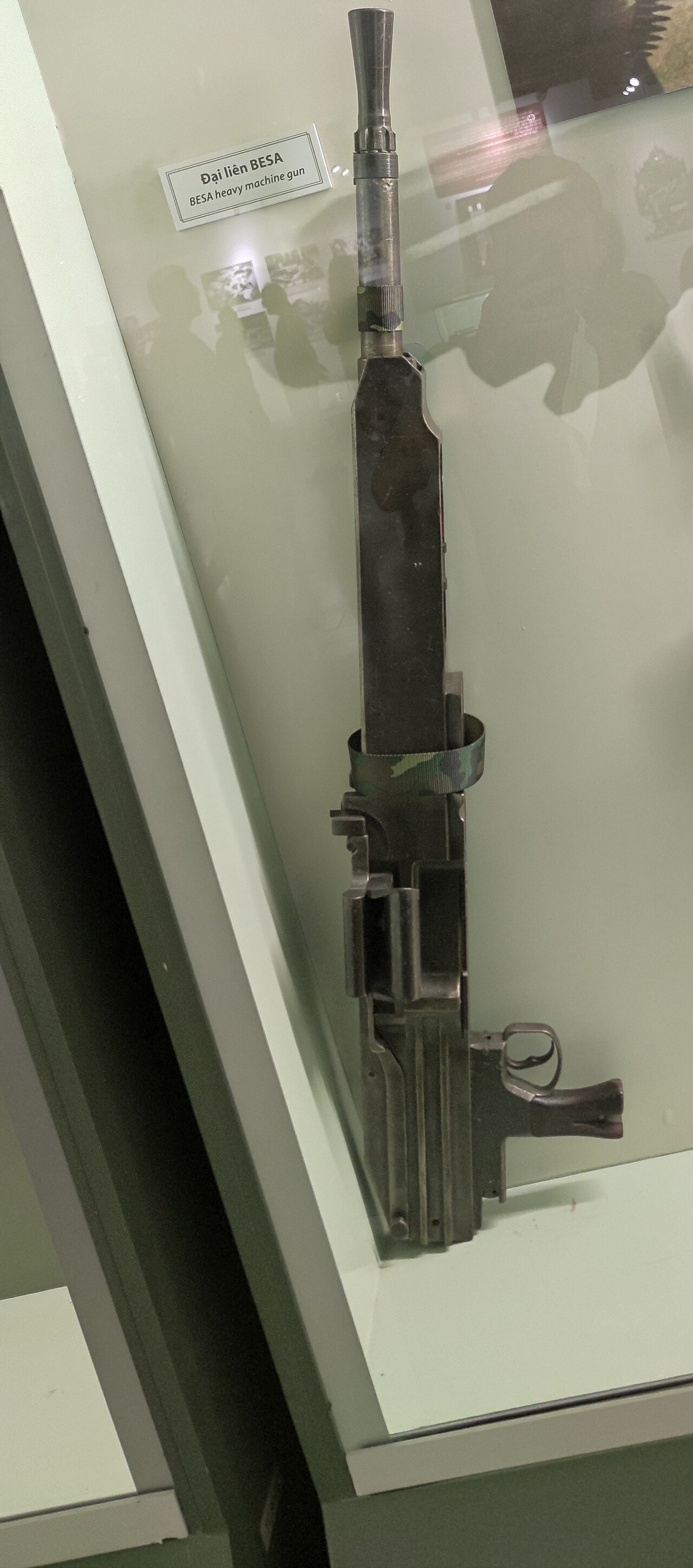
The Besa machine gun was the British adaptation of the Czechoslovak ZB-53, an air-cooled, belt-fed weapon known in Czechoslovak service as the TK vz. 37. Its name came from the Birmingham Small Arms Company (BSA), which reached a deal with Československá zbrojovka to produce the gun in the UK. The War Office placed an order in 1938, and after some modifications, manufacturing started in 1939. During the Second World War, British forces used it widely as a mounted machine gun in tanks and other armoured vehicles, replacing the bulkier, water-cooled Vickers machine gun. Despite needing a fairly large opening in a tank’s armour, it proved reliable.
Although British troops used the .303 rimmed round for rifles and machine guns, the ZB-53 had been built for the German 7.92×57mm Mauser round—called 7.92 mm by the British. The British had planned to switch from rimmed to rimless ammunition, but with war approaching, a full change was impossible. BSA and the Ministry of Supply mistakenly believed that converting the design to .303 would cause more industrial, technical, and supply trouble than keeping the original calibre, especially since the Royal Armoured Corps already had a separate supply chain from other army branches. So the round stayed unchanged for British production. Because the Besa used the same ammunition as German rifles and machine guns, the British could fire captured enemy stocks, though they could not use the enemy’s ammunition belts as packaged.
A .303 version of the ZB-53 was shown to British officials in early 1937 and passed field trials in November 1937 with excellent results—only 0.5% stoppages. However, the Small Arms Committee had already decided in September 1937 that it wanted the 7.92 mm version, for which BSA was already preparing tooling due to the urgency.
The Mark II version, built under licence by BSA in Birmingham (unlike ZB’s Mark I), entered service in June 1940. The design was altered for faster and cheaper production, and three simplified models—the Mark II*, Mark III, and Mark III*—came into service in August 1943. The Mark II* was a transitional model that used new simplified parts but remained compatible with the Mark II. All these versions had a selector offering a high rate of fire (750–850 rounds per minute) for close combat or focused targets, and a low rate (450–550 rounds per minute) for long-range or area targets.
Quick Facts
- Origin
- British Empire
- Is Ranged
- yes
- Service
- 1939–1960s
- Used By
- British Empire / Ireland / Israel
- Wars
- World War II · 1948 Palestine war · Korean War · Suez Crisis · Lebanese Civil War
- Designer
- Václav Holek
- Design Date
- 1936
- Manufacturer
- The Birmingham Small Arms Company Limited
- Developed From
- ZB-53
- Production Date
- 1939–1945
- Number
- 39,332 in all variants.
- Variants
- Mark I (1939–1940) / Mark II (1940–1943) / Mark II (1943) / Mark III (1943–1951) / Mark III (1943–1952) / Mark III/2 (1952–1966) / Mark III/3 (1954–1966)
Facts from the source article.
Lore & Background
The Besa machine gun was developed from the ZB-53, which had been designed for the German 7.92×57mm Mauser round. Although British forces used the .303 inch rimmed round for rifles and machine guns, the British had intended to move to rimless ammunition. With war imminent, wholesale change was not possible. BSA and the Ministry of Supply falsely believed that converting the design to .303 would be more onerous than retaining the original calibre, especially since the Royal Armoured Corps already had a separate supply chain. Consequently, the Besa used the same ammunition as Germany, allowing British forces to use stocks of captured enemy ammunition, though without the ability to use their ammunition belts as packaged.
The .303 version of the ZB-53 had been presented to British officials in early 1937 and passed field trials in November 1937 with 0.5% stoppages. However, in September 1937 the Small Arms Committee had already decided it wanted the 7.92 mm version, for which BSA was already tooling up due to urgency. The Mark II version, license-produced by BSA in Birmingham, entered service in June 1940. Simplified models—the Mark II*, Mark III, and Mark III*—entered service in August 1943. The Mark II* was transitional and compatible with the Mark II; the Mark III and Mark III* were incompatible with the Mark II. The Mark III had a fixed high rate of fire, while the Mark III* had a fixed low rate of fire. Damaged or malfunctioning Mark IIIs were converted to Mark III* at factories during repair.
A larger, heavier 15 mm version was developed by BSA from the Czechoslovak ZB-60 heavy machine gun as vehicle armament. It could fire in semi-automatic mode as well as fully automatic. Introduced in June 1940, it was used on the Light Tank Mk VIC and on armoured cars such as the Humber Armoured Car Marks I–III. Over 3,200 15 mm Besa were manufactured until it was declared obsolete in 1949. It fired a 75 g bullet from a cartridge with a muzzle velocity of 818.3 m/s at a rate of 450 rounds per minute, fed from 25-round metal belts, which limited its practical rate of fire; it was usually used for single shots as it was difficult to fire accurately in automatic.
Reader's Guide
The Besa machine gun's significance lies in its role as the primary mounted machine gun for British armoured vehicles during the Second World War, replacing the water-cooled Vickers. Its adoption of the 7.92 mm calibre, shared with German weapons, allowed British armoured units to use captured enemy ammunition, a logistical advantage. The weapon's reliability was noted, though it required a rather large opening in the tank's armour. Post-war, the earlier Mark I, Mark II, and Mark II* versions were declared obsolete in 1951, and all Mark III versions were converted to Mark III*. The Mark III/2 introduced in 1952 and the Mark III/3 introduced in 1954 were conversions that improved compatibility with mixed ammunition belts. The post-war Mark III/2 and Mark III/3 remained in service until the late 1960s. The 15 mm Besa, though produced in smaller numbers, provided heavier firepower for light tanks and armoured cars until its obsolescence in 1949. The Besa's lineage connects to other ZB designs adopted by the UK, such as the Bren gun.
Did You Know?
- The Besa used the same 7.92×57mm Mauser ammunition as German forces.
- The Mark III had a fixed high rate of fire of 750–850 rounds per minute, while the Mark III* had a fixed low rate of 450–550 rounds per minute.
- The 15 mm Besa was fed from 25-round metal belts and was usually used for single shots due to difficulty in accurate automatic fire.
Origins and British Adoption
The Besa machine gun traces its lineage to the Czechoslovak ZB-53, an air-cooled, belt-fed weapon that served in the Czechoslovak army under the designation TK vz. 37. When Britain recognized the need for a lighter alternative to the water-cooled Vickers machine gun for mounting in tanks and armoured vehicles, the Birmingham Small Arms Company stepped in. BSA signed a licensing agreement with Československá zbrojovka to produce the weapon domestically, and the name "Besa" itself derives from the company's initials. The War Office formally ordered the gun in 1938, and after a period of modifications, production commenced in 1939 just as the war engulfed Europe. Despite requiring a comparatively large opening in a tank's armour plating, the weapon earned a reputation for reliability throughout the Second World War, becoming a standard mounted armament across British armoured formations.
The Calibre Controversy
One of the most consequential decisions in the Besa's history concerned its ammunition. The original ZB-53 was chambered for the German 7.92×57mm Mauser round, while British forces traditionally relied on the .303 rimmed cartridge. A .303-adapted version was actually presented to British officials in early 1937 and passed field trials in November of that year with an impressive stoppage rate of just 0.5 percent. Yet by September 1937, the Small Arms Committee had already committed to the 7.92mm variant, largely because BSA was already tooling up and urgency demanded speed. BSA and the Ministry of Supply believed—mistakenly—that converting the design to .303 would impose greater industrial and supply difficulties than retaining the original calibre. The decision carried a practical silver lining: because the Besa consumed the same ammunition as German rifles and machine guns, British crews could feed captured enemy rounds into their belts, though the enemy's belt packaging could not be used directly.
Mark Evolution and Production Simplification
The Besa's production history reflects the relentless pressure of wartime manufacturing. The Mark II, license-produced by BSA in Birmingham, entered British service in June 1940. By August 1943, three simplified variants—the Mark II*, Mark III, and Mark III*—had joined the lineup. The Mark II* served as a transitional bridge, incorporating new simplified components while remaining compatible with the earlier Mark II. A notable feature of the Mark II and Mark II* was a selector switch offering two rates of fire: a high setting of 750 to 850 rounds per minute for close-range engagements or concentrated targets, and a low setting of 450 to 550 rounds per minute suited to long-range or area suppression. The Mark III and Mark III* abandoned this selector entirely, locking in a single rate—high for the Mark III, low for the Mark III*—and were mutually incompatible with the Mark II. Damaged Mark IIIs were routinely reworked into Mark III* units during factory repairs. In 1951, all earlier wartime marks were declared obsolete, and every Mark III was converted to the Mark III* standard.
The 15 mm Besa and Post-War Service
Beyond the familiar 7.92mm variant, BSA also developed a substantially larger 15mm Besa, derived from the Czechoslovak ZB-60 heavy machine gun and intended specifically as vehicle armament. Introduced into British service in June 1940, it saw deployment on the Light Tank Mk VIC and on Humber Armoured Cars Marks I through III. The weapon could fire in both semi-automatic and fully automatic modes, propelling a 75-gram bullet from a 15×104mm cartridge at a muzzle velocity of approximately 818 metres per second, with a cyclic rate of 450 rounds per minute. However, its 25-round metal belts constrained sustained fire, and crews generally preferred single-shot bursts because accurate automatic fire proved difficult. More than 3,200 examples were manufactured before the type was declared obsolete in 1949. British engineers even explored converting the 15mm Besa to 20mm calibre, noting that the 15×104mm cartridge shared the same diameter as the 20mm Hispano round, but this project never advanced past the design stage. Meanwhile, the 7.92mm Besa saw post-war life extended through the Mark III/2 (1952) and Mark III/3 (1954) conversions, remaining in service into the late 1960s.
Gallery
Frequently Asked Questions
What is the Besa machine gun?
The Besa is a British tank-mounted machine gun developed in the late 1930s as an adaptation of the Czechoslovak ZB-53 (designated TK vz. 37 in Czech service). It is an air-cooled, belt-fed weapon that became the standard gun in British armoured vehicles throughout World War II.
Where does the name 'Besa' come from?
The name is an abbreviation of Birmingham Small Arms Company (BSA), the British firm that secured a licensing deal with Československá zbrojovka to manufacture the gun domestically. After a War Office order in 1938 and some design tweaks, UK production began in 1939.
What role did the Besa play in British tanks?
It served as the primary mounted machine gun in British tanks and other armoured fighting vehicles, replacing the older, heavier water-cooled Vickers. Its lighter air-cooled construction made it far more practical for the confined spaces inside a tank turret.
What are the key specs of the Besa?
The standard model fires 7.92×57mm Mauser at a selectable rate of roughly 750–850 rpm on high and 450–550 rpm on low, while the Mark III and Mark III* variants lock to one of those two fixed rates respectively. A rarer 15 mm variant achieved a muzzle velocity of about 818 m/s at 450 rounds per minute.
Why was the Besa significant in WWII British armour?
By swapping out the bulky Vickers, the Besa freed up weight and turret space, making British tanks easier to crew and more practical in combat. Its 1939 adoption meant that virtually every British tank entering service during the war carried this Czech-derived weapon as its standard gun.
More in Machine Guns, Part 4 1-24
Spotted an error? Know more?
Reader corrections go straight into our review queue. Suggest an edit · How this site is sourced