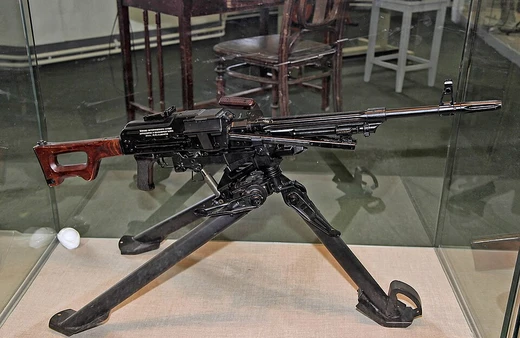
M60 machine gun
American general-purpose machine gun adopted in 1960.

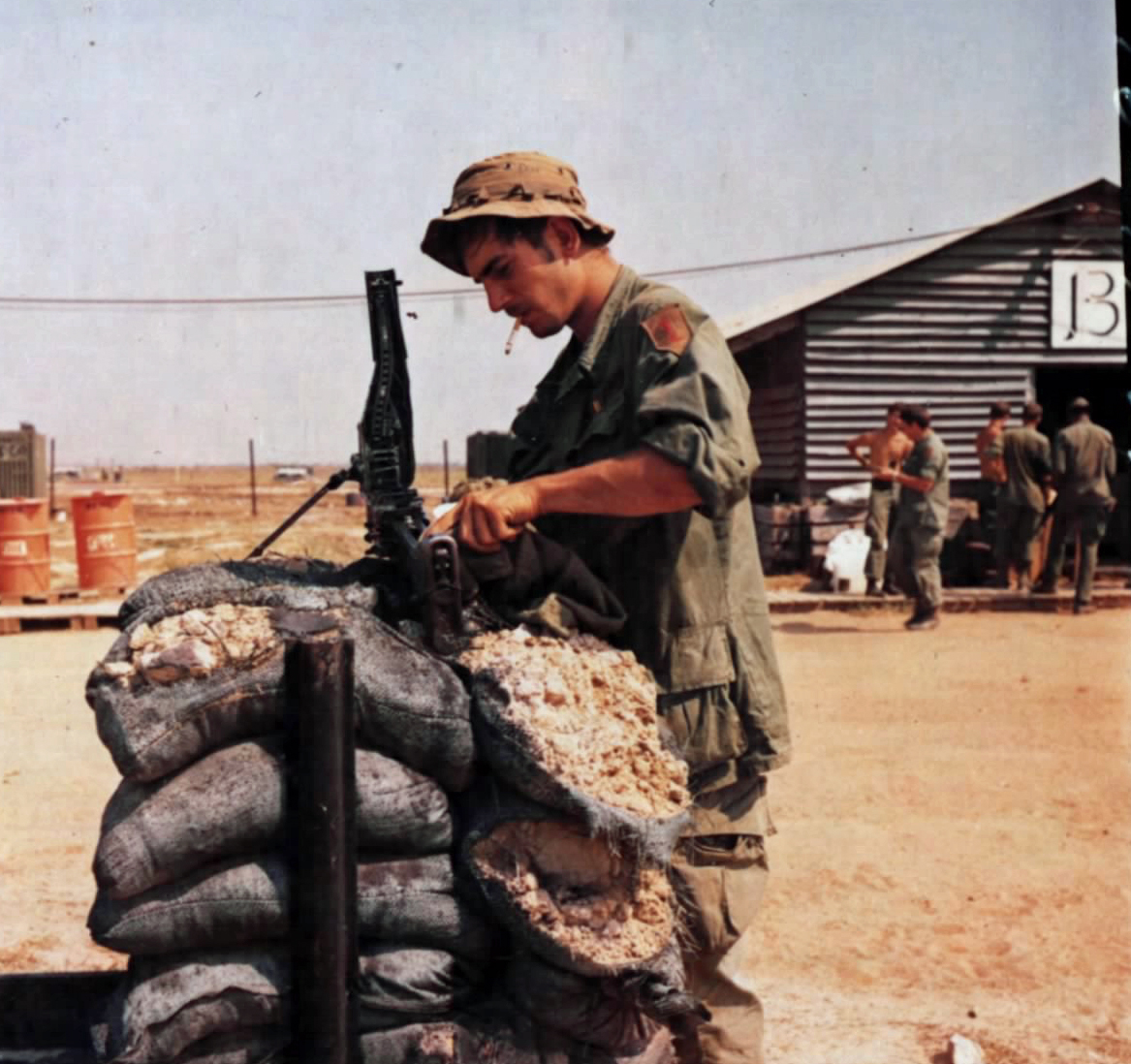
SP4 A. T. Rockoff · Public domain
The M60, officially the Machine Gun, Caliber 7.62 mm, M60, is a family of American general-purpose machine guns firing 7.62×51mm NATO cartridges from a disintegrating belt of M13 links. Adopted in 1960 and issued later that year, it has served with every branch of the U.S. military and continues to serve with the armed forces of other nations, though it has been replaced or supplemented in most roles by designs such as the M240.
Quick Facts
- Service
- 1960–present
- Length
- 1105 mm
- Action
- Gas-operated, short-stroke gas piston, opened rotating bolt
- Origin
- United States
- Is Ranged
- yes
- Design Date
- 1952–1957
- Manufacturer
- Saco Defense / U.S. Ordnance
- Unit Cost
- US$6,000 (M60E3)
- Production Date
- 1957–present
- Weight
- 10.5 kg
- Part Length
- 560 mm
- Cartridge
- 7.62×51mm NATO
Facts from the source article.
Lore & Background
The M60 machine gun began development after World War II as a program for a new, lighter 7.62 mm machine gun intended to replace the Browning M1919 machine guns. It drew inspiration from the German 'universal machine gun' concept. Postwar, a proof of concept light machine gun was contracted to Bridge Tool and Die, modifying a captured German FG-42 to be belt-fed by installing the top cover from an MG-42. A single example, the T44, was constructed in 1946. Further development led to the T52, which incorporated interchangeable barrels, disintegrating link belt, and was chambered in 7.62×51mm. The final evaluation version, the T161E3, was accepted as the M60 in 1957.
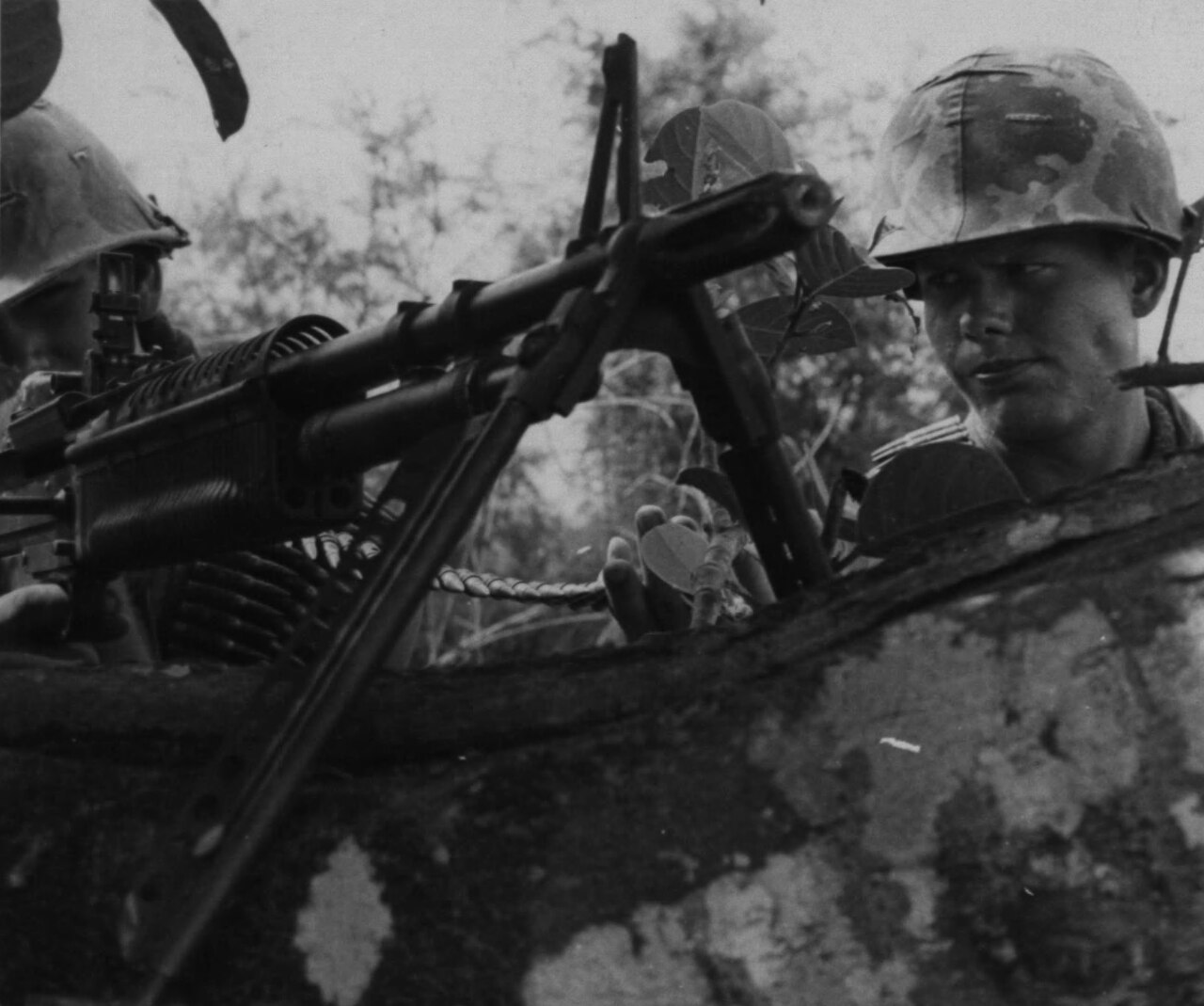
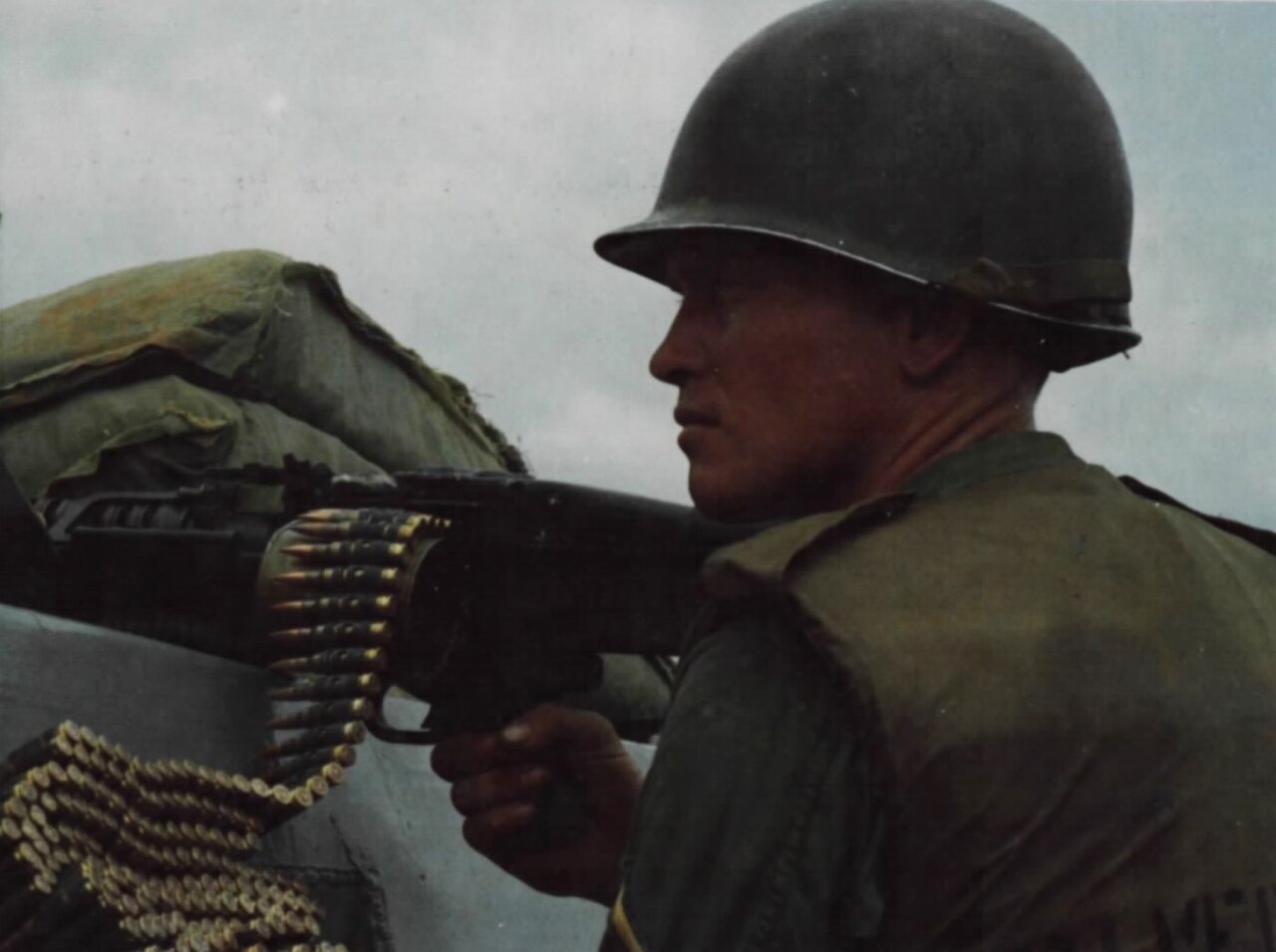
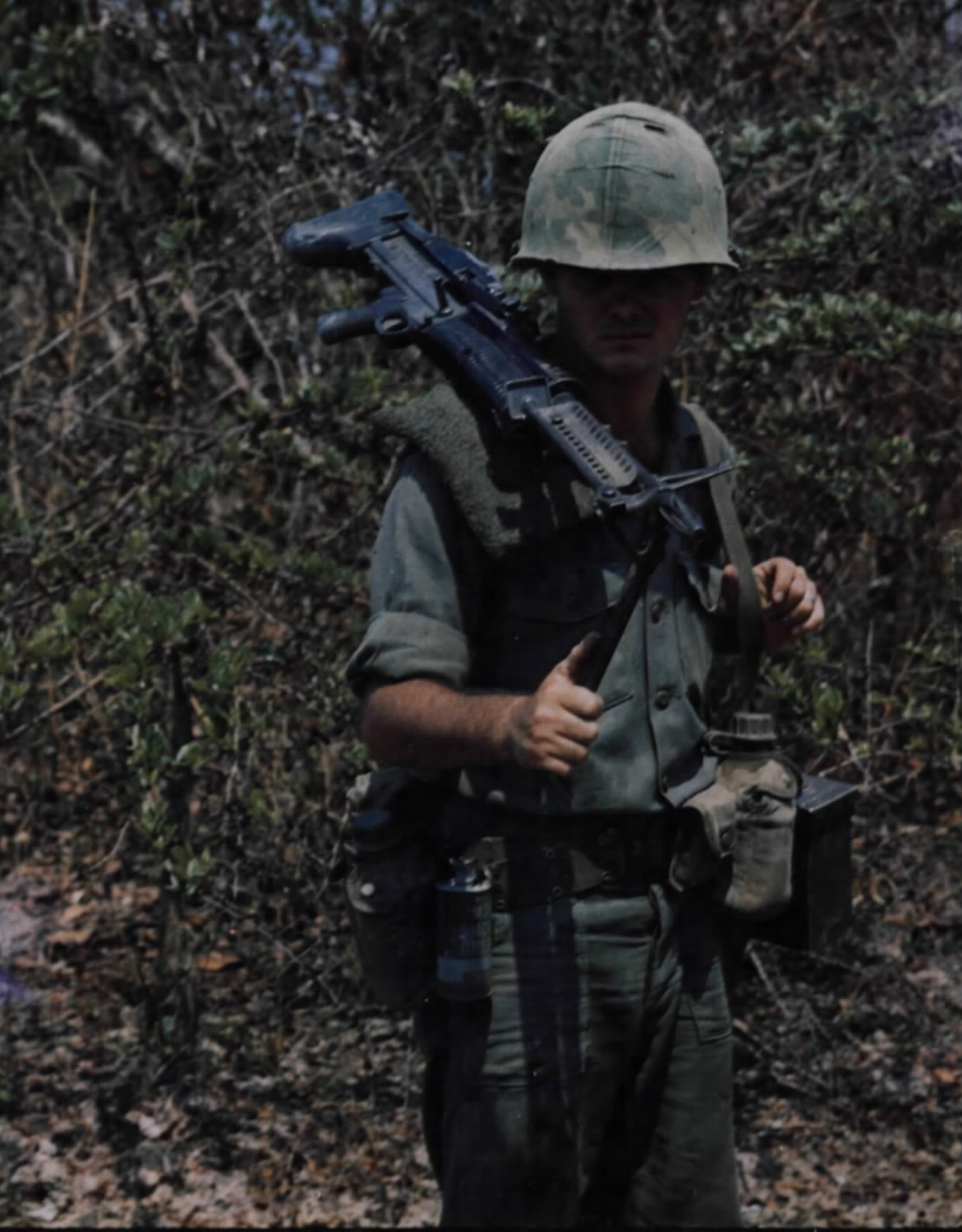
During the Vietnam War, the M60 was used as a squad automatic weapon. It received the nickname 'The Pig' due to its bulky size and appetite for ammunition. Vietnam's tropical climate caused parts like the bolt and operating rod to wear out quickly. United States Navy SEALs used M60s with shorter barrels and no front sights to reduce weight; some had feed chutes from backpacks. In the 1980s, the Army partially replaced the M60 with the M249 Squad Automatic Weapon, but many disliked the M249's lesser reliability, accuracy, and range. The U.S. Marine Corps adopted the M60E3, which was five pounds lighter and included a forward pistol grip, but it was not durable. Saco Defense later developed the M60E4, more reliable and durable, designated the Mk 43 Mod 0 for NAVSPECWAR units in late 1994.
Reader's Guide
The M60's significance lies in its role as the U.S. military's first general-purpose machine gun, replacing older Browning designs and serving across all branches from the Vietnam War into the 21st century. Its design, influenced by German wartime concepts, allowed shoulder firing from the bipod or tripod, a holdover from the M1918 Browning Automatic Rifle. The weapon's nickname 'The Pig' reflected its heavy ammunition consumption and bulk, which made it a crew-served weapon typically operated by a team of two or three. Despite reliability issues in tropical climates and eventual replacement in many roles by the M240 and M249, the M60 remained in service due to its powerful 7.62mm round and effective range. The M60E3 and M60E4 upgrades attempted to address weight and durability concerns, with the latter adopted by Navy special operations. The M60's continued manufacture and upgrade into the 21st century for military and commercial purchase underscores its lasting legacy, even as it has been supplemented by more modern designs.
Design Philosophy & Development
The M60's origins trace to a postwar American desire to shed the aging Browning M1919 and adopt a lighter 7.62 mm weapon. The concept drew heavily from the German universal-machine-gun idea—exemplified by the MG-34 and MG-42—where a single platform could serve as a shoulder-fired light gun, a sustained-fire crew weapon, or a vehicle mount. During the war, the U.S. Army had even ordered two test copies of the MG-42 in .3006 Springfield, designated the T24, but trials at Aberdeen proved unsatisfactory. After the conflict, Bridge Tool and Die built a proof-of-concept by grafting an MG-42 top cover onto a captured FG-42 paratrooper rifle, producing the T44 in 1946. Engineers then rebuilt the design from scratch as the T52, retaining the MG-42-derived cover and bolt carrier while adding interchangeable barrels, disintegrating links, and the new 7.62×51mm chambering. The feed was relocated to the top, and the structure was reinforced for sustained fire. The final T161E3 was accepted as the M60 in 1957, beating out the Belgian FN MAG among foreign rivals.
Crew-Served Operations & Logistics
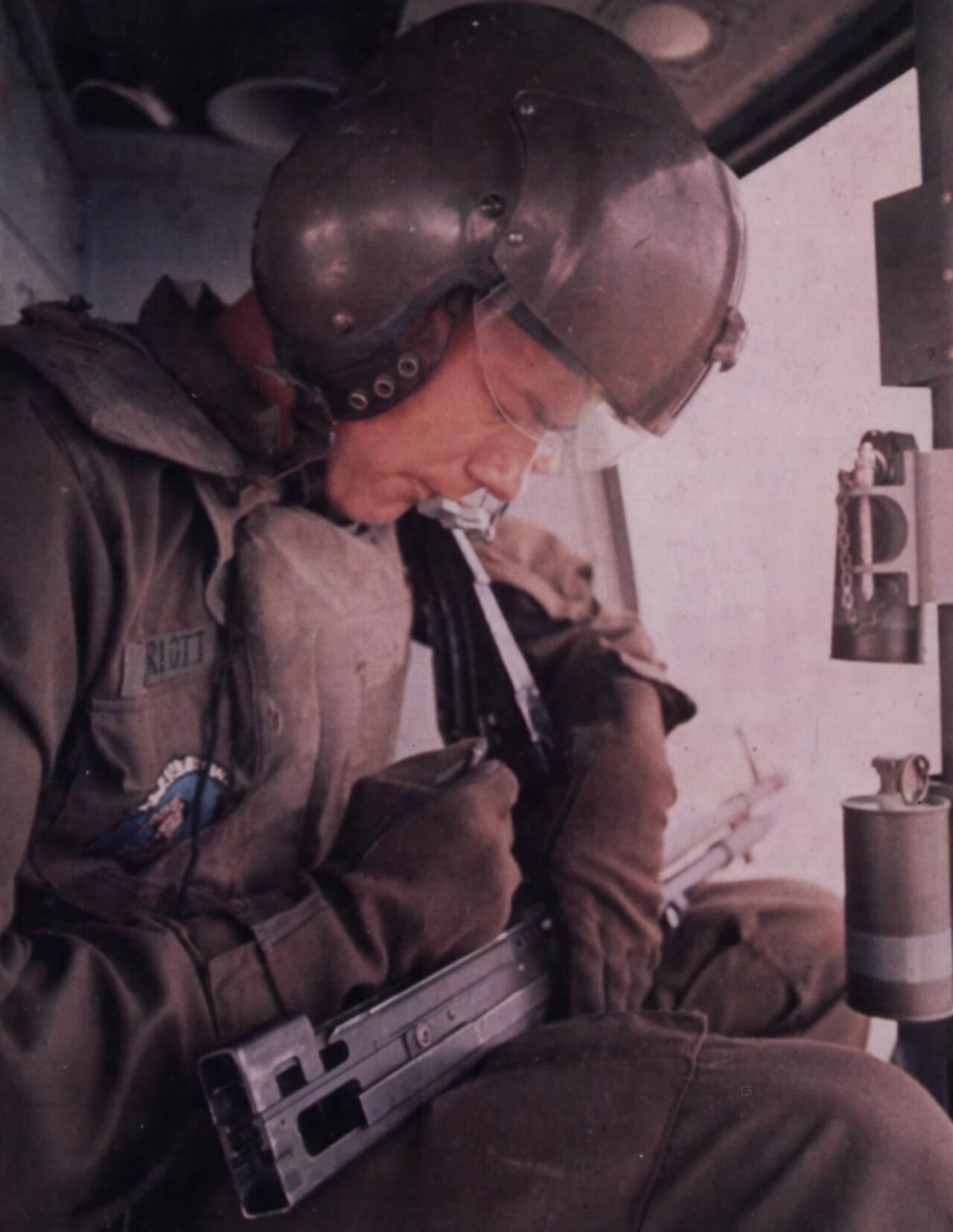
Because of its weight and the volume of 7.62×51mm rounds it can expend, the M60 is not a one-man weapon. Standard doctrine assigns a three-person team: the gunner, who carries the gun and anywhere from 200 to 1,000 linked rounds depending on physical condition; the assistant gunner, who totes a spare barrel, extra ammunition, and handles reloading and target spotting; and the ammunition bearer, who shoulders additional belts plus the M122 tripod with its traversing and elevation mechanism, fetching more rounds as the fight demands. Ammunition arrives in a cloth bandolier housing a cardboard box of 100 pre-linked rounds, secured by the M13 link system—a departure from the older, incompatible M1 links. The bandolier is reinforced so it can hang directly from the feed tray. In Vietnam, crews improvised by locking B3A cans from C-ration packs into the box attachment to roll belts over more smoothly, a workaround later made obsolete when manufacturers revised the attachment point. The gun can be shouldered at short range, braced on its integral bipod, mounted on the tripod, or fitted to vehicle brackets.
Vietnam War Service & Combat Effectiveness
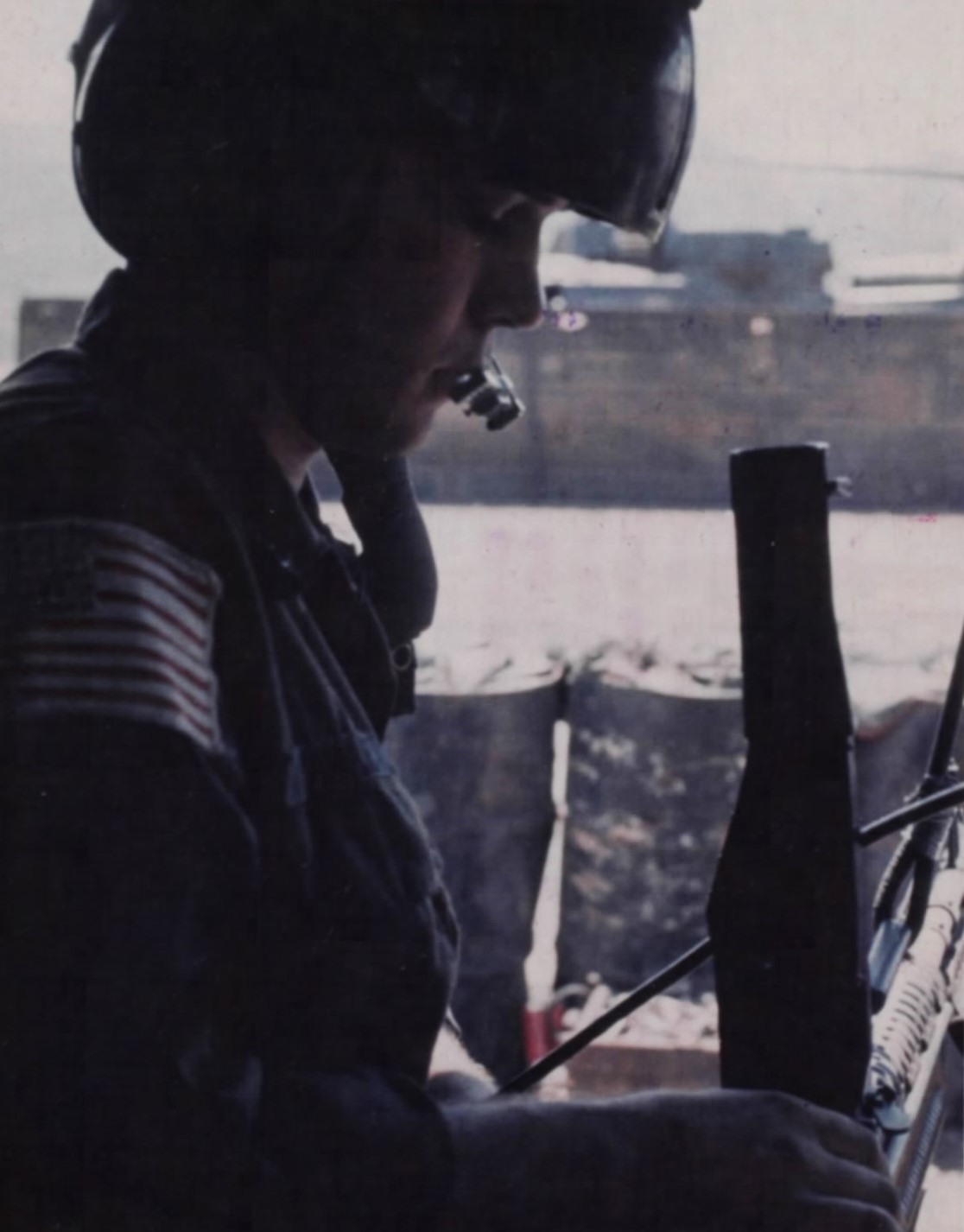
The M60 saw its most demanding baptism in the jungles of Vietnam, where it served as the squad automatic weapon in most U.S. units. Every rifleman in a squad carried an extra 200 linked rounds, a spare barrel, or both to keep the gun fed. The up-gunned M113 armored personnel carrier paired two M60 gunners alongside its .50-caliber mount, and Patrol Boat, River crews added one M60 to their two .50-cal positions. Soldiers dubbed it 'The Pig' for its bulky profile and insatiable ammunition appetite. The tropical climate was brutal: the gun's relatively light construction made it vulnerable to damage, and critical components like the bolt and operating rod wore out at accelerated rates. Yet troops still valued its mechanical simplicity, easy handling, and versatility across firing positions. Navy SEALs ran shortened-barrel versions without front sights to save weight, and some rigged feed chutes from backpacks to keep hundreds of rounds staged without a reload. In 1966, Marine Lance Corporal Richard Pittman of 1/5 used an M60 to defeat two North Vietnamese machine gun positions, an action that earned him the Medal of Honor.
Legacy & Continued Service
First fielded in 1960, the M60 went on to serve in every branch of the U.S. military and found a home in the armed forces of numerous other nations. Although the M240 has largely supplanted it in U.S. service, the M60 has not been retired. Its manufacture and ongoing modernization continue into the 21st century for both military and commercial buyers, and the weapon has been updated repeatedly over the decades to satisfy evolving operational requirements. The family of approved ammunition—ball, tracer, and armor-piercing rounds—remains standardized around the 7.62×51mm NATO cartridge, the same round that powers the M14 rifle and other service weapons. The M60's design philosophy, rooted in the German universal-machine-gun concept, proved durable: a single platform that could be shouldered by an individual, emplaced on a tripod for sustained fire, or bolted to a vehicle hull. Six decades after its introduction, the M60 endures not as a cutting-edge system but as a proven, adaptable workhorse that still turns up in arsenals and on the market worldwide.
Gallery
Frequently Asked Questions
Who is the M60 machine gun?
The M60 is an American general-purpose machine gun, officially titled 'Machine Gun, Caliber 7.62 mm, M60,' that entered U.S. service in 1960. It fires 7.62×51mm NATO rounds from a disintegrating belt of M13 links and was designed to give infantry squads a reliable automatic support weapon.
What are the M60's powers and role?
As a general-purpose machine gun, the M60 was built to cover both light and medium support duties for infantry units across every U.S. military branch. It feeds ammunition through a disintegrating M13-link belt and fires the standard 7.62×51mm NATO cartridge.
Why is the M60 nicknamed 'The Pig'?
Soldiers gave the M60 the nickname 'The Pig' because of its bulky, heavy look and the way it seemed to gulp down belt-fed ammunition. The original model was notably heavier than the later M60E3 variant, which trimmed roughly five pounds off the overall weight.
Why is the M60 important?
Adopted in 1960, the M60 became the standard squad-support weapon for every branch of the U.S. military and stayed in that role for decades. Its long service life and widespread adoption by allied and other foreign forces made it one of the most recognizable American small arms of the Cold War era.
More in Machine Guns, Part 4 1-24
Spotted an error? Know more?
Reader corrections go straight into our review queue. Suggest an edit · How this site is sourced