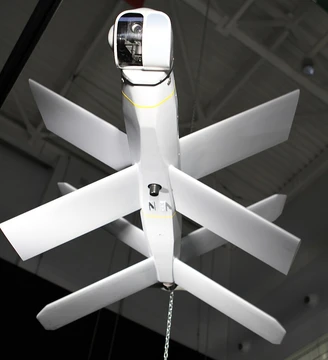
TAI Keklik
A low-cost target drone for Turkish armed forces training.

The TAI Keklik is a radio-controlled target drone that entered service in 2001. Built by Turkish Aerospace Industries (TAI), it is used by the Turkish Armed Forces for target tracking during non-firing gunnery drills. Its name means "partridge" in Turkish, and it is one of several TAI unmanned aerial vehicles named after birds.
Development began after the Turkish Ministry of National Defence’s Research and Development Department awarded TAI a contract in August 1995. The goal was a low-cost training drone for the Turkish Army and Navy, used in target tracking and non-firing exercises with anti-aircraft guns, as well as radar-guided and heat-seeking missiles. It also served to train operators for the larger TAI Turna target drone.
A prototype was completed in July 1997, with production starting in late 1999. Since November 2001, the Keklik has been in the inventories of the Turkish Air Force and Turkish Army. It is powered by an OS-MAX 91 FX two-stroke engine, producing 2.09 kW and made by Germany’s Graupner GmbH. This delta-winged, simple, and robust UAV launches from a manually operated bungee catapult and is recovered by a remotely controlled parachute on land or water. It can be re-launched within 15 minutes. The tractor-type aircraft is built from composite material and painted in bright colors for easy visibility.
Quick Facts
- Aircraft Type
- Unmanned drone tracking target drone
- Manufacturer
- Turkish Aerospace Industries (TAI)
- Primary User
- Turkish Armed Forces
- Introduction
- November 2001
- First Flight
- 1997
Facts from the source article.
Lore & Background
The Research and Development Department of the Turkish Ministry of National Defence awarded a contract to TAI in August 1995 for the development of a low-cost training target drone. It was intended for use by the Turkish Army and Navy in target tracking and non-firing gunnery exercises with anti-aircraft guns, as well as with radar-guided and heat-seeking anti-aircraft missiles. The drone was also designed to train operators of the much larger TAI Turna target drone.
The Keklik prototype was completed in July 1997, and production began in late 1999. Since November 2001, the Keklik has been in the inventory of the Turkish Air Force and Turkish Army. The delta-winged, robust and simple UAV is propelled by an OS-MAX 91 FX two-stroke engine developing 2.09 kW, produced by German company Graupner GmbH. It takes off from a manually operated bungee catapult and is recovered by a remotely controlled parachute on land or sea, and can be re-launched in 15 minutes. The tractor type aircraft is made of composite material and painted in bright colors for easy visibility.
Reader's Guide
The TAI Keklik serves as a practical and cost-effective training tool for the Turkish Armed Forces, filling a specific niche in target tracking and gunnery exercises. Its development, initiated by a 1995 contract from the Turkish Ministry of National Defence, reflects a focus on low-cost, reusable systems for anti-aircraft training. The drone's design emphasizes simplicity and robustness, with a delta-wing configuration, composite construction, and bright coloring for visibility. Its launch via bungee catapult and parachute recovery allow for rapid reuse, with a 15-minute turnaround time. The Keklik also plays a role in training operators for the larger TAI Turna target drone, indicating its place within a broader family of Turkish UAVs. Since entering service in November 2001, it has been used by both the Turkish Air Force and Turkish Army, supporting exercises with anti-aircraft guns and missiles. The drone's engine, sourced from German manufacturer Graupner GmbH, underscores international collaboration in its design. Overall, the Keklik represents a focused solution for realistic target practice without live firing, contributing to the readiness of Turkish air defense personnel.
Did You Know?
- The Keklik is named after the Turkish word for 'partridge'.
- It is designed to train operators of the larger TAI Turna target drone.
- Its engine is an OS-MAX 91 FX two-stroke produced by German company Graupner GmbH.
More in Loitering Munitions and Target Drones 1-24
Spotted an error? Know more?
Reader corrections go straight into our review queue. Suggest an edit · How this site is sourced