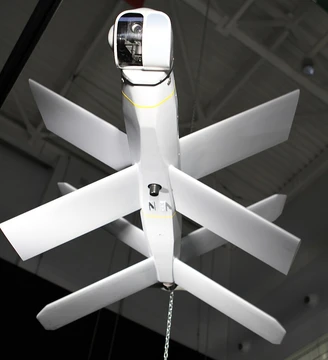
HESA Ababil
Iranian family of cost-effective, long-range tactical UAVs.

Hossein Zohrevand · CC BY 4.0
The HESA Ababil is a family of single-engine, multirole tactical drones built by Iran Aircraft Manufacturing Industrial Company (HESA). These unmanned aerial vehicles are known for being long-range, inexpensive, and technologically simple. The family includes four main lines—Ababil-2, 3, 4, and 5—with the Ababil-2 offering several variants. Development started during the Iran–Iraq War. The Ababil has been sold widely to governments and paramilitary groups across the Middle East and beyond, and has seen combat in the 2006 Lebanon War, the Iraq War, and the civil wars in Sudan, Syria, Iraq, and Yemen.
Quick Facts
- National Origin
- Iran
- Manufacturer
- HESA Isfahan factory / Syrian Scientific Studies and Research Center (Ababil-3)
- Design Group
- Iran Aircraft Manufacturing Industrial Company
- First Flight
- 1986
- Introduction
- disputed
- Produced
- 1980s–present
- Number Built
- Unknown (Hundreds)
Facts from the source article.
Lore & Background
The early history of the Ababil is unclear. Jane's reports that the Ababil program was begun at Qods Aviation Industries in 1986 with the first delivery in 1993, while Iranian military expert Galen Wright writes that the program began at Iran Electronics Industries in the mid-1980s and began mass production in 1986, with possible use in the Iran–Iraq War. The Ababil-1 was an obscure loitering munition built in the 1980s; its specifications are not known, there are no known photographs, and it is believed to be out of service. One source describes it as a suicide drone with 40 kg of explosives, essentially a prototype or preproduction version of the Ababil-2.
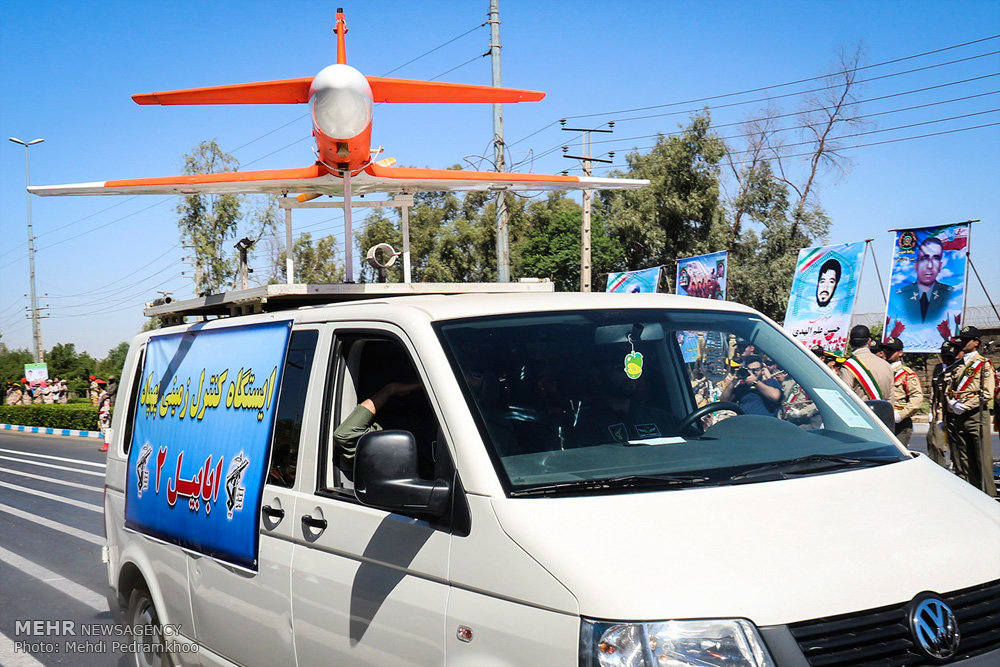
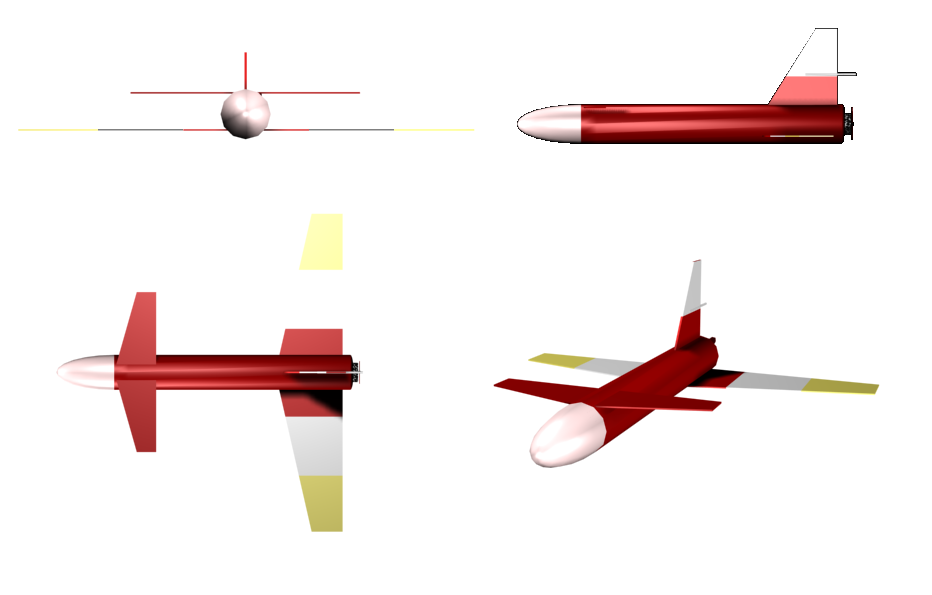
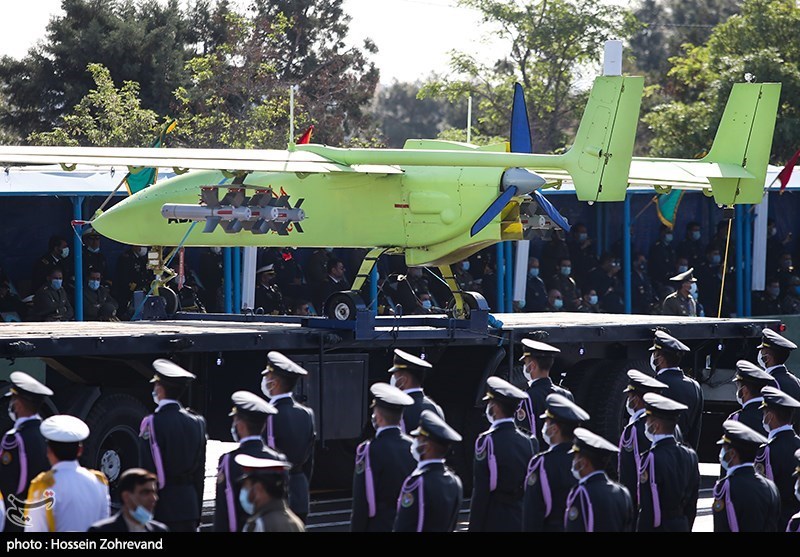
The Ababil-2, developed in the 1990s, has rudimentary surveillance capabilities and can be used as a loitering munition, but is mainly used as a target drone. It has a cylindrical fuselage, a sweptback vertical fin, and a pusher engine. Variants include the Ababil-B (target drone), Ababil-S (surveillance), Ababil-T (twin-tail attack variant), and Ababil-CH (twin-tail target drone). The Qasef-1 and Qasef-2K loitering munition versions, based on the Ababil-2 airframe with a 30-kg warhead, have been operated solely by Yemeni Houthis since late 2016. The Houthis claim they manufacture Qasef-1s themselves, but this claim has been disputed and there is widespread suspicion that it is Iranian-built.
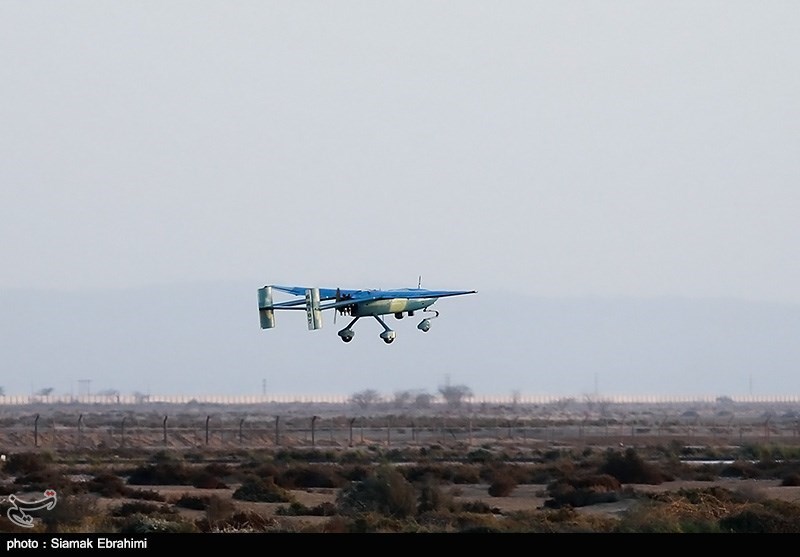
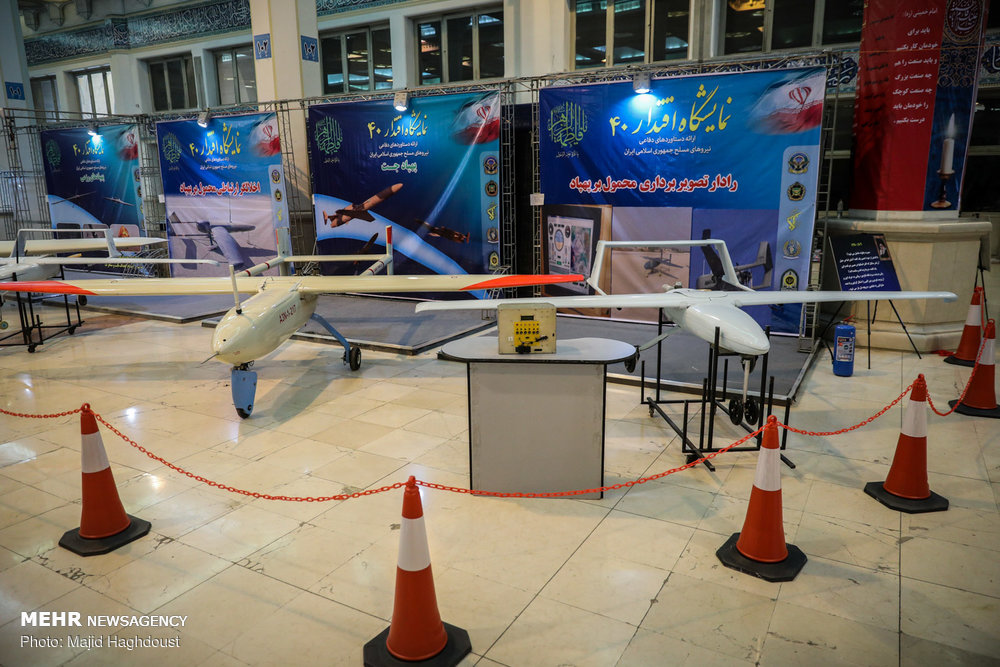
The Ababil-3 is a complete redesign used solely for surveillance, with improved equipment and longer endurance. It is thought to be based on the South African Denel Dynamics Seeker. The Ababil-3 has a cylindrical body, top-mounted wings, and an H-shaped twin boom. It uses an engine from German company Limbach Flugmotoren, though other sources suggest Chinese or Iranian clones. Analysis of a downed Ababil-3 found composite construction and 'very economical' manufacture, with some defects possibly indicating poor manufacture or handling. The Ababil-4 and Ababil-5 were both unveiled in 2022 and are only seen in Iranian service.
Reader's Guide
The Ababil family is notable for its longevity, low cost, and widespread use across multiple conflicts and operators. Described as 'a pretty rough-and-ready system' because of its cheapness, simplicity, and ease of use, the Ababil has been a staple of Iranian drone exports to governments and paramilitaries in the Middle East and elsewhere. The Ababil-2 and Ababil-3 have seen extensive combat in the 2006 Lebanon War, the Iraq War, and the Sudanese, Syrian, Iraqi, and Yemeni civil wars. The Ababil-3 has been produced under license by the Syrian Scientific Studies and Research Center and used extensively in the Syrian Civil War for targeting high-precision artillery strikes and ISTAR roles. The Ababil-4 and Ababil-5, introduced in 2022, represent the latest developments, with the Ababil-5 boasting a flight duration of up to 24 hours in reconnaissance mode and the ability to carry guided anti-tank missiles or precision-guided bombs. The Qasef-1 variant, operated by Yemeni Houthis, has been used primarily to attack radar components of MIM-104 Patriot surface-to-air missiles, demonstrating the Ababil's adaptability as a loitering munition. Overall, the Ababil's significance lies in its role as a cost-effective, accessible drone system that has proliferated widely and been adapted for multiple roles across decades of conflict.
Did You Know?
- The Qasef-1 loitering munition, based on the Ababil-2, has a 30-kg warhead and has been used by Yemeni Houthis since late 2016.
- The Ababil-5 can carry four Almas guided anti-tank missiles or six Qaem-1 precision-guided bombs.
Origins in Wartime Necessity
The HESA Ababil program traces its roots to the crucible of the Iran–Iraq War, though the precise timeline remains murky. Two prominent sources offer conflicting accounts: Jane's places the program's inception at Qods Aviation Industries in 1986 with first deliveries arriving in 1993, while Iranian military analyst Galen Wright argues it began earlier at Iran Electronics Industries in the mid-1980s, with mass production already underway by 1986 and possible combat employment during the war itself. The earliest iteration, the Ababil-1, was a shadowy loitering munition from the 1980s whose specifications remain entirely unknown. No photographs of it have ever surfaced, and it is unclear whether it ever saw combat. One source suggests it was essentially a preproduction prototype for the Ababil-2, described as a suicide drone carrying roughly forty kilograms of explosives. The Ababil-2 itself had its first flight in 1997 according to Jane's, though Wright dates production to 1992; both agree it was publicly revealed in 1999.
One Airframe, Many Missions
The Ababil-2 stands as the most versatile and widely produced member of the family, distinguished by its cylindrical fuselage, sweptback vertical fin, and a simple two-bladed pusher propeller. Its aerodynamic layout pairs a rear-mounted wing with a front canard, giving it favorable stall, stability, and maneuverability characteristics. All variants achieve a range exceeding one hundred kilometers and are built with all-metal construction, with the notable exception of the composite-fiberglass Ababil-T. Launch flexibility is a hallmark: the drone can be fired from a zero-length JATO platform or a Mercedes Benz 911 pneumatic truck launcher, both of which can be assembled and broken down for portability and even deployed from a ship deck. Recovery is equally adaptable, using either a parachute that provides a four-meters-per-second descent rate or skids for conventional landings on a runway or open field. The Ababil-2 has spawned numerous variants—the Ababil-B target drone with its acoustic miss-distance indicators and radar reflectors (in service since 2001), the Ababil-S surveillance model with only rudimentary ISR capability, the twin-tail Ababil-T attack variant, and the slightly larger Ababil-CH target drone.
From Export Catalog to Active Conflict
The Ababil-2 and Ababil-3 have found their way into the hands of governments and paramilitary groups across the Middle East and beyond, making the family one of the most geographically dispersed Iranian drone lines. In combat, Ababil airframes have appeared in the 2006 Lebanon War, the Iraq War, and the protracted civil wars in Sudan, Syria, Iraq, and Yemen. Perhaps the most visible foreign operator is the Yemeni Houthi movement, which has employed the Qasef-1 loitering munition—built on the Ababil-2 airframe with a thirty-kilogram warhead—since late 2016. Houthi forces have predominantly targeted the radar components of MIM-104 Patriot surface-to-air missile systems. While the Houthis publicly claim to manufacture Qasef-1s domestically, that assertion has been widely disputed, and there is strong suspicion of Iranian production. Indeed, some Qasef-1 units have been intercepted while in transit to Yemen. The twin-tail Ababil-T variant is thought to be coterminous with the Mirsad-1 UAV operated by Hezbollah and may have been re-designated Qasef-1 in Houthi service. In contrast, the newer Ababil-4 and Ababil-5, both unveiled in 2022, remain exclusively in Iranian military service.
Rough, Ready, and Evolving
The Ababil family has earned the characterization of a "pretty rough-and-ready system," reflecting its core philosophy: cheapness, mechanical simplicity, and ease of use over high-end sophistication. This low-technology, cost-effective approach has made it accessible to operators who need long-range capability without the expense of advanced platforms. The Ababil-3, introduced in the 2000s, represents a complete redesign with an improved airframe dedicated solely to intelligence, surveillance, and reconnaissance. It carries better sensor equipment and can loiter longer than its predecessors. Its cylindrical body features top-mounted wings with a rectangular planform that tapers toward the tips, and an H-shaped twin boom at the rear. The wingspan stretches to roughly seven meters—more than double the Ababil-2's three meters. The powerplant is attributed to German firm Limbach Flugmotoren, though other sources point to Chinese or Iranian clones of the L550 engine, and certain internal components were reportedly sourced from Irish defense contractors. Production was underway by 2008, with specific parts manufactured as early as 2006, and the type was officially unveiled in 2010. The Ababil-4, about which little is publicly known, first appeared at the 2022 Army Day parade. The Ababil-5, the most recent addition, offers greater range and a heavier ammunition load.
Gallery
Frequently Asked Questions
What is the HESA Ababil?
The HESA Ababil is a family of single-engine, multirole tactical unmanned aerial vehicles built for long-range surveillance and target acquisition. It is widely recognized for being inexpensive, technologically straightforward, and capable of operating over distances exceeding 100 kilometers.
Who manufactures the HESA Ababil?
The Ababil is produced by Iran Aircraft Manufacturing Industrial Company, commonly referred to as HESA. Development of the platform originated during the Iran–Iraq War, with the Ababil-2 variant first taking flight in the mid-to-late 1990s.
What are the key performance figures for the HESA Ababil?
The Ababil-3 variant cruises at a top airspeed of roughly 200 km/h, reaches a service ceiling near 5,000 meters, and covers a roundtrip range of about 100 km. The Ababil-2 line pushes one-way range beyond 100 km.
Where has the HESA Ababil seen combat use?
The drone has been employed in the 2006 Lebanon War, the Iraq War, and the civil conflicts in Sudan, Syria, and Iraq. It has been exported to numerous governments and paramilitary organizations across the Middle East and other regions.
Why is the HESA Ababil considered significant in UAV development?
Its importance stems from demonstrating that a long-range, multirole tactical drone could be produced cheaply with simple technology, making it accessible to a broad range of operators. The family's four main lines (Ababil-2 through 5) and multiple variants reflect a sustained, iterative design philosophy rooted in wartime necessity.
More in Loitering Munitions and Target Drones 1-24
Spotted an error? Know more?
Reader corrections go straight into our review queue. Suggest an edit · How this site is sourced