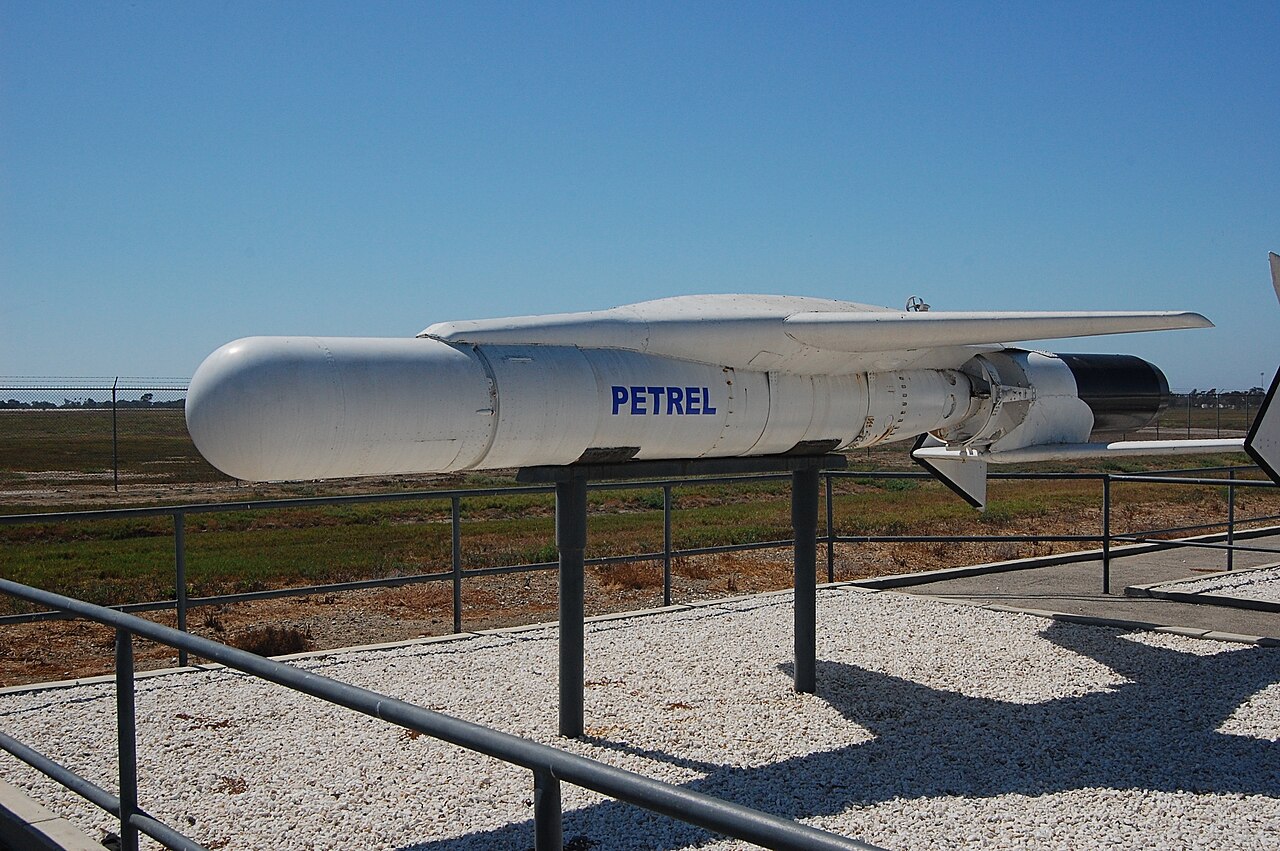
AUM-N-2 Petrel
Air-launched torpedo missile later used as a target drone.

Epolk · CC0
The AUM-N-2 Petrel, also known as Kingfisher C and AUM-2, was an air-to-surface missile developed for the United States Navy under Project Kingfisher. Designed to deliver an aerial torpedo against enemy surface ships and surfaced submarines from outside the range of defensive armament, it saw brief operational service in the late 1950s before being converted into a target drone and redesignated AQM-41A.
Quick Facts
- Is Missile
- yes
- Origin
- United States
- Used By
- United States Navy
- Service
- 1956–59
- Manufacturer
- Fairchild Guided Missiles Division
- Propellant
- JP-4
- Production Date
- 1954–57
- Engine
- Fairchild J44 turbojet
- Engine Power
- 1000 lbf
- Weight
- 3800 lb
- Length
- 24 ft
- Diameter
- 24 in
Facts from the source article.
Lore & Background
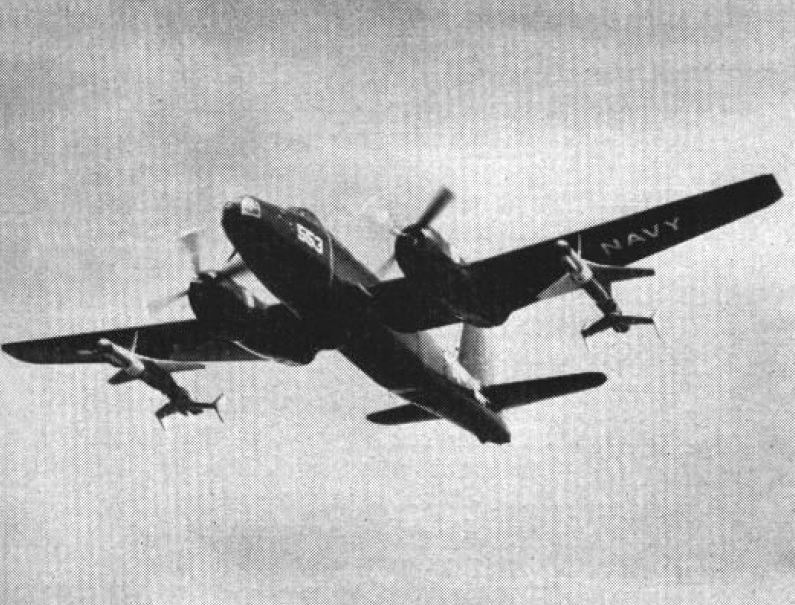
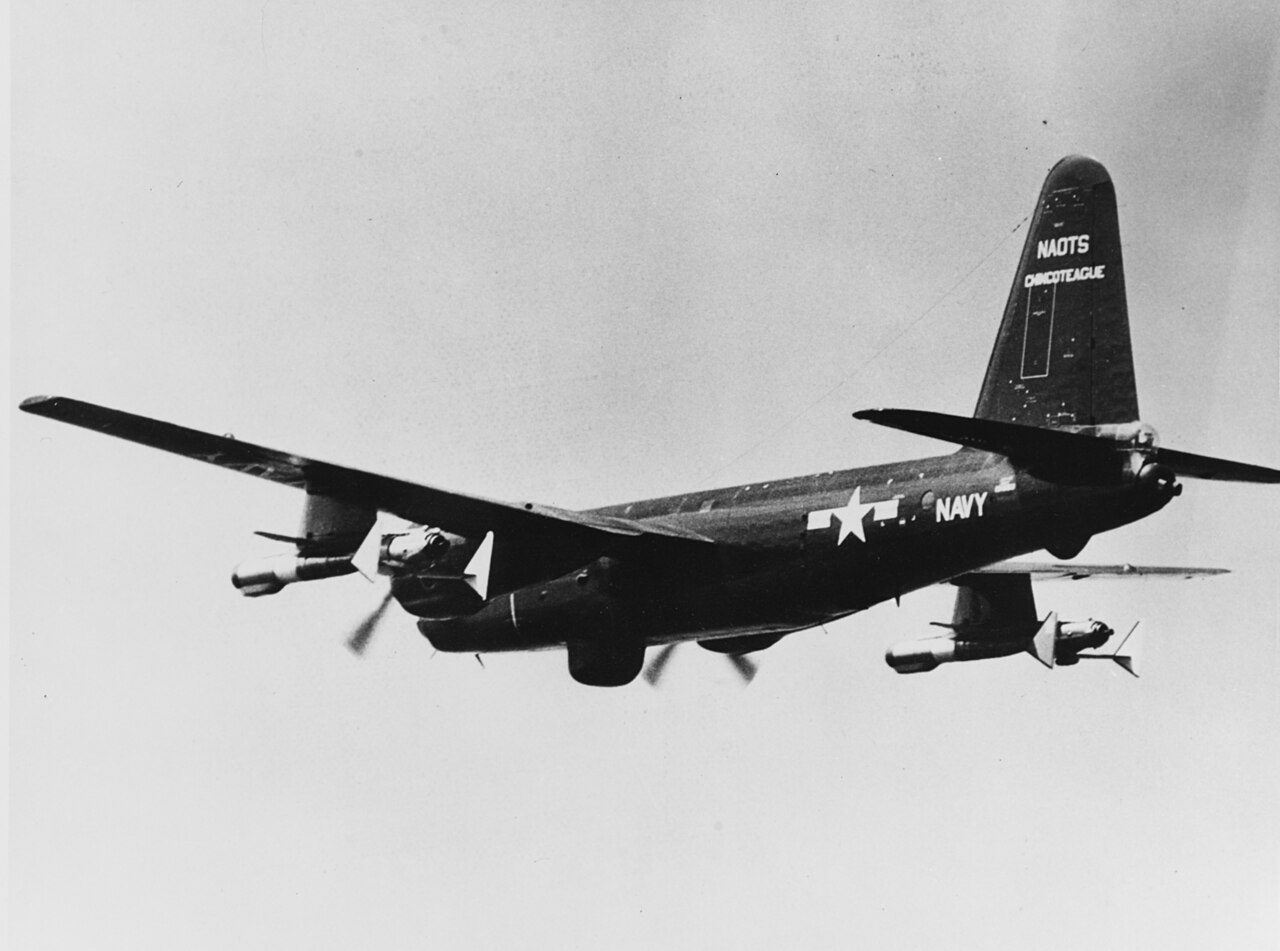
Development of the Petrel began in August 1944 when the U.S. Navy Bureau of Ordnance initiated Project Kingfisher to create standoff torpedo weapons. The Kingfisher C design, later designated AUM-2 and then AUM-N-2, was a jet-powered missile carrying a torpedo. The final configuration used a Mark 21 Mod 2 torpedo with a Fairchild J44 turbojet engine, wooden fins and wings, and a nose fairing for guidance equipment. On launch, the 3800 lb, 24 ft missile dropped to 200 ft above the water and cruised at Mach 0.5 toward the target. At a range of just under 1500 m, the engine shut down, all wings and fins were jettisoned, and the torpedo dropped into the water to home in on the target. The weapon was effective only against surface targets—primarily ships and surfaced submarines—and was usually carried by the Lockheed P2V Neptune.
Tests began in 1951 under the National Bureau of Standards, by which time the Mark 41 torpedo had replaced the Mark 21 Mod 2. Development transferred to Fairchild Aircraft in 1954, and the missile was declared operational in 1956. Production at Fairchild's Wyandanch, Long Island factory was completed by 1957. The Petrel was never a high priority for the Navy, which was more concerned with submerged submarines—a threat the Petrel could not address due to its radar homing. The requirement for the launching aircraft to continue closing on the target also exposed it to greater danger. In 1956, patrol squadrons VP(HM)-13 and VP(HM)-10 began working up with P2V-6M Neptunes, but responsibility transferred to Navy Reserve units in 1957. The phaseout began in early 1959, and the program was cancelled on 29 January 1959. Remaining Petrels were converted into air-launched target drones, redesignated AQM-41A in 1962, and retired shortly afterward.
Reader's Guide
The AUM-N-2 Petrel represents a transitional weapon system that attempted to combine an air-launched missile with a torpedo for standoff attacks against surface targets. Its operational history was brief, reflecting the U.S. Navy's shifting priorities as nuclear-powered submarines capable of remaining submerged indefinitely emerged in the mid-1950s. The Petrel's reliance on semi-active radar homing and its inability to engage submerged submarines rendered it obsolete in the changing strategic environment. After cancellation, the remaining missiles were repurposed as target drones under the designation AQM-41A, extending their service life in a secondary role. The Petrel's legacy lies in its demonstration of the challenges inherent in developing multi-stage standoff weapons and the rapid obsolescence of systems designed for a specific threat that was soon eclipsed. Its conversion to a drone also illustrates a common practice of reusing retired munitions for training and testing purposes.
Did You Know?
- The Petrel was originally developed under Project Kingfisher, which began in August 1944.
- It carried a Mark 21 Mod 2 torpedo, later replaced by a Mark 41 torpedo during testing.
- The missile's engine was a Fairchild J44 turbojet providing 1000 lbf thrust.
- After cancellation, remaining Petrels were converted into target drones and redesignated AQM-41A in 1962.
Gallery
Frequently Asked Questions
Who is AUM-N-2 Petrel?
AUM-N-2 Petrel (also called Kingfisher C or AUM-2) was a U.S. Navy air-to-surface missile born out of Project Kingfisher. It was essentially a jet-powered delivery vehicle built to carry an aerial torpedo to enemy watercraft without exposing the launching aircraft to return fire.
What are AUM-N-2 Petrel's powers/role?
Its sole combat job was to fly out beyond the reach of a target ship's or submarine's defensive guns and drop a Mark 21 (later Mark 41) aerial torpedo onto the water. Powered by a Fairchild J44 turbojet producing about 1,000 lbf of thrust, it cruised at roughly Mach 0.5 to reach the delivery point.
Why is AUM-N-2 Petrel important?
It represented one of the Navy's earliest attempts to solve the problem of attacking surface vessels from a safe standoff distance using an air-launched torpedo rather than a bomb or rocket. Its brief life and subsequent rebirth as a training drone make it a compact case study in how Cold War weapons programs pivoted when the tactical window closed.
What are AUM-N-2 Petrel's key specs?
The missile measured 24 feet long with a 13-foot wingspan and weighed around 3,800 pounds. Its payload was a 24-inch-diameter aerial torpedo, and the whole package was propelled by a single Fairchild J44 turbojet engine.
More in Loitering Munitions and Target Drones 1-24
Spotted an error? Know more?
Reader corrections go straight into our review queue. Suggest an edit · How this site is sourced