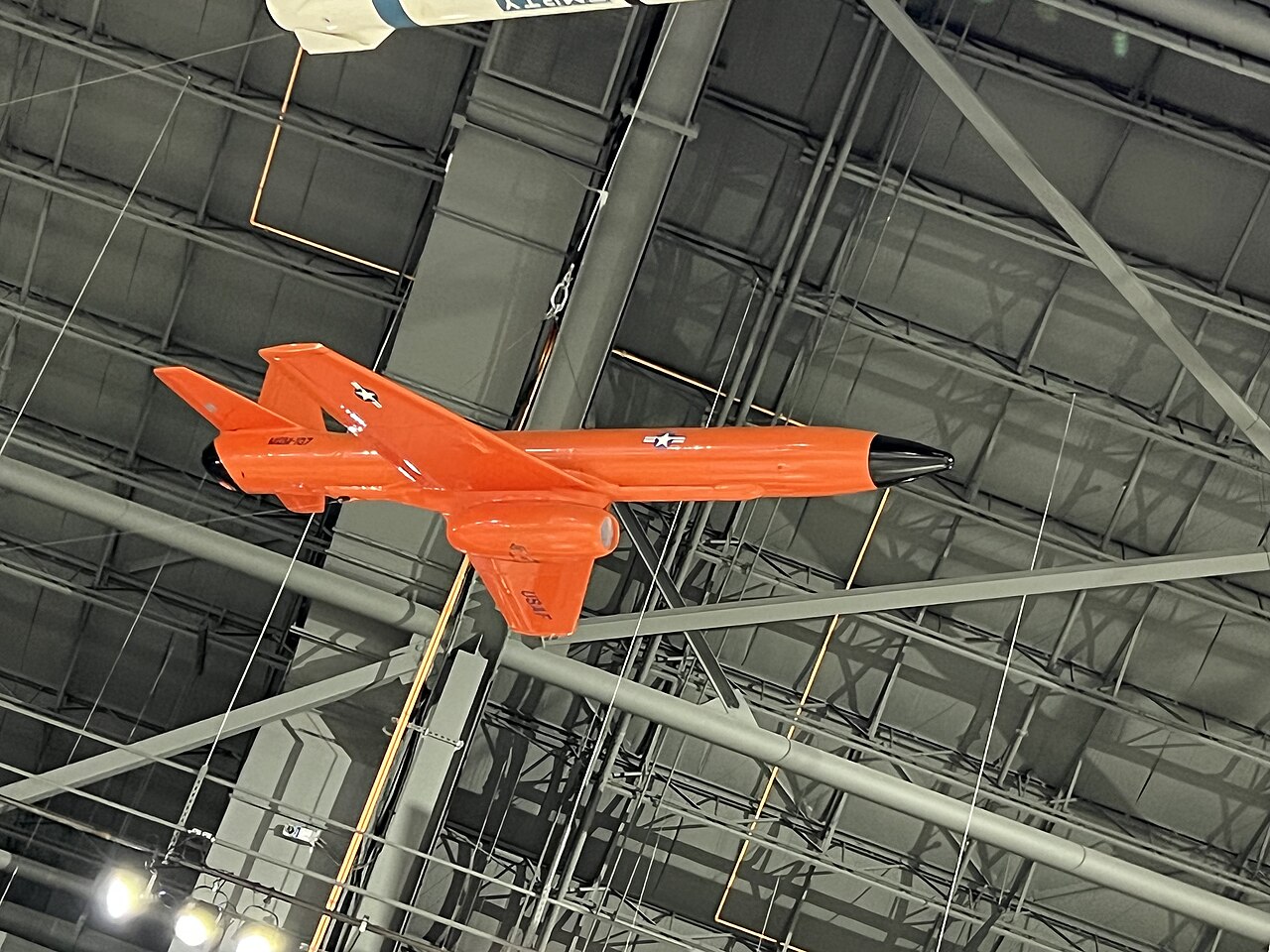
Beechcraft MQM-107 Streaker
Reusable target-towing drone for missile and gunnery training.

ZLEA · CC BY-SA 4.0
The Beechcraft MQM-107 Streaker is a reusable, turbojet-powered drone built to tow targets for missile and gunnery training. It serves the United States Army and Air Force in testing and practice scenarios. The Army uses it to evaluate surface-to-air missile systems, including the FIM-92 Stinger and MIM-104 Patriot, while the Air Force employs it for live-fire drills with air-to-air missiles such as the AIM-9 Sidewinder and AIM-120 AMRAAM.
Beech Aircraft originally developed the MQM-107 to meet a 1972 requirement from the United States Army Aviation and Missile Command for a Variable Speed Training Target. The design won the competition in 1975, and the Army received the first model, the MQM-107A, through 1979. Over the following two decades, several updated variants appeared, each with different engines and payload capacities.
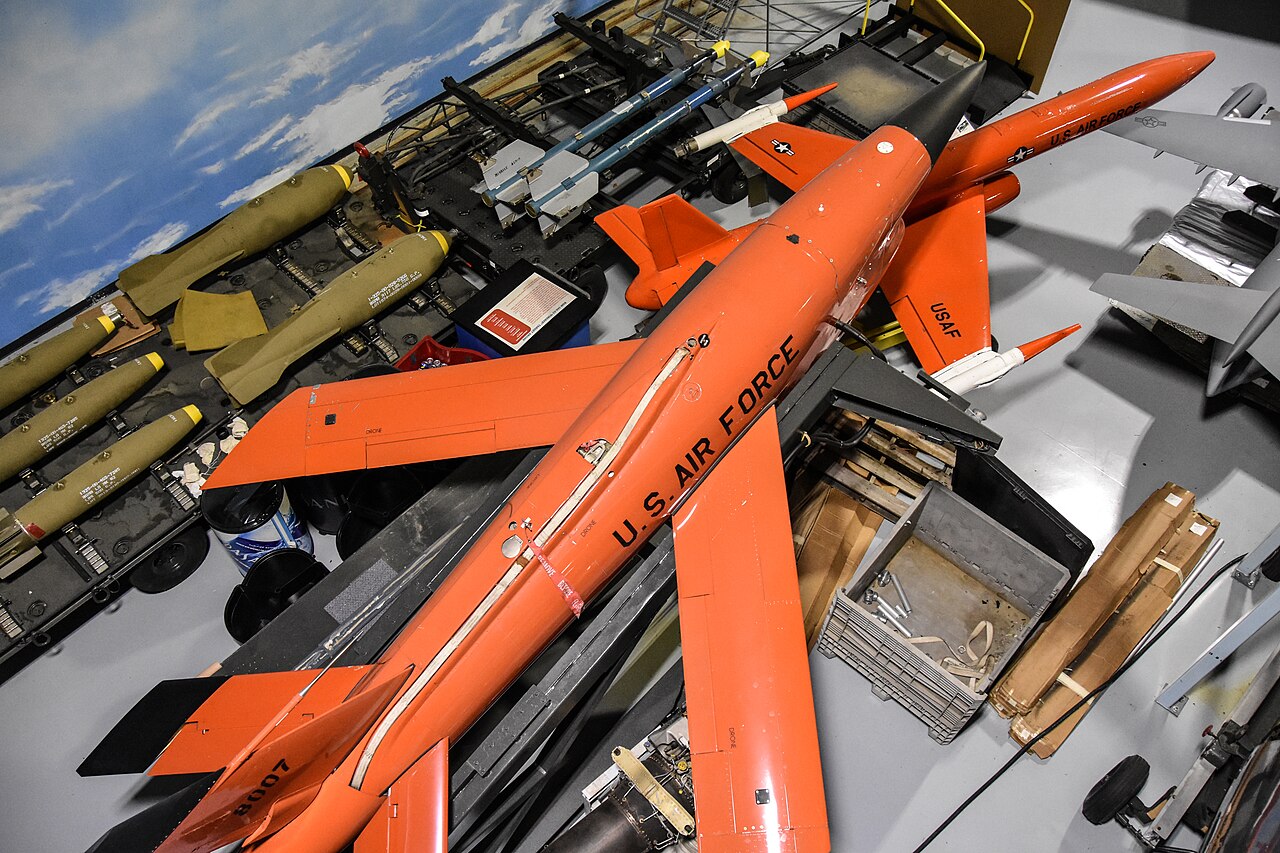
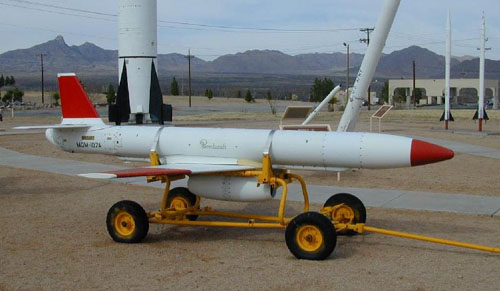
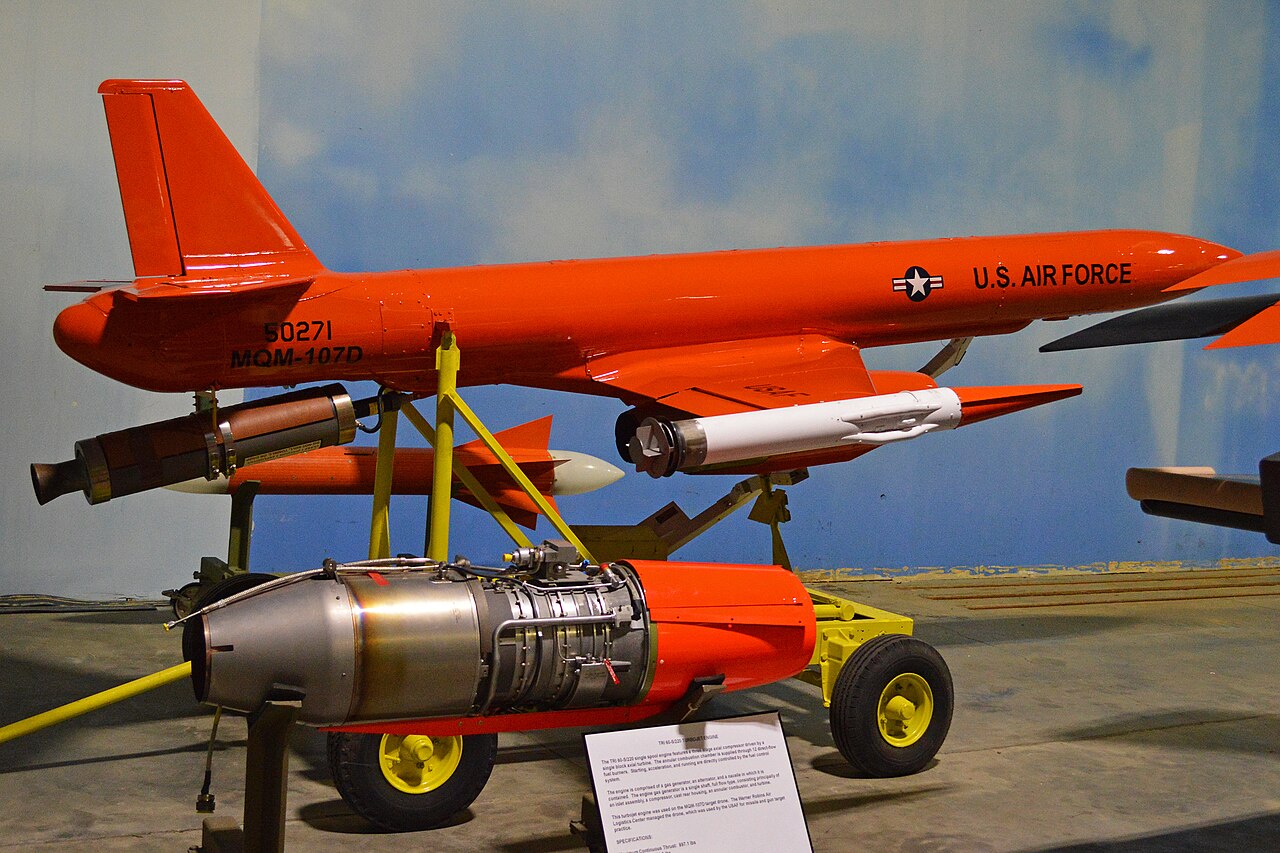
The drone is a high-subsonic target with slightly swept wings and a turbojet engine mounted along its centerline. It launches from the ground using a rocket booster, which accelerates it until the jet engine takes over. After a mission, the Streaker can be recovered by parachute and reused. Its primary role is to tow targets for missile and gun training. It can carry radar or infrared tow targets for missile practice, or a square banner with an enhanced radar signature for gunnery. Flare and chaff pods are also available for use.
Production of the MQM-107 ended in 2003, and the remaining inventory is being phased out in favor of the BQM-167 Skeeter. In 2012, reports indicated that North Korea had acquired several MQM-107D drones second-hand from a Middle Eastern country, and the following year it unveiled an indigenous target drone believed to be based on the Streaker.
Variants include the MQM-107A, the original model powered by a Teledyne CAE J402-CA-700 turbojet; its export version was known as the Model 999, with subdesignations A, D, E, and F for different countries. The MQM-107B, introduced in 1982, used a more powerful Microturbo TRI 60-2 engine and had a larger fuselage with higher payload capacity; it was exported as the Model 999 with designations B, L, or H. The MQM-107C combined the B-model fuselage with the A-model engine to use up surplus J402-CA-700 engines. The MQM-107D, introduced in 1987, initially used a J402-CA-702 engine, replaced in 1989 by a newer Microturbo TRI 60-5.
Quick Facts
- Aircraft Type
- Unmanned target drone
- National Origin
- United States
- Manufacturer
- Beechcraft
- Primary User
- United States Air Force
- More Users
- United States Army
- Number Built
- 2,236
- Construction Date
- 1974–2003
- Introduction
- 1984
- First Flight
- 1974
- Variants
- HESA Karrar
- Developed Into
- Beechcraft BQM-126
Facts from the source article.
Lore & Background
The MQM-107 was originally developed by Beech Aircraft for the United States Army Aviation and Missile Command's 1972 Variable Speed Training Target (VSTT) requirement. It was announced as the winner in 1975, and the Army took delivery of the original model (the MQM-107A) until 1979. Over the next two decades, several updated variants were introduced with different engines and payloads. The drone is designed as a high-subsonic target, featuring a slight sweep in the wings and a centerline-mounted turbojet engine. It is launched from the ground with a rocket booster that accelerates it until the jet engine takes over, and can be recovered by parachute and reused.
The Streaker generally operates as a tow vehicle for missile and gun targets, carrying either radar or infrared tow targets for missile training, as well as a square banner with an enhanced radar signature for gunnery training. Flare and/or chaff pods can also be carried. Production ended in 2003, and the current inventory is being phased out in favor of its replacement, the BQM-167 Skeeter. In 2012, it was reported that North Korea had acquired several MQM-107D aircraft second-hand from a Middle Eastern country, and the following year revealed an indigenous target drone type believed to be based on the Streaker.
Reader's Guide
The MQM-107 Streaker served as a primary target drone for the US Army and Air Force for decades, supporting the testing and training of critical missile systems including the Stinger, Patriot, Sidewinder, and AMRAAM. Its ability to tow both radar and infrared targets, along with banner targets for gunnery, made it versatile for a range of training scenarios. The drone's design allowed for multiple engine and payload variants, extending its service life from the 1970s into the early 2000s. The Streaker's legacy includes its export to several countries under the Model 999 designation, and its influence on North Korean target drone development. The selection of the MQM-107E by Australia to replace its GAF Jindivik drones further underscores its international impact. The eventual replacement by the BQM-167 Skeeter marks the end of an era for this reusable, rocket-boosted target system.
Did You Know?
- The MQM-107 was originally developed for the US Army's 1972 Variable Speed Training Target requirement.
- Australia selected the MQM-107E to replace its GAF Jindivik target drones, designating it the N28 Kalkara.
Gallery
Frequently Asked Questions
What is the Beechcraft MQM-107 Streaker?
The MQM-107 Streaker is a reusable, turbojet-powered target-towing drone designed for live-fire training. It flies ahead of towed target shapes so that missile and gunnery crews can practice engaging realistic aerial threats without expending expensive ordnance.
What role does the MQM-107 Streaker play in U.S. military training?
The Army uses it to test and evaluate surface-to-air systems like the FIM-92 Stinger and MIM-104 Patriot, while the Air Force employs it for live-fire exercises with air-to-air weapons such as the AIM-9 Sidewinder and AIM-120 AMRAAM. In both cases it provides a controllable, variable-speed aerial target for crews to track and intercept.
Who developed the MQM-107 Streaker and when did it first fly?
Beech Aircraft originally built the Streaker to satisfy a 1972 Variable Speed Target Towing requirement issued by the U.S. Army Aviation and Missile Command. The type was announced as the winning design in 1975, and later variants of the E model were produced under BAE Systems.
How is the MQM-107 Streaker recovered after a training sortie?
Because the airframe is designed to be reused, it is brought back to the ground on a parachute rather than being destroyed at the end of a run. This recoverability is what makes it a cost-effective option for repeated missile and gunnery drills.
Why is the MQM-107 Streaker considered important in the target-drone field?
It has given the U.S. Army and Air Force a reliable, repeatable way to validate both existing and next-generation air-defense and air-to-air weapon systems under realistic flight conditions. Its long service life, dating back to the mid-1970s, and its role in testing missiles like the Stinger, Patriot, Sidewinder, and AMRAAM make it a cornerstone of American live-fire training infrastructure.
More in Loitering Munitions and Target Drones 1-24
Spotted an error? Know more?
Reader corrections go straight into our review queue. Suggest an edit · How this site is sourced