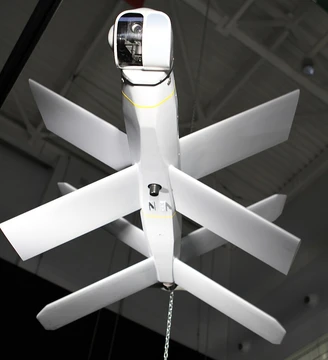
IAI Harpy
Anti-radar loitering munition for suppression of enemy air defences.

The IAI Harpy is a loitering munition designed to target radar systems, produced by Israel Aerospace Industries (IAI). It is built for the suppression of enemy air defences (SEAD) and carries a high explosive warhead.
In the late 1980s, IAI acquired the designs for Kentron's ARD-10 loitering drone and used them to develop the Harpy, which was first tested in 1989. The munition has been sold to several countries, including South Korea, India, and China.
China purchased the Harpy in 1994 for about US$55 million. In 2004, the munitions were returned to Israel under a contract for upgrades. The United States, concerned that the Harpy could threaten Taiwanese and American forces in a conflict with China, demanded Israel seize the munitions and cancel the contract. Israel stated that the Harpy is an indigenously designed system containing no US-made sub-systems. In 2005, the munitions were returned to China without upgrades.
This incident strained US-Israel relations, leading to Israel's suspension from its role as Security Cooperative Participant in the Joint Strike Fighter program. However, on 6 November 2005, Israel was re-admitted to the program.
Variants include the Mini Harpy and Harpy NG. Operators are shown on a map in blue.
Quick Facts
- National Origin
- Israel/South Africa
- Manufacturer
- IAI
- First Flight
- 1989
- Variants
- IAI Harop
Facts from the source article.
Lore & Background
In the late 1980s, Kentron sold the designs for its ARD-10 loitering drone to IAI. IAI used those designs to develop the Harpy, which was first tested in 1989. The Harpy is designed to attack radar systems and is optimised for the suppression of enemy air defences (SEAD) role, carrying a high explosive warhead.
The Harpy has been sold to several countries, including South Korea, India and China. Sold to China in 1994 for around US$55 million, the loitering munitions were returned to Israel in 2004 under contract to be upgraded. The United States, fearing that the Harpy would pose a threat to Taiwanese and American forces in the case of a war with China, demanded that Israel seize the loitering munitions and nullify the contract. According to Israel, the Harpy is an indigenously designed loitering munition, and does not contain any US-produced sub-systems.
In 2005, the loitering munitions were returned to China without being upgraded. This incident chilled relations between the United States and Israel, with Israel being suspended from its status as Security Cooperative Participant in the Joint Strike Fighter program. However, on 6 November 2005, Israel stated that it has been re-admitted into the program.
Reader's Guide
The IAI Harpy's significance lies in its role as an early and prominent anti-radar loitering munition, specifically designed for the suppression of enemy air defences. Its development from Kentron's ARD-10 designs and first test in 1989 established a lineage that led to multiple variants, including the Mini Harpy and Harpy NG. The Harpy's deployment to several countries, including South Korea, India, and China, demonstrates its international reach. The 2004–2005 controversy over the upgrade and return of Chinese Harpies became a notable incident in US–Israel relations, leading to Israel's temporary suspension from the Joint Strike Fighter program. Israel maintained that the Harpy is an indigenously designed system without US sub-systems. The eventual return of the munitions to China without upgrade, and Israel's subsequent re-admission to the JSF program, highlight the geopolitical tensions surrounding advanced military technology transfers. The Harpy remains a reference point in discussions of loitering munitions and SEAD capabilities.
Did You Know?
- The Harpy was first tested in 1989.
- In 2004, the United States demanded Israel seize Chinese Harpies and nullify the upgrade contract.
- Israel was suspended from the Joint Strike Fighter program over the Harpy incident but was re-admitted on 6 November 2005.
More in Loitering Munitions and Target Drones 1-24
Spotted an error? Know more?
Reader corrections go straight into our review queue. Suggest an edit · How this site is sourced